
Accidentally Mixed Pool Chemicals: Dangers & Safety Guide
Mixing pool chemicals like chlorine and acid creates toxic gas or fire. Store products separately, use dedicated scoops, and ventilate sheds to prevent dangerous accidents.

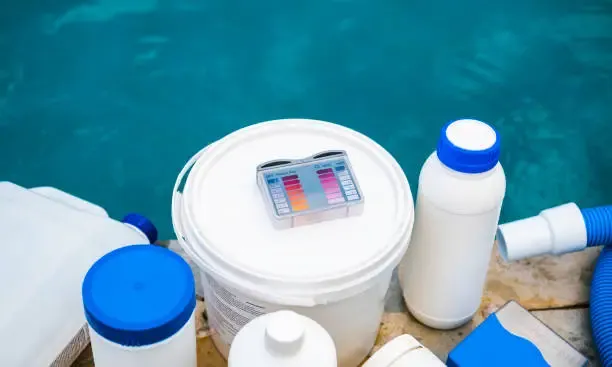
There’s nothing quite like jumping into a crystal-clear backyard pool on a scorching Aussie afternoon. Keeping that water sparkling, though, takes a bit of work—and usually a fair few chemicals.
When handled right, these treatments do a brilliant job of killing off bacteria. But make a simple slip-up in the garden shed, and things can escalate fast. If you accidentally mix pool chemicals, you're looking at a reaction that can trigger extreme heat, spark a fire, or release toxic fumes right into your face.
This guide breaks down exactly why these products are so volatile, the combinations you must avoid at all costs, and the practical first aid steps every pool owner needs to know.
The Core Dangers of Mixing Pool Chemicals
Think about what pool maintenance products are actually designed to do: obliterate organic matter. Chlorine, strong acids, and shock treatments are inherently aggressive. Because they pack such a punch, combining them improperly is a recipe for disaster.
When incompatible substances touch, they don't just fizz. They can boil over, spit corrosive liquid, or instantly off-gas. Often, this creates what safety experts warn against—a dangerous chlorine gas pool environment where the surrounding air becomes unbreathable in seconds.
According to Fire and Rescue NSW, swimming pool chemicals are highly reactive; if mixed incorrectly, they can become unstable and produce poisonous fumes or even fire.
And here’s the kicker: these reactions don't just happen in the water. Most accidents actually occur dry—like when you use the same measuring scoop for two different powders, or accidentally spill a bit of liquid acid onto a bag of chlorine granules.
Toxic Combinations: What You Must Never Mix
Some products sit perfectly fine on their own but turn incredibly volatile the second they meet. Here are the absolute worst offenders you need to keep far apart.
Chlorine and Muriatic Acid
You've probably used muriatic acid (often sold as hydrochloric acid for swimming pools) to drop your pH. It's a backyard staple. But let it touch your chlorine? That's when you run into massive trouble.
This specific mix rapidly generates deadly chlorine gas. People sometimes ask what creates mustard gas when cleaning—while actual mustard gas is a different chemical weapon entirely, combining chlorine and muriatic acid unleashes a toxic cloud that attacks your lungs and eyes in a frighteningly similar way. In a tight space like a pump shed, it can be lethal. Always dose these into the water separately, on completely different days if possible.
Can You Mix Chlorine and Bleach?
We hear this one constantly: can you mix chlorine and bleach? The short answer is an absolute no.
Sure, they both technically clean things. Liquid bleach actually contains sodium hypochlorite as its main active ingredient, which is exactly what you'll find in plenty of commercial liquid pool sanitising products. However, the stuff you buy at the supermarket is formulated differently. It has varying concentrations and often includes extra stabilisers or fragrances. Tossing household bleach into a pool skimmer alongside your standard pool chemicals is asking for an unpredictable, potentially hazardous reaction.
Mixing Different Types of Pool Shock
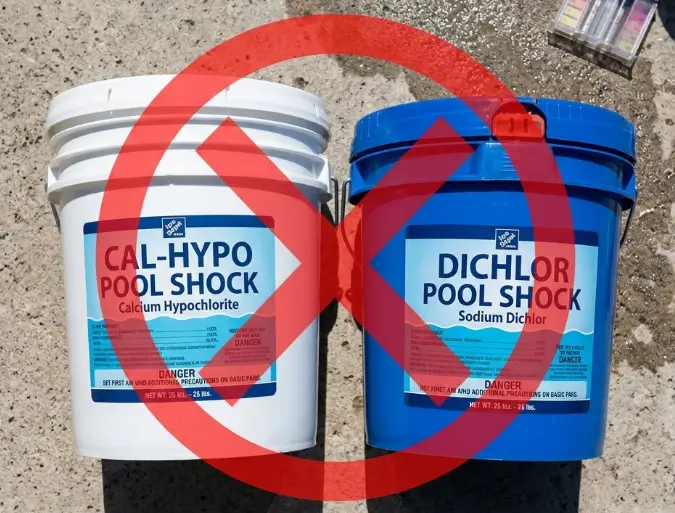
Grabbing whatever 'shock' is on sale might seem harmless, but not all pool shock is made from the same stuff. One bucket might rely on calcium hypochlorite, while another is dichlor-based.
Dump two different dry shocks into the same bucket, and you're risking spontaneous combustion. Seriously, they can literally catch fire. Beyond the fire risk, there’s the immediate danger of an inhaled pool shock reaction if the powder kicks up a toxic dust cloud when the container is opened. Stick to one type, follow the label to the letter, and never combine them.
Symptoms & First Aid for Pool Chlorine Poisoning
If you do mess up and catch a face full of fumes, you'll know about it quickly. Pool chlorine poisoning isn't something you can just walk off. Depending on how much you inhaled, symptoms hit hard and fast.
Watch out for:
- Violent coughing and a burning throat
- Watering, stinging eyes
- A tight chest and struggling to catch your breath
- Sudden nausea or dizziness
- Blistering or red skin
These signs can show up within seconds of a chlorine gas leak in the swimming pool area.
What to do right now:
- Drop everything and walk away. Get yourself, your kids, and your pets to fresh air instantly.
- Don't play hero. Don't try to dilute the bucket with a hose or sweep up the powder. Adding water to an active reaction often makes it explode or off-gas faster.
- Call for help. Dial Triple Zero (000) immediately if someone is struggling to breathe. For less severe exposure or general advice, ring the Poisons Information Centre at 13 11 26.
Best Practices for Safe Pool Chemical Handling
Most shed disasters are entirely preventable. It just comes down to building a few non-negotiable habits into your routine.
- Water first, chemicals second. Always add your chemicals to a large body of water. Never pour water directly onto concentrated chemicals.
- One scoop per bucket. Buy a bunch of cheap plastic scoops and label them. Using the chlorine scoop in the acid bucket is the number one way accidents happen.
- Keep them separated. Store your acids on the opposite side of the shed from your chlorine.
- Lock down the lids. Keep everything tightly sealed in a cool, dry spot with plenty of airflow.
If you're tackling your own water balancing, it’s worth reading through a solid DIY Pool Chemical Guide so you know exactly how to manage your stash safely without breaking the bank.
Smart Maintenance: Reducing Heavy Chemical Reliance
Want to stop stressing over handling buckets of harsh chemicals? The easiest trick is simply needing fewer of them.
When your pool is full of leaves, dirt, and general backyard muck, that organic matter eats up your chlorine. You end up having to dump in heavier doses of acid and shock just to keep the water from turning green. By keeping the physical debris out, your water chemistry stays stable longer.
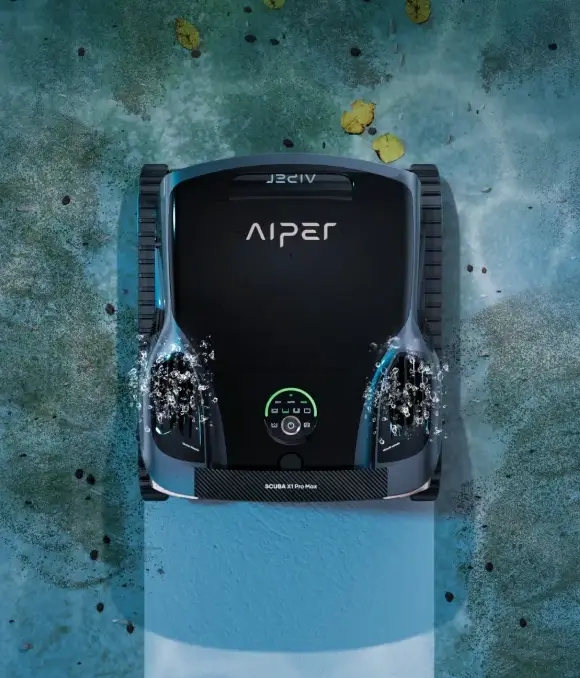
A robotic cleaner like the Aiper Scuba X1 Pro Max automates the tedious part. It scrubs the walls and vacuums the floor for you. Consistently pulling out that fine dirt means a lighter organic load, which translates directly to handling far fewer harsh chemical corrections over the swimming season.
Conclusion
At the end of the day, pool chemicals are heavy-duty industrial products scaled down for backyard use. Treat them with the respect they deserve. Read the labels, never guess the dosage, and keep your supplies strictly separated. Getting the basics right ensures your pool stays exactly what it should be: a safe place to relax.
FAQs About Pool Chemical Safety
What should I do if I accidentally mix pool chemicals?
If you realise you've made this mistake, back away immediately. Get everyone upwind into fresh air. Do not try to hose it down or sweep it up, as this can worsen the reaction. Call emergency services (000) straight away.
How long does chlorine gas stay in a swimming pool area?
It heavily depends on the breeze. Out in the open backyard, a minor off-gas might blow away in a few minutes. But if a reaction happens inside a closed shed or pump room, the gas gets trapped and remains highly toxic until a professional fire or hazmat team ventilates the space.
Can I store all my pool chemicals in the same bin?
Absolutely not. Stashing everything in one big tub is a massive hazard. If a container leaks or fumes escape, cross-contamination is almost guaranteed. Keep your acids and chlorine far away from each other on well-ventilated shelves.