
7 Best Swimming Pool Exercises to Transform Your Fitness Routine
Water workouts offer a joint-friendly, high-resistance alternative to land exercises. These 7 beginner-friendly pool moves build strength and cardio without the heat, making them perfect for Australian summers.

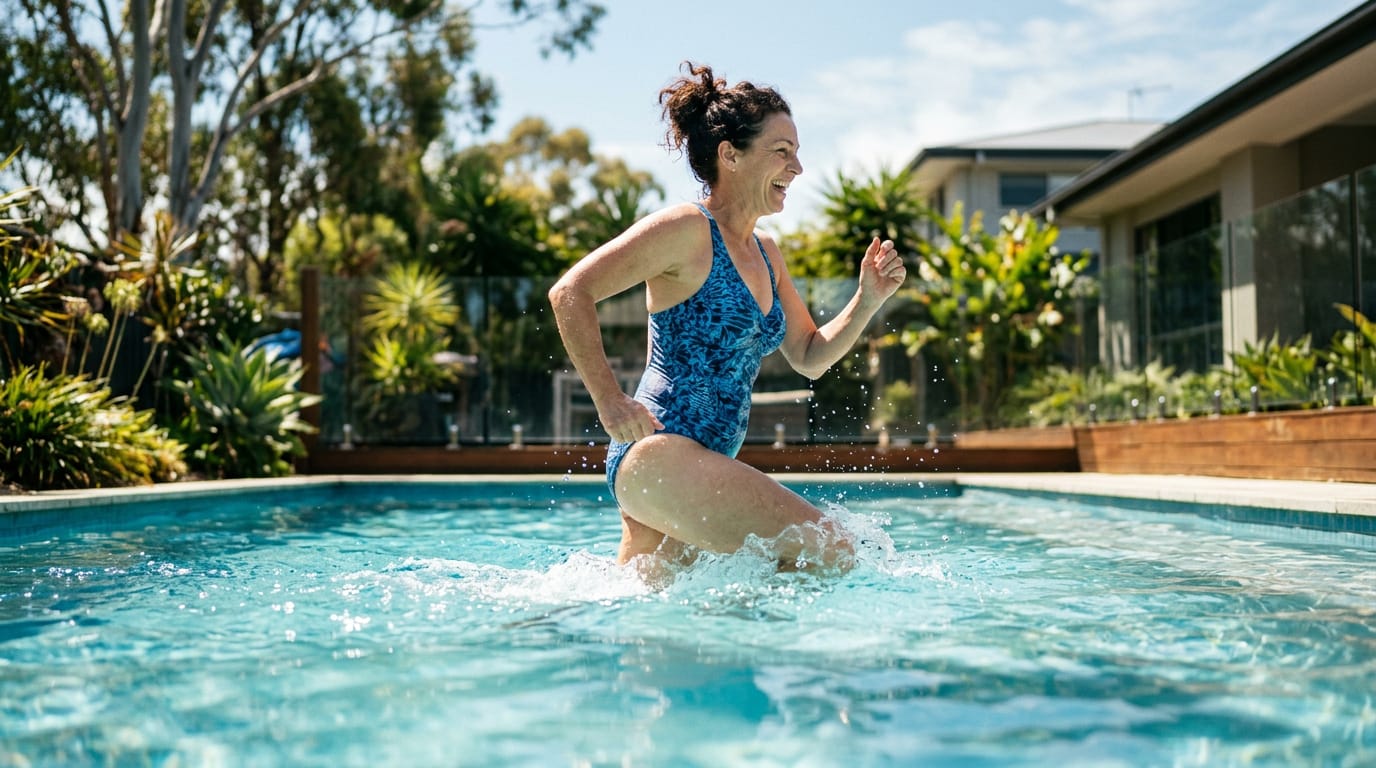
If you have ever finished a run in the middle of an Australian summer, you know the feeling. Sore knees, pounding heat, sweat that will not stop, and joints that complain for days after. Land-based workouts can be tough on the body, especially if you are managing old injuries or simply getting back into fitness.
That is where swimming pool exercises come in. Training in water offers a low-impact, high-resistance alternative that keeps your heart rate up without punishing your joints. Whether you are in your backyard pool in Brisbane or cooling off in Perth, aquatic training can completely shift how you approach fitness.
What Are the Key Water Fitness Benefits?
Exercising in water is not just easier. It is smarter for many people.
Water buoyancy supports up to 90% of your body weight, which means far less pressure on your knees, hips, and ankles. At the same time, water density creates natural resistance in every direction. Unlike lifting a dumbbell in one plane of movement, water pushes back from all sides. Every step and arm movement becomes a strength exercise.
The water fitness benefits go beyond muscle tone. According to Healthdirect Australia, water-based exercise improves mental health and benefits people with osteoarthritis by decreasing pain and improving joint function without worsening symptoms. That makes it especially valuable for older adults and anyone recovering from injury.
The Better Health Channel also highlights swimming and aquatic activity as excellent for heart health, muscle strength, and overall well-being. Furthermore, the Centers for Disease Control and Prevention (CDC) notes that regular swimming can help reduce the risk of chronic conditions while improving aerobic fitness.
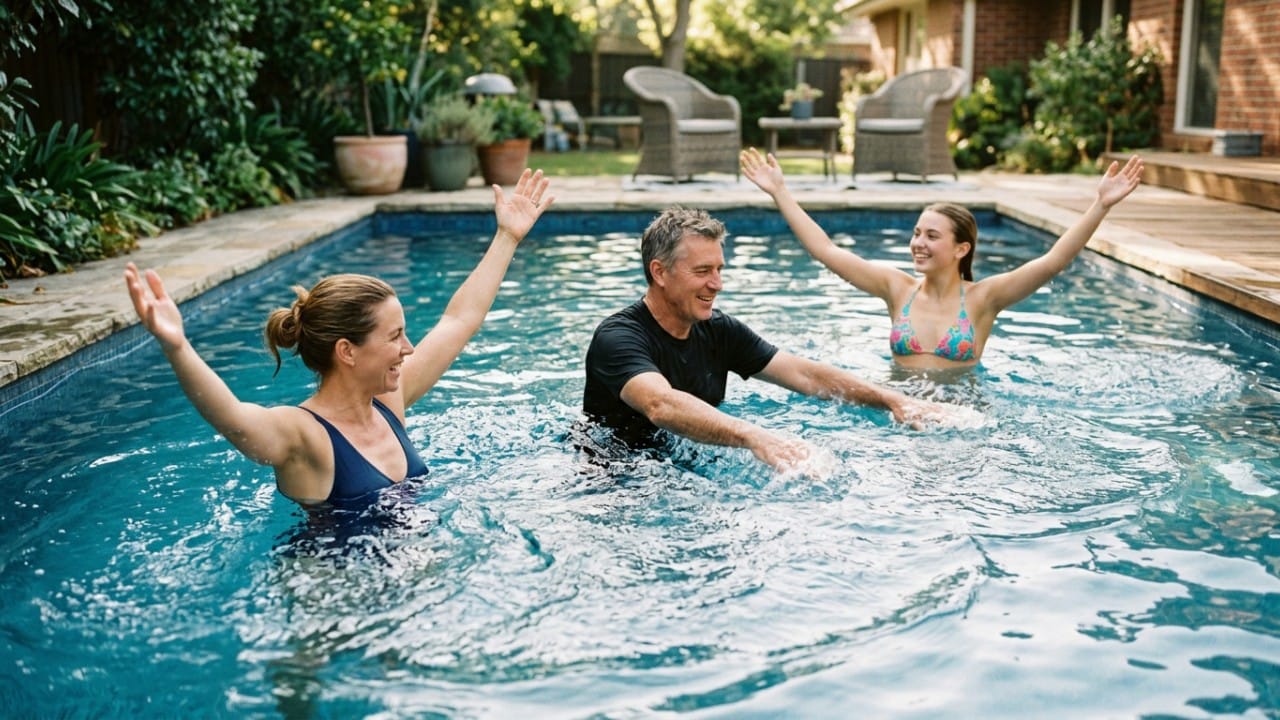
To make it clearer, here is how water compares with land training:
Water Fitness vs. Land-Based Workouts
| Feature | Water Fitness (Swimming Pool) | Land-Based Workouts (Gym/Running) |
|---|---|---|
| Joint Impact | Very low. Buoyancy supports up to 90% of body weight, protecting knees and ankles. | High. Hard surfaces increase stress and risk of injury. |
| Resistance | 360-degree continuous. Water provides natural resistance in every direction. | Mostly unidirectional. Relies on gravity, weights, or machines. |
| Heat Dissipation | Excellent. Water cools the body naturally, ideal for hot Aussie summers. | Poor. Higher risk of heavy sweating and overheating. |
| Calorie Burn | High and efficient. Constant resistance increases effort without feeling overly exhausted. | Varies. Often feels more exhausting for similar calorie burn. |
How to Exercise in a Swimming Pool: 7 Effective Moves
If you are wondering how to exercise in a swimming pool, the good news is you don't need complicated equipment, you will be pleased to know that most water fitness workouts require very little. These moves are beginner-friendly but can be adjusted for more intensity. You can even combine them into a simple water aerobics workout circuit.
1. Water Walking or Jogging
Target Area: Full body warm-up and cardiovascular system
Stand in waist to chest deep water. Begin walking heel to toe, just like you would on land. Swing your arms naturally and keep your core engaged. After a few minutes, increase the pace into a light jog.
The key is control. Push the water behind you with each step to increase resistance. You will feel your legs working harder than they do on land, but without the jarring impact.
2. Pool Planks
Target Area: Core muscles, including abs and lower back
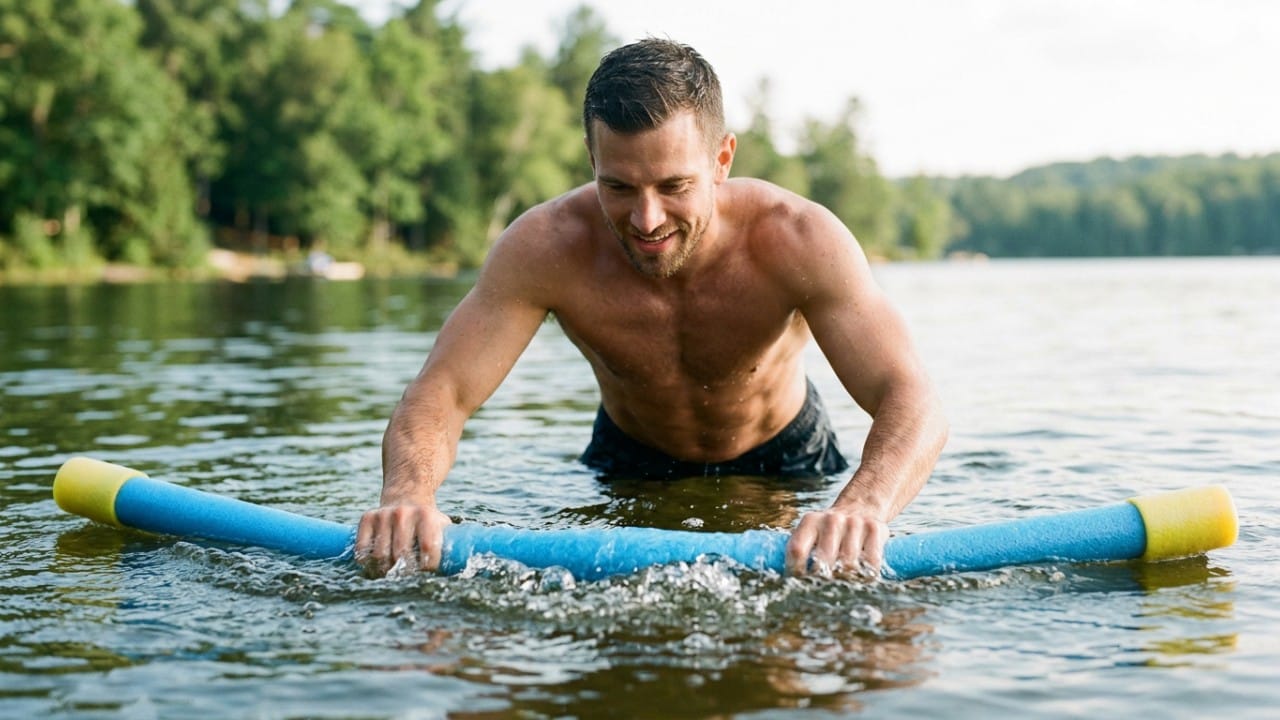
Grab a pool noodle and hold it upright in front of you with both hands. Push it straight down into the water and lean your body slightly forward. Keep your feet flat on the pool floor so you feel steady.
You will notice the noodle wants to pop straight back up. That floating pressure is what makes this move work. Your abs and lower back have to switch on to keep you balanced. Hold it for 20 to 30 seconds. It looks easy, but most people start feeling their core shake pretty quickly.
3. Water Squats
Target Area: Glutes, quads, and hamstrings
Stand in waist-deep water with your feet about shoulder-width apart. Sit back into a squat as if you are lowering into a chair. Keep your chest lifted and make sure your knees do not push past your toes.
Pause for a second at the bottom, then press through your heels to stand up again. The water adds resistance on the way up, so your legs have to work harder than they would on land. The best part is that you do not get that heavy pressure on your knees.
4. Lateral Arm Raises
Target Area: Shoulders and upper back
Stand in neck-deep water with your arms resting by your sides. Slowly lift them out to the sides until they reach shoulder height. Then push them back down through the water with control.
It might not feel like much at first, but after a few reps, you will feel the burn in your shoulders. If you want to step it up, try wearing aqua gloves or holding water dumbbells. The extra surface area makes the water push back even more.
5. Flutter Kicks
Target Area: Lower abs, hips, and legs
Hold onto the pool edge or a kickboard for support. Stretch your legs straight out behind you and start with small, quick kicks. Keep them under the water and controlled rather than splashing everywhere.
The tighter the movement, the more your lower abs and hips have to work. It is a simple move, but done properly, it builds strength without straining your lower back.
6. Standing Bicycles
Target Area: Core and legs for cardio
Lean against the pool wall in deeper water or tread water if comfortable. Bring your knees up toward your chest and start a pedalling motion, as if riding a bike.
To stay balanced, your core must remain engaged. The water resistance makes each cycle slower and more deliberate, which increases muscle activation.
7. Jumping Jacks
Target Area: Full body cardio
In chest-deep water, perform jumping jacks as you would on land. Step or jump your legs apart while raising your arms out and up, then return to the starting position.
The difference is that there is no harsh landing impact on your knees or ankles. Meanwhile, the water resists both your arms and legs, turning a simple movement into a strong cardio challenge.
Four Safety Tips and Common Mistakes to Avoid
Water training is generally very safe, but a bit of common sense goes a long way.
Tip 1. Stay hydrated.
It sounds funny, but people forget to drink water when they are standing in a pool. You might not notice yourself sweating, yet your body is still working and losing fluids. Keep a drink bottle within reach and take small sips between sets. Do not wait until you feel thirsty.
Tip 2. Protect your skin.
The Aussie sun is no joke. Even during a short session, UV exposure adds up quickly. Use a good waterproof sunscreen and reapply if you are in the pool for a while. A hat and rash shirt can also help if you are exercising for longer periods.
Tip 3. Ensure solid footing.
Many exercises, like walking or squats, rely on stable contact with the pool floor. Leaves, debris, or slippery algae buildup can increase the risk of slipping or twisting an ankle.
A simple step is to run an Aiper cordless robotic pool cleaner before your workout. It scrubs the floor and removes debris, giving you a clean, slip-free surface for your routine.
Tip 4. Start gradually.
Even though water feels easier, resistance is constant. Begin with 15 to 20 minutes and build up as your fitness improves.
Conclusion: Dive Into Your New Fitness Routine
Adding swimming pool exercises to your week does not require a gym membership or expensive equipment. Just your backyard pool and a bit of consistency.
Start with 15 to 20 minutes a day. Focus on proper form, stay hydrated, and enjoy the cooling relief that water provides. Over time, you will notice stronger muscles, improved stamina, and healthier joints. It is one of the simplest ways to make the most of your pool and your fitness.
FAQs About Pool Exercises
Do I need to be a good swimmer to do swimming pool exercises?
No. Most exercises are performed in the shallow end where you can stand comfortably with your head above water.
How many calories does a water aerobics workout burn?
On average, a water aerobics workout can burn between 300 and 500 calories per hour, depending on intensity, body weight, and water depth.
Is walking in a swimming pool good exercise?
Yes, absolutely. Water provides roughly 12 to 14 times more resistance than air. That turns a simple walk into an effective cardiovascular and muscle-strengthening workout while remaining gentle on joints.
How to swim for exercise in a small pool?
For smaller backyard pools, consider using a swim tether or resistance band system for stationary swimming. You can also focus on vertical water fitness workouts such as jogging in place or aqua squats, which require very little space but still deliver excellent results.