
Compacted Soil 101: Why Your Lawn is Hard & How to Fix It

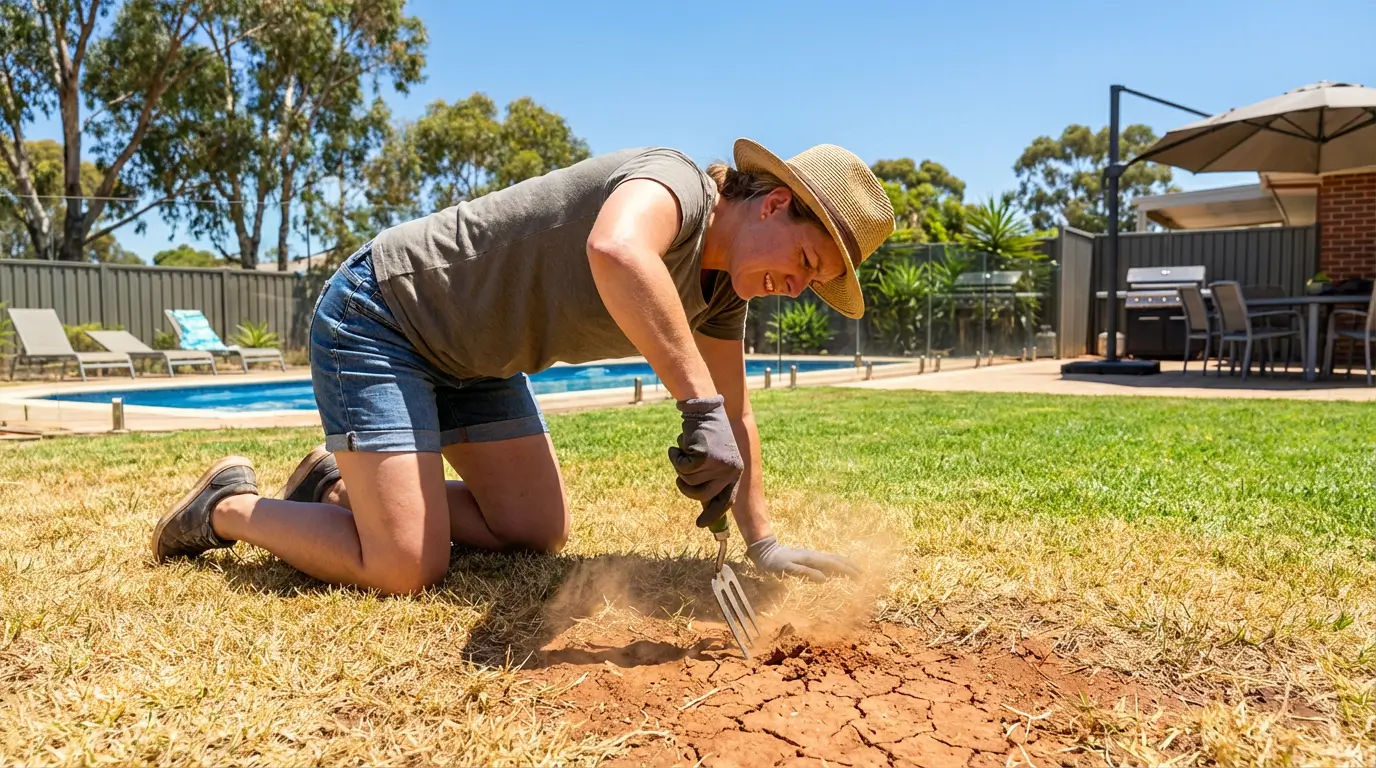
You turn on the sprinkler expecting your lawn to drink it up, but instead the water runs straight across the surface and down the drain. Or maybe you walk across the yard, and it feels more like concrete than grass. These are classic signs of compacted soil, and they are incredibly common in Australian backyards.
This is a true 101 guide, designed for homeowners who want clear answers without the jargon. We will cover what soil compaction actually is, why it happens so often across Australia, and the practical steps you can take to fix it properly. If your lawn struggles no matter how much you water or fertilise, the problem may not be the grass at all. It is likely what is happening underneath your feet.
What is Soil Compaction?
Soil compaction happens when soil particles are pressed tightly together. When this occurs, the tiny spaces between particles, known as pore space, collapse. These spaces are critical because they hold air and water. Without them, soil stops working the way it should.
Grass roots need oxygen just as much as they need water. In compacted soil, roots cannot breathe. This is known as root asphyxiation. When roots are starved of oxygen, they stay shallow, weak, and unable to access nutrients. The lawn above suffers even if everything else seems right.
According to Agriculture Victoria, soil structure is the foundation of plant health. A healthy soil profile should ideally be about 50 percent solid material and 50 percent pore space. That pore space should be roughly half air and half water.
Once compaction squeezes out that balance, grass struggles to survive, let alone thrive.
Top Signs Your Lawn Has Compacted Soil
Compacted soil often goes unnoticed because the damage happens below the surface. Here are the most common signs to watch for.
- Puddling or pooling: After rain or irrigation, water sits on the lawn instead of soaking in. This runoff is one of the clearest indicators of soil compaction.
- Hard ground: If pushing a garden fork or shovel into the soil feels like hitting rock, the soil structure has likely collapsed.
- Thinning or discolouration: Grass looks tired, yellow, or patchy, especially in areas where people or pets walk regularly.
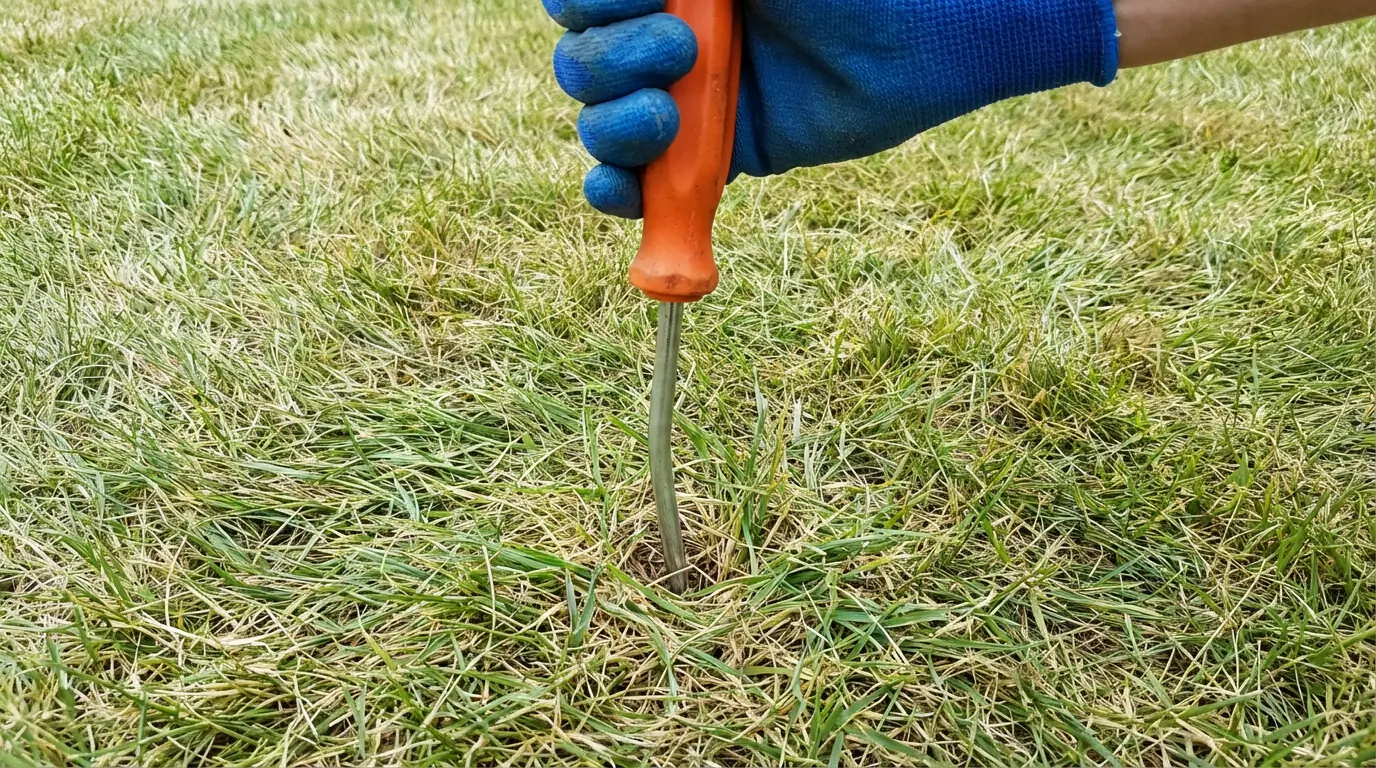
A simple way to check is the screwdriver test. Take a standard six-inch screwdriver and push it into the lawn. If it slides in easily, your soil is in good shape. If you have to stab it or use real force, compaction is present. This test is recommended by NSW Department of Primary Industries because it is quick, reliable, and requires no special tools.
Why is My Soil Hard? (Common Causes)
Many Australian lawns are built on clay-based soils. Areas like Western Sydney, parts of Melbourne, and sections of Perth are well known for heavy clay. Clay particles are extremely small, which means they pack together easily and leave very little pore space. This makes them naturally prone to soil compaction.
Daily life also plays a role. Kids playing footy, pets running the same paths, backyard gatherings, and even regular walking all compress the soil over time. Every step pushes air out and presses particles tighter together.
Maintenance practices can make it worse. Heavy ride-on mowers, garden machinery, and repeated passes in the same direction apply constant pressure. Over time, this flattens the soil profile.
Using lightweight equipment can reduce this impact. Robotic mowers and smart irrigation tools apply far less pressure than traditional machinery. While they do not fix compacted soil on their own, they help prevent it from getting worse.
Consistent moisture also matters. Long dry spells followed by heavy watering cause clay soils to shrink, crack, and then collapse. Aiper IrriSense smart irrigation helps maintain that Goldilocks zone, not too wet and not too dry, which keeps soil more resilient and less likely to harden.
How to Fix Compacted Soil (The Solution)
Fixing compacted soil requires improving the structure, not just watering more. These methods are proven and effective.
Method 1: Aeration (The Gold Standard):
Aeration is the gold standard for treating soil compaction.
There are two main types. Spike aeration simply pokes holes into the ground. Core aeration removes small plugs of soil from the lawn.
For heavily compacted lawns, core aeration is far more effective. Removing material creates real space for air, water, and roots to move. Spike aeration can actually make compaction worse in clay soils by pushing particles closer together.
Most Australian lawn experts recommend core aeration at least once a year for high-traffic or clay-based lawns.
Method 2: Topdressing:
Topdressing works best after aeration. This involves spreading a thin layer of compost or coarse river sand over the lawn. The material fills the aeration holes and keeps them open, encouraging roots to grow deeper.
Over time, topdressing improves soil structure, boosts microbial activity, and makes the lawn more resilient to compaction.
Method 3: Gypsum (Specific for Clay):
If your lawn sits on heavy clay, gypsum can help. Gypsum acts as a clay breaker by improving soil structure at a chemical level. It helps clay particles bind into larger aggregates, which improves drainage and airflow.
Gypsum is not a quick fix, but when combined with lawn aeration and proper watering, it can significantly improve long-term results.
One important warning applies to all methods. Do not aerate when the soil is bone dry or soaking wet. Experts recommend aerating when the soil is moist, similar to a squeezed sponge, not saturated.
Comparison: Compacted vs. Aerated Lawn
Below is a simple comparison to show the difference soil structure makes.
| Feature | Compacted Soil | Healthy Aerated Soil |
|---|---|---|
| Water Absorption | High runoff | Deep soak |
| Root Depth | Shallow under 2 inches | Deep over 6 inches |
| Resistance | Hard and concrete like | Firm but spongy |
| Nutrient Uptake | Blocked | Efficient |
Healthy soil works with water and nutrients, not against them.
Summary & Prevention Tips
Healthy soil is the foundation of a green lawn. No amount of fertiliser will fix grass that cannot breathe. If your lawn struggles year after year, start with the soil, not the surface.
This weekend, head outside and do the screwdriver test. Vary your mowing patterns to avoid constant pressure in the same tracks. Avoid walking on the lawn immediately after heavy rain, when the soil is most vulnerable.
Using smart tools like Aiper IrriSense to manage moisture consistently also helps prevent future soil compaction by avoiding extreme wet and dry cycles.
FAQ
How often should I aerate my lawn?
For clay soils or high traffic areas, aerate once a year. For sandy or low-traffic lawns, every two to three years is usually enough.
Does watering make compacted soil softer?
Only temporarily. Water may soften the surface, but it does not fix the soil structure. Aeration is needed to solve the root cause.
Can I fix compacted soil without tilling?
Yes. Core aeration is the best no-till solution for established lawns and delivers long-term improvement without destroying the turf.