
How to Reduce Pool Water Evaporation in Summer: 5 Proven Ways

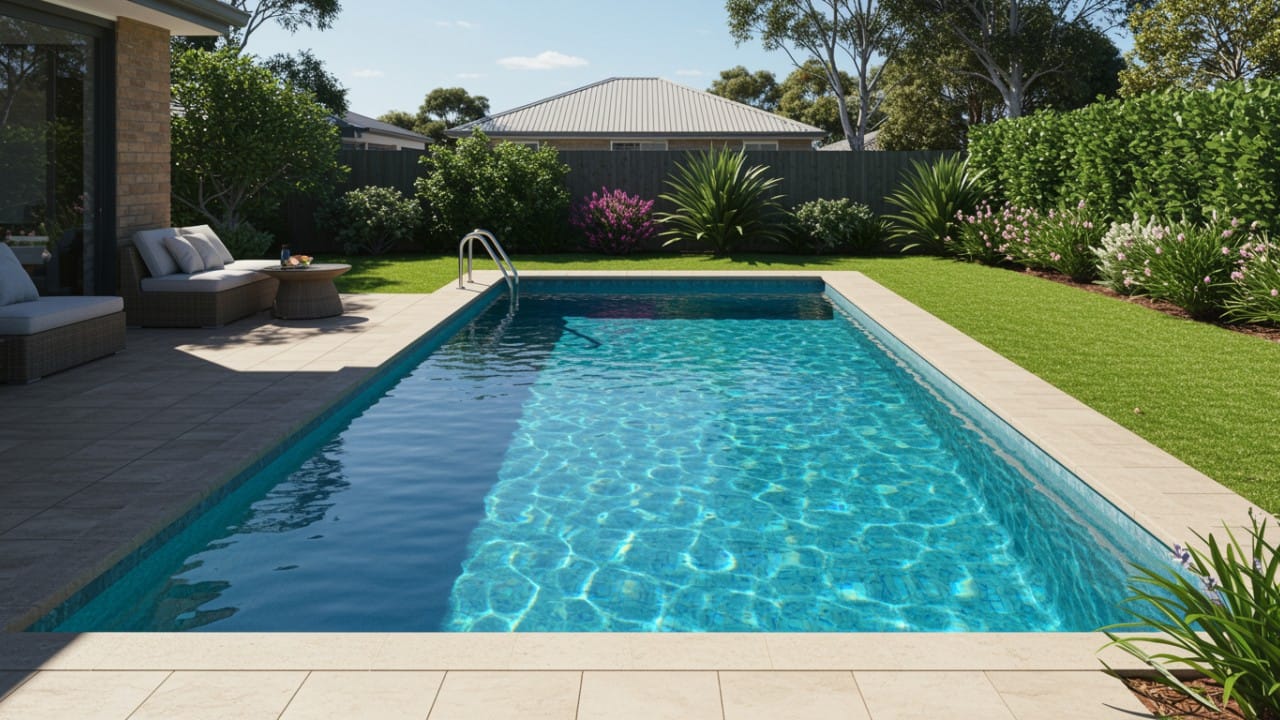
The Australian summer is known to be hot. The oppressive sun scorches your backyard and before the day is over, your pool appears to be decreasing every day. This is not just a small inconvenience to many owners of pools. This means that it results in exceeding the water bills as the pool continually gets topped up, along with the fact that the chemical balance is also disrupted, causing additional maintenance work.
Understanding how to reduce pool water evaporation can save money, time, and resources. While some evaporation is natural, excessive water loss is preventable. In this guide, we will share five actionable ways to stop pool water loss and also provide a method to test if the drop is due to evaporation or a leak.
Why Does Pool Water Evaporate?
Evaporation happens when water turns into vapor and leaves the pool. Three main factors accelerate this process:
- Heat: Direct sunlight warms the water, speeding up evaporation.
- Humidity: Dry air draws moisture from the pool. This is especially common in hot, arid regions like Perth and Adelaide.
- Wind: Air movement sweeps away the thin layer of moisture above the pool surface, allowing more water to evaporate.
According to SPASA (Swimming Pool & Spa Association of Australia), "an uncovered pool can lose up to twice its volume in water every year due to evaporation." Knowing the science behind evaporation is the first step to effectively reducing it.
Summer Impact by Region
| City | Typical Summer Temp (Celsius) | Climate Factor | Est. Daily Water Loss | Risk Level |
|---|---|---|---|---|
| Perth | 30–40 | Hot & Dry | 0.8 cm – 1.2 cm | Critical |
| Adelaide | 29–35 | Hot & Dry | 0.7 cm – 1.0 cm | High |
| Brisbane | 29–33 | Humid/Subtropical | 0.5 cm – 0.8 cm | High |
| Sydney | 26–32 | Coastal Breeze | 0.4 cm – 0.7 cm | Moderate |
| Melbourne | 20–30 | Variable | 0.4 cm – 0.6 cm | Moderate |
Looking at the table, it is clear that Perth and Adelaide face critical risks due to dry heat, while humid regions like Brisbane still experience significant water loss. Coastal breezes in Sydney can also accelerate evaporation, despite cooler temperatures.
5 Effective Ways to Stop Pool Water Evaporation
Here are five practical ways to stop pool water loss this summer.
1. Use a Pool Cover (The #1 Solution)
A physical bubble cover, also called a solar blanket, acts as a barrier between the water and the air. It prevents heat and wind from accelerating evaporation. A well-installed cover is capable of slowing down the evaporation rate of the pool in Australia by 90-95 percent (Source: SPASA/Water Corp). This solution not only conserves water but also helps maintain heat, keeping your pool comfortable.
2. Try Liquid Solar Covers
A liquid solar cover is a microscopic layer on the surface of water, which makes evaporation hard to come by without having to roll up a blanket. In kidney shaped pools or in cases where a physical cover is inconvenient, it is specifically helpful. The liquid solar cover efficiency is less than a physical blanket, in that it will reduce evaporation by approximately 40-50 percent, but still is much better than having the pool exposed to the sky.
3. Install Windbreaks or Landscaping
The wind on top of the water is like blowing on hot soup, it makes the evaporation faster. Hedges, fences, or privacy screens can prevent the prevailing winds and reduce the loss of water by a large factor. A partial coverage can make a difference even half.
4. Lower the Water Temperature
Hot water evaporates faster. To make sure that your pool pump is run at night to cool the water, or put shade sails up during the hottest times of the year (11 AM -3 PM) will keep the water cooler. Such a system is efficient as it is used with a pool cover to save as much water as possible.
5. Keep the Pool Clean
Dirty pools require more chemical treatment and frequent backwashing, which wastes thousands of litres of water. Using a robotic pool cleaner like the Aiper Scuba Series reduces the burden on your filter system, meaning fewer backwashes and indirect water savings. Regular cleaning also helps maintain a safe and enjoyable swimming environment.
Comparison: Physical Cover vs. Liquid Cover
| Feature | Physical Bubble Cover | Liquid Solar Cover |
|---|---|---|
| Evaporation Reduction | High (up to 95%) | Moderate (up to 50%) |
| Heat Retention | Excellent (Keeps heat in) | Good |
| Cost | High ($150+) | Low ($30 per bottle) |
| Effort | High (Must remove to swim) | Low (Pour and forget) |
| Durability | 3–5 Years | 1 Month per dose |
Choosing the right cover depends on your pool type, budget, and willingness to manage the cover. Physical covers are highly effective but require effort, while liquid covers are simple but less impactful.
Conclusion
Saving water is saving money. By implementing a pool cover, controlling temperature, reducing wind exposure, and keeping your pool clean, you can drastically reduce evaporation. Take action this summer to protect your pool and your budget. Explore Aiper’s range of cordless robotic cleaners to help maintain your pool's efficiency this summer.
FAQs
Q1: How much water does a pool lose to evaporation per day in Australia?
Answer: Varies by region, but typically between 0.4cm to 1.2cm per day in summer.
Q2: Does a pool cover really stop evaporation?
Answer: Yes, it is the most effective method, stopping up to 95% of water loss.
Q3: Why is my pool losing water in winter?
Answer: Evaporation still happens in winter if the water is warmer than the air, though it is slower. If it is significant, do the bucket test for pool leak to rule out a leak.
References
- Bureau of Meteorology. (n.d.). Average evaporation maps. Australian Government. http://www.bom.gov.au/climate/maps/averages/evaporation/
- Swimming Pool & Spa Association of Australia. (n.d.). Pool water savings techniques. https://www.spasa.com.au/pool-and-spa-owners/faqs-tips-and-tricks/pool-water-savings-techniques
- Swimming Pool & Spa Association of Australia. (n.d.). Best practice and debunking the myths [PDF]. https://www.spasa.com.au/assets/water-myths-debunking-(1).pdf
- Sydney Water. (n.d.). Ways to save water [PDF]. https://www.sydneywater.com.au/content/dam/sydneywater/documents/Ways-to-save-water.pdf