
How Weather Affects Your Pool Maintenance: The Complete Australian Guide
Weather plays a major role in pool health. Heat burns off chlorine, wind adds debris and phosphates, rain dilutes chemicals, and cold snaps shift water balance—so adjusting maintenance based on the forecast is key to keeping your pool clean and stable.


If there’s one thing we know about Aussie weather, it’s that it rarely plays by the rules. We’ve all been there: you’re planning a weekend barbie by the pool, the sun is blazing, and then—out of nowhere—a Southerly Buster rolls in, turning your crystal-clear water into a leaf-filled lagoon.
It’s not just about chasing leaves with a net, though. From the harsh UV index of a Queensland summer to the sudden chill of a Victorian cool change, the elements are constantly messing with your pool’s chemistry. Understanding how weather affects your pool maintenance is the secret weapon to keeping your swim spot pristine without spending your entire weekend fighting off algae.
In this guide, we’re going deeper than the basics. We’ll look at exactly how heat, wind, rain, and cold snaps wreak havoc on your water balance, and share some industry-approved strategies to protect your pool—and your wallet—no matter what the forecast says.
The Scorch of Summer: Heat & UV Rays
Let’s be honest: in Australia, the sun is your pool’s frenemy. It makes the water inviting, but it’s also working hard to ruin your water quality.
1. The Chlorine "Burn-Off"
Think of the sun as a giant sponge for your sanitiser. UV rays strike the water and degrade unstabilised chlorine at a frightening speed. In fact, on a proper scorcher of a day, bright sunlight can strip up to 90% of your pool’s chlorine in just two hours. That leaves your water completely undefended against algae, which happens to love warm, stagnant water.
The Fix: You need "sunscreen" for your water. That’s essentially what Cyanuric Acid (CYA) does. It acts as a stabiliser, shielding the chlorine molecule so it lasts longer. Industry standards suggest aiming for a CYA level between 30-50 ppm. Just be careful not to go overboard; if your levels creep over 100 ppm, you’ll hit "chlorine lock," where the sanitiser is present but refuses to work.
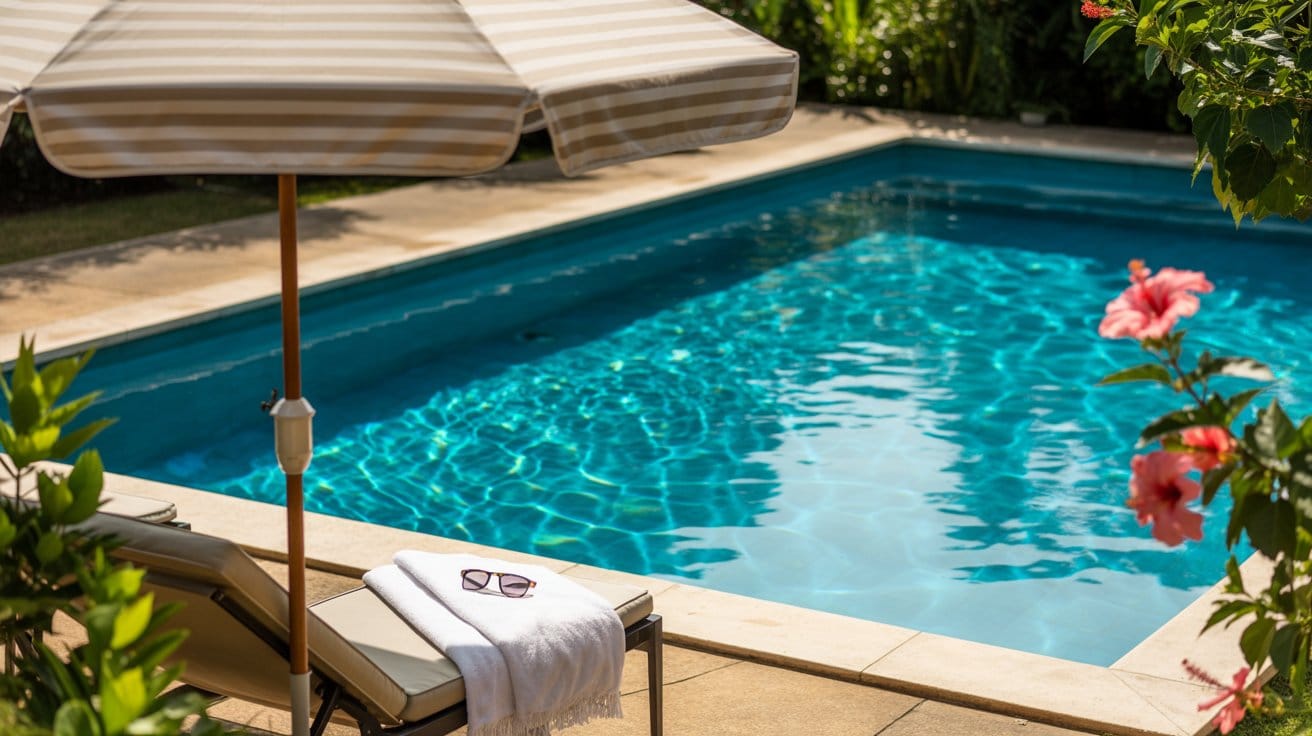
2. The Evaporation Effect
It’s not just water disappearing into thin air. When H2O evaporates, it leaves everything else behind. The concentration of calcium, salt, and other chemicals rises, throwing your balance off kilter.
According to data from the Swimming Pool & Spa Association of Australia (SPASA), an uncovered pool can lose roughly twice its volume in evaporation over a year. That’s a huge waste of water, but it also leads to:
- Scale build-up: Higher calcium concentrations leave those stubborn white crusts on your waterline and salt cells.
- Gear trouble: Imbalanced water turns aggressive, eating away at heater elements and shortening the life of your pump seals.
Pro Tip: When a heatwave hits, check your water level every morning. If you have to top it up with the garden hose, remember you’re diluting the chemistry. Don’t just set and forget—test and re-balance straight away.
Windy Days: The Silent Debris Carrier
We usually worry about big storms, but dry, windy days are often the silent killers of pool clarity. They act as a delivery service for fine dust, pollen, and organic debris.

The Phosphate Problem
Wind blows gum leaves, bark, and pollen into the water. As this organic matter sinks and starts to break down, it releases phosphates. Think of phosphates as an "all-you-can-eat buffet" for algae. Combine that food source with warm summer water, and you’ve got a green pool waiting to happen.
Mechanical Strain
It’s not just the chemistry that suffers. Fine dust clogs up skimmer baskets and sand filters faster than you’d expect. This shoots your system pressure up and drags circulation efficiency down right when you need it most. If your skimmer basket gets choked with leaves while you’re at work, the pump has to work overtime to cycle the water, which is a fast track to motor burnout.
The Smart Solution: Automated Cleaning
This is where working smarter, not harder, pays off. Instead of spending your Saturday hand-vacuuming dust after a windy spell, let technology handle the grunt work. An automated cleaner, like the Aiper Scuba Series, navigates the floor and walls independently. These robots scrub away that fine dust and capture leaves before they have a chance to rot. By getting the debris out early, you’re cutting off the phosphate supply and saving a fortune on chemicals.
Rainfall: Managing the Deluge
While the sun takes water away, rain dumps it back in—and it’s rarely clean. Rainwater is usually acidic and drags airborne pollutants down with it.
1. Chemical Dilution & pH Drop
A heavy downpour dilutes your salt and chlorine levels significantly. It also tends to crash your pH and Total Alkalinity. Low pH means acidic water, which stings swimmers' eyes and eats away at metal equipment components. It is vital to run a test as soon as the storm clears.
Deep Dive: Staring at a green pool after a storm? We’ve got a specific guide for that. Read our breakdown on how rain affects pool water for the exact dosage steps to fix it.
2. The Overflow Risk
During severe weather events, your pool might fill up past the skimmer box. Once the water level covers the skimmer opening entirely, surface skimming stops working. The filtration system becomes useless at catching floating debris.
Action Plan: If your backyard is looking a bit swampy, don't panic. Check out our step-by-step solution on what to do if your pool is overflowing from rain to manage the water levels safely.
Temperature Fluctuations: The "Cool Change"
We’re famous for those temperature drops where it plummets 10 or 15 degrees in an hour. It’s a relief for us, but it stresses your pool out.
Water balance relies on the Langelier Saturation Index (LSI). It sounds technical, but it’s basically a formula that includes pH, alkalinity, calcium, CYA, and temperature.
- When water cools down: It gets "aggressive." It wants to dissolve calcium out of your grout or plaster.
- When water heats up: It tends to form scale.
Maintenance Strategy: As we transition from summer to autumn, or if an unseasonal cold snap hits, nudge your pH and alkalinity slightly higher. This compensates for the lower water temperature, keeping the LSI balanced and your pool surfaces safe.
Quick Reference: The "Weather-Proof" Care Table
Here’s a cheat sheet to visualise how to adapt your routine.
| Weather Condition | Primary Impact | Key Maintenance Action |
|---|---|---|
| High Heat / UV | Chlorine loss, rapid evaporation, scaling risk. | Check chlorine daily; use a pool cover; keep an eye on stabiliser levels. |
| Heavy Rain | Dilution, acidity (low pH), potential overflow. | Test alkalinity immediately; drain excess water to protect skimmer function. |
| High Wind | Phosphates, dust, and organic debris. | Empty skimmer baskets; deploy your Aiper robot to vacuum the floor ASAP. |
| Cold Snap | Corrosive water; heater efficiency drops. | Adjust pH slightly higher; keep water circulating; use a solar cover to retain heat. |
Expert Tips for All-Weather Protection
To keep your pool sparkling year-round, here are three tips borrowed from the pros.
1. Invest in a Quality Pool Cover
The Government of Western Australia’s Water Corporation is big on this, and for good reason. A cover is your first line of defence. It stops evaporation when it’s hot, blocks leaves when it’s windy, and keeps excess rainwater out during a storm. It’s the single most effective tool for "weather-proofing" your pool.
2. Automate Your Cleaning
Consistency wins every time. Weather happens while you’re at work or asleep. Owning a cordless robotic cleaner ensures the mess is cleaned up regularly, preventing stains and phosphate buildup even when you aren't there to hold the vacuum pole.
3. Monitor the LSI
Water balance isn't just about pH. As the water temp drops in autumn or spikes in summer, the LSI changes. Download a simple pool calculator app to keep this index near 0.0—it takes the guesswork out of the chemistry.
Conclusion
Understanding how weather affects pool maintenance lets you be proactive rather than reactive. Instead of waking up to a green swamp after a summer storm, you can adjust your routine before the clouds even roll in.
Whether it’s boosting chlorine before a hot day or dropping your robotic cleaner in before the wind picks up, small adjustments make a massive difference. It’s not about fighting nature—it’s about adapting to it. With these tips, your pool will be ready for whatever the Aussie sky decides to throw its way.
FAQ: Weather and Your Pool
Q: Should I shock my pool before or after heavy rain?
A: It is actually best to shock the pool before a predicted storm. This builds up a sanitiser buffer to fight off the contaminants the rain brings. However, you must also test and balance the water after the rain stops to fix the pH.
Q: Does cold weather really affect my chemicals?
A: Absolutely. Chemical reactions slow down in cold water. Algae grows slower, but your chlorine is also less active. Plus, many salt chlorinators shut down automatically below 15°C-18°C to protect themselves, so you might need to add liquid chlorine manually.
Q: How do I stop my pool water from evaporating so fast?
A: A solar pool cover is the gold standard—it can cut evaporation by up to 95%. Also, consider windbreaks or landscaping; reducing wind speed across the water surface helps more than you’d think.
Q: What happens if I leave my pool uncovered during a storm?
A: You’re inviting debris, dirt, and excess acidic water right in. This consumes your chlorine rapidly and can clog the filter. If the forecast looks grim, covering the pool is the best preventative measure you can take.