
Manual vs. Smart Lawn Watering: Which is Best for Your Aussie Garden?
Smart lawn watering uses real-time weather data to deliver the precise 10mm your Aussie lawn needs, cutting water waste, improving soil health, ensuring restriction compliance, and saving time compared to inconsistent manual irrigation.

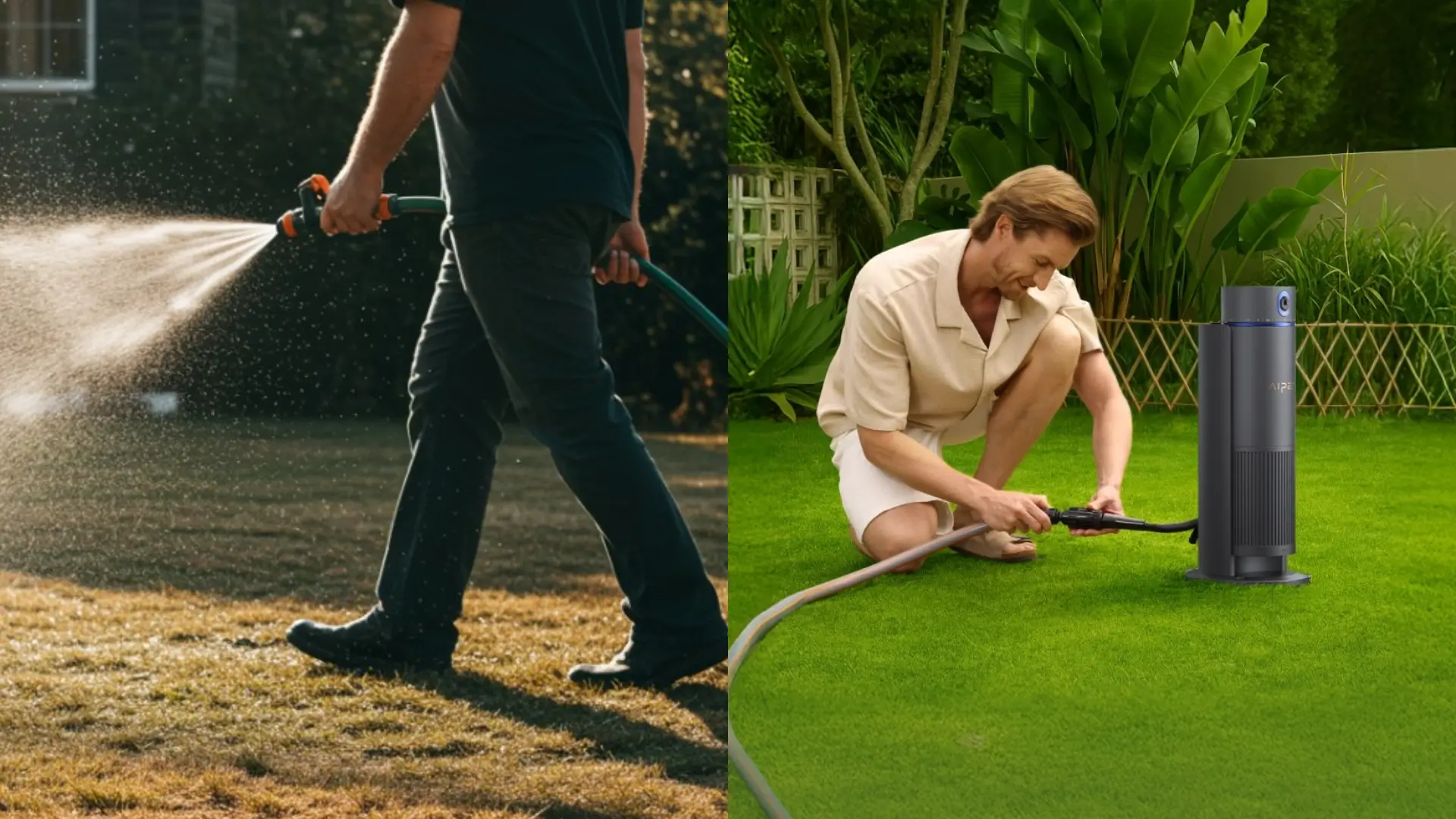
There is a specific rhythm to the Australian summer. It involves the sound of cicadas, the smell of sunscreen, and the silent, ongoing battle to keep the lawn from turning into a dustbowl.
For most homeowners, watering the garden is a chore that sits somewhere between "necessary evil" and "complex science." With water restrictions tightening across the country and the cost of living climbing, the days of casually leaving the sprinkler running for an hour are over. Every drop counts—literally and financially.
The debate is heating up: is the traditional manual watering method (you, a hose, and a plastic click-on sprinkler) still viable? Or is it time to hand over the reins to smart lawn watering technology?
In this guide, we strip back the marketing jargon to compare the two methods. We’ll look at efficiency, cost, and—crucially—what the experts at the Water Corporation say your lawn actually needs to survive the scorcher season.
Manual Watering: The "Hit or Miss" Method
We all know the drill. You check the weather, see a 35°C day approaching, and run out to move the sprinkler around the lawn. Manual watering is the traditional backbone of Aussie gardening. It relies entirely on human intervention—turning the tap on, moving the hose, and remembering to turn it off.
The Problem with "Guesstimating"
The biggest flaw in manual irrigation isn't the effort; it's the inconsistency.
When you water by hand or use a standard non-smart timer, you are essentially guessing. You might think, "The grass looks dry, I'll give it 20 minutes." But 20 minutes on a cool, humid morning delivers a completely different result than 20 minutes on a windy, dry afternoon.
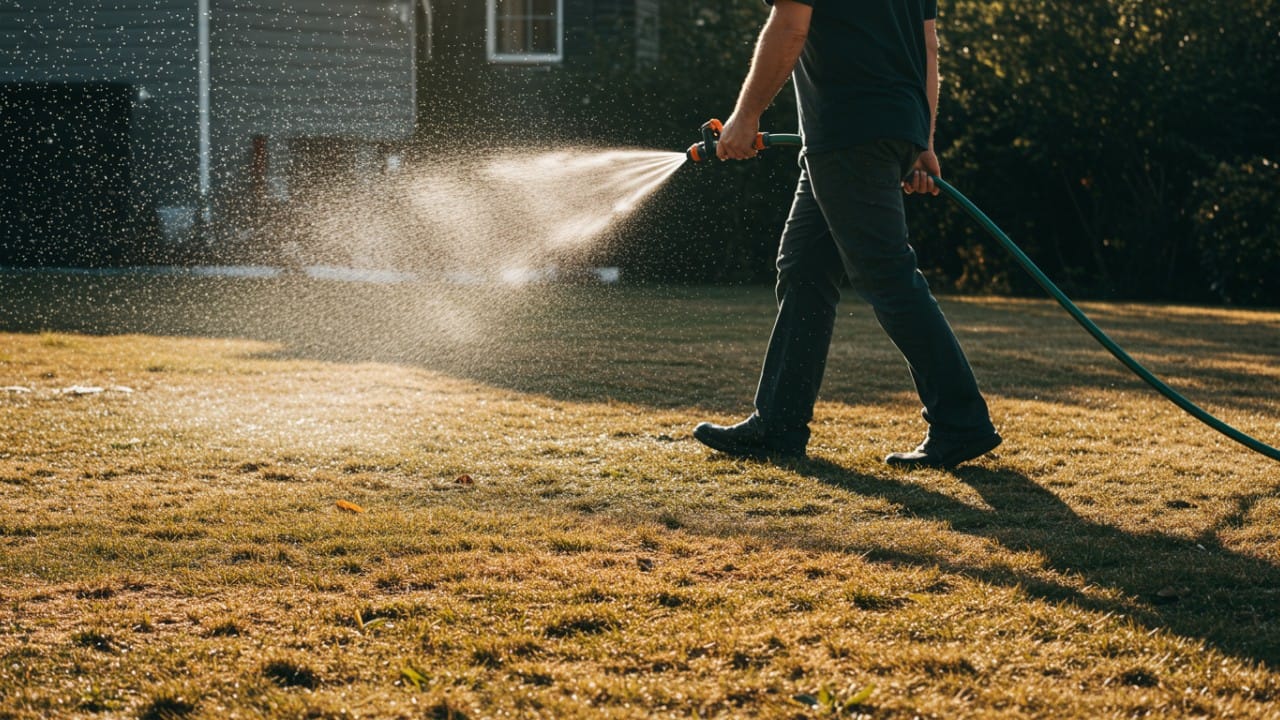
This inconsistency leads to two major issues:
- Shallow Root Syndrome: Frequent, light sprinklings encourage roots to stay near the surface. As detailed in our Lawn Care for Beginners: Get a Green Lawn, shallow roots are the first to fry when a heatwave hits.
- The "Set and Forget" Danger: We’ve all done it. You turn the sprinkler on, get distracted by a phone call or the footy, and suddenly the nature strip is a swamp. This runoff is a primary target for local council inspectors enforcing water restrictions.
Manual watering requires discipline. It demands you wake up early (before 10 am) to beat evaporation, a routine that is often hard to maintain purely on willpower.
Smart Lawn Watering: Precision in Every Drop
If manual watering is an analogue watch, smart lawn watering is a smartwatch. It tells the time, but it also monitors the environment.
Smart irrigation controllers replace your standard tap timer. They connect to your home Wi-Fi and access local weather stations. Instead of watering because it's "Tuesday at 7 am," a smart system asks: Has it rained in the last 24 hours? Is rain forecast for tomorrow? Is the evaporation rate high today?
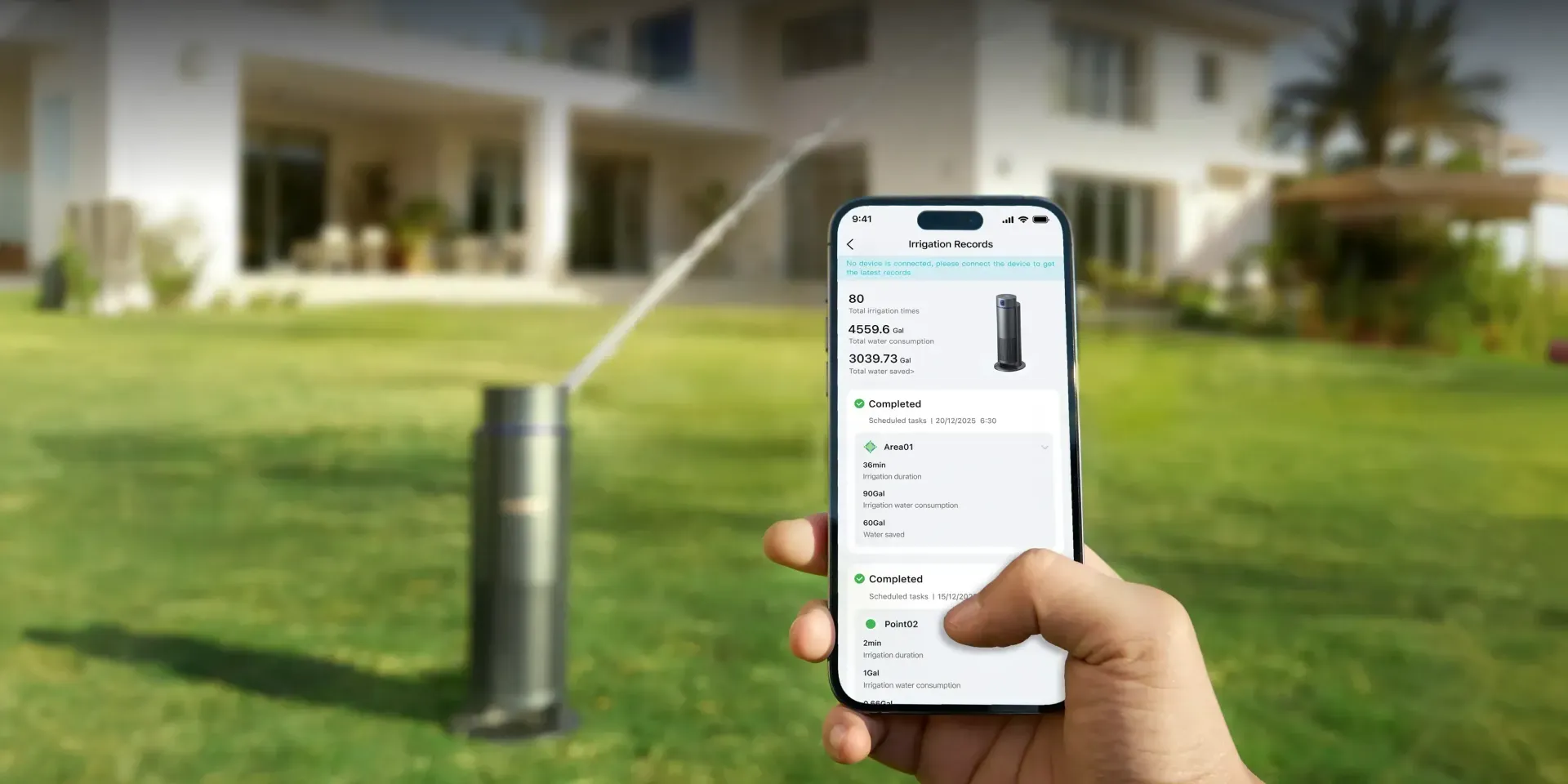
The "Soil Health" Connection
Smart watering isn't just about saving water; it's about biology.
A smart controller delivers consistent moisture levels, avoiding the "drench-then-drought" cycle that kills beneficial soil bacteria. As we explored in our deep dive on Why Your Lawns Need Probiotics & Smart Watering, maintaining stable soil moisture is critical. When soil microbes thrive, they naturally aerate your soil and help your lawn resist disease. Smart systems protect this microscopic ecosystem by ensuring the soil never completely dries out, nor becomes waterlogged.
The "Catch Cup" Test: The Real Measure of Efficiency
You might think your current setup is "good enough," but do you know your application rate? This is where we look to the authorities.
According to the Water Corporation of WA, one of Australia's leading authorities on water conservation, the average lawn only needs 10mm of water per session to thrive.
"As a general rule, your garden only needs 10mm of water on each of your watering days." — Water Corporation
The gap between manual and smart watering becomes obvious when you try to hit this specific 10mm target.
How to Perform the Catch Cup Test
To see if your current method is efficient, you need to audit your system. You can buy professional catch cups, or simply use empty tuna cans or flat-bottomed containers.
- Place Cups: Scatter at least 5 containers randomly across your lawn (some near the sprinkler, some far away).
- Run the Water: Turn on your sprinkler for exactly 15 minutes.
- Measure: Use a ruler to measure the depth of water in each cup.
The Manual Reality: You will likely find that one cup has 15mm (over-watered) while another has 4mm (under-watered). To hit the 10mm standard manually requires constant monitoring and moving the sprinkler head every 10 minutes.
The Smart Solution: A smart irrigation system allows you to input these "catch cup" results. If the system knows it takes 20 minutes to deliver 10mm of water, it will run for exactly that duration—and crucially, it will automatically reduce that time if the soil is already damp from yesterday’s rain.
Comparison: Manual vs. Smart Irrigation
Is the upgrade worth the investment? Let’s break down the differences for the average Australian household.
| Feature | Manual Watering (Hose/Timer) | Smart Irrigation System |
|---|---|---|
| Water Efficiency | Low. Prone to runoff and evaporation loss. | High. Uses local weather data to prevent waste. |
| Cost | Low Upfront. Plastic sprinklers cost <$20. | Medium Upfront. Controllers start from ~$150+, but save on bills long-term. |
| Convenience | Labor Intensive. Requires physical presence. | Automated. Control from your phone anywhere in the world. |
| Water Restrictions | High Risk. Easy to forget rostered days. | Compliance. Can be programmed to strict council rosters. |
| Lawn Health | Inconsistent. Risk of fungus or drought stress. | Optimised. Delivers the "Goldilocks" amount (just right). |
Navigating Aussie Water Restrictions
One of the strongest arguments for smart watering in Australia is compliance. Whether you are in Perth, Sydney, or Brisbane, water restrictions are a fact of life.
Manual watering puts the mental load on you. You must remember if today is your rostered day. You must ensure the hose is off before the cutoff time.
Smart controllers remove this anxiety. You program your specific "watering windows" into the app once. If your council allows watering only on Wednesdays and Saturdays before 9 am, the system locks that in. It ensures you are a responsible water user without you having to set a 6 am alarm clock on your day off.
Conclusion: Is It Time to Switch?
If you have a small courtyard or a few potted plants, manual watering is likely fine—provided you are diligent. However, for the typical Australian backyard with a patch of Buffalo or Couch grass, the shift to smart lawn watering is inevitable.
The data from the Catch Cup Test proves that "guessing" rarely hits the necessary 10mm standard. By automating the process, you aren't just buying a gadget; you are buying back your time and insuring your lawn against the harsh summer climate.
Best Practice Checklist:
- Audit First: Do the catch cup test this weekend. The results might shock you.
- Check the Soil: Ensure your soil structure is healthy enough to hold water (refer to our guide on probiotics).
- Invest Wisely: If you upgrade, choose a smart controller that is "Waterwise" endorsed or has local weather capabilities.
Your lawn is a living ecosystem, not just a green carpet. Giving it the precision it deserves is the best way to keep it green while keeping your water bills in the black.
FAQ
Q: Can a smart irrigation system really save money?
A: Yes. By preventing watering during rain or high-humidity days, smart systems can reduce outdoor water usage by up to 30-50%. Over a dry year, this reflects significantly on your water bill.
Q: How do I know if I am over-watering my lawn?
A: Perform the "step test." Walk on your grass; if it squelches or if water runs off onto the pavement, you are over-watering. Also, check for a "rotten" smell, which indicates anaerobic soil conditions caused by waterlogging.
Q: What is the best time of day to water in Australia?
A: Always water in the early morning (between 6 am and 10 am). This allows the water to soak down to the roots before the heat of the day evaporates it. Avoid evening watering, as cool, wet grass overnight attracts fungal diseases.
Q: My manual sprinkler doesn't cover the whole lawn evenly. What should I do?
A: This is a coverage issue. You likely need to overlap your sprinkler patterns. Head-to-head coverage (where the spray from one sprinkler reaches the head of the next) is the gold standard for uniform 10mm coverage.