
Mustard Algae vs Pollen in Pool: How to Tell the Difference?

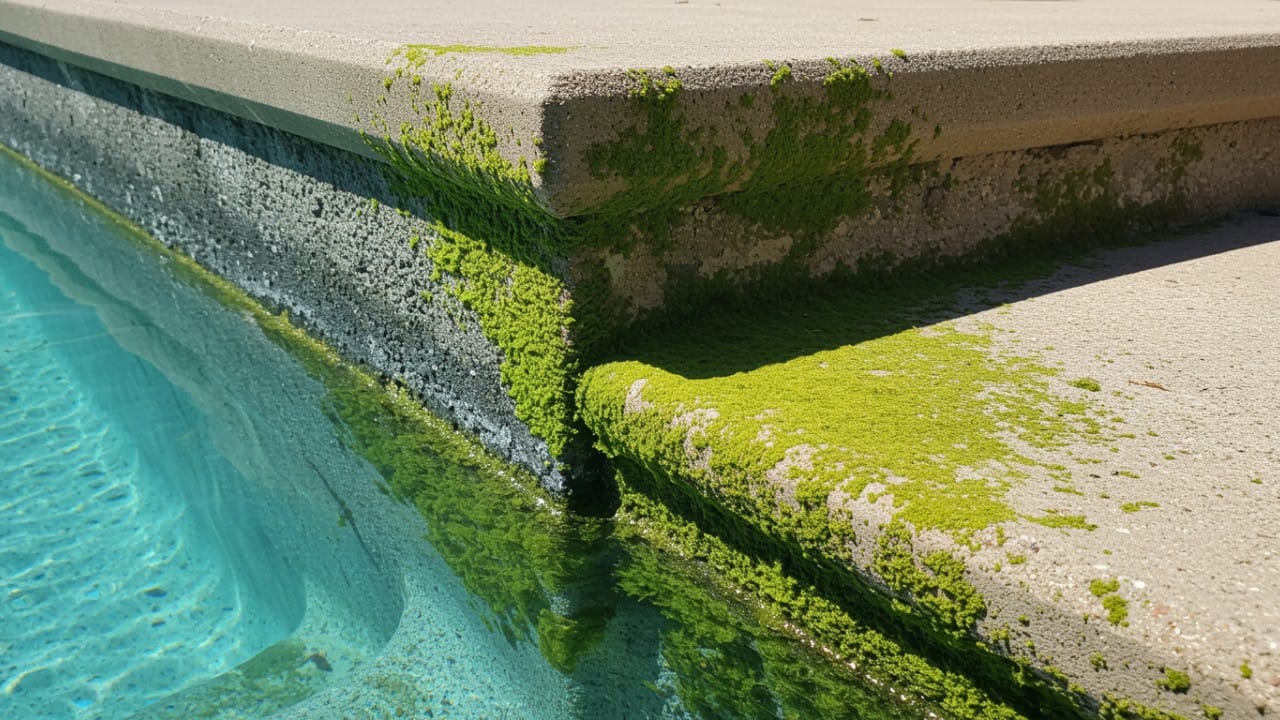
If you own a pool in Australia, you’ve probably seen it: a thin yellow layer on the bottom that just won’t go away. You brush it off, and a few hours later, it’s back in the same spot. At first, it might look like dirt, sand, or harmless debris, but it could actually be pollen from nearby trees or mustard algae, a stubborn type of pool algae.
Mixing the two up can waste your time, money, and effort. Spraying algaecide on pollen won’t help, while ignoring mustard algae lets it spread across walls, steps, and ladders.
In this guide, we’ll show you three easy ways to figure out what’s really going on. You’ll learn visual checks, the brush test, and a simple chemical method so you can finally know what’s causing that yellow dust in your pool and handle it the right way.
How to Distinguish Quickly Between Algae and Pollen
One of the easiest ways to identify yellow dust in your pool is the brush test.
- Grab a pool brush and push it firmly against a patch of yellow sediment.
- Watch how it reacts:
- If the dust disperses into a fine cloud that hangs in the water, it’s probably mustard algae. These microscopic particles float before settling back down in the same spot. You may notice the water looks slightly hazy for a few minutes before the particles settle.
- If the dust swirls around, rises toward the surface, or quickly sinks nearby, it is likely pollen. Pollen is heavier, and it doesn’t float as algae does.
Think of it like this: algae creates a soft “poof,” almost like a tiny smoke cloud, while pollen moves in a gentle swirl that settles more predictably. This quick test saves you the guesswork and prevents unnecessary chemical treatments.
4 Key Differences: Algae vs. Pollen (Comparison Table)
To understand the problem more fully, here’s a table showing four main differences between mustard algae and pollen:
| Characteristic | Slimy Type | Gritty / Powdery Type |
|---|---|---|
| Texture | Slimy | Gritty / Powdery |
| Location Preference | Shady walls/corners | Evenly on the floor/surface |
| Reaction to Sunlight | Avoids sun | No preference |
| Adhesion | Clings to walls | Sits loosely |
- Location Preference: Mustard algae avoids sunlight, so you often find it on shady walls, under ladders, or along the pool’s south side. Pollen, however, falls wherever wind and gravity take it. It can settle evenly across the pool floor, regardless of sun exposure.
- Texture & Adhesion: Algae is slimy and sticks to surfaces, while pollen is powdery or gritty and does not cling. Running your hand over algae may feel slippery, whereas pollen brushes away easily.
Understanding these characteristics helps you identify the yellow dust without testing, so you can treat only the problem that matters.
The Scientific Proof: Overnight Chlorine Loss Test (OCLT)
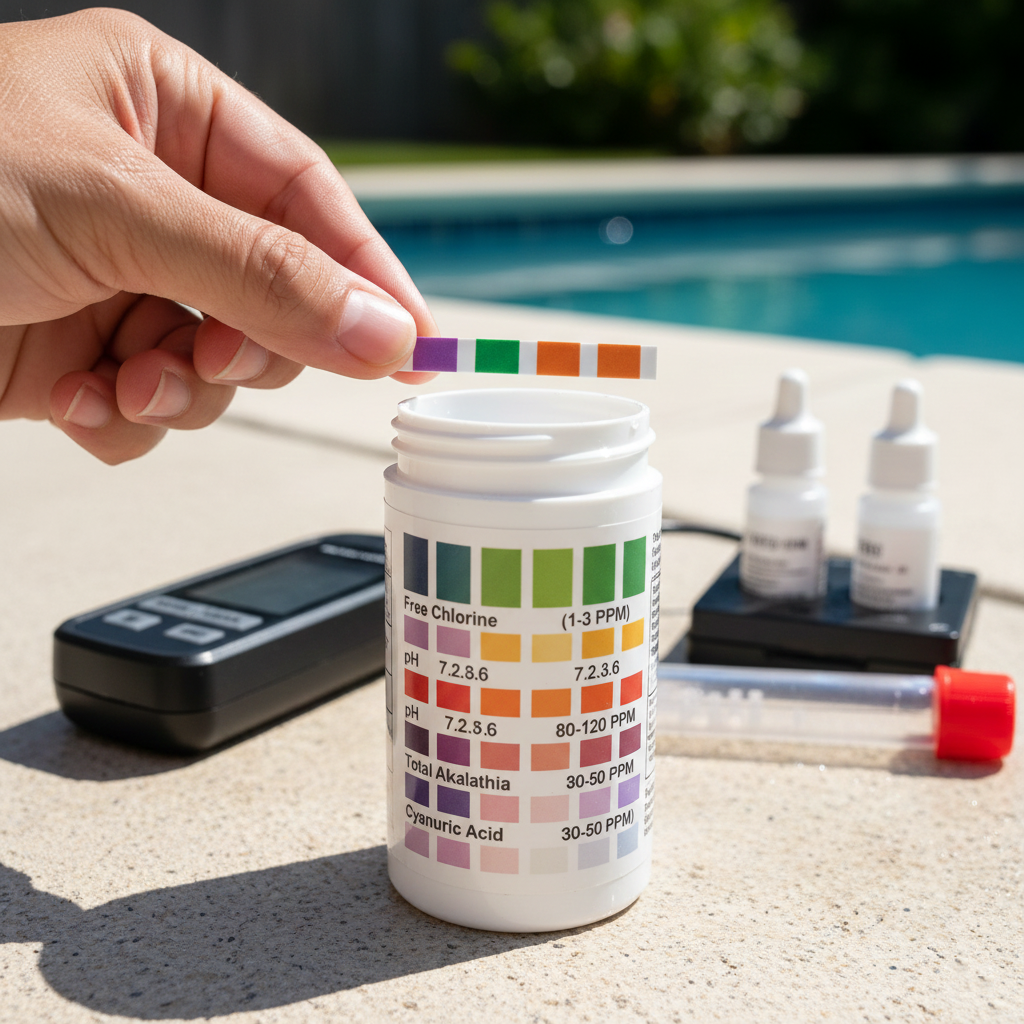
When the visual checks aren’t clear, the Overnight Chlorine Loss Test (OCLT) gives a definitive answer.
Algae are living organisms; they consume chlorine even in the dark. Pollen, by contrast, is organic debris that uses very little chlorine.
How to perform the test:
- Measure Free Chlorine (FC) after sunset.
- Keep the pump running overnight.
- Measure FC again before sunrise.
- A drop of more than 1.0 ppm indicates chlorine is being consumed, likely by mustard algae.
- A drop of less than 1.0 ppm suggests the yellow dust is pollen or inert debris.
The Swimming Pool & Spa Association of Australia (SPASA) confirms that monitoring chlorine demand is a reliable method to distinguish algae from pollen. This test takes the guesswork out of identification and ensures you target the right problem.
Scenario 1: Confirmed! It IS Mustard Algae
If the test shows it’s mustard algae, it’s important to act fast. This type of algae is tough and resistant to chlorine, and it can spread quickly. The spores can stick to swimsuits, pool toys, and even your filter equipment.
The usual method is “Shock and Scrub.” That means giving your pool a strong chlorine shock, scrubbing the walls and steps where the algae is growing, and rinsing any equipment that came into contact with the water. Avoid using robotic cleaners while the algae is active, as they can carry spores around and contaminate your filter.
Aiper recommends following a careful, step-by-step approach for stubborn mustard algae. For full instructions on which chemicals to use and how to apply them safely, see: [How to Get Rid of Mustard Algae]. Tackling the problem early prevents it from coming back and keeps your pool safe for everyone.
Scenario 2: It’s Just Pollen (Good News!)
If it’s pollen, you don’t need harsh chemicals. Pollen is seasonal, especially in Australia during Wattle and Eucalyptus flowering. It’s a maintenance problem, not a biological one.
The best solution focuses on filtration and circulation. While clarifiers or flocculants can help clump fine pollen, the real fix is ultra-fine filtration. Ordinary pool skimmers often miss tiny pollen particles or blow them back into the water.
Aiper’s Scuba Series robots are perfect for this kind of problem. Their super-fine baskets catch tiny pollen particles that other skimmers often miss, keeping your water clear and safe. Using these robots regularly during pollen season helps prevent build-up and keeps your pool looking its best.
For more tips on keeping pollen under control, check out: How to Treat Pool Pollen During Aussie Spring.
FAQs
Q: Does mustard algae float?
A: No. Mustard algae sticks to walls and floors. Yellow floating scum is usually pollen or debris.
Q: Why does the yellow dust come back immediately after vacuuming?
A: If it’s algae, it may have resettled or regrown. If it’s pollen, filters may not catch fine particles, or wind may deposit new pollen.
Q: Is mustard algae harmful to swimmers?
A: The algae itself isn’t toxic, but can host bacteria like E. coli. Avoid swimming until it’s treated (CDC guidance).
Conclusion
Knowing the difference between mustard algae vs pollen is the key to saving time, money, and chemicals. Algae requires active treatment, while pollen is a maintenance task. Regular brushing, proper circulation, and ultra-fine filtration, like Aiper Scuba Series robots, are the best ways to prevent yellow dust from becoming a recurring problem.
Take a few minutes today to inspect your pool and run simple tests. Correctly identifying the issue early ensures your pool stays clear, safe, and ready for a swim all season.