
Top Pool Design Trends in Australia for 2026: Beyond the Blue Rectangle
Australian pools in 2026 prioritize lifestyle over size. Key trends include resort-style sun shelves, dark lagoon finishes, compact plunge pools for urban blocks, and seamless indoor-outdoor flows that blend with native landscapes.

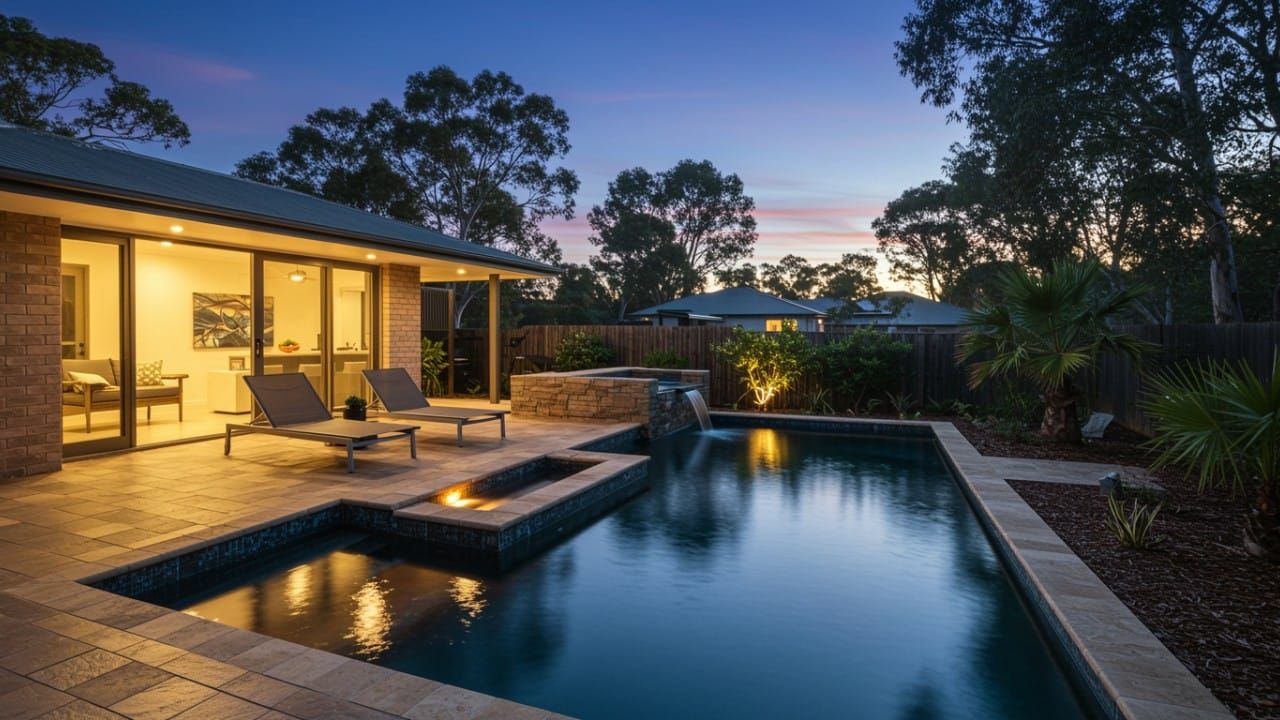
We’ve always been obsessed with our backyards down under. But as we head towards 2026, the days of the standard kidney-shaped pool slapped in the middle of a lawn are fading fast.
Australian homeowners are rethinking their outdoor spaces entirely. It’s no longer just about having a place to swim; it’s about creating an atmosphere. Whether you’re working with a compact terrace in inner-city Sydney or a sprawling block in regional WA, the focus has shifted towards smarter, more sustainable, and deeply integrated designs.
If you are planning a renovation or a new build, here is a look at the design movements shaping Australian pools in 2026—where lifestyle meets landscape.
1. Bringing the Resort Home
The "staycation" concept has permanently altered how we design our homes. One of the biggest shifts we’re seeing is the move towards resort-style configurations that prioritise lounging over doing laps.
It’s less about deep ends and diving boards, and more about "water furniture." Think expansive sun shelves (or Baja shelves) where you can place a sun lounger directly in ankle-deep water. In warmer climates like Queensland and Northern NSW, this trend is huge. It allows you to stay cool while reading a book or enjoying a drink, without being fully submerged. Coupled with mature palms and natural stone coping, these pools feel like a holiday destination that you don’t need a passport to visit.
2. The Rise of the Dark Lagoon
For decades, "pool colour" meant one thing: bright, Windex blue. In 2026, that is changing rapidly.
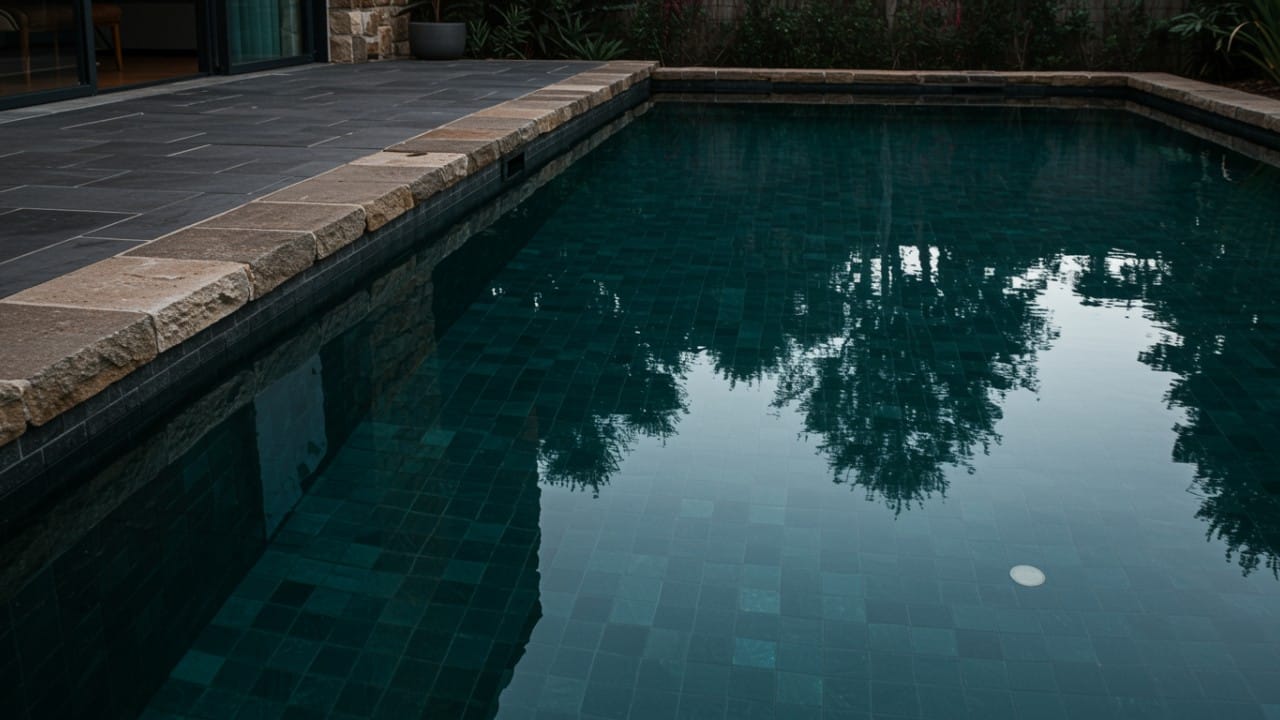
Australians are increasingly favouring darker interior finishes—deep charcoals, slate greys, and even navy blues. There is a practical and aesthetic reason for this. A darker pool interior mirrors the surrounding landscape, often creating a mirror-like surface that reflects the sky and trees. It feels more like a natural lagoon than a man-made structure.
Visually, a dark pool looks stunning against modern timber decking or pale travertine pavers. Plus, dark hues can help retain heat from the sun slightly better than lighter colours, which is a nice bonus for extending the swimming season in Victoria and Tasmania.
3. The "Architectural" Minimalist Pool
Contemporary Australian architecture is all about clean lines and reducing visual clutter, and pool design is following suit.
We are seeing a move away from busy features and towards minimalist, geometric shapes. Rectangular and L-shaped pools are dominant, often featuring flush edges where the water level sits almost level with the deck. The goal here is seamlessness. The pool shouldn’t look like an add-on; it should feel like a piece of liquid architecture that locks perfectly into the home’s footprint.
4. Smarter, Smaller, and Water-Wise
Sustainability isn't just a buzzword anymore; it’s a necessity, especially given our climate history.
In 2026, responsible pool ownership is a major design driver. This goes beyond just slapping a cover on at night. We are seeing pools designed with smaller footprints to reduce water volume (and evaporation rates).
Behind the scenes, variable-speed pumps and energy-efficient filtration systems are becoming standard. In states like South Australia and parts of regional NSW where water conservation is top of mind, homeowners are opting for systems that recycle water more effectively, ensuring the backyard oasis doesn’t come with a guilty conscience.
5. The Urban Plunge Pool
As block sizes shrink, particularly in high-density areas of Melbourne and Sydney, the "Spool" (Spa/Pool hybrid) or plunge pool has become the hero of the backyard.
You don't need a quarter-acre block to have a pool anymore. These compact pools are designed strictly for cooling off and socialising. Because they hold less volume, they are faster to heat, easier to clean, and cheaper to run. Design-wise, they pack a punch—often elevated out of the ground with glass fencing or tiled feature walls, turning a tiny courtyard into a luxury retreat.
6. Blurring the Indoor-Outdoor Line
The "alfresco" lifestyle is quintessentially Australian. The trend for 2026 pushes this to the limit by positioning the pool immediately adjacent to the living areas.
We’re seeing designs where the water edge is practically touching the bi-fold doors. The idea is to make the pool a visual feature from the living room or kitchen, even in winter. This setup often includes outdoor kitchens and sunken fire pits integrated right next to the pool coping, ensuring the area remains the social hub of the house year-round, not just on Christmas Day.
7. Understated Edges
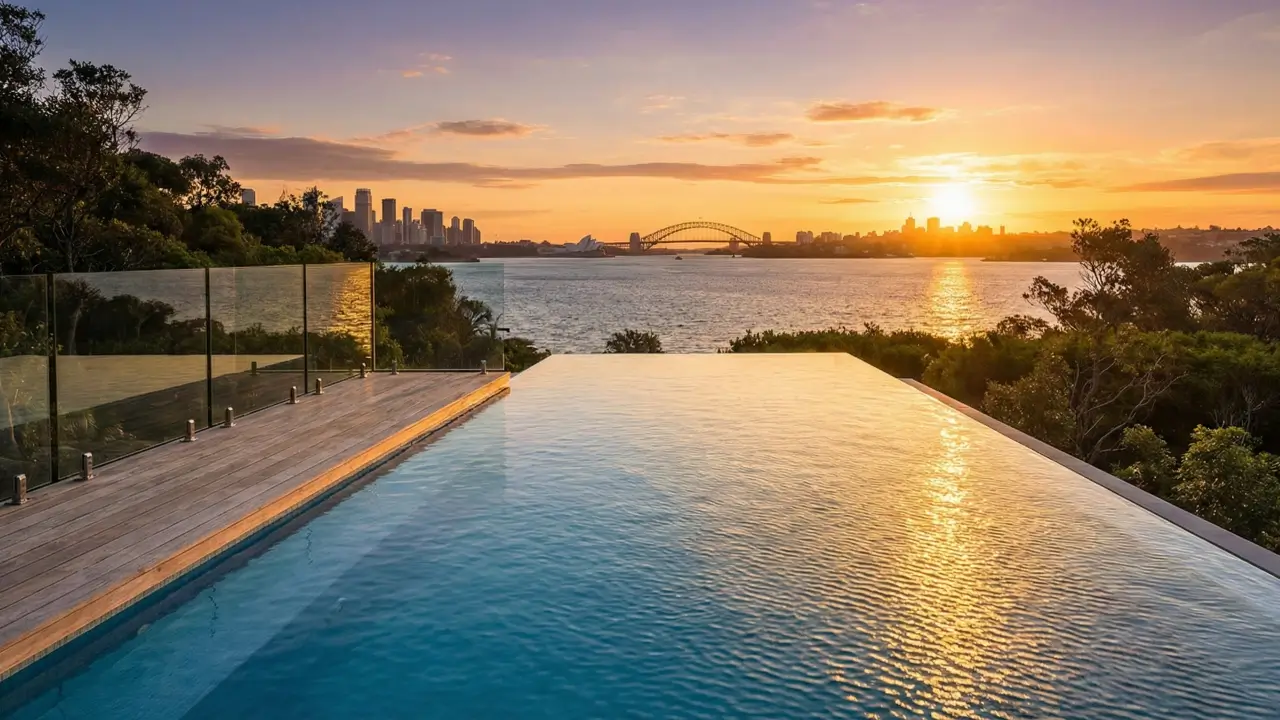
The dramatic infinity edge (or vanishing edge) had its moment of glory in the 2010s. While still popular for coastal properties with ocean views, the 2026 version is more subtle.
Designers are using hidden overflow systems or "knife-edge" perimeters where water slots silently into a narrow gap in the stone. It creates a glass-sheet effect that is incredibly calming. It’s less about the drama of falling water and more about the stillness of the surface.
8. The Multi-Zone Family Pool
Families are moving away from the "one-depth-fits-all" approach. Modern layouts are being zoned to accommodate different generations simultaneously.
A typical 2026 family pool might feature a large, shallow ledge for toddlers (and parents with wine), a deeper section for the teenagers to bomb into, and a dedicated lane or unobstructed side for swimming. It’s about maximising utility so that the pool remains usable as the kids grow up, rather than becoming a giant, unused pond once they leave home.
9. Biophilic and Nature-First Design
Biophilic design—connecting people with nature—is influencing pool shapes and surrounds.
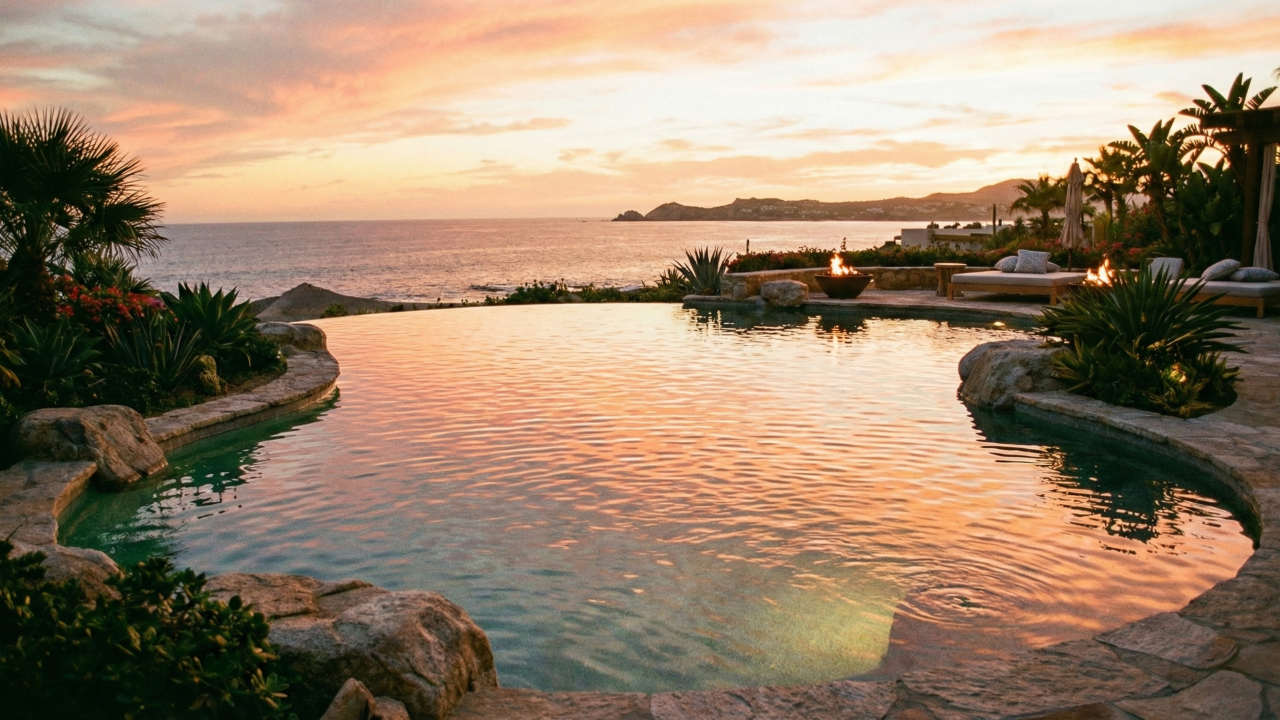
Instead of rigid concrete jungles, we are seeing "soft" landscaping creeping right up to the water’s edge. This might mean irregular, organic pool shapes that mimic natural ponds, or simply using jagged natural stone and native grasses instead of sterile paving. This trend is strong in WA and coastal regions, where blending the pool into the bushland or dunes is key to the aesthetic.
10. The Invisible Tech Revolution
Finally, the smartest trend in 2026 is the one you can’t see. Automation has moved from being a luxury to a standard expectation.
Australians want to control their pool lighting, heating, and filtration from their smartphone before they even leave the office. But it goes deeper than just apps. The integration of robotic cleaning tech is changing how pools are built. Designers are creating pools with cleaner lines and fewer obstacles specifically to accommodate robotic cleaners, ensuring the maintenance is as hands-off as possible.
Why Old-School Cleaning Doesn't Match New-School Design
There is a distinct clash happening in many backyards. You might have a stunning, dark-tiled, architectural plunge pool... but if you are still dragging a heavy plastic hose around or fighting with a manual vacuum pole, you are breaking the spell.
Traditional manual cleaning is time-consuming and disruptive—exactly the opposite of the "resort lifestyle" these new pools are designed to offer. Plus, with the rise of sustainable, water-wise designs, having a cleaner that operates independently of your pool's filtration system (saving energy and reducing backwashing) just makes sense.
This is where the shift to cordless robotic cleaners fits in. It aligns with the 2026 ethos: minimal effort, maximum enjoyment, and smart technology doing the heavy lifting while you enjoy the water.
Final Thoughts
If there is one theme uniting all these trends, it is lifestyle alignment.
In 2026, a pool isn't just a hole in the ground filled with water. It is a carefully considered extension of the home, designed to be sustainable, easy to manage, and beautiful to look at—even when you aren't swimming. Whether you go for a moody dark finish or a compact plunge pool, the goal is simple: create a space that you actually want to live in.