
Ultimate Guide to Pool Maintenance in Windy Areas
Master pool maintenance in windy areas with our ultimate guide. Learn essential steps for cleaning a pool after wind, balancing water chemistry, and using automation to handle debris effectively.


G'day. We all know how it goes. You head off for a quick holiday, a Southerly Buster tears through, and suddenly you’re coming home to a pool packed with debris. When the gum trees start shedding and those gale-force gusts hit, keeping that water crystal clear feels like a full-time gig.
If you're completely over dealing with leaves in a pool after a storm—or sick of bribing neighbors to check your skimmer while you're away—you're definitely not the only one. Let's break down some actually practical pool maintenance in windy areas. We'll cover exactly how to clean a pool after wind, sort out your water chemistry, and keep your backyard setup looking pristine without tearing your hair out.
Proven Step-by-Step Pool Maintenance in Windy Areas
Let's get one thing straight right off the bat: there's a huge difference between immediate post-storm recovery and your normal, everyday upkeep. Heavy pool cleaning after a storm usually means rolling up your sleeves to physically drag out large branches and massive clumps of organic matter. But once that heavy lifting is out of the way? That’s when you lean on routine methods and automation to handle the daily leaf drop.
The second the gales die down, you need to move fast. Leaving organic debris sitting there is a one-way ticket to stained surfaces and wrecked water chemistry.
Step 1: Skim the Surface and Clear All Baskets
Wind dumps a massive amount of leaves, twigs, and dust straight into your water. Grab a heavy-duty leaf rake and get that stuff off the surface before it waterlogs and sinks. And don't forget to empty out your skimmer and pump baskets straight away.
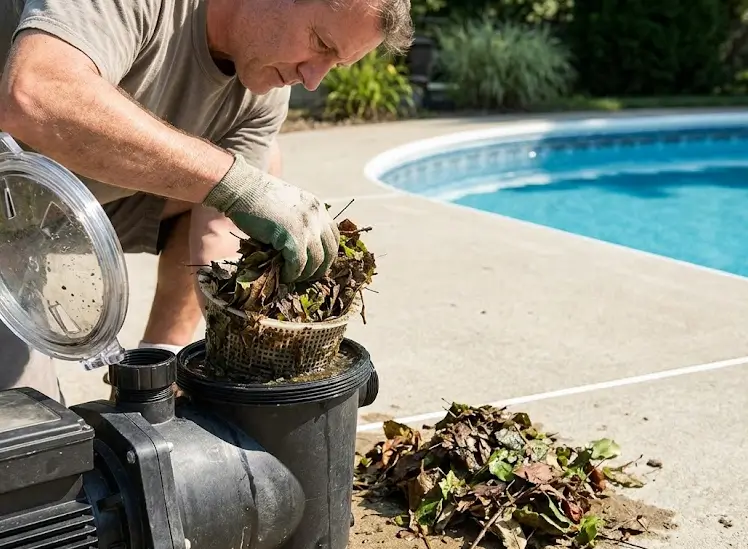
Step 2: Brush, Vacuum, and Check Filtration
Got the big stuff out? Good. Now give the walls a solid brush and vacuum the floor. High winds love dumping fine dirt that turns your normally clear water into a cloudy mess. Keep a really close eye on your pressure gauge during this part. If it’s creeping up to 8-10 PSI above its normal running pressure, you'll need to follow the standard step-by-step instructions to backwash your system to get your water flow back to normal.
Step 3: Shock and Balance the Chemistry
All that organic matter—especially eucalyptus leaves—chews through your pool's free chlorine incredibly fast.
Authoritative Guideline: According to the NSW Health Public Swimming Pool Guidelines, you really need to keep your pool's pH strictly between 7.2 and 7.8 to prevent bacterial growth after heavy organic contamination. Free chlorine levels also need to sit between 1.0 and 3.0 mg/L. (Source: NSW Health - Public Swimming Pools and Spa Pools)
Grab your test kit immediately after a windstorm. If you notice the chlorine levels taking a dive, hit it with a shock treatment to sanitize everything and wrestle the balance back into shape.
Common Mistakes to Avoid During Pool Cleaning After a Storm
Plenty of pool owners try to cut corners when wild weather hits, and it honestly just leads to massive headaches down the line. Steer clear of these common traps:
- Restarting the System Without Pre-Cleaning: Firing up the pump before you've pulled out the large debris is a rookie error. All you're doing is forcing leaves and twigs straight into the filtration system, which is a guaranteed way to cause severe clogs or completely fry your pump. Always manually skim the bulky stuff first.
- Relying 100% on the Main Drain: We see people turning off their skimmers entirely when they go on holiday just to avoid them clogging. The problem? Those leaves just sink, mat heavily over the bottom drain, and completely choke off your circulation.
- Ignoring the Rainwater: Aussie windstorms usually bring torrential rain with them. If your water level creeps up above the skimmer opening, the skimming action just stops working. You really need to know how to manage an overflowing swimming pool after heavy storms to keep that surface circulation moving.
Automation vs. Manual: Managing Leaves in Pool After a Storm
Living in an area that gets battered by wind means you're constantly fighting debris. It never really stops, so your maintenance can't either.
While you absolutely have to do some heavy manual skimming right after a major weather event, throwing a robotic pool cleaner into the mix is a super practical way to handle the everyday mess. It takes the edge off the manual workload and actually helps keep the water quality decent between those deep cleans.

Let's look at a realistic breakdown of manual cleaning versus automated gear for your everyday upkeep:
| Feature | Traditional Manual Cleaning | Automated Cordless Cleaning |
|---|---|---|
| Setup Time | Usually means dragging out hoses and poles | Minimal setup |
| Supervision | Needs your constant, active attention | Runs with minimal supervision |
| Debris Handling | Relies entirely on your skimmer basket's capacity | Grabs surface/bottom debris before it clogs your skimmer |
| Energy Efficiency | Can mean running the AC pump for much longer | Generally more energy-efficient for the routine stuff |
To be clear, automated gear doesn't magically replace post-storm manual care. But it absolutely takes the sting out of the daily grind of pool maintenance after heavy wind.
Summary & Best Practices for Aussie Pool Owners
At the end of the day, looking after a pool in gusty weather is all about prep and having a solid game plan. Keep the trees nearby trimmed back, lock down your pool cover if you know a major storm is brewing, manually scoop out the big debris the second the wind drops, and let automated cleaners handle the daily leaf barrage.
If you want a broader look at keeping your backyard setup looking sharp year-round, we highly recommend checking out how shifting weather patterns impact your water chemistry across the different Aussie seasons.
Cleaning Your Pool After a Storm: FAQs
How long should I run my pool pump after a windstorm?
You'll want to run your pump continuously to make sure the water is fully turned over and filtered. Plan for about 12 to 24 hours, though it really depends on your pool's size, how much debris blew in, and how well your filter is performing.
Will high winds affect my pool’s pH levels?
Absolutely. Dust, acidic rain, and all that blown-in organic matter can tank your pH and alkalinity pretty fast. Always grab your test kit and check the water chemistry within 24 hours of a storm passing.
What is the best way to keep leaves out of the pool automatically?
For your everyday maintenance, a battery-operated surface skimmer or a robotic floor cleaner does a brilliant job. These little units just patrol the water, picking up the daily leaf drop before it ever gets a chance to overwhelm your wall skimmers.