
Pool Pump Failure: Common Causes, DIY Fixes, and How to Prevent Costly Impeller Clogs

Is your pool pump having trouble? Do you hear unusual noises or perceive a lack of water flow? Every pool owner's worst fear is a broken pump, which can lead to green water, bad circulation, and potentially high repair costs. While a complete pump failure requires a licensed expert, many performance problems originate from a basic, easily missed component: the impeller.
This article will break down the most common reasons why pumps fail, show you how to safely clean your water pump impeller, and most importantly, show you the long-term maintenance solution that can save your pump and your money.
The Main Cause: Understanding Pool Pump Impeller Clogs
The impeller is the part of your pump that spins and uses centrifugal force to push water through the filter and back into the pool. It is an efficient piece of engineering, but it is also very susceptible to damage from pool debris.
Why Impellers Break
When debris bypasses the skimmer and pump baskets, it goes right to the impeller blades. Some things that frequently cause an impeller to get stuck or clogged are:
- Hair and Fibres: These can wrap tightly around the impeller shaft, creating friction and drag.
- Fine Sediment and Sand: These small bits can wear down the plastic or metal of the impeller over time, making it less effective (a process known as cavitation).
- Algae and Biofilm: Too much algae can form sticky clumps that obstruct the vanes.
- Small Stones or Debris: If the pump basket is cracked or the water level drops too low, larger pieces of debris can get sucked right into the pump housing, which will immediately jam the impeller.
When the impeller gets stuck, the pump motor has to work harder, which can cause it to overheat, damage the seals, and eventually break down completely.
Safety First: Important Steps Before You Attempt Any DIY Repair
Safety is paramount. It is really unsafe to work with water and electricity. Before you even consider touching your pool pump or any of its internal parts, you must always follow strict safety rules:
- Isolate the Power: Turn off the circuit breaker that supplies power to the pump. This is often not enough. You must also physically unplug the pump or ensure it is locked out so that it cannot be re-energised by accident. Safe Work Australia specifically states that faulty equipment must be disconnected and appropriately labelled (tagged) as unsafe before and during maintenance [cite: 1.6].
- Close Valves: To keep water from flooding the area when you open the housing, turn off the isolation valves on both the suction (intake) and return (discharge) sides of the pump.
- Lower the Pressure: Open the air relief valve on your filter to let any excess pressure out of the system.
If you see any evidence of electrical damage, including broken cords or a burning smell, do not proceed with the repair. A licensed electrician must do all complicated electrical work [cite: 1.1].
How to Safely and Effectively Clean a Water Pump Impeller Yourself
You can clean the impeller once the pump is completely shut down and the pressure is gone.
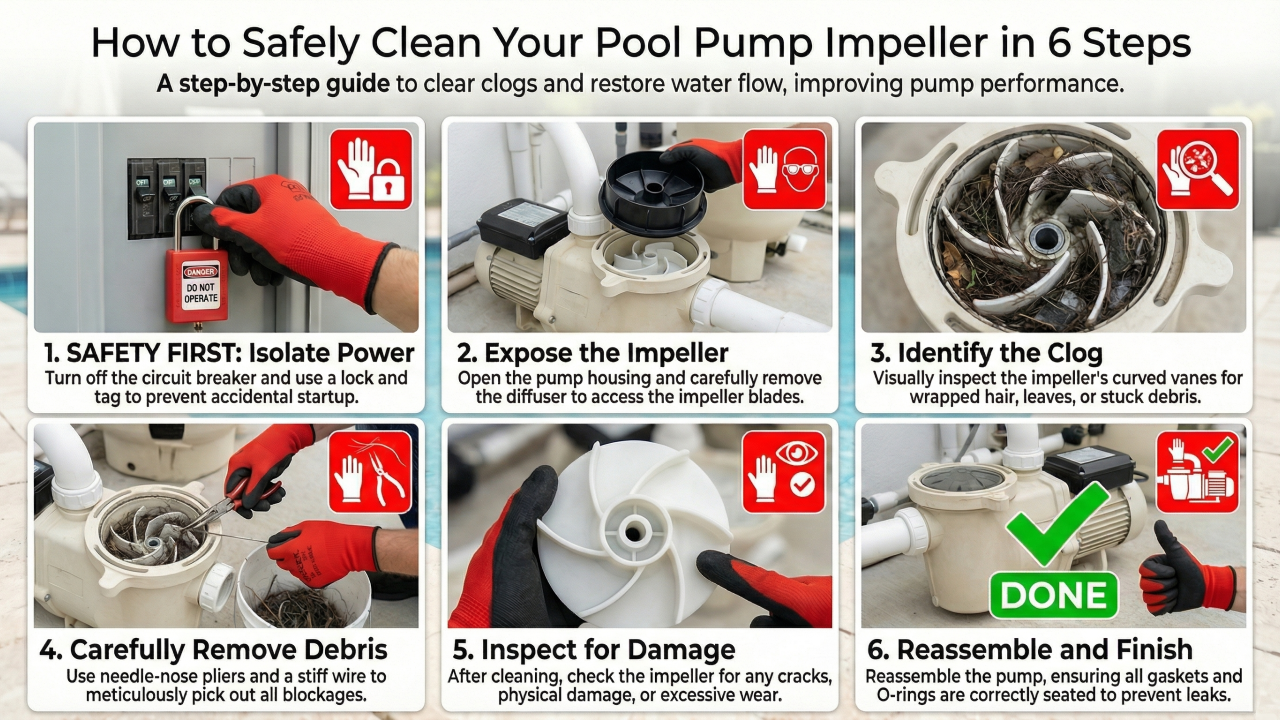
Cleaning Process in Steps (How to clean water pump impeller)
- Take off the Motor: Unplug the pump's back end (the motor housing) from its wet end (the pump casing). Most of the time, this means taking out the bolts that hold the seal plate or diffuser in place.
- Find the Diffuser: The diffuser is the component that holds the impeller. Carefully take out the screws or bolts that hold the diffuser in place to fully expose the impeller.
- Get to the Impeller: Check the vanes (the curved blades) for any dirt, hair, or small stones.
- Get Rid of the Debris: Use a small, stiff wire, needle-nose pliers, or a small, stiff brush to carefully pick or brush out all the stuff that is stuck. Be meticulous because the hair and fibres are often tightly wrapped.
- Check for Damage: Look for any cracks, physical damage, or too much wear on the impeller vanes. You may need to replace the impeller (or the pump) if the damage is significant.
- Reassemble: Before you put the motor and casing back together, ensure the diffuser and all of the gaskets and O-rings are clean and in the right place. Warning: O-rings that are not aligned correctly or are broken can let air escape, which can cause suction problems later.
Beyond the Basket: Why Regular Pool Maintenance is So Important
Cleaning the impeller is a reactive fix. To truly safeguard your pool pump, you need to do regular, proactive maintenance to keep dirt and other things from getting into the system.
The HealthyWA guide and other Australian bodies emphasise that you need to take care of your pool equipment, including the pump, on a regular basis as the manufacturer says [cite: 2.2].
- Daily Debris Removal: The first thing you should do to protect your pool is to regularly net it and empty the skimmer basket.
- Filter Cleaning: Clean the main filter (backwash or hose down cartridges) on a regular basis. A filthy filter slows down the flow, which puts additional stress on the pump and makes it more likely to get clogged again.
The Best Way to Prevent Impeller Clogs is Using a Robotic Cleaner
Even if you take good care of your skimmer and pump baskets by hand, small pieces of debris, fine sand, and biofilm can still get through and damage the sensitive impeller blades. This is where a dedicated robotic cleaner, like those from Aiper, adds an important layer of long-term protection.
Aiper's Answer: Getting Rid of the Problem at Its Source
You are greatly lowering the amount of fine debris, hair, and silt that gets to your primary filtration system by using an Aiper pool cleaning robot.
The robot's strong suction and internal filtering technology catch these pollutants right in the robot's basket, before they can move about and block your pool's main pump impeller.
Key Benefit: By keeping the pool floor and water column clean all the time, you dramatically lower the chance of impeller clogs, which means your pricey pool pump will last longer and not have to work as hard. It changes a repair job that needs to be done into maintenance that doesn't need to be done.
Troubleshooting and When to Call an Australian Pool Expert
If your pump is still showing severe symptoms after you've cleaned the impeller well, it's time to call a competent professional.
| Symptom | Possible Problem | Action Required |
|---|---|---|
| Loud Grinding Noise | Worn-out motor bearings. | Professional repair or replacement. |
| Water leaking from under the motor | The mechanical seal is broken. | Professional repair (needs special tools). |
| The pump gets too hot and shuts off | Electrical fault, or chronic blockages further down the line. | An inspection of the electrical work by a professional. |
The Pool and Spa Association of Australia (SPASA) states that service technicians should only do work in the trades they are qualified to do [cite: 2.6]. Do not attempt to fix complicated issues like the motor or electrical wiring on your own.
FAQ (Frequently Asked Questions)
Q: How often should I check my pool pump impeller for clogs?
A: This depends on the amount of debris your pool collects. If you use a robotic cleaner regularly, checking every 3 to 6 months may suffice. If you notice a sudden drop in pressure or unusual noise, check the impeller immediately.
Q: Can a slightly clogged impeller damage the motor?
A: Yes. Even a small clog increases the stress on the motor and shaft, generating heat and prematurely wearing out expensive components like the motor bearings and seals.
Q: Does using a pool robot really reduce the need to clean my main pump basket?
A: While the robotic cleaner significantly reduces the finer debris that causes impeller clogs, you still need to regularly empty your main skimmer and pump baskets to maintain optimal flow and prevent larger debris from blocking the suction line.
Sources of Information
Rules from well-known Australian health and safety organisations back up the information in this article:
- Safe Work Australia (SWA): Guides on managing electrical risks in the workplace, with a focus on cutting off power before doing maintenance.
- HealthyWA: Tips for keeping your spa or pool healthy, with a focus on the importance of cleaning up debris and keeping equipment in good shape.
- Training.gov.au (CPPSPS3004A): Provides competency standards for routinely maintaining swimming pool and spa water circulation and filtration systems.
- SA Health: Guideline for the Inspection and Maintenance of Swimming Pools and Spa Pools in South Australia, which discusses water circulation and system performance.