
Pool Water Circulation Guide: The Secret to Crystal Clear Water
Chemicals only work if they reach the bacteria. Proper circulation acts as the pool's "heart," moving water through the filter and eliminating stagnant dead zones to ensure your sanitizers can effectively maintain a crystal-clear swim.

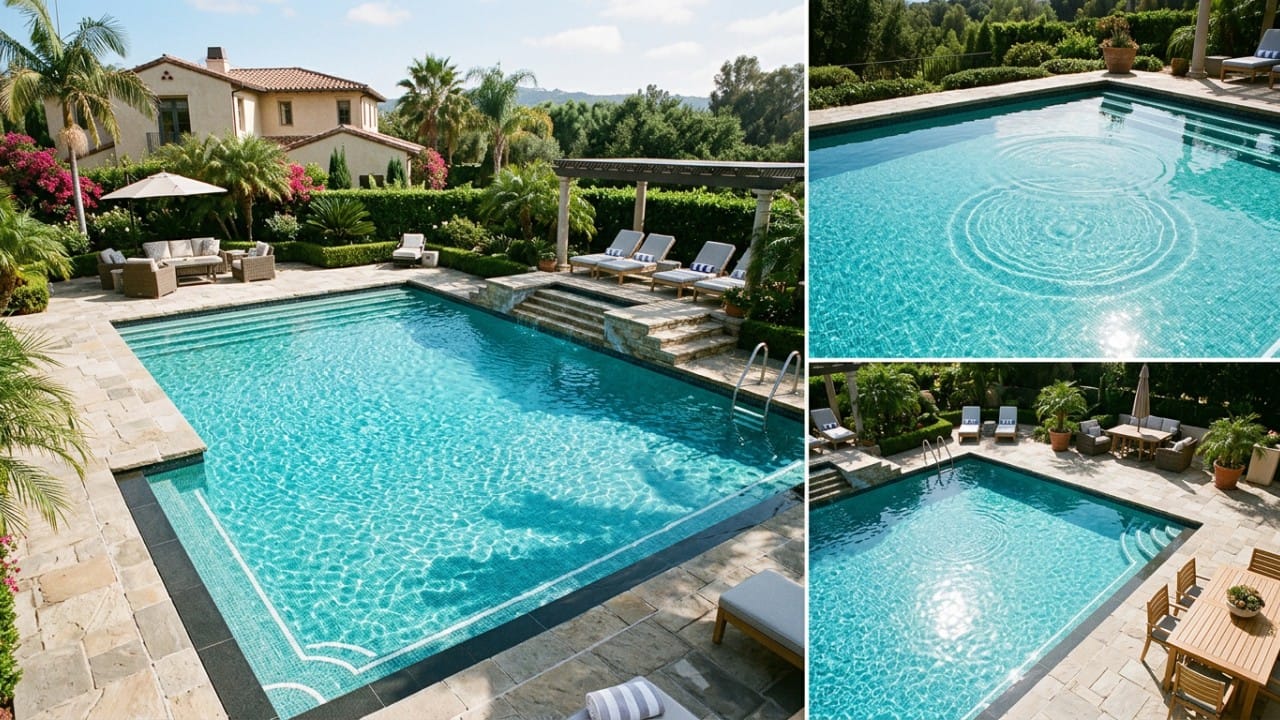
It can be incredibly frustrating to spend time and money balancing your chemicals, only to look out at a murky, uninviting swimming pool. If you find yourself dealing with cloudy pool water but your chemicals are fine, the missing puzzle piece is almost certainly your water circulation.
Think of your pool like the human body. The chemicals are the immune system, fighting off bacteria and algae. But your pump and plumbing act as the heart and veins. If the water isn't moving effectively, the chemicals can't reach the bacteria to do their job.
Understanding how water flows through your system is the absolute best way to maintain a crystal clear pool, reduce your chemical usage, and prevent frustrating algae blooms before they start.
How Does Water Circulate in a Pool?
To fix a circulation problem, you first need to know how the system is supposed to work.
The Anatomy of Your Pool's Plumbing
Your pool relies on a few key components working together in perfect harmony:
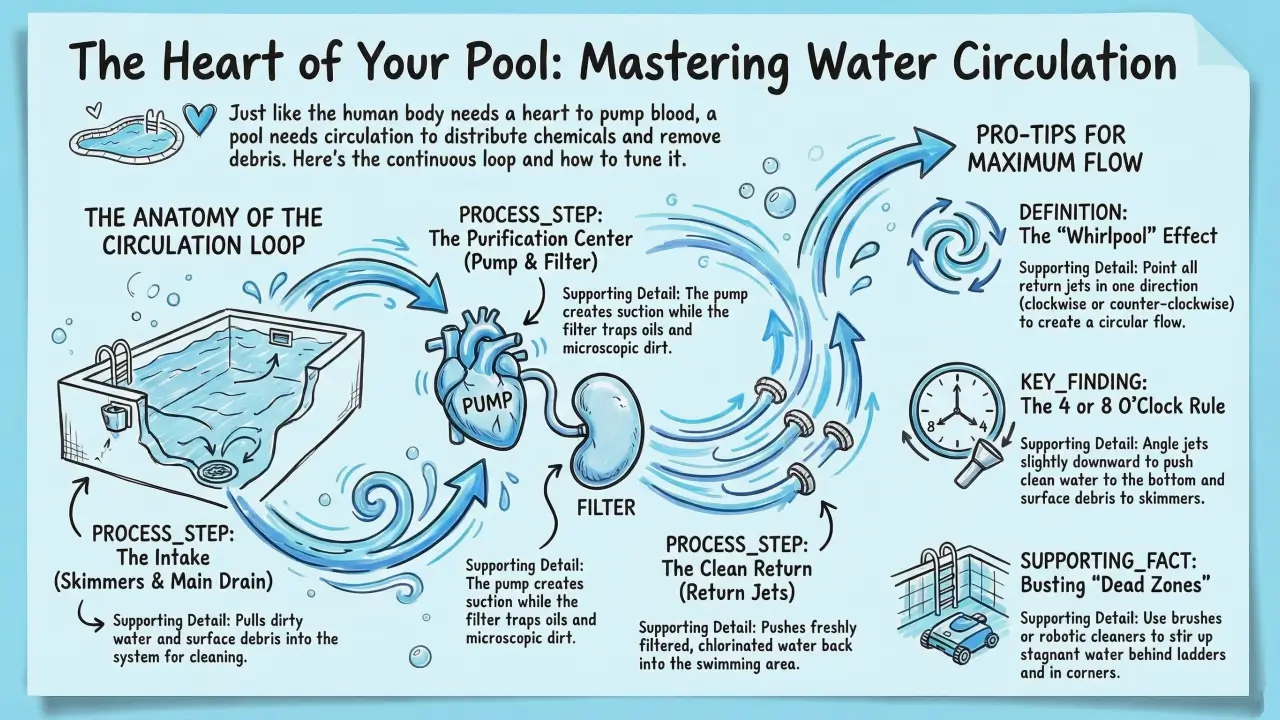
- The Skimmers and Main Drain: These act as the intake valves, pulling dirty water from the surface and the floor. Because skimmers sit at the waterline, it is crucial to keep your pool water level stable so they don't suck in air and damage your equipment.
- The Pump: The "heart" of the pool that creates the suction.
- The Filter: The "kidneys" that trap dirt, oils, and microscopic debris.
- The Return Jets: The out-flow valves that push clean, chlorinated water back into the pool.
The Journey of the Water
The process is a continuous loop. The pump actively pulls unfiltered water in through the skimmers and main drain. This water passes through the pump basket (catching large debris) and is forced into the filter (catching fine debris). Finally, the freshly cleaned and sanitized water is pushed back out into the main swimming area through the return jets.
Should Pool Water Always Be Circulating?
A common point of confusion for new pool owners is exactly how long the pump needs to run.
Understanding "Turnover Rate"
The goal of circulation isn't to run the pump 24/7; it is to achieve a proper turnover rate. The turnover rate is the amount of time it takes for your pump to push every single drop of water in your pool through the filter at least once. For a healthy pool, you want at least one complete turnover every single day.
How Long to Run Your Pump Daily
Running a standard pool pump all day and night will guarantee great circulation, but it will also result in a massive electricity bill. For most residential pools, running the pump for 8 to 12 hours a day is the sweet spot. This provides enough time for a complete turnover, ensuring the chemicals are thoroughly mixed and the water stays moving, without wasting energy.
What Causes Poor Water Circulation in a Pool?
If your water looks stagnant or you are constantly battling algae in the same corners, one of these three culprits is usually to blame.
Clogged Skimmer and Pump Baskets
This is the most common cause of restricted flow. When your skimmer baskets or the basket inside your pump housing are packed full of leaves, the pump has to work twice as hard to pull water through. If debris manages to bypass a broken basket entirely, it can cause a pool pump impeller clog, which will bring your circulation to a screeching halt.

A Dirty Pool Filter
Just like a clogged artery restricts blood flow, a dirty filter restricts water flow. As your filter traps more dirt and oils, the internal pressure rises. When the pressure gauge reads about 10 PSI higher than its normal clean starting pressure, water struggles to pass through, and your return jets will lose their power.
Poorly Aimed Return Jets
Your return jets are the steering wheel for your pool water. If they are pointed straight across the pool or directly at each other, the water streams will crash, creating turbulent areas but leaving the rest of the pool completely stagnant.
How to Get Better Water Circulation in a Pool
Improving your water flow doesn't require expensive plumbing changes. It usually just takes a few minutes of strategic tweaking.
Optimizing Your Return Jet Direction
To get the best circulation, you want to create a gentle, continuous whirlpool effect.
- Loosen the lock rings on your return jets.
- Point them all in the same direction (either clockwise or counter-clockwise).
- Angle them slightly downward (at about a 4-o'clock or 8-o'clock position). By pointing them down and in a circle, you push clean water toward the bottom while forcing the dirty water on the surface toward your skimmers.
Eliminating "Dead Zones"
Even with perfect jet placement, every pool has "dead zones"—areas where water naturally stagnates, such as behind ladders, on the top steps, and in sharp corners. Stagnant water is exactly where algae spores settle and bloom.
You need to physically move the water in these areas. A modern device like an Aiper cordless robotic pool cleaner is incredibly helpful here. Not only does it scrub the floor and walls, but the active movement and water propulsion from the robot naturally stir up these hard-to-reach dead zones, significantly boosting your overall circulation while doing the hard work for you.
Brushing and Vacuuming
If you don't use a robotic cleaner, you must manually brush those dead zones at least once a week. Brushing the steps, walls, and corners pushes stagnant water back into the main circulation path. Consistent brushing and vacuuming are foundational steps when learning how to look after a pool properly.
The Bottom Line on Water Flow
Chemicals alone cannot keep a pool clean. By keeping your baskets clear, maintaining your filter, and aiming your return jets to create a steady whirlpool, you maximize your pool's circulation. Good water flow means less time fighting algae, less money spent on shock treatments, and more time actually enjoying a crystal clear swim.