
What is an Infinity Edge Pool: Design, Costs, and the Australian Dream

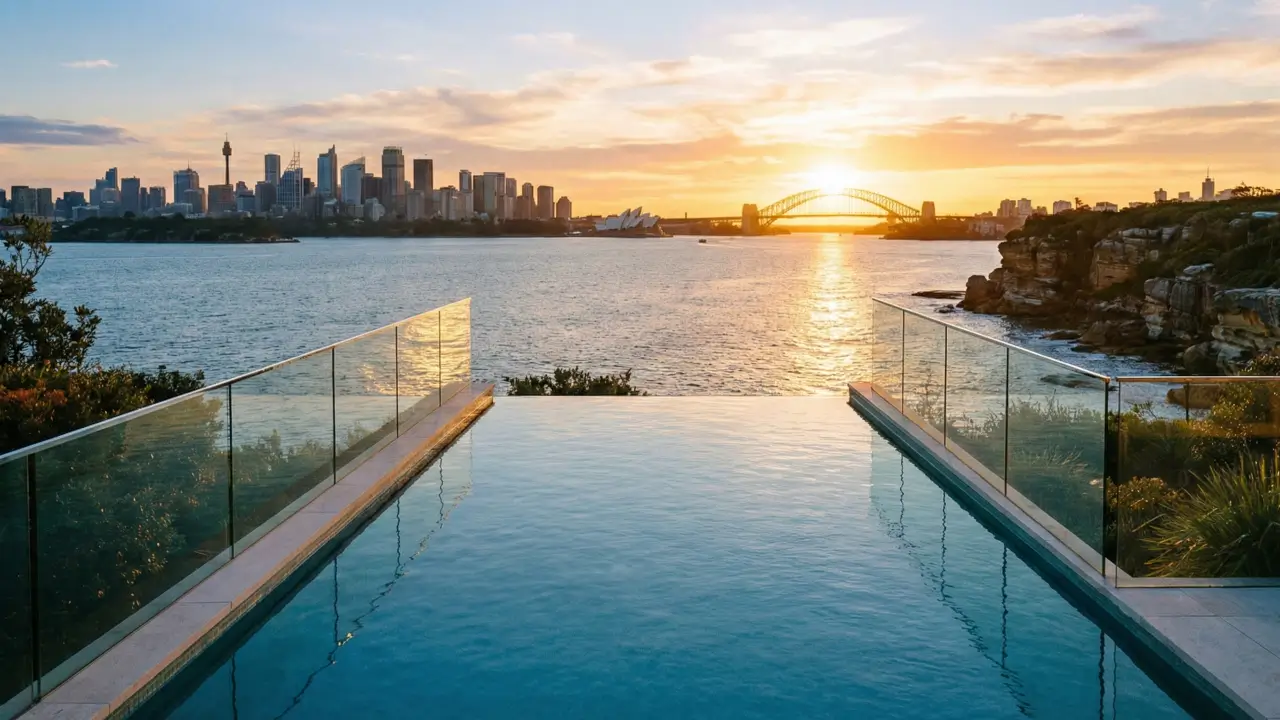
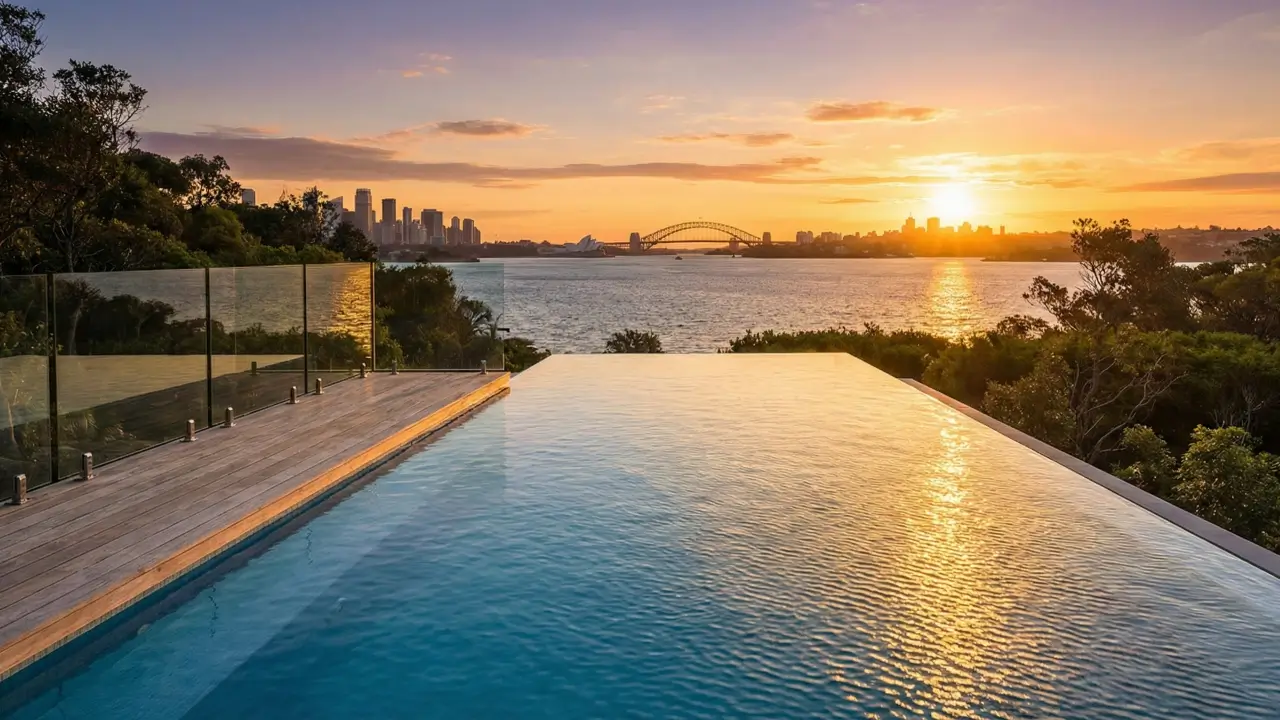
Anyone who has stood near an infinity pool knows the trick it plays on your eyes. The water slides off the far side and, for a moment, the pool and the horizon feel connected. You see this all over Australia, whether it’s a coastal deck or a hillside property.
Most people love the look, but many don’t realise how the effect is created. It takes more than a low wall to get that smooth run of water. Here’s a simple breakdown of what an infinity edge pool is, how it works, and what to keep in mind if you want one at home.
The Essential Definition: Decoding the Infinity Illusion
An infinity edge pool works by having one side set slightly lower than the rest. Water goes over the edge slowly. It makes a smooth line. You cannot see the wall under it. The water looks like it goes far, far away.
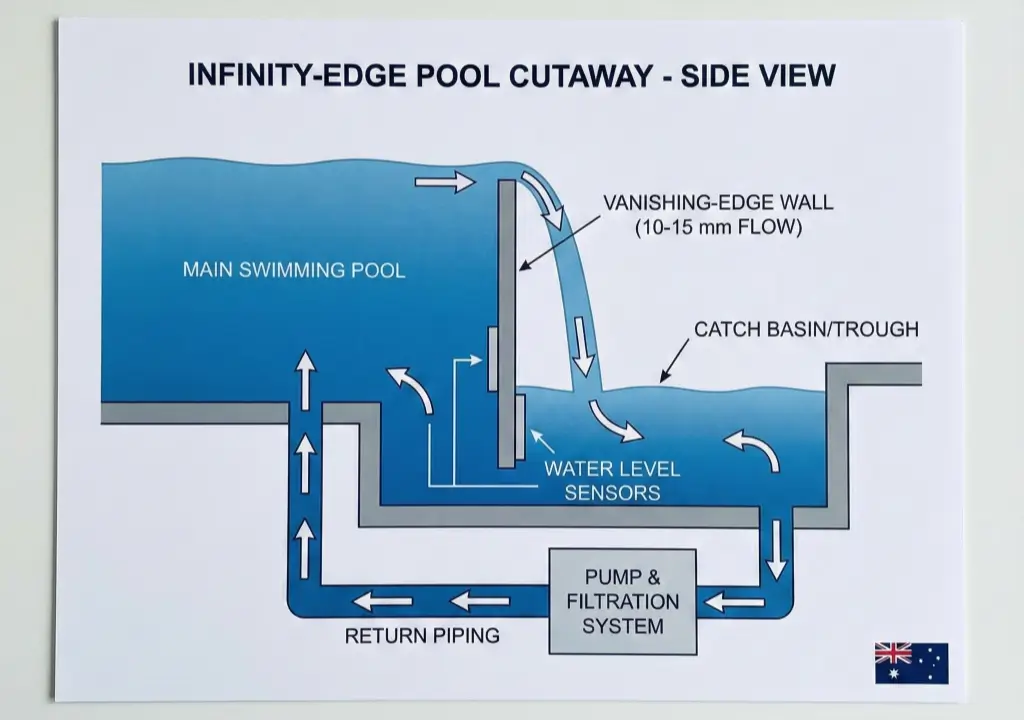
This style goes by a few different names. Some people call it a negative edge, zero edge, or wet edge pool, but they all follow the same basic idea and structure. First is the main pool where you swim. Then there’s the vanishing-edge wall, which acts like a controlled spillway. And underneath that, usually tucked away, is the catch basin where all that overflowing water lands.
Even though the design feels artistic, it still has to follow proper rules. Builders here rely on SPASA Australia’s standards and local council requirements to make sure everything, from the structure to the water chemistry, stays safe and stable. Those regulations are a big part of keeping the pool running properly.
The Mechanics: How Does an Infinity Pool Work?
The pool looks smooth because the water moves. The pump pushes water into the pool. When the water is high, it slides over the edge in a thin line.
Under the edge is a small tank. It catches the water. The water goes through a filter and back into the pool. It keeps going around. The pool has two jobs: one for swimming and one for the water that flows over the edge.
One detail that matters a lot in Australia is the size of that catch basin. The tank needs to be big. Wind, rain, and splashes from people make more water. The tank holds it so the pool does not get too empty or too full.
Weighing the Trade-Offs: Pros and Cons of Infinity Edge Pools
Pros
Infinity pools have a few clear benefits. The big one, of course, is the view. Without a hard edge in sight, the pool blends into whatever scenery you’ve got: ocean, hills, bush, or skyline. They also tend to lift the whole look of a property, which is why people often call them the “luxury” option. And the gentle spillover sound is surprisingly relaxing.
Cons
They do come with downsides. Infinity pools cost more because they have extra walls, pipes, and a water tank. They also lose more water, so you need to add water sometimes, especially in hot Australian summers. And the catch basin needs attention since it collects a lot of debris.
One important note: even though the edge looks open, the pool still needs proper fencing. All Australian states require compliant barriers; glass is common because it protects the area without blocking the view.
Australian Cost Estimate and Key Design Factors
Infinity pools tend to look the most dramatic on a sloping block because the drop-off helps sell the whole disappearing-edge effect. The downside is that a slope usually adds extra work. There’s more engineering, more support, and often more equipment, which is why the price can shift a lot from one site to another.
Estimated Costs (AUD)
| Feature | Low Estimate | High Estimate | Notes |
|---|---|---|---|
| Standard Concrete Pool (Baseline) | $50,000 | $80,000 | Basic size on a flat site |
| Simple Infinity Edge (Flat site) | $80,000 | $120,000 | Includes the catch basin and extra hydraulics |
| Complex Infinity Edge (Sloped Site or Difficult Access) | $120,000 | $200,000+ | Needs strong engineering and retaining work |
Concrete is the go-to choice for Australian infinity pools because it handles custom shapes and tough conditions well. Most builds are finished with tiles or pebblecrete for a cleaner look and easier upkeep.
Seamless Maintenance with Aiper: Best Practices for Infinity Pools
The catch basin is usually the messiest part of the whole setup. Leaves and dirt fall straight into it, and if too much builds up, the pumps can struggle to keep up. Clearing out that area from time to time helps everything run smoothly.
An automatic pool cleaner saves time by handling the main pool floor and walls. It keeps the bulk of the pool clean so you can focus on the overflow section instead of doing all of it by hand.
Infinity pools also tend to mix air into the water due to constant spillover. That extra aeration can nudge the pH around, so checking and balancing chemicals regularly keeps the water stable.
FAQs
Do Infinity Edge Pools Waste More Water in Australia's Climate?
They do lose more water than a still pool because of the movement and the exposed edge. Most new builds include auto-fill systems and wind sensors to help cut down unnecessary loss.
Are They Harder to Insure or Certify Locally?
Not really. The main concern is meeting barriers and building codes. Because the structure is more complex, approval may take longer, but the edge design itself doesn’t cause issues.
Can I Add an Infinity Edge to an Existing Pool?
It’s rarely possible. Adding one requires a new wall, basin, plumbing, and support work. By the time everything is rebuilt, it usually becomes a full replacement rather than an upgrade.
Conclusion
Infinity edge pools create a stunning look and a unique swimming experience, but they do take some work. You need careful planning, extra engineering, and regular maintenance to keep them running well. For many homeowners, all that effort pays off because the finished pool is truly one of a kind.
If you’re ready to explore the idea, reach out to a SPASA-certified builder for proper advice. And to keep your pool clean with less work, check out Aiper’s robotic cleaners — they’re built to handle the everyday jobs while you enjoy the view.
References
- Swimming Pool & Spa Association of Australia. (n.d.). Standards Australia. Retrieved November 28, 2025, from https://www.spasa.com.au/standards-australia
- Government of Western Australia - Building and Energy. (2025). Swimming pool and spa safety barrier requirements. Retrieved November 28, 2025, from https://www.wa.gov.au/organisation/building-and-energy/swimming-pool-and-spa-safety-barrier-requirements