
What Is Chlorine Lock? Causes, Fixes & Prevention Guide


It's very annoying when you add chlorine to the pool, test the water again, and the strip still displays zero. Or, even worse, the pool smells like chemicals yet doesn't look clear; it looks green or dull. Chlorine lock is the name for this puzzling circumstance.
A chlorine lock occurs when chlorine is present in the water but is chemically inert, meaning it can't clean the pool effectively, and germs and algae keep growing even after regular chemical treatments. Even when your chemical levels seem normal, this problem might keep your pool water hazy.
This article explains what causes chlorine lock, how pool stabilizer and pH affect it, and how to break it step by step, in accordance with Australian health rules.
What Causes Chlorine Lock in Pools?
Usually, chlorine lock happens because the chemicals are out of balance, not because there isn't enough chlorine. There are two primary reasons why most people have pools in their backyards.
Cause #1: Excess Cyanuric Acid (Pool Stabiliser)
Cyanuric Acid (CYA), commonly called pool stabiliser in Australia, acts like sunscreen for chlorine. It protects chlorine from being destroyed by UV rays, which is essential for outdoor pools. However, when stabiliser levels become too high, chlorine binds too tightly to the CYA and becomes ineffective at killing bacteria and algae.
Ideally, CYA levels should sit between 30–50 ppm (mg/L). Once levels climb above this range, especially beyond 70–100 mg/L, chlorine activity slows dramatically. You may measure chlorine in the water, but it is no longer able to sanitise properly.
According to HealthyWA guidelines, maintaining proper stabiliser levels (30–50 mg/L) is crucial because excess stabiliser significantly slows down chlorine’s sanitising effectiveness (Government of Western Australia, n.d.).
Cause #2: pH Imbalance
pH plays a major role in chlorine efficiency. If your pool’s pH drifts outside the 7.2-7.6 range, chlorine becomes far less effective. At higher pH levels, chlorine remains present but loses much of its disinfecting power. NSW Health and other state authorities consistently emphasise balanced pH as a core requirement for safe swimming water.
The Role of Combined vs. Free Chlorine
Chlorine lock is often confused with high combined chlorine, but the two are not exactly the same.
- Free Chlorine is the active form of chlorine available to sanitise the pool and kill harmful microorganisms.
- Combined Chlorine, also known as chloramines, forms when free chlorine binds with contaminants like sweat, urine, and ammonia. This chlorine is used up, ineffective, and is responsible for the strong “chlorine smell” many pool owners notice.
- Total Chlorine is simply the sum of free chlorine and combined chlorine.
When total chlorine appears high, but free chlorine is low, the pool is not being sanitised properly. For a detailed breakdown of these chemical differences, check our guide on total vs free chlorine.
How to Identify and Break Chlorine Lock (Step-by-Step)
Breaking the lock requires accurate testing and the correct solution based on the root cause.
Step 1: Test Your Water:
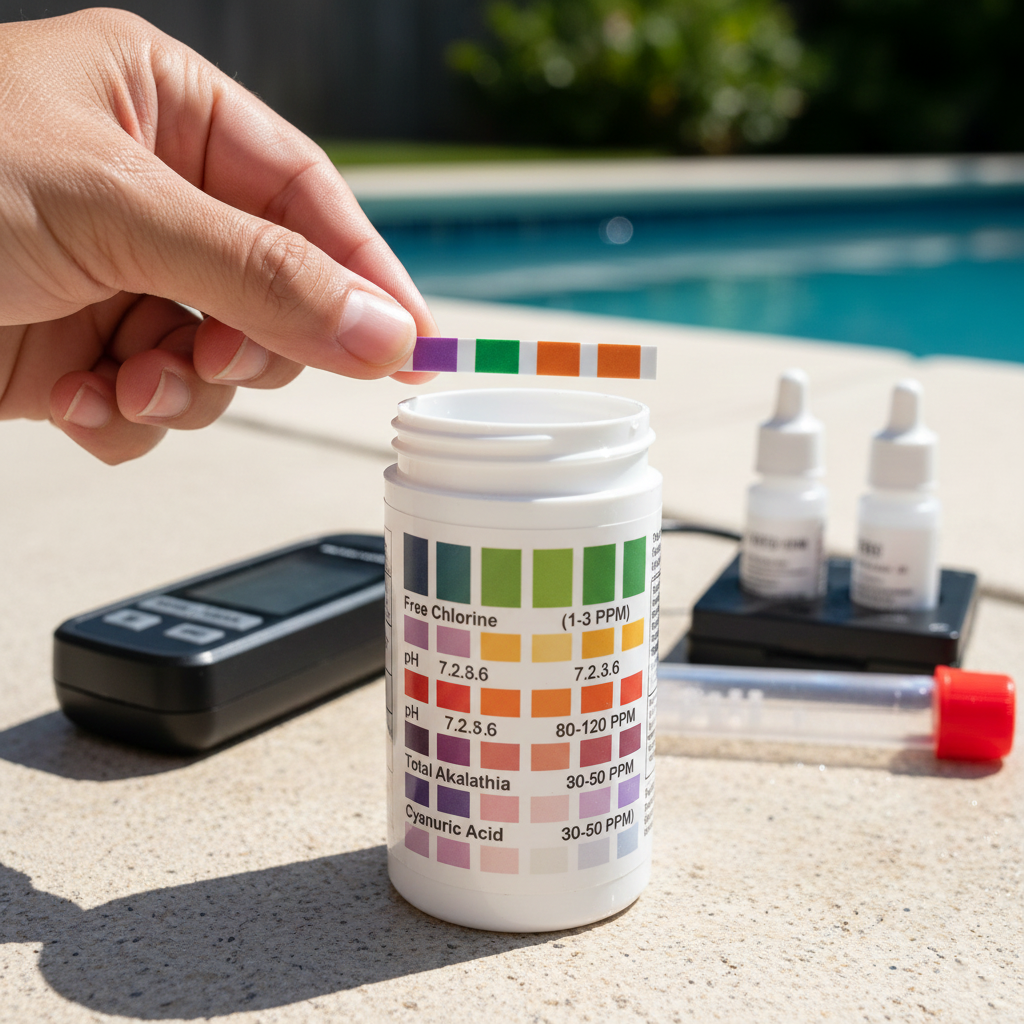
Start with a reliable liquid test kit rather than basic test strips. You need accurate readings for:
- Pool stabiliser (CYA)
- Free chlorine
- Combined chlorine
- pH
Without knowing your stabiliser level, it is impossible to diagnose the issue correctly.
Step 2: Determine the Solution:
Scenario A: High CYA (Stabiliser Lock)
If CYA levels are above 70–100 mg/L, adding more chemicals will not help. There is no chemical that quickly removes stabiliser. In this case, the only effective fix is partial draining and refilling with fresh water to dilute the CYA back into the safe range.
Scenario B: High Combined Chlorine (Chloramines)
If stabiliser levels are normal but combined chlorine is high, the pool requires breakpoint chlorination. This involves adding enough chlorine to oxidise and burn off the chloramines, restoring free chlorine levels.
Step 3: The Process (Shocking/Draining):
For high CYA, drain 20–30% of the pool water and refill with fresh water. Retest and repeat if necessary until stabiliser levels fall between 30–50 mg/L.
For chloramines, shock the pool using either a non-chlorine shock (oxidiser) or calcium hypochlorite, following manufacturer dosing instructions carefully.
Safety Warning: Always wear gloves and safety glasses when handling pool shock products, and never mix chemicals together.
Allow the pool to circulate for at least 24 hours before retesting.
Comparison: Chlorine Lock vs. Chlorine Demand
Chlorine lock is often mistaken for chlorine demand, but they are different problems with different solutions.
| Feature | Chlorine Lock | Chlorine Demand |
|---|---|---|
| Primary Cause | Excess Cyanuric Acid (CYA) | Algae, bacteria, organic debris |
| Chlorine Reading | High Total, Low Free | Zero Total, Zero Free (consumed instantly) |
| Solution | Drain/refill or specialised reducer | Breakpoint shock chlorine |
Chlorine demand occurs when contaminants are consuming chlorine faster than it can be added. Chlorine lock, on the other hand, is typically chemical inhibition caused by excess pool stabiliser.

How to Prevent Chlorine Lock: 3 Essential Tips
Tip 1: Test every week
Regular testing keeps the stabilizer and pH from going to dangerous levels. Australian health officials said that testing should be done once a week.
Tip 2: Take a shower before you swim.
Sweat, makeup, and body lubricants all make combined chlorine and chlorine demand go up. A brief rinse before you swim makes the chemicals in your pool much less harmful.
Tip 3: Get rid of debris and improve circulation
Leaves, bugs, and dirt make chlorine levels go up and make the water hazy. A robotic pool cleaner helps keep the floors and walls clean, makes the water flow better, and makes your sanitizing system work less hard. Cleaner water lets chlorine perform its work better instead of fighting dirt.
Conclusion
Chlorine lock isn't about adding more chlorine; it's about restoring balance. Chlorine stays active and works best when the pool stabilizer is between 30 and 50 mg/L, and the pH is within the proper range. Test your CYA levels today and find out what's wrong if your pool still looks sick even after frequent treatments.
Combining effective chemical management with automatic debris removal can make pool maintenance much easier and help keep your pool safe, transparent, and compliant year-round.
FAQ about Chlorine Lock
Q1: Can you swim in a pool with a chlorine lock?
No. It is unsafe because the water is not being sanitised effectively, even if chlorine appears present.
Q2: Does baking soda break the chlorine lock?
No. Baking soda raises alkalinity and pH. It does not lower stabiliser levels or remove combined chlorine.
Q3: How long does it take to fix a chlorine lock?
Partial draining can correct stabiliser lock quickly. Shocking for chloramines usually requires around 24 hours for levels to normalise.