
What Is Cycle and Soak? A Water-Saving Method Guide for Lawn

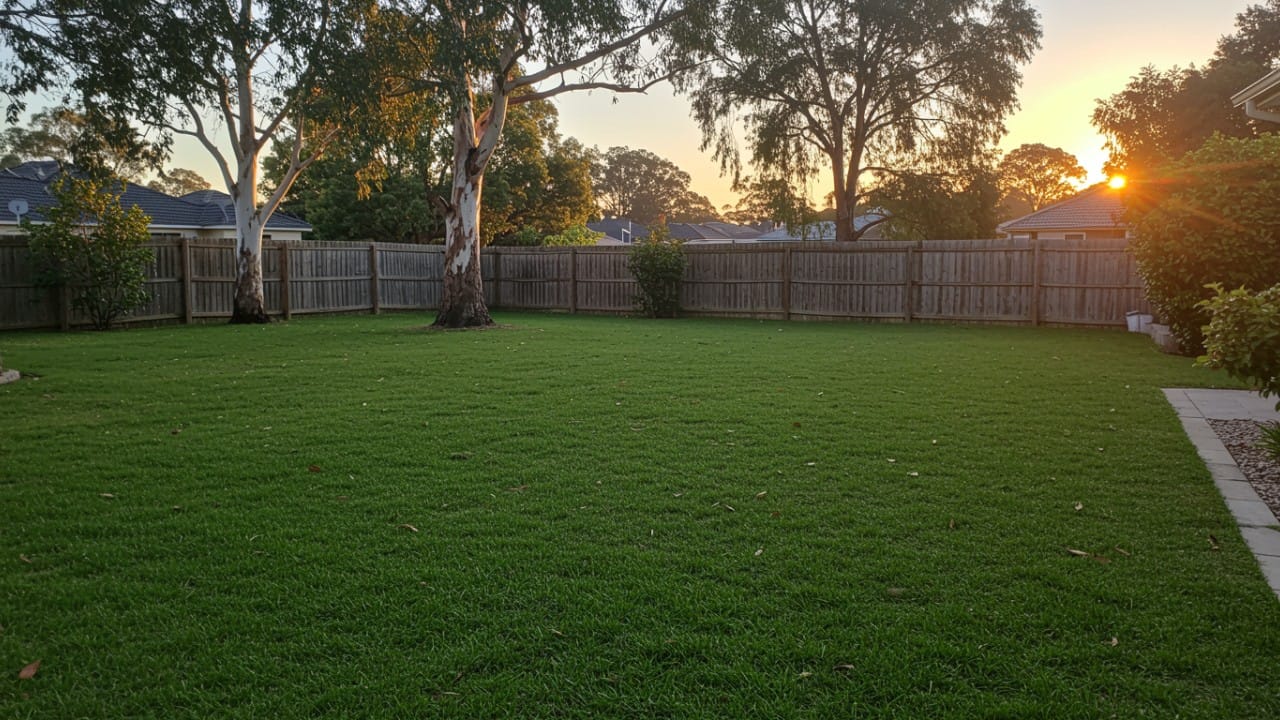
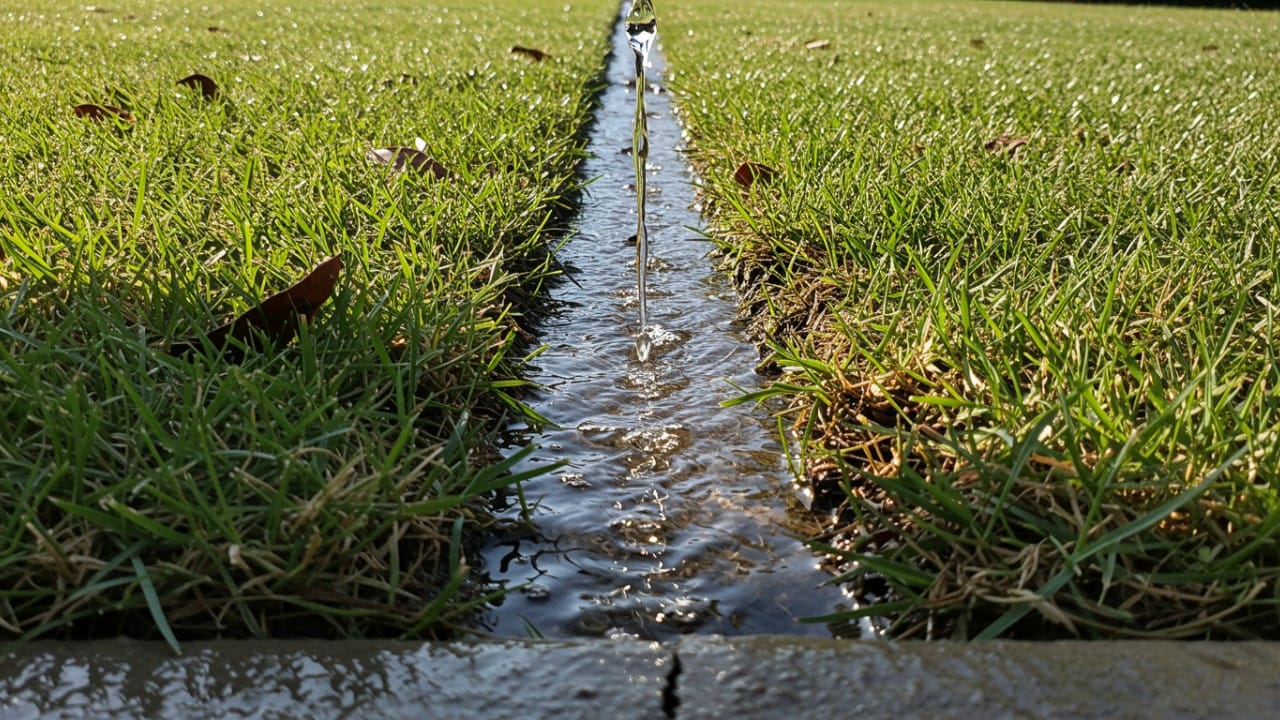
Have you ever watered your lawn, only to see a stream running down the driveway or pooling on the surface after just ten minutes? This is a common frustration for Australian homeowners, especially those dealing with compacted or clay-heavy soils. The problem isn't necessarily how much water you’re using, but how fast you’re applying it.
So, what is cycle and soak?
Think of cycle and soak as giving your lawn a chance to take a breath between drinks. Instead of flooding the grass for 20 minutes in one go, you split that time into shorter bursts—say, four rounds of 5 minutes, with a break in between. This pause allows the water to actually sink down to the roots rather than running off into the gutter. It’s a simple tweak that stops waste and trains your turf to be much tougher during the dry months.
What Is Cycle and Soak?
Why does this method work so well for Australian backyards? It comes down to "infiltration rate"—the speed at which your soil can absorb water.
Many gardens across Australia sit on clay soil or compacted turf, which has a very slow infiltration rate. Standard sprinkler systems often deliver water faster than the ground can drink it. Once the surface is saturated, any extra water becomes run-off, carrying valuable topsoil and fertiliser into the storm drains.
Authoritative Insight: According to the Australian National Botanic Gardens (ANBG), managing precise watering intervals is a professional standard. Their horticulturists use computerised systems to manage specific "cycle and soak" timing periods to avoid run-off and ensure deep soil penetration. If Australia’s national experts rely on this method to maintain their collections, it is certainly worth implementing on your own turf.
How to Set Up Cycle and Soak Irrigation Manually
If you are using a standard controller or manual timer watering, setting up a cycle and soak irrigation schedule requires a bit of maths and patience.
- Determine Run Time: Turn on your sprinklers and watch carefully. Note the exact minute water starts to pool or run off the lawn. This is your maximum "Cycle" time (e.g., 5 minutes).
- Calculate Total Needs: If your lawn needs 20 minutes of water total, and your max cycle is 5 minutes, you need 4 cycles.
- Set Soak Time: Allow at least 30–60 minutes between cycles for the water to percolate deep into the subsoil.
- Programme the Timer: Manually set four separate start times for that specific zone (e.g., 6:00 AM, 7:00 AM, 8:00 AM, 9:00 AM).
The Challenge: Manual Timer Watering vs. Smart Irrigation Systems
While the benefits are clear, the execution can be a headache. Standard timer watering requires you to manually calculate these infiltration rates and set multiple, rigid start times for every zone in your garden.
This manual approach has a major flaw: it’s static. If it rains, your timer doesn't know. If the soil is already moist, the timer still runs. This rigid scheduling can accidentally lead to waterlogging—the exact opposite of what you want.
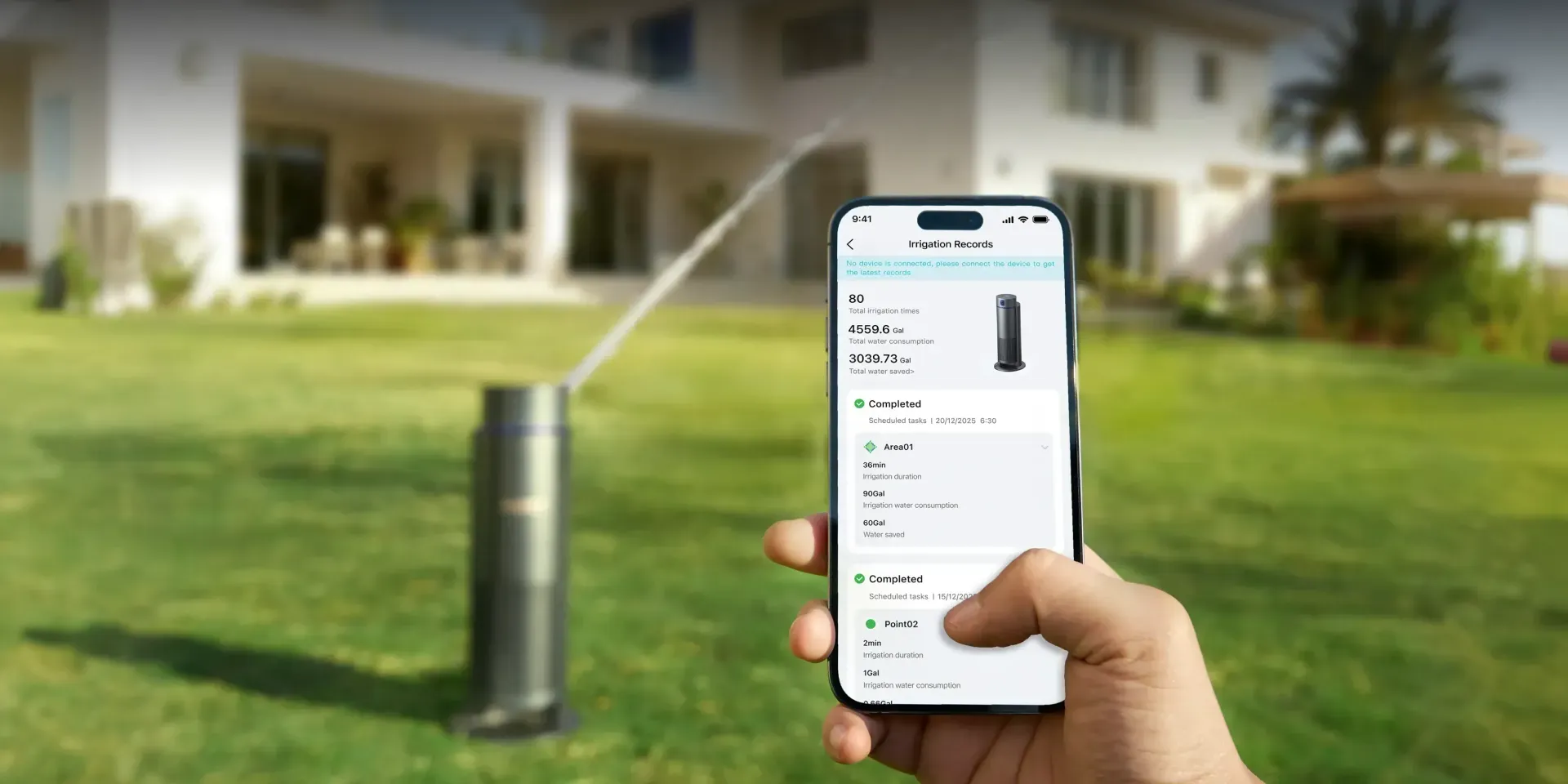
This is where smart technology changes the game. Advanced systems, such as the Aiper IrriSense 2, are designed to automate this complex logic. Instead of forcing you to do the maths and reprogramme your controller every season, a smart system uses local data—such as soil type (e.g. clay or sandy), slope steepness, and plant variety—to automatically create optimised cycle-and-soak schedules for each zone.
Comparison: Traditional Timer vs. Smart Cycle and Soak
| Feature | Traditional Timer Watering | Smart Irrigation |
|---|---|---|
| Setup Effort | High. Requires manual calculation and complex programming. | Low. Automatically calculates cycles based on soil input. |
| Precision | Low. Often "set and forget," leading to waste. | High. Dynamic adjustment to prevent run-off. |
| Weather Response | None. Waters even during rain unless a rain sensor is added. | Real-time. Skips cycles based on live weather data. |
| Slope Management | Difficult. Cannot easily adjust for steep areas. | Built-in. Adjusts soak times for sloped terrain automatically. |
Why Smart Irrigation is Best for Cycle and Soak
The brilliance of cycle and soak lies in the timing, and timing is exactly what smart controllers do best.
A system like the Aiper IrriSense 2 takes the guesswork out of the equation. Because you can input specific details about your garden—such as "Clay Soil" or "Steep Slope"—the system understands that your lawn cannot handle a 20-minute deluge. It automatically splits that watering event into smaller, digestible bites tailored to your specific landscape.
Furthermore, unlike a static manual timer, smart systems are connected to the cloud. If a summer storm rolls through Sydney or Melbourne, the system delays the next cycle automatically, saving you money on your water bill and preventing fungus growth from over-watering.
Frequently Asked Questions About Cycle and Soak
Is cycle and soak better for grass?
Yes. It encourages water to penetrate deeper into the soil profile. This forces grass roots to grow longer and deeper to reach the moisture, resulting in a healthier, more drought-tolerant lawn.
How long should you soak between cycles?
A general rule of thumb is 30 to 60 minutes. This gives the water enough time to move from the surface down to the root zone before the next application.
Does cycle and soak save water?
Absolutely. By preventing run-off and evaporation, you ensure that every drop of water you pay for is actually used by your plants, rather than flowing into the gutter.
Conclusion
Mastering cycle and soak is one of the most effective ways to maintain a lush Australian garden while being water-wise. While you can certainly achieve this with a stopwatch and a manual timer, the process is significantly more efficient when handled by a smart controller.
By upgrading to a system that automates these calculations, you ensure your lawn gets exactly the deep watering it needs—without the runoff, and without the hassle.
References:
- Australian National Botanic Gardens. (n.d.). Watering. Australian Government. Available at: https://www.anbg.gov.au/gardens/living/water/watering.html