
How Do Robotic Pool Cleaners Work? A Complete Guide to Cordless Technology

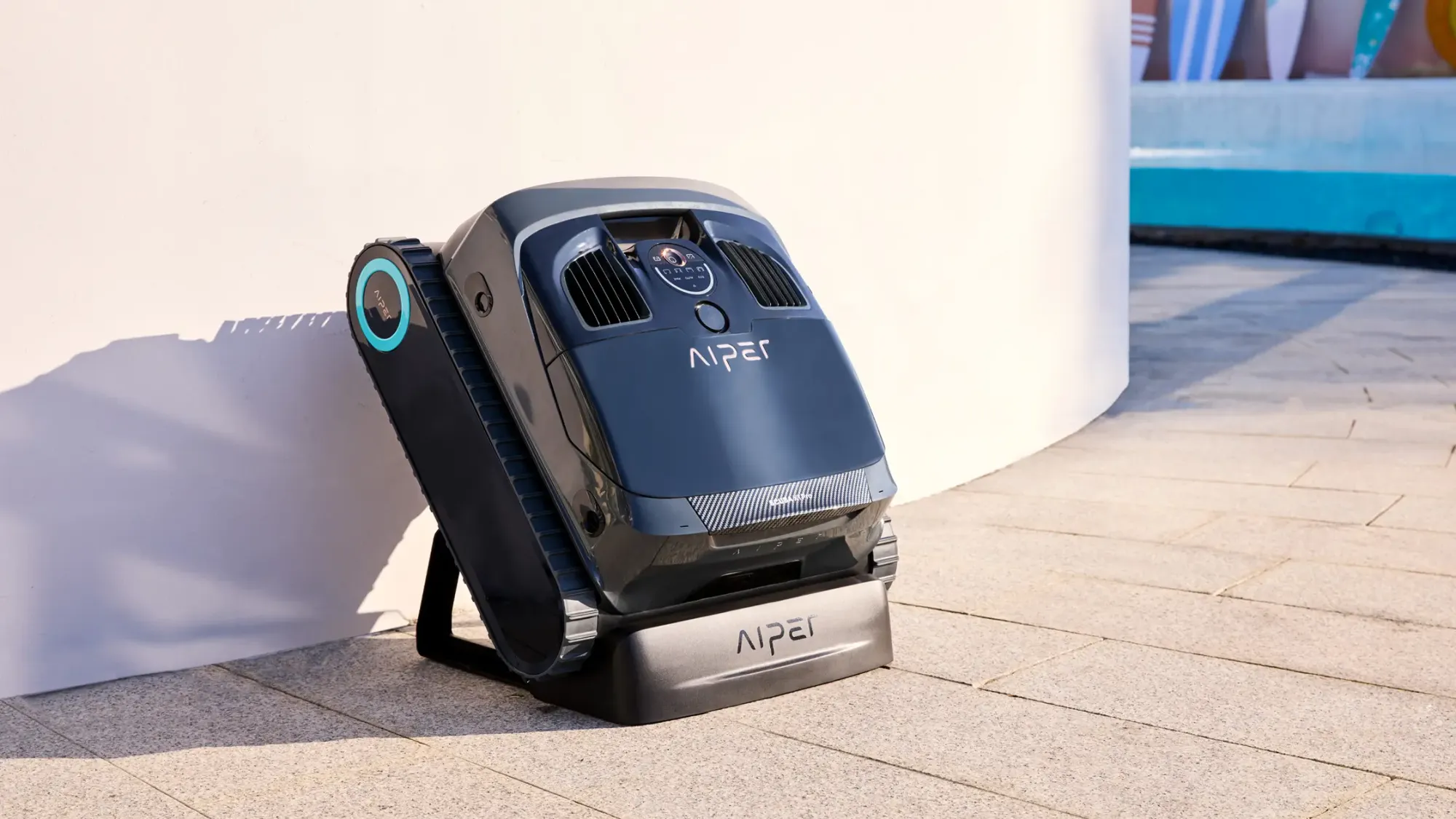
Let’s be honest: nobody installs a swimming pool just to spend their Saturday mornings scrubbing algae off the tiles. It is the one downside to pool ownership that the brochures rarely mention. But thankfully, the days of manually pushing a vacuum pole around for hours are largely behind us.
Understanding how do robotic pool cleaners work is your ticket to reclaiming those summer weekends. Unlike the clumsy suction cleaners of the past that choked your pool's filtration system, modern robotic cleaners are a different breed entirely. They are independent, surprisingly energy-efficient, and—crucially for Aiper users—increasingly intelligent.
In this guide, we are going to look under the hood (or rather, the waterproof casing) to see what makes these devices tick.
Understanding the Mechanics Behind Robotic Pool Cleaners
Think of a robotic pool cleaner as an underwater autonomous vehicle. It doesn't rely on your pool’s plumbing or pump to move. Instead, it carries everything it needs on board.
To get a clear picture of how they operate, we need to break down the three distinct systems working in harmony:
1. The Drive System (Movement)
While hydraulic cleaners are dragged around by a hose like a reluctant pet, robotic cleaners drive themselves. They use low-voltage electric motors to power tracks or wheels. This direct drive provides the torque needed not just to move across the floor, but to defy gravity—climbing vertical walls to scrub the waterline where oils and pollen tend to gather.
2. Active Scrubbing and Filtration
As the robot moves, it’s not just sucking; it’s scrubbing. Rotating brushes agitate the surface to lift stubborn dirt. An internal pump then draws this debris-filled water into the unit.
Here is the clever part: instead of sending that dirty water to your pool filter, the robot traps it in its own internal basket. Many utilize fine filtration (often down to 3 microns) to capture silt you can barely see. The result? Clean water is pumped back out, which actually helps circulate your chemicals more effectively.
3. Cutting the Cord
Historically, robots were tethered by long, floating power cables that loved to get tangled. How do robotic pool cleaners work without that constant power supply? The answer lies in high-density lithium-ion batteries.
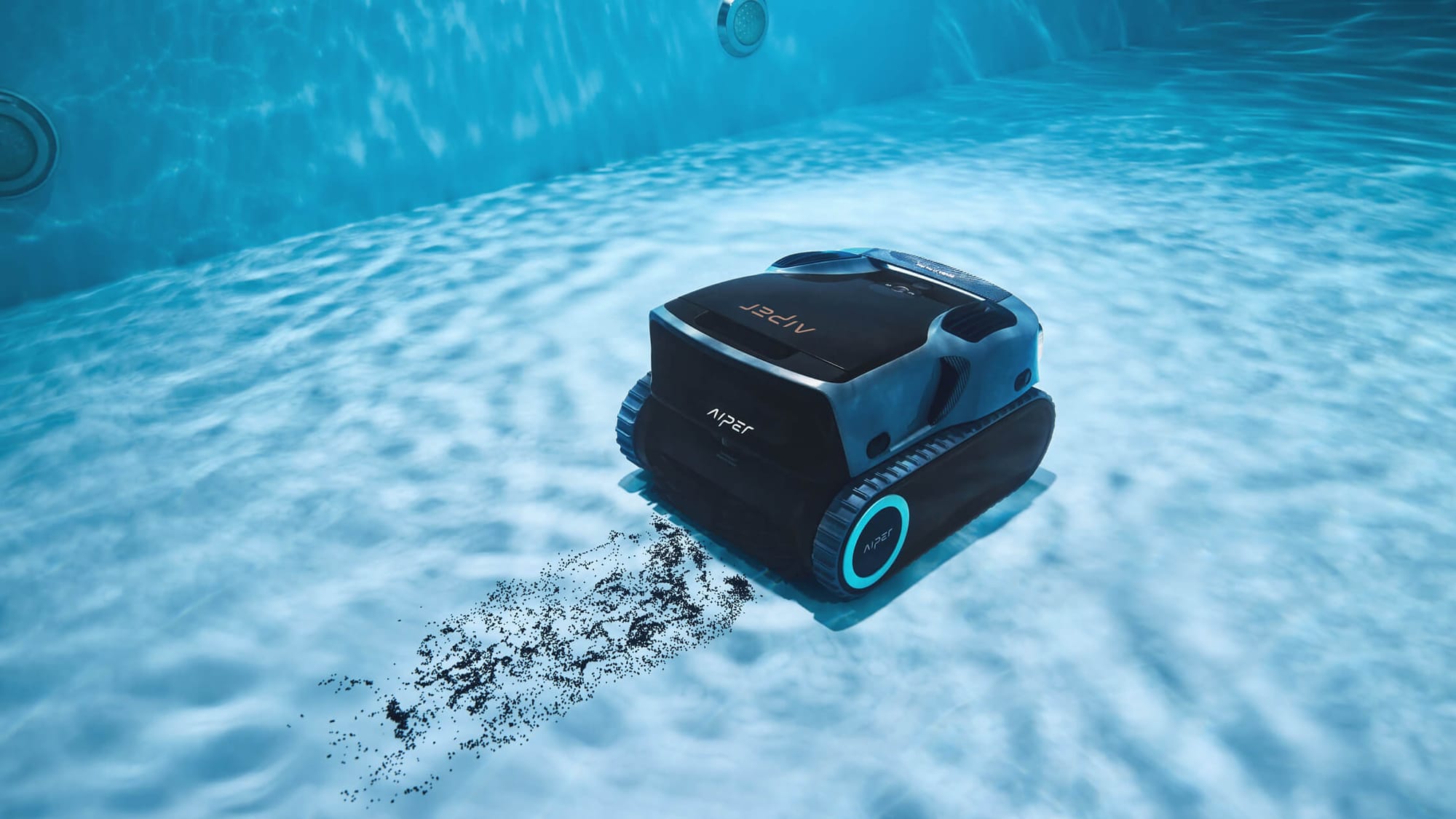
Models like the Aiper Scuba X1 Pro Max have ditched the tether completely. This eliminates the "spaghetti junction" of cables on your patio, offering a genuine "drop and go" experience.
Safety Insight: The Royal Society for the Prevention of Accidents (RoSPA) frequently highlights the risks of electricity near water. By removing trailing cables and extension leads from the poolside, cordless cleaners inherently lower trip hazards and electrical risks.
How Robotic Pool Cleaners Navigate and Map Your Pool
If you bought a robotic cleaner ten years ago, you probably remember it bouncing off walls randomly like a pinball. It worked, eventually, but it wasted a lot of energy.
Today's technology is unrecognisable. The difference between a budget gadget and a premium machine is its "brain."
The Scuba X1 Pro Max, for example, doesn't just wander; it observes. It uses OmniSense™+ sensors—a sophisticated blend of ultrasonic and infrared tech—to build a real-time map of your pool.
The Logic Behind the Path
Instead of chaos, you get calculation.
- Scanning: The moment it enters the water, it gauges the environment.
- Planning: It calculates the most efficient route, typically an "S" or "N" pattern, ensuring it doesn't go over the same clean spot twice while missing a dirty one.
- Adapting: Spot a drain cover or a forgotten diving toy? It navigates around it without losing its orientation.
This smart navigation is why modern units can clean an entire pool on a single battery charge—they aren't wasting power driving in circles.
Why Cordless Robots Beat Traditional Suction Devices
If your current cleaning routine involves connecting a hose to your skimmer box, you might be surprised to learn you are likely wasting electricity.
Because robotic cleaners operate independently, they take the strain off your main pool pump. This reduces the backwashing frequency and extends the life of your expensive pool equipment.
Data referenced by the European Union of Swimming Pool and Spa Associations (EUSA) suggests that energy efficiency is the new frontier in pool maintenance. An independent robot can reduce overall energy consumption by nearly 80% compared to pressure-side cleaners that demand booster pumps.
At a Glance: Hydraulic vs. Cordless
| Feature | Old-School Hydraulic Suction | Aiper Scuba X1 Pro Max (Cordless) |
|---|---|---|
| Power Source | Your Pool's Main Pump | On-board Lithium-ion Battery |
| Where does dirt go? | Into your pool filter (clogging it) | Into an internal basket (easy to empty) |
| Can it climb walls? | Rarely | Yes (Dual-drive motors) |
| Navigation Style | Random / Dragged by hose | Intelligent 3D Mapping |
| Setup Time | High (Wrestling with hoses) | Zero (Drop it in) |
Best Practices for Operating Your Cordless Pool Cleaner
Even the smartest robot needs a little human help to perform at its peak. Regardless of which model you own, following these universal steps will ensure longevity and better results:
Step 1: Charge and Check
It sounds obvious, but ensure the battery is fully topped up before use. Most modern cordless cleaners feature a sealed charging port to prevent corrosion—however, it is vital to ensure this port is bone dry before you plug the charger in.
Step 2: The Submersion Technique
Don't just throw the robot in. Lower the unit into the water and tilt it slightly from side to side. You will see bubbles rising. This is crucial—you are letting the air escape from the internal cavities. If you skip this, the robot might float or lack the traction needed to grip the floor properly.
Step 3: Select the Appropriate Mode
Different messes require different approaches. If your pool only has light debris on the bottom, a 'Floor Only' cycle saves battery. for a thorough spring clean, ensure you select a mode that covers walls and the waterline to scrub away oils.
Step 4: Rinse and Repeat
When the cycle ends, advanced models will automatically park themselves near the pool edge for easy retrieval. Pro Tip: The Pool Water Treatment Advisory Group (PWTAG) notes that organic debris breaks down into phosphates, which feed algae. By emptying your robot's basket immediately after use, you are physically removing that food source from your water.
Why Is My Cleaner Not Working?
If your robot seems sluggish or isn't climbing walls, it is rarely a mechanical fault. Check these two culprits first:
- The Chemistry: Is your pool floor slippery? If you have an algae bloom or high pH, the tracks can't grip. The European Chemicals Agency (ECHA) advises keeping biocidal products at balanced levels—not just for hygiene, but to protect the material integrity of your pool equipment.
- The Filter: A clogged basket restricts water flow. Without strong flow, the suction (Venturi effect) drops, and the robot loses its "stickiness" to the walls.
The Bottom Line
So, to answer the question: how do robotic pool cleaners work? They work by combining the independence of a battery-powered vehicle with the precision of smart navigation sensors.
The shift to cordless technology isn't just a gimmick; it’s about safety, efficiency, and ease. By eliminating hoses and cables, the Aiper Scuba X1 Pro Max offers a pool care experience that is actually... manageable.
If you are ready to stop scrubbing and start swimming, it might be time to cut the cord. Check out the Aiper Scuba X1 Pro Max and see the difference for yourself.
FAQ About Robotic Pool Cleaner Technology
Q: How do robotic pool cleaners work without hoses?
A: Unlike old-fashioned cleaners, modern robots use an internal battery and motor to create their own suction. They are completely self-contained.
Q: How long will a cordless cleaner run for?
A: It varies, but the Aiper Scuba X1 Pro Max manages up to 180 minutes on a single charge—plenty of time for most residential pools in Europe.
Q: Can I leave the robot in the pool?
A: While they are waterproof, it is best to remove them after the cycle to charge them and rinse the filter. This also prevents long-term chemical exposure to the casing.
References
- European Chemicals Agency. (n.d.). Understanding Biocidal Products Regulation. ECHA. Retrieved from https://echa.europa.eu/regulations/biocidal-products-regulation/understanding-bpr
- European Union of Swimming Pool and Spa Associations. (n.d.). About EUSA. EUSA. Retrieved from https://www.eusaswim.eu/
- Pool Water Treatment Advisory Group. (2018, February). Phosphate in Pool Water (TN37). PWTAG. Retrieved from https://www.pwtag.org/phosphate-in-pool-water-february-2018/
- Royal Society for the Prevention of Accidents. (n.d.). Water Safety Advice. RoSPA. Retrieved from https://www.rospa.com/leisure-safety/water