
Can You Add Shock and Algaecide at the Same Time?


If you are staring at a green pool, your instinct is likely to throw every chemical you have at the water to kill the algae as fast as possible. You might be standing poolside with a bag of shock in one hand and a bottle of algaecide in the other, wondering if you can pour them in together to save time.
The short answer is no. You should not add shock and algaecide at the same time.
While mixing them (in the pool water) won't cause a dangerous explosion, it is a chemical mistake that will render your algaecide useless. Doing so effectively throws your money down the drain and delays the clearing of your pool.
Here is why patience is critical to your wallet and your water clarity, and exactly how long you need to wait between chemicals.
Why You Should Not Mix Shock and Algaecide
To understand why these two chemicals don't get along, you have to look at what they are designed to do.
Pool shock (calcium hypochlorite or liquid chlorine) is a powerful oxidizer. Its job is to attack and destroy organic contaminants—bacteria, debris, and algae.
Algaecide is typically made of polymers (long chains of molecules) or metals (like copper) designed to disrupt the cell membranes of algae.
The Conflict: When you add algaecide to water that has just been shocked, the high level of chlorine attacks the algaecide polymers just like it attacks bacteria. The shock breaks the algaecide down before it has a chance to work on the algae.
- The Result: You waste the bottle of algaecide.
- The Risk: If you use a copper-based algaecide, adding it to high levels of chlorine can oxidize the copper, leading to black or unsightly stains on your pool liner or plaster.
Safety Warning: Never mix chemicals together in a bucket or container outside of the pool. As noted in our guide on how to store pool chemicals, mixing dry chlorine and algaecide can create a volatile, dangerous reaction. Always add chemicals directly to the pool water, one at a time.
The Correct Order: How Long After Shock to Add Algaecide?
The most effective way to treat a green pool is to follow a strict order of operations. You must kill the bloom first, then prevent it from coming back.
Step 1: Shock the Pool First
Your first line of defense against an active algae bloom is chlorine.
- Balance your pH: Before adding chemicals, test your pool water. You need to ensure the pH is between 7.2 and 7.6. If it is too high, learn how to lower pH in your swimming pool to ensure the chlorine can work effectively.
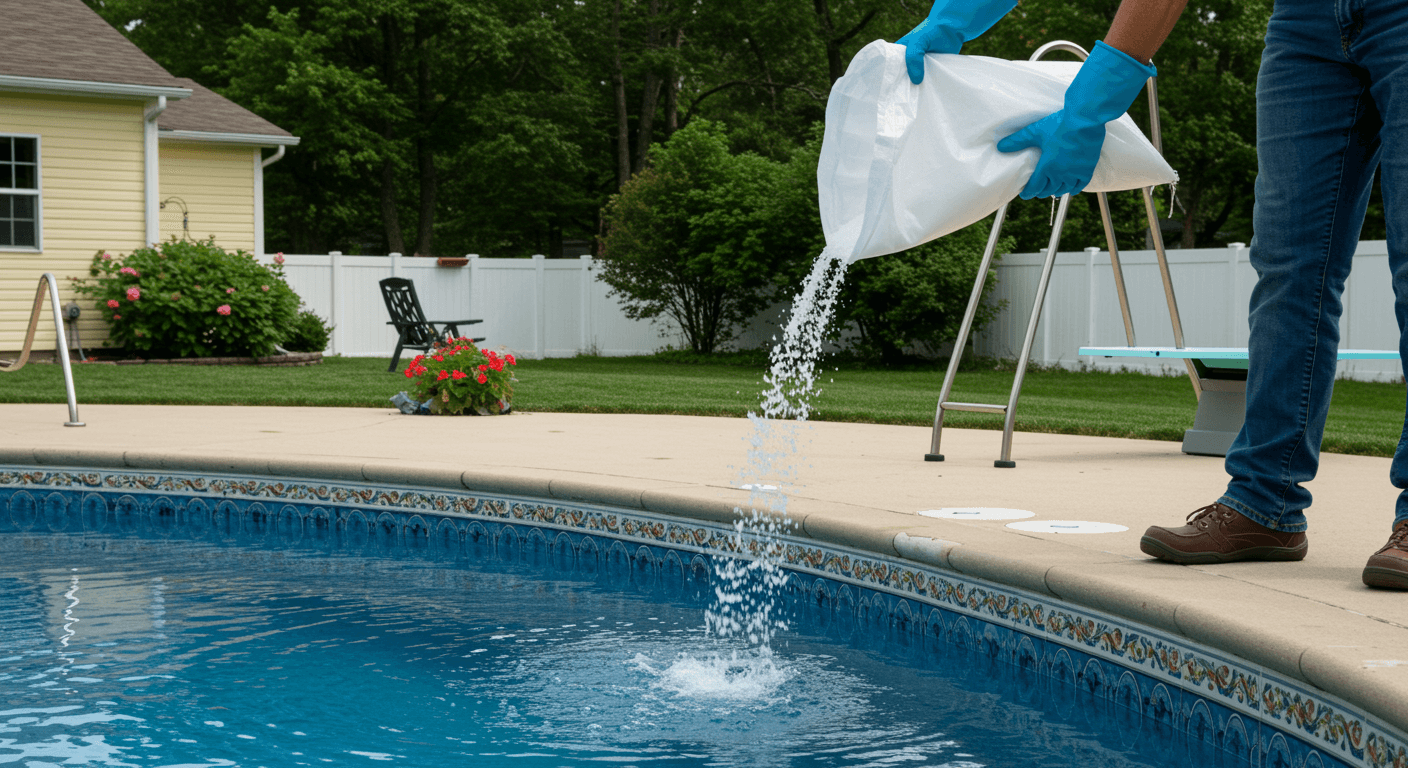
- Add your shock: Follow the package instructions (usually at dusk or night to prevent the sun from burning it off). If you are dealing with a severe bloom, you may need to SLAM your pool (Shock Level and Maintain) to get the job done.
- Run your pump: Circulate the chemical throughout the system.
Step 2: The Waiting Period
This is the most critical step. You cannot add the algaecide immediately.
How long should you wait? Ideally, you should wait 24 hours after shocking the pool before adding algaecide. This is also a good general rule regarding how long after shock you can swim.
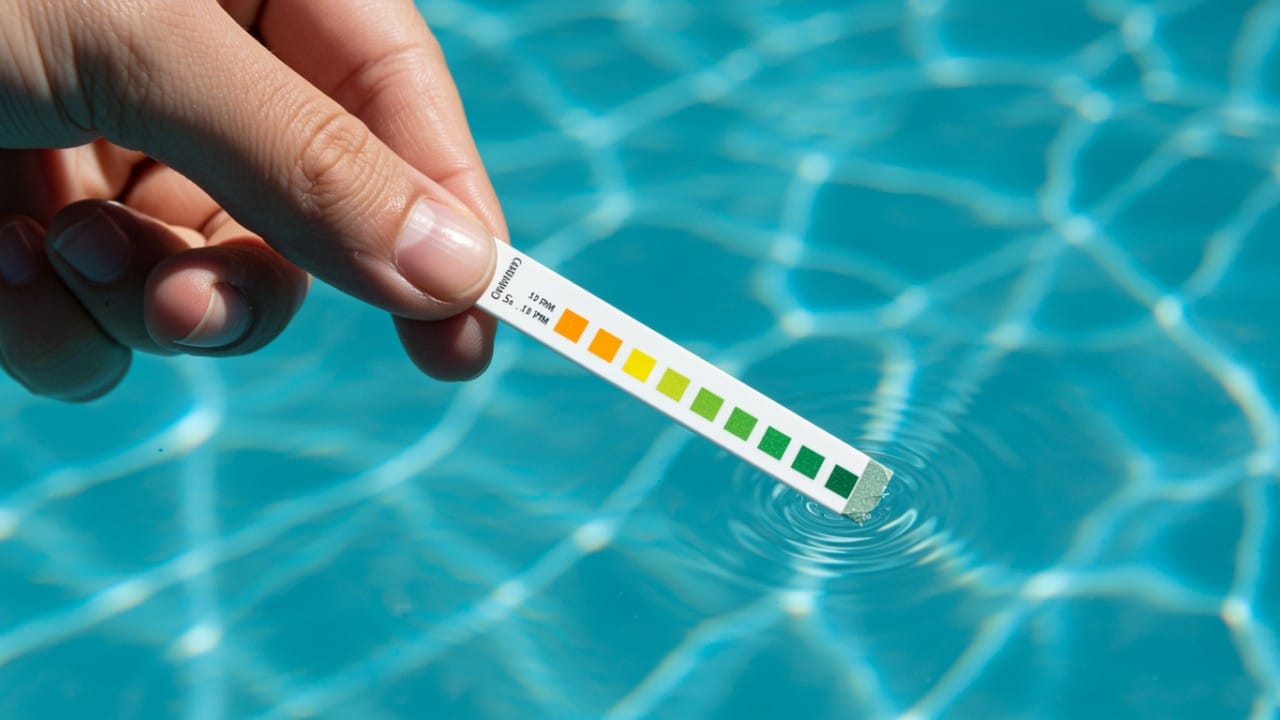
If you want to be precise, use a test strip or liquid test kit. You are waiting for the chlorine levels to drop back down to the normal swimming range—typically below 5.0 PPM (parts per million). Once the chlorine level has dropped, it is safe to introduce the algaecide.
Step 3: Add Algaecide
Once the chlorine levels have subsided, pour in your algaecide. It will now act as a preventative shield, ensuring that any surviving algae spores cannot reproduce, and helping to prevent future blooms.
Shock vs. Algaecide: What Is the Difference?
A common source of confusion is understanding which chemical handles which job.
- Pool Shock is the "Killer": Shock is for corrective action. If your water is green, cloudy, or has a visible bloom, you need shock. It kills the live algae instantly.
- Algaecide is the "Shield": Algaecide is best for preventative action. It is excellent at keeping a clean pool algae-free, or as a finishing touch after you have shocked the pool. However, if you are dealing with tough variants like black algae in your pool, algaecide alone is rarely enough.
The "Green to Clean" Workflow: Removing Dead Algae
Once you have successfully shocked the pool and added your algaecide, the water might turn from green to a cloudy blue or gray. You may wonder, why is my pool cloudy? This is actually good news—it often means the algae is dead.
However, dead algae doesn't just disappear. It turns into fine, gray dust that settles on the floor of your pool. Chemical treatment is only half the battle; physical removal is the other half.
The Cleanup Process:
- Run the Filter: Keep your pump running 24/7 until the water clears.
- Clean the Filter: You will likely need to backwash your pool filter or clean your cartridge filter frequently as it traps the dead algae.
- Vacuum the Debris: This is the most labor-intensive part. The dead algae on the floor must be removed.
If you are using a manual vacuum, move slowly to avoid stirring the dust back up into the water. For many pool owners, this is where modern maintenance tools make a significant difference.
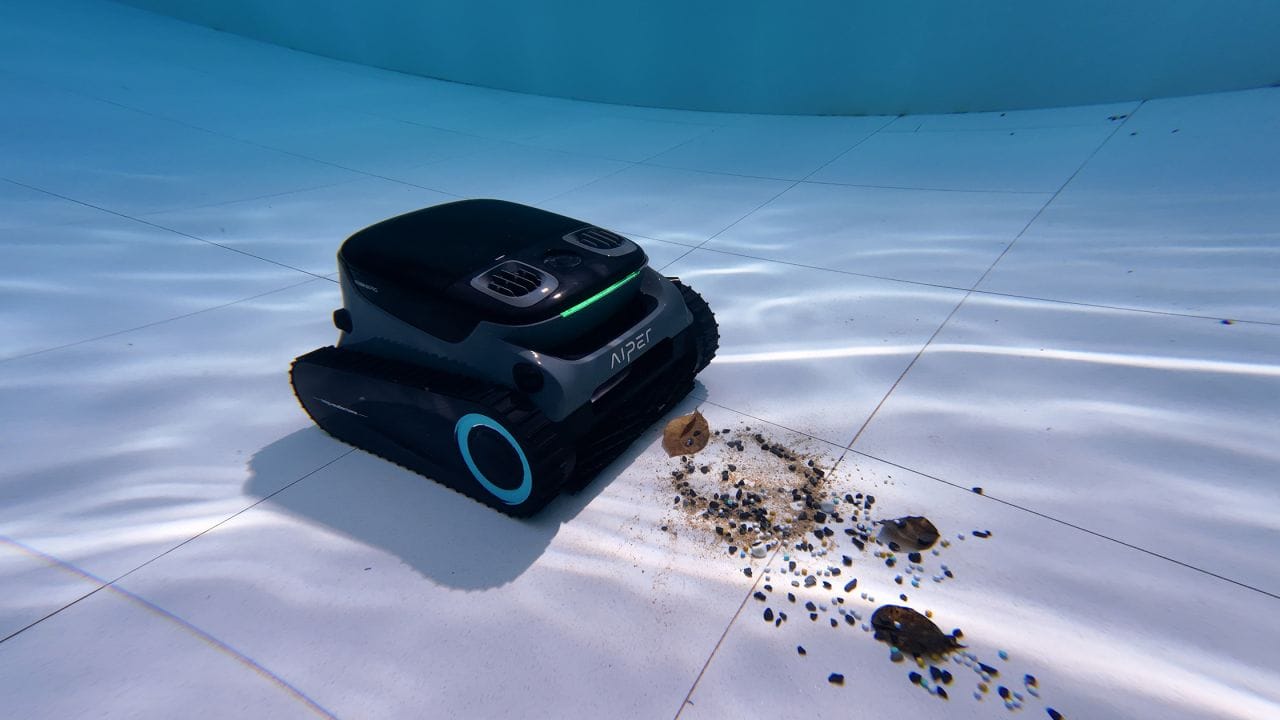
Comparing a robotic pool cleaner vs. a handheld pool vacuum, the robot offers a distinct advantage here. Devices like those from Aiper can scrub the floor and capture debris in their own onboard canisters. This prevents your main pool filter from clogging up as quickly and saves you hours of manual labor. If you are wondering if robotic pool cleaners are worth it, the time saved during algae cleanup alone often justifies the investment.
Summary: Save Your Money, Split Your Chemicals
Pool maintenance can sometimes feel expensive, but many costs are avoidable. One of the best pool maintenance money-saving tips is simply following the correct order of operations.
By resisting the urge to pour everything in at once, you ensure that every chemical you buy actually does its job. Shock kills the algae, and—after a 24-hour wait—algaecide keeps it away. Add in a robotic pool cleaner to handle the heavy lifting, and you will have a crystal clear pool with a fraction of the effort.
FAQ About Pool Chemicals
What if I accidentally added shock and algaecide at the same time?
Don't panic. You haven't ruined your pool. You likely just wasted the algaecide. The shock will destroy the algaecide, so you simply won't get the benefit of the algae prevention. Wait until the chlorine levels drop (usually 24 hours) and then add a new dose of algaecide.
Can I mix chemicals when closing my pool?
When you are learning how to winterize a pool, efficiency is key, but the chemistry rules still apply. Add your winter shock, circulate the water, wait for the levels to stabilize, and then add your winter algaecide before covering the pool.
Do I really need algaecide if I shock weekly?
If you maintain proper chlorine levels and shock weekly during the summer, you may not strictly need algaecide, but it serves as a great insurance policy. It covers you if your chlorine levels accidentally drop due to heavy rain or a hot sunny day.