
Can You Put Bleach in a Pool? The Safe Way to Sanitize

It’s a scenario every pool owner knows: You need to shock the pool, but the local pool store is closed, or perhaps you’re simply tired of the markup on "specialized" pool chemicals. Standing in the laundry aisle of the grocery store, you wonder: Is this bottle of bleach the same thing as the expensive jug at the pool shop?
The frustration is valid. Pool maintenance money-saving tips are essential because costs add up, and the chemical names can be confusing.
The short answer is yes, you can use bleach in your pool. However, there is a critical "catch" regarding the type of bleach you buy. Using the wrong bottle can turn your backyard pool into a foamy disaster.
Here is everything you need to know to use household bleach to sanitize your pool safely.
The Short Answer: Yes, Household Bleach is Safe for Pools
Household bleach and "liquid pool chlorine" are, chemically speaking, almost identical. They both rely on the same active ingredient to kill algae and bacteria: Sodium Hypochlorite.
If you look at the ingredient label on a jug of pool shock and a bottle of regular bleach, you will see that name on both. This means that regular, plain bleach will sanitize your pool just as effectively as the product sold in pool stores.
However, you must strictly avoid:
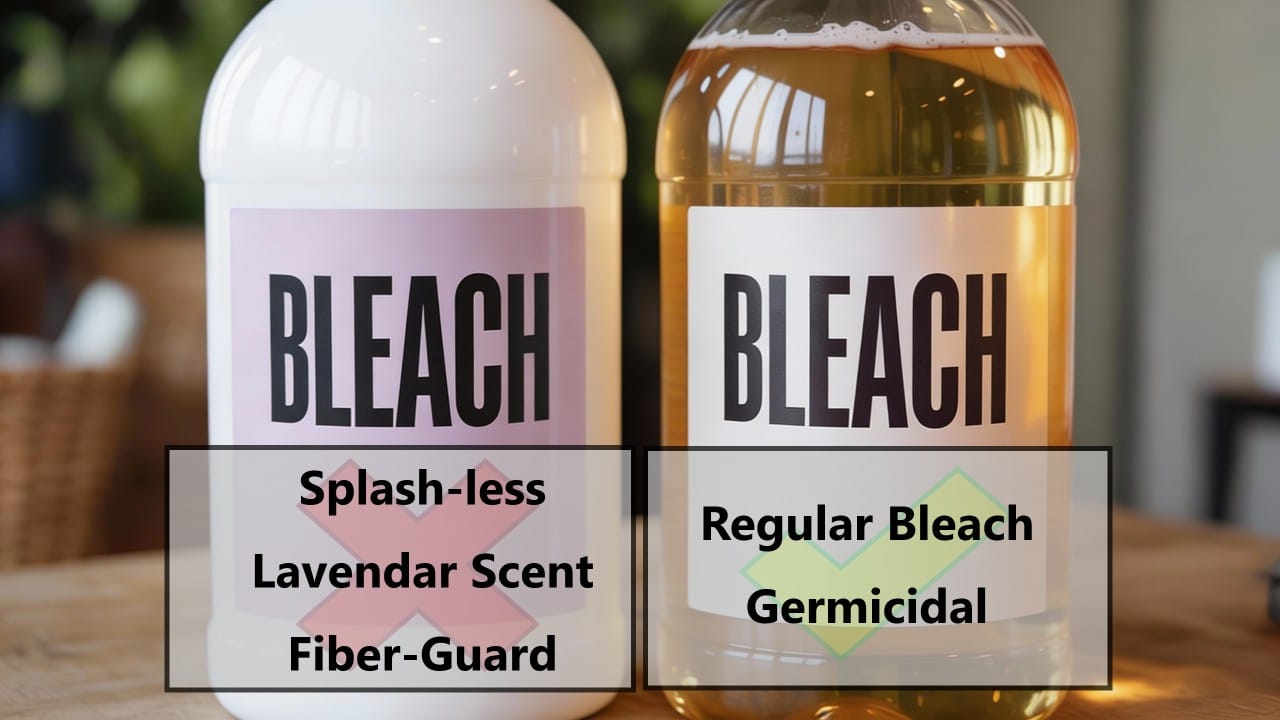
- Splash-less Bleach: This contains thickeners and soaps that will cause your pool to foam excessively.
- Scented Bleach (Lavender, Lemon, etc.): These introduce oils and phosphates that consume chlorine and cloud the water.
- Fabric Protection/Fiber-Guard varieties: These contain polymers unsuitable for pool water.
The Golden Rule: Only use "Regular," "Plain," or "Germicidal" bleach. If the bottle says "Does not disinfect" (common on splash-less varieties), do not put it in your pool.
Comparing Concentration: Household Bleach vs. Pool Chlorine
If they are the same chemical, why is pool chlorine more expensive? The difference lies in concentration and freshness.
1. The Concentration Gap
You aren't just paying for the plastic jug; you are paying for the strength of the chemical.
- Household Bleach: Typically 5% to 7.5% Sodium Hypochlorite.
- Pool Chlorine (Liquid Shock): Typically 10% to 12.5% Sodium Hypochlorite.
The Takeaway: Because household bleach is roughly half the strength of pool chlorine, you need to use twice as much to get the same result. If your pool requires one gallon of pool shock, you will likely need two gallons of Clorox to achieve the same sanitation level.
2. The Shelf-Life Factor
Sodium hypochlorite degrades over time, especially when exposed to heat or light. Knowing how to store pool chemicals is vital because pool stores generally turn over their stock of liquid chlorine faster than a grocery store might turn over generic bleach. If you buy bleach that has been sitting in a hot warehouse for six months, its potency may be significantly lower than the label suggests.
When Should You Use Bleach in Your Pool?
While you can use bleach, many pool owners wonder if they should make it their primary method.
As a Daily Sanitizer
This is the best use case for bleach and is a core component of the popular BBB Pool Method (Bleach, Borax, and Baking Soda). Unlike chlorine tablets (pucks), which contain Cyanuric Acid (stabilizer), liquid bleach is "unstabilized."
- The Benefit: Continuous use of tablets causes stabilizer levels to creep up, eventually locking up your chlorine and rendering it ineffective (commonly known as "chlorine lock").
- The Solution: Using liquid bleach for your daily chlorine dose prevents your stabilizer levels from rising, keeping your water chemistry manageable for longer.
For Emergency Algae Cleanup
If you are fighting a green pool, you need to "shock" it by raising chlorine levels rapidly. Bleach works perfectly here. However, dead algae will cloud the water and eventually sink to the floor.
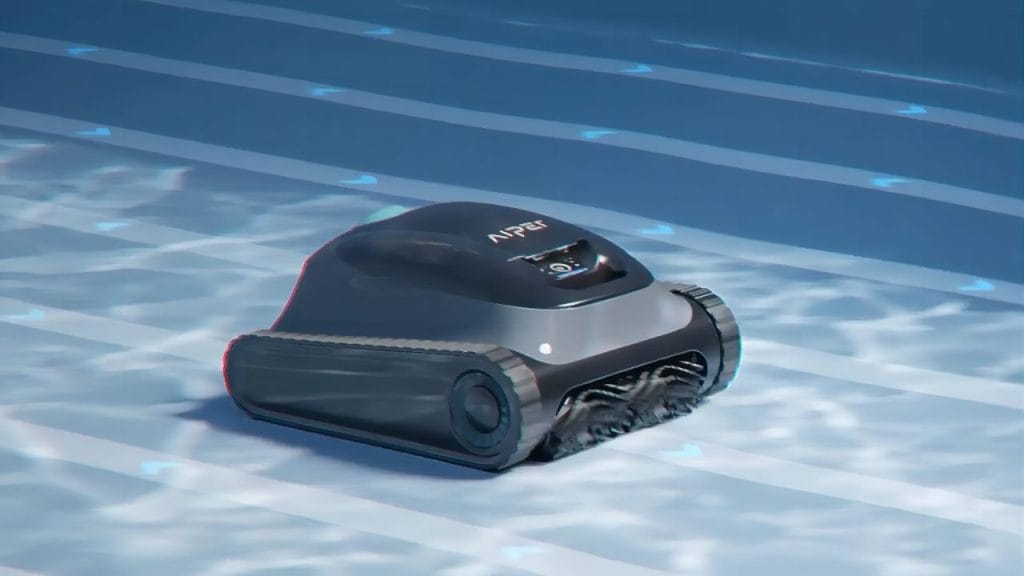
Pro Tip: Chemical sanitation is only half the battle; the other half is physical removal. Once the bleach kills the algae, it turns into fine debris. A powerful robotic cleaner, like the Aiper Scuba X1 Pro Max, is useful here. Its ultra-fine filtration system captures the dead algae particles that standard sand filters often miss, while its active brushing helps scrub stubborn spores off the floor and walls.
How to Put Bleach in a Pool Safely (Step-by-Step)
If you’ve decided to use bleach, follow this procedure to protect your liner and equipment.
Step 1: Test Your Water
Before adding bleach, you must test your pool water. You are specifically looking for pH and Cyanuric Acid (CYA) levels.
- CYA Warning: Since bleach has no stabilizer, the sun will burn it off in hours if your pool has zero CYA. Ensure your CYA is between 30–50 ppm.
- pH Warning: Bleach has a high pH (around 13). Frequent use will slowly raise your pool's pH, so you may need to lower your pool's pH using Muriatic Acid to keep it balanced.
Step 2: Calculate the Dosage
Do not guess. Use a pool math calculator or app.
General Rule of Thumb: To raise the Free Chlorine (FC) by 5 ppm in a 10,000-gallon pool, you need roughly 1 gallon (128 oz) of 6% household bleach. This is essential if you are trying to SLAM your pool (Shock Level and Maintain) to clear algae.
Step 3: Pour with Circulation
Never pour bleach directly into the skimmer (it can damage the pump seals and heater) or stagnant water (it can bleach the liner).
- Turn your pump on high.
- Pour the bleach slowly in front of a return jet (where water shoots back into the pool) to disperse it instantly.
- Brush the area afterward to ensure no heavy pockets of chlorine settle on the floor.
Note on Monitoring: Maintaining steady chemical levels is essential for clear pool water. With advanced features like water-quality monitoring (e.g., HydroComm Pure Underwater Communication), you can eliminate guesswork in sanitizer application and keep a closer eye on your pool's condition.
3 Reasons You Might Stick With Pool Store Chlorine
Even though bleach works, there are valid reasons to stick with the "official" stuff:
- Storage Space: You have to buy and store twice as many bottles of bleach. If you have a large pool, hauling 10 gallons of bleach from the grocery store is physically demanding.
- Plastic Waste: Double the bottles means double the plastic recycling.
- Freshness Guarantee: Dedicated pool stores usually guarantee the percentage of their chlorine, whereas grocery store bleach strength can be a gamble.
Frequently Asked Questions
Will bleach hurt a swimming pool?
No, not if used correctly. Since bleach is chemically identical to liquid pool chlorine (Sodium Hypochlorite), it is safe for pool water. The only risk of damage comes from pouring undiluted bleach directly onto a vinyl liner, which can bleach the pattern, or using "splash-less" varieties that gum up filters.
How much bleach should I put in my pool?
The dosage depends on the strength of the bleach. Because household bleach (5-6%) is roughly half the strength of pool chlorine (10-12%), you generally need two jugs of bleach for every one jug of pool shock. For a 10,000-gallon pool, one gallon of household bleach will raise your chlorine levels by approximately 5-6 ppm.
Can bleach be used instead of pool shock?
Yes. "Shocking" is an action (raising chlorine levels high enough to kill contaminants), not just a specific product. You can "shock" a pool using granular chlorine or liquid bleach. You simply need to use enough bleach to reach "shock level" (usually 10 ppm or higher).
What's the difference between pool shock, chlorine, and bleach?
- Chlorine is the chemical element used to sanitize.
- Bleach is a liquid form of chlorine (Sodium Hypochlorite) typically sold at 6% strength.
- Pool Shock is a high-strength dose of oxidizer. It can be liquid (12.5% Sodium Hypochlorite) or granular (Calcium Hypochlorite or Dichlor). Liquid shock and bleach are the same chemical at different strengths; granular shock includes other ingredients like calcium or cyanuric acid.
How long after adding bleach can I swim?
You should wait until the water has circulated fully and chlorine levels have dropped to a safe range (typically 1-4 ppm). For more details on safe wait times, check our guide on how long after shock you can swim.