
Dark Bottom Pools: Pros, Cons, and What to Know Before You Build
Dark bottom pools offer a luxurious lagoon-like look and better heat retention but reduce underwater visibility, hide debris, and require stricter water chemistry and consistent cleaning. Understand the pros, cons, safety, and maintenance before building or remodeling.

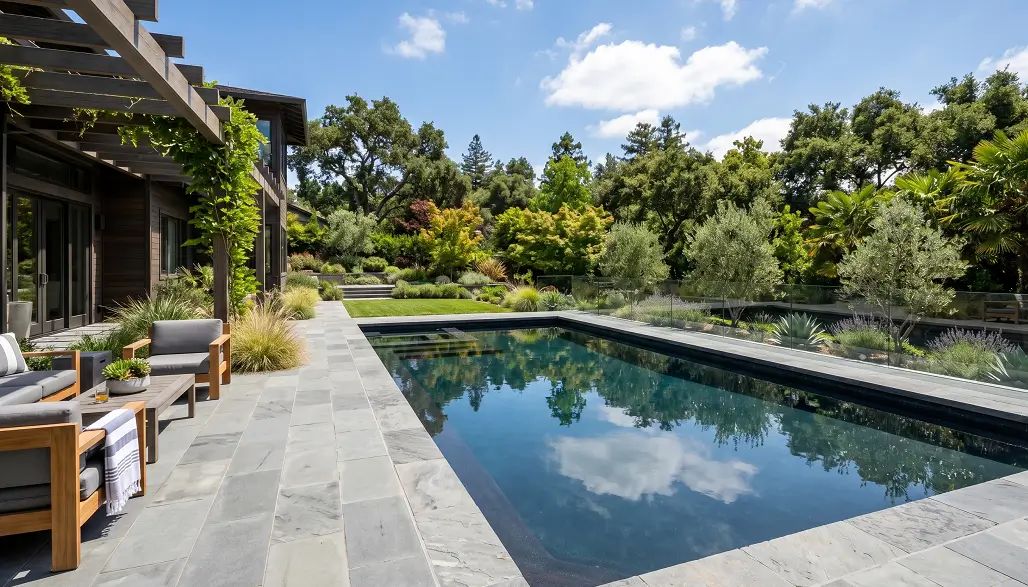
Dark bottom swimming pools have a powerful appeal. They can look calm, rich, and resort-like, especially when sunlight hits the surface and the water reflects the sky. If you are planning a new build or weighing a remodel, it makes sense to pause before choosing a finish that will stay with you for years.
A dark pool can add warmth and style, but it also changes how the pool feels to swim in, how easy it is to supervise, and how simple it is to keep clean. That is the part many homeowners do not think about until after the plaster cures. The real question is not just whether the finish looks good. It is whether it fits your climate, your safety priorities, and the amount of maintenance you are willing to take on.
This guide breaks down the tradeoffs clearly so you can choose with confidence.
Why Choose a Dark Bottom Swimming Pool?
Dark finishes are popular because they create a softer, more natural look than a traditional bright blue pool. They can make the pool feel like part of the landscape instead of a separate structure.
The Mirror Effect and Lagoon Aesthetics
A dark pool bottom can reflect the sky, trees, and surrounding hardscape in a way that gives the water a lagoon-like quality. Instead of a bright, artificial blue basin, the pool often looks deeper, moodier, and more blended into the yard.
That look works especially well in modern landscapes, desert settings, and backyards with a lot of greenery. The finish can make a pool feel quieter and more luxurious at the same time. For many homeowners, that visual effect is the main reason they choose it.
Natural Heat Retention
Dark surfaces absorb more sunlight than light ones. In plain terms, that means the finish can help the water warm more quickly on sunny days.
It is not a replacement for a heater, but it can reduce how hard the system has to work in mild weather. In warmer climates, that can make the pool feel more comfortable and may stretch the swimming season a bit. If you value passive comfort and lower heating demand, this is one of the strongest practical benefits of a dark finish.
Safety and Maintenance Risks of Dark Bottom Pools
The same finish that looks elegant can also make the pool harder to read at a glance. That matters for both safety and upkeep.
Reduced Depth Perception and Swimmer Safety
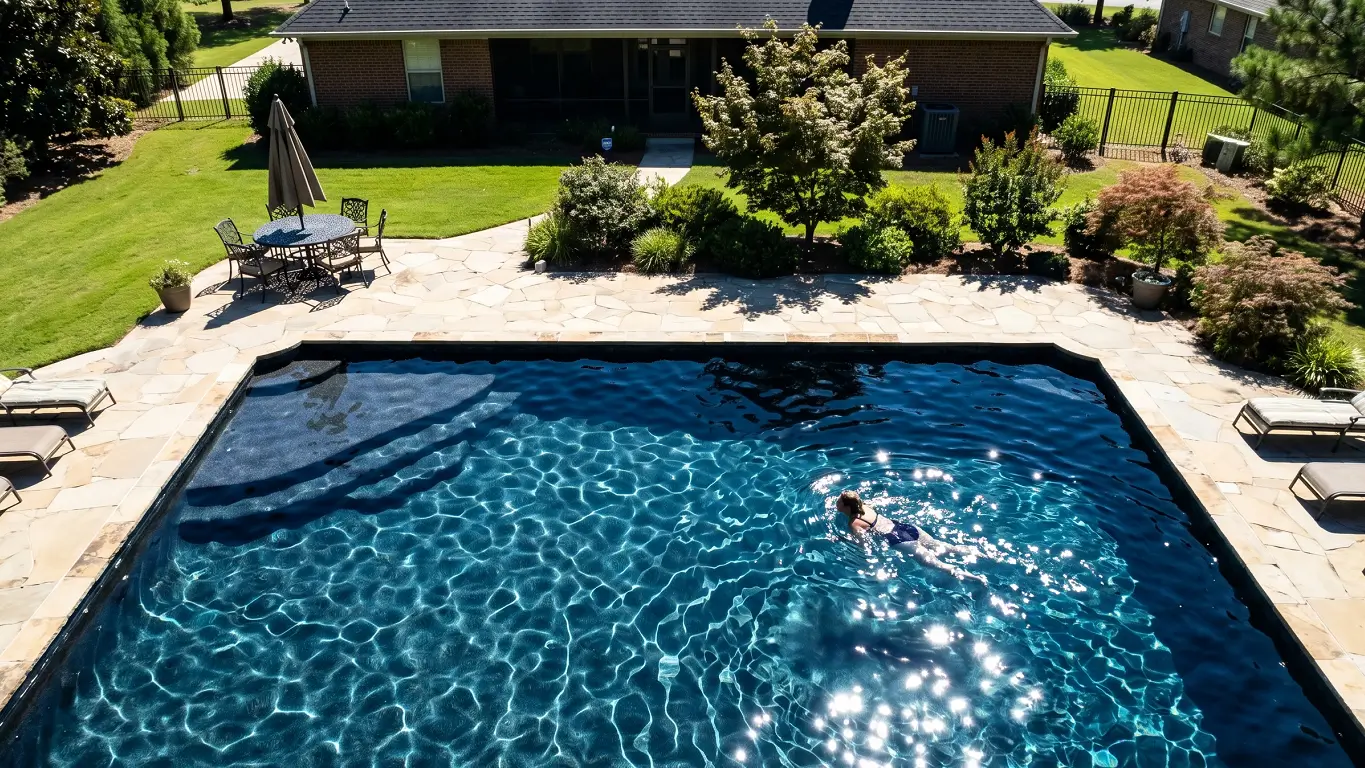
According to standard pool safety practice, clear visibility matters because people need to see the shape of the water, the bottom, and anyone who may need help. Dark water can make depth harder to judge, and it can also reduce the visibility of swimmers, pets, or objects below the surface.
That is why some municipalities and pool inspectors may limit very dark finishes in public or shared pools. The concern is simple. If the bottom disappears visually, supervision becomes harder. If you are evaluating the safety side more closely, see our guide to pool safety for families.
The Hidden Dirt Trap
Dark finishes are good at disguising small debris, which sounds helpful until you realize they can also hide the warning signs of a bigger problem. A sunken leaf, a patch of fine grit, or what looks like black algae can blend into the surface far longer than it would on a lighter pool.
That means a dark pool may not look dirty right away, even when cleaning is overdue. The problem is not only appearance. It is timing. By the time the issue becomes visible, it may already be harder to remove. This is why dark pools reward consistency more than quick spot checks.
Fading, Scaling, and Mottling
White calcium scale stands out sharply on a dark surface. So does uneven fading. If the water balance drifts, dark plaster can show every patch of discoloration faster than a lighter finish would.
That does not mean dark pools are fragile. It means they are less forgiving of chemistry problems. Keeping calcium hardness, pH, and sanitizer levels in range matters more when the background is dark. If scale is already a concern, our guide on how to lower calcium hardness in a pool is a useful next step.
Dark vs. Light Pool Bottoms: A Quick Comparison
Here is the practical difference at a glance.
| Category | Dark finish | Light finish |
|---|---|---|
| Aesthetic | Lagoon like, dramatic, and modern | Bright, classic, and more traditional |
| Water temperature | Absorbs more sunlight and may feel warmer | Reflects more light and usually feels cooler |
| Safety and visibility | Harder to judge depth and spot swimmers | Easier to see the bottom and water activity |
| Maintenance difficulty | Can hide debris, algae, and stains longer | Shows debris sooner, which can help with visual checks |
The short version is this. Dark finishes win on mood and warmth. Light finishes usually win on visibility and easier day to day inspection.
Solving the Maintenance Challenge of Dark Pools
The biggest maintenance challenge with a dark pool is not always the cleaning itself. It is the fact that you cannot rely on your eyes to tell you when cleaning is needed.
Automating Your Cleaning Routine
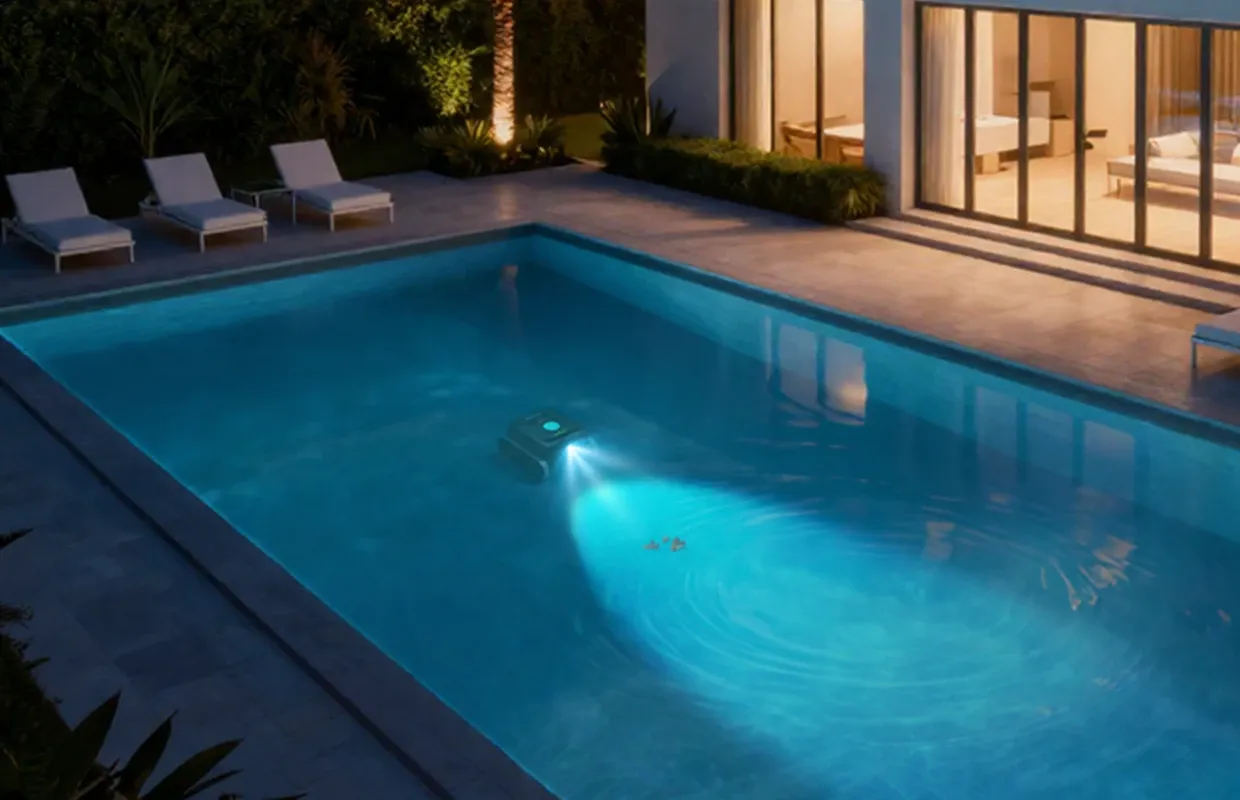
When dirt and algae are harder to see, proactive cleaning becomes more important. That is where an independent cleaner can help. Aiper® Scuba V3 cordless robotic pool cleaner gives dark pool owners a more consistent way to remove debris on a routine basis, so buildup does not sit unnoticed for long.
Without that kind of support, small leaves, grit, and organic residue can stay hidden until they become more stubborn to remove. If you want to compare options, start with robotic pool cleaners or review the Aiper Scuba V3. The main benefit is simple. You get cleaner water with less visual guesswork, which matters more when the pool bottom itself makes debris harder to spot.
Conclusion
Dark bottom swimming pools can be beautiful, warm, and highly distinctive. They can also make it harder to judge depth, spot debris, and notice early maintenance issues. If you choose one, the smartest approach is to plan for the tradeoffs up front, keep water chemistry tight, and use a cleaning routine that does not depend on what you can see from the deck.
That way, you get the look you want without losing control of the upkeep that keeps the pool safe and inviting.
FAQs
How much warmer does a black bottom pool actually get?
A common rule of thumb is that a dark pool can run about 3 to 8 degrees Fahrenheit warmer than a light plaster pool. The exact result depends on sunlight, wind, depth, and whether you use a cover.
Are dark plaster finishes a good choice?
They can be, but premium exposed aggregate finishes usually hold up better than standard dyed plaster when it comes to mottling and fading. If you want the dark look with better durability, ask your builder about upgraded surface options and water balance requirements.
Do dark bottom pools make the water look black?
Usually not. In full sun, the water often looks deep blue, slate, or green depending on the surrounding landscape, while shade can make it look much darker.
What pool system is best for eczema?
Pool color has no impact on eczema. What matters more is balanced water and a sanitation setup that suits sensitive skin, such as a well maintained saltwater system or UV and ozone support, along with advice from a dermatologist if symptoms are severe. For more context, see our ozone pool system guide and how to convert to a saltwater pool.