
Does Weed and Feed Kill Crabgrass? The Truth & Better Solutions
Weed and feed does NOT kill crabgrass—it only targets broadleaf weeds. Control crabgrass with early spring pre-emergent herbicides, spot-treat visible growth with post-emergents, and maintain a thick lawn via deep watering and high mowing for long-term prevention.

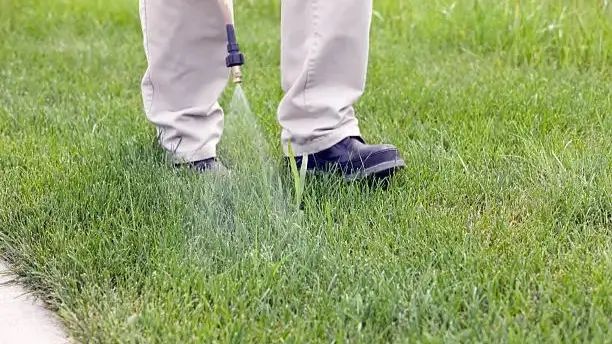
If you find yourself asking, "does weed and feed kill crabgrass?" the short and honest answer is no. If you have ever applied a standard weed and feed product expecting a lush, weed-free lawn, only to see crabgrass aggressively take over anyway, you are certainly not alone. It is one of the most common and frustrating situations for homeowners trying to maintain a pristine yard.
Most weed and feed products are designed specifically to target broadleaf weeds, not grassy weeds like crabgrass. That means they will not eliminate crabgrass, no matter how often or how heavily you apply them. If you are dealing with a crabgrass invasion, you will need a completely different approach—involving targeted pre-emergent or post-emergent herbicides, along with meticulous lawn care timing.
In this comprehensive guide, we will break down exactly why your current products are falling short, the science of lawn care timing, and the step-by-step strategies you need to reclaim your yard.
Quick Summary
- Weed and feed does NOT kill crabgrass. It only targets broadleaf weeds like dandelions.
- Use a pre-emergent herbicide in early spring to stop crabgrass seeds from germinating.
- Use a selective post-emergent herbicide to kill visible, actively growing crabgrass.
- Maintain a thick, healthy lawn (through deep watering and high mowing) to naturally block out future weed growth.
What Kills Crabgrass Effectively?
If standard two-in-1 fertilizers are not the answer, the next logical question is what kills crabgrass effectively without destroying your turf. The solution involves understanding two distinct categories of targeted herbicides and exactly when to use them.
1. Pre-Emergent Herbicides (The Defensive Shield)
Think of a pre-emergent herbicide as an invisible protective barrier for your soil. It is applied before crabgrass seeds begin to germinate. Once watered into the soil, it stops the germinating seeds from ever breaking the surface. This is widely considered the absolute most effective way to control crabgrass. However, timing is highly critical. If you apply it after the seeds have already sprouted, the product will have zero effect.
2. Post-Emergent Herbicides (The Targeted Sniper)
If you missed the early spring prevention window, you will need a post-emergent herbicide. These products are specifically formulated to target and kill grassy weeds after they have already appeared, without damaging your surrounding turfgrass. They act as a targeted spot-treatment.
Applying post-emergent herbicides during extreme summer heat, however, can severely stress your lawn and reduce the chemical's effectiveness. If you are unsure about the safety window, it is highly recommended to learn about the cut-off time for spraying weeds so you can avoid burning your lawn late in the season. A combination of both approaches—pre-emergents in the spring and post-emergents for summer stragglers—provides a much more reliable strategy than relying on a single weed and feed bag.
Why Standard Weed and Feed Fails Against Crabgrass
At first glance, weed and feed products seem like the perfect, labor-saving solution. They promise to feed your lawn essential nutrients while simultaneously eliminating pesky weeds. However, the root of the problem lies in the specific biological type of weeds they are formulated to control.
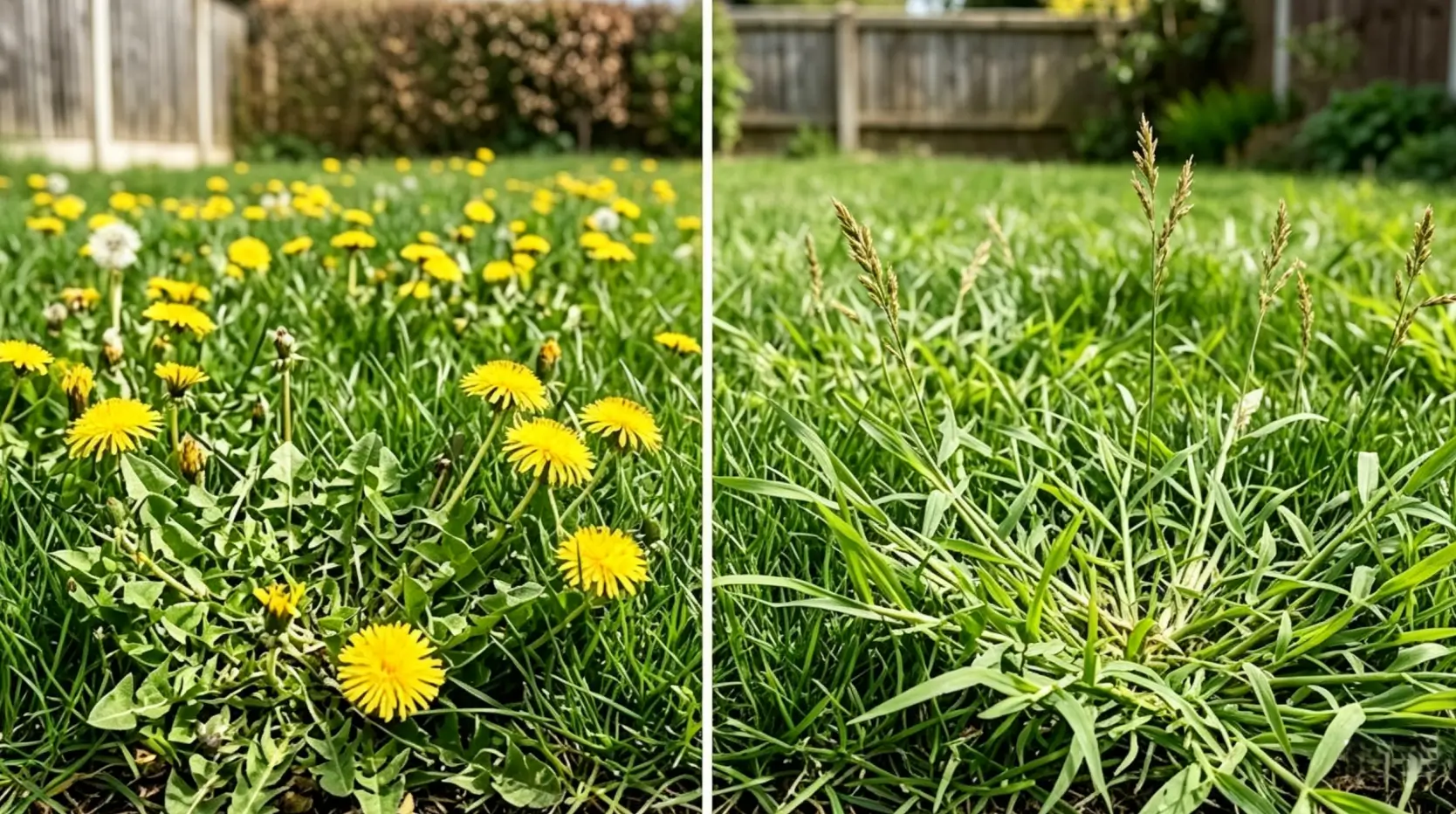
Most weed and feed formulas on the market are created to target broadleaf weeds. These include common lawn invaders like dandelions, clover, chickweed, and plantain. Broadleaf weeds have wide leaves and a distinct internal vascular structure compared to grass, which makes them very easy to target with selective herbicides (such as 2,4-D or Dicamba).
Crabgrass, on the other hand, is not a broadleaf weed; it is a grassy weed. This distinction is incredibly important because grassy weeds closely resemble your actual lawn grass at a biological and cellular level. Because of this similarity, the selective herbicides used in standard weed and feed products are intentionally designed to avoid harming grass species—which means they naturally leave crabgrass completely untouched.
This is exactly why many homeowners feel cheated, thinking the product “did not work.” In reality, it worked exactly as the manufacturer designed it to, just not for the specific weed you were battling. It may clear out visible dandelions, making the lawn look better temporarily, but the crabgrass continues to spread beneath the surface. In fact, because crabgrass grows aggressively and thrives in thin lawns, it often quickly fills the empty dirt patches left behind by the dying broadleaf weeds, making your crabgrass problem look significantly worse.
Best Time to Spread Weed and Feed vs. Crabgrass Preventer
Even beyond the issue of weed biology, there is another major reason weed and feed struggles against grassy weeds: timing. Lawn care is highly dependent on seasonal timing, and this is where many homeowners unintentionally sabotage their own yards.
This conflict is widely known in landscaping circles as the “weed and feed dilemma.” According to research and guidance from the Illinois Extension, there is a fundamental mismatch between when you should fertilize your lawn and when you should prevent crabgrass.
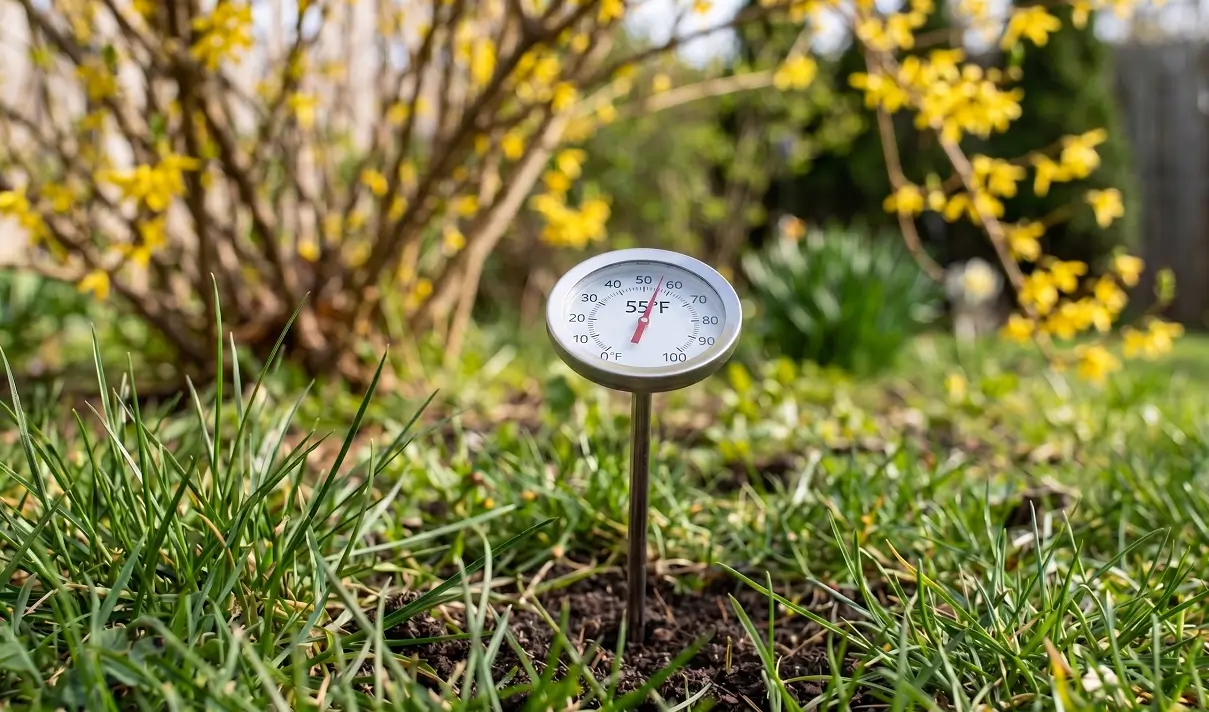
Crabgrass begins germinating in early spring when soil temperatures consistently reach around 55°F for several consecutive days. This is the critical window when your pre-emergent prevention needs to be applied. However, putting down nitrogen-rich fertilizer too early during this cold stage can encourage rapid top leaf growth instead of strong, deep root development. This leaves your turfgrass shallow-rooted and highly vulnerable to heat stress, just as the aggressive crabgrass begins to emerge for the summer.
So, when to apply weed and feed properly? Most agronomic experts agree that the best time to spread weed and feed is actually later in the season. You should wait until mid to late spring (often late May or early June, depending on your region) once your grass is actively growing and can fully metabolize the nutrients. In many cool-season grass regions, early fall is also an optimal time for feeding.
If you apply weed and feed too early, you risk weakening your lawn's root system. If you apply it at the correct time for the fertilizer to work, it is already way too late to prevent crabgrass. Many university extension programs also recommend pre-emergent herbicides as the most reliable way to prevent crabgrass each season, strictly applied separate from your feeding schedule.
How to Get Rid of Crabgrass (Step-by-Step)
For homeowners trying to figure out how to get rid of crab grass once and for all, piecemeal solutions won't cut it. You need a structured, seasonal battle plan. In many cases, homeowners start seeing noticeable improvement within one growing season when they switch from weed and feed to a proper pre-emergent strategy. Follow this step-by-step guide to reclaim your yard:
Step 1: Apply a Pre-Emergent in Early Spring
Monitor your local soil temperatures. When the soil hits 55°F (often when Forsythia bushes begin to bloom), apply a dedicated granular pre-emergent herbicide. Water it in immediately to activate the protective soil barrier.
Step 2: Hold Off on Fertilizing
Resist the urge to fertilize right away. Wait until late spring or early summer to apply your standard lawn food or weed and feed to nourish your grass without stunting its root development.
Step 3: Monitor for Breakthrough Growth
No pre-emergent is 100% perfect. Walk your lawn in early summer and look for pale green, crab-like grass blades emerging near sidewalks, driveways, or thin bare patches where the soil heats up faster.
Step 4: Use a Post-Emergent Herbicide on Visible Weeds
Spot-treat the visible crabgrass with a liquid post-emergent herbicide containing active ingredients like Quinclorac. Apply this during a cool morning to avoid burning the surrounding turf.
Step 5: Adopt Thicker Lawn Care Practices
Mow high and water deeply. A dense, thick turf is the ultimate natural weed blocker, starving weed seeds of the sunlight they need to sprout.
Chemical-Free Defense: Cultural Control for Crabgrass
While chemical herbicides can be highly effective, they are not the only solution. In fact, the absolute best defense against crabgrass is improving the overall density and health of your lawn. A thick, vibrant lawn naturally crowds out weeds before they can establish a foothold.
One of the most important factors in this natural defense is maintaining the ideal summer mowing height. Keeping your grass slightly taller, usually around three to four inches, creates a dense canopy of shade over the soil. This drastically limits the amount of sunlight that reaches dormant crabgrass seeds, making it nearly impossible for them to germinate. Proper mowing practices play a significant role in strengthening your lawn’s natural defenses and reducing your reliance on chemicals.
Watering technique is equally critical. Many homeowners unknowingly water their lawns too frequently but too lightly (e.g., 10 minutes every day). This encourages the grass to develop shallow root systems, which weakens the turf over time. Crabgrass thrives in these exact conditions. Instead, deep, infrequent watering is the superior approach. It forces grass roots to grow deeper into the soil in search of moisture, making the lawn incredibly strong and drought-resistant.
Consistent deep watering is one of the most overlooked factors in crabgrass prevention. Smart irrigation systems, like the Aiper IrriSense 2, can automate this precise process. Instead of guessing when and how much to water, a smart system ensures your lawn gets the exact volume of deep hydration it needs, perfectly timed with local weather data. This automates the process of building a stronger root system that naturally starves out shallow-rooted weeds, severely reducing your need for constant chemical interventions.

Conclusion & Best Practices for a Crabgrass-Free Lawn
The biggest takeaway for your spring yard prep is that 2-in-1 weed and feed products are simply not designed to handle grassy weeds. Understanding exactly why weed and feed does not kill crabgrass is the first step toward building a better lawn care regimen.
A successful, long-term strategy requires applying a dedicated pre-emergent shield in early spring, using spot-treatment post-emergents when necessary, and utilizing smart cultural practices. Proper mowing heights, automated deep watering, and applying fertilizer only when the grass is ready will all contribute to a healthier, thicker lawn.
If crabgrass keeps coming back year after year, it is likely a timing issue—not a product issue. Start with a simple pre-emergent plan this spring, and you will see a dramatic difference by summer.
Frequently Asked Questions (FAQ)
Can I put down crabgrass preventer and weed and feed at the same time?
It is highly discouraged. While the two products will not chemically react and explode, their ideal application timings do not align at all. Applying both simultaneously means you are either applying the preventer too late, or you are fertilizing the lawn much too early, which can cause severe stress to your turf.
How do you get rid of crabgrass permanently?
If you are wondering how do you get rid of crabgrass for good, you must understand that it requires a multi-year plan. Because a single crabgrass plant can drop up to 150,000 seeds, it takes multiple seasons of consistent pre-emergent applications and thick turf maintenance to fully deplete the dormant seed bank hiding in your soil.
Is wiregrass the same as crabgrass?
No, they are entirely different plants that require different treatments. Wiregrass is a common nickname for Bermudagrass, which is a perennial grass that goes dormant and returns year after year. Crabgrass is a summer annual weed that dies completely with the first winter frost.
Does weed and feed prevent crabgrass?
No. Standard weed and feed only kills existing broadleaf weeds and provides fertilizer. It does not contain pre-emergent chemicals, meaning it has zero ability to prevent crabgrass seeds from germinating in the soil.
What is the best time to apply crabgrass preventer?
The optimal time is early spring, right before the weed seeds germinate. You should apply it when your local soil temperatures consistently reach 55°F for three to five consecutive days. A great natural indicator for this timing is when the yellow Forsythia bushes in your neighborhood begin to bloom.