
How to Get Stripes in Lawn: A Complete Guide to Pro Patterns
Achieve pro lawn stripes by mowing hydrated grass in alternating directions with a weighted roller. The pattern is an optical illusion caused by light reflection, not cutting height.

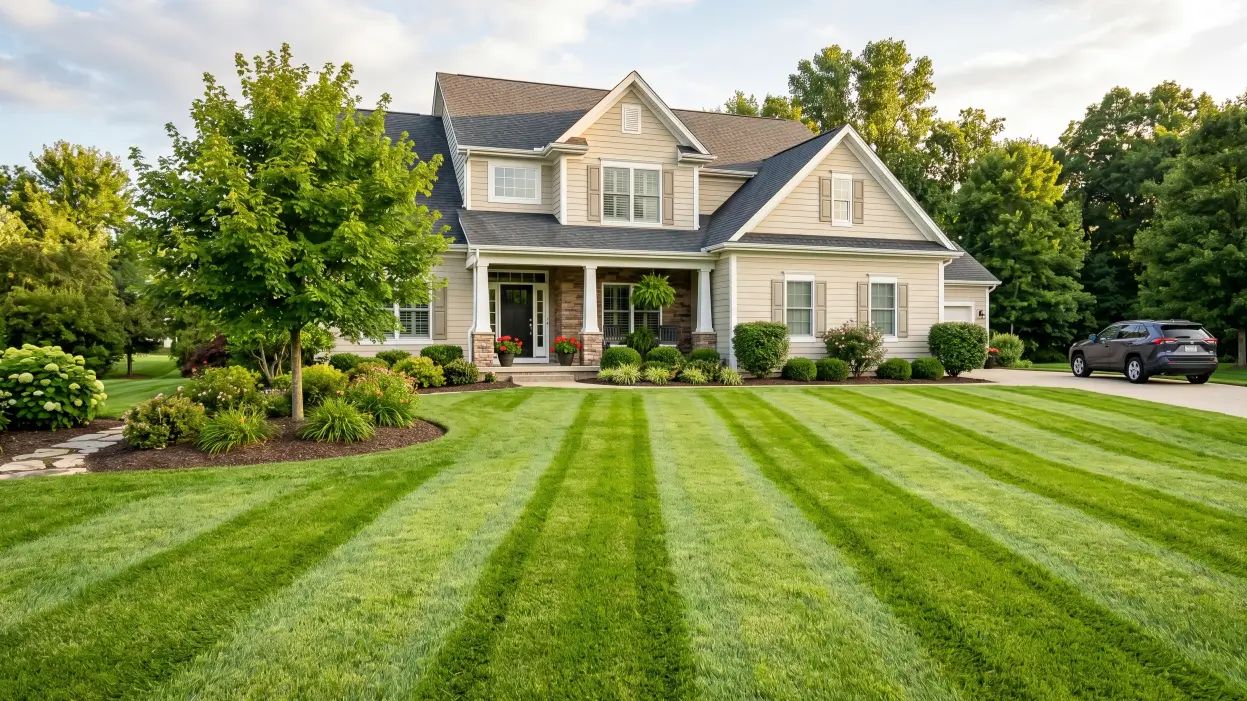
Watch any baseball game or golf tournament, and you'll notice one thing right away: those clean, alternating stripes on the grass. You might assume that getting that premium look requires a huge crew, expensive commercial equipment, or special grass seed.
The good news? It doesn't. If you have been searching for exactly how to get stripes in lawn, the truth is that almost any homeowner can pull this off with the equipment they likely already have in the garage.
Quick Answer: To get stripes in your lawn, mow in alternating directions using a mower with a rear roller attachment. The stripes are actually an optical illusion created by light reflecting off bent grass blades, not by cutting the grass at different heights.
In this guide, we are going to explain what's actually going on with those yard patterns, share a cheap DIY roller hack, and show you the exact mowing techniques to make your yard look like a professional field.
The Science Behind Lawn Stripes: It's All About the Light
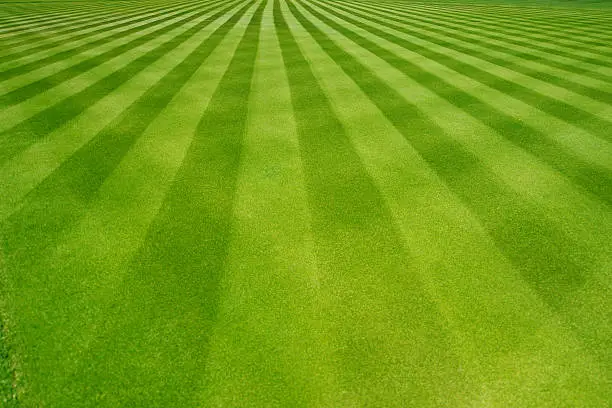
Before you start the engine, let's debunk a common myth: the grass isn't cut at different heights to create lines, and nobody is painting the turf. Those bands of dark and light green are purely an optical illusion caused by how sunlight reflects off the grass blades.
It comes down to the direction the grass is bent. When a mower rolls over the turf and bends the grass blades toward you, you are looking directly at the shaded, darker tips of the grass. This makes a dark green stripe. On the flip side, when the grass is bent away from you, the sunlight reflects off the wide, flat surface of the blade, resulting in a lighter, brighter green stripe.
Pro Tip for the Perfect View: The sun is your best friend when trying to stripe a lawn. To make the contrast pop, aim to finish your mowing with the sun behind your back when viewing the yard from your patio or the street. The sun's angle makes the "bent away" blades reflect the most light.
Preparation: The Reality of Lawn Striping
Let's face a harsh truth that is often discussed in lawn care forums: no striping kit will work on a thin, patchy, or weed-infested yard.
Before mapping out checkerboards, you need a healthy, dense canvas. If your yard has bare dirt spots or is loaded with crabgrass, you should first focus on thickening your turf with a proper overseeding strategy. Weeds don't bend uniformly, which means they simply will not stripe.
The Role of Moisture
Healthy, well-hydrated grass is what actually makes striping work. If your lawn is too dry, the blades won't bend cleanly—they'll just spring back, break, or fail to hold the pattern.
If you struggle to keep moisture consistent, a smart irrigation system can help automate the process based on weather and soil conditions. Systems like the Aiper IrriSense 2 are designed for this kind of precision, but even a well-managed manual watering schedule can make a noticeable difference in how flexible your grass blades are.
What You Need for Lawn Striping:
- A lawn mower (rotary or reel)
- A striping roller (either a store-bought kit or a DIY pipe)
- Healthy, adequately hydrated grass
- A clear visual target (like a tree or fence post) to keep lines straight
Step-by-Step: How to Get Stripes in Lawn (Beginner Guide)
Now that your turf is prepped, let's get into the actual mechanics of how to mow stripes in lawn setups at home.
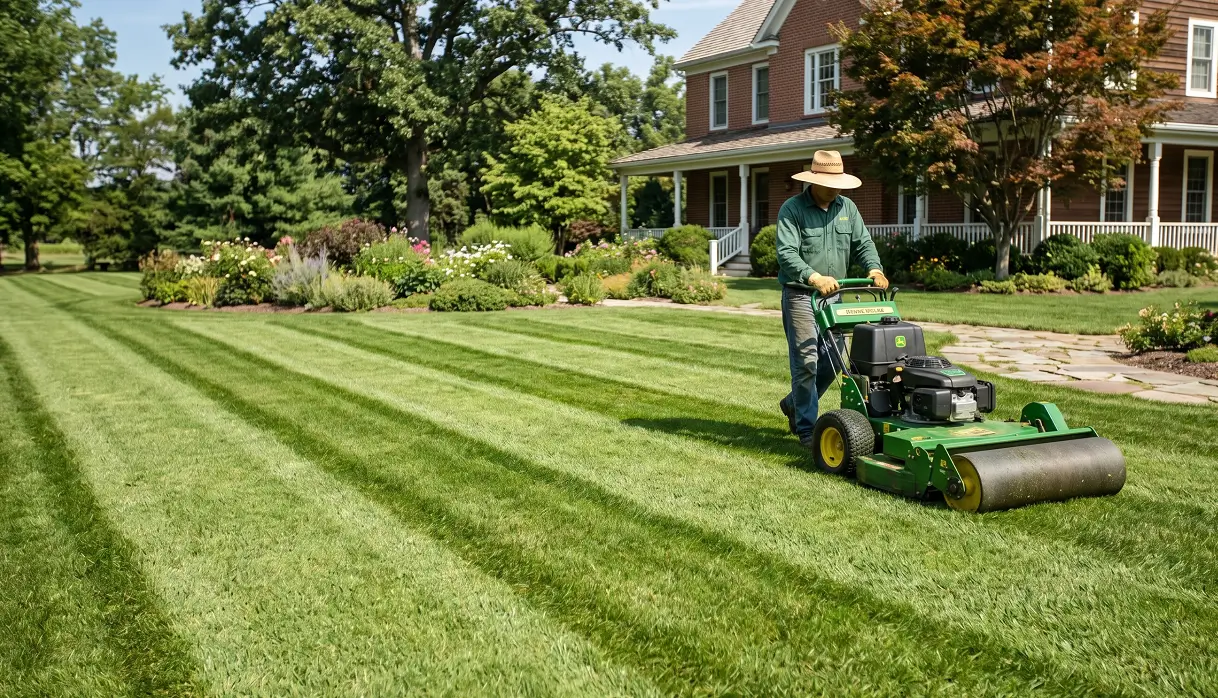
Step 1: Raise Your Mower Blade
A common mistake beginners make is cutting the grass too short. To create a solid stripe, you need enough leaf surface area to reflect the light. If the grass is scalped, it physically cannot bend.
Raise your mower deck so you are cutting the grass at roughly 2.5 to 4 inches, depending on your grass type. Keeping it a bit longer is essential for the effect, but ensure you are finding the optimal mowing height during hotter months to avoid stressing the plant.
Step 2: Equip Your Mower with a Roller
The rubber safety flap on the back of most push mowers does a little bit of bending, but it's rarely heavy enough for high-contrast lines. You can buy commercial lawn striping kits online, but a highly effective, cheap DIY solution is building your own.
The Budget DIY Roller Hack: Get a piece of 2-inch or 3-inch PVC pipe cut to the width of your mower's rear wheels. Glue a cap on one end, fill the pipe about halfway with dry play sand or small pebbles for weight, and cap the other end. Use heavy-duty zip ties to attach it to the trailing edge of your mower. As you walk, this weighted pipe drags smoothly behind the deck, laying the freshly cut grass down firmly.
Step 3: Mow in Straight, Overlapping Lines
Start with a "perimeter pass"—mow two full laps around the outer edge of your yard. This gives you a clean border and a staging area to turn your mower around without messing up your interior lines.
Next, pick a visual focal point straight ahead (a fence post, a window) and mow your first line directly toward it. Don't look down at your wheels. Keep your eyes on the target for a laser-straight baseline. At the end of the row, turn 180 degrees in your perimeter zone, overlap your previous cut by a few inches to avoid missing strips of grass, and mow back the opposite way.
Expert Warnings: Mistakes to Avoid
Creating lawn striping patterns is fun, but doing it rigidly can actually hurt your yard's health over time.
According to the turfgrass experts at Cornell University's College of Agriculture and Life Sciences: "Mowing direction should be changed every mowing. Grass will lean or grow in the same direction it is mowed so changing the mowing direction each time you mow will avoid the undesirable streaking appearance."
If you mow the exact same paths week after week, you will likely notice these issues:
- Permanent wheel tracks: Soil compaction will create actual ruts in your yard.
- Uneven color bands: High spots in the dirt will constantly get scalped.
- Stripes disappear after a day: If the grass starts permanently leaning one way, the contrasting bend effect stops working.
The golden rule? If you mow north-to-south this week, mow east-to-west or diagonally next week.
Visual Guide to Lawn Striping Patterns
Ready to upgrade from basic rows? Here are three fundamental patterns to give your home major curb appeal.
- Basic Parallel Stripes: The back-and-forth pattern described above. It is simple, clean, and makes smaller yards look longer.
- The Checkerboard: Mow your entire yard in basic parallel stripes (e.g., North to South). Then, lower your roller and mow the whole yard a second time, crossing your original lines at a 90-degree angle (East to West).
- The Diagonal (Diamond): This works just like the checkerboard, but instead of a 90-degree angle, your second pass should cross the first on a 45-degree diagonal. This creates a sharp, argyle-like diamond pattern.
Summary
You don't need to be a golf course superintendent to figure out how to get stripes in lawn. By focusing on soil health, keeping the grass hydrated, raising your mower blade, and dragging a simple roller, you can transform your yard. Just remember to use the sun's angle to your advantage and always rotate your mowing patterns to keep the grass healthy.
Grab your mower, pick your pattern, and get ready to enjoy the view this weekend.
FAQs About Lawn Striping
How to get better stripes in lawn if they look faded?
If your bands look weak, check your grass length and roller weight. Increase your mower's cutting height by half an inch so the blades have room to bend. Next, make sure your roller is heavy enough. If using a DIY PVC roller, adding more sand usually provides the extra pressure needed.
Does striping damage the grass?
No, bending the blades does not harm the plant as long as the grass is well-hydrated. However, failing to rotate your mowing direction will cause soil compaction and wheel ruts. Always alternate your paths.
Can I stripe my lawn with a regular push mower?
Yes. While standard rotary push mowers lack the heavy built-in steel rollers of commercial reel mowers, you can easily attach a store-bought striping kit or a weighted DIY PVC pipe to get great results.