
Hardscaping vs. Landscaping: Creating the Ultimate Smart Backyard
Master the balance of hardscaping (structure) and landscaping (nature) to design your perfect backyard, and use smart tech like robotic pool cleaners and solar irrigation to keep maintenance effortless.

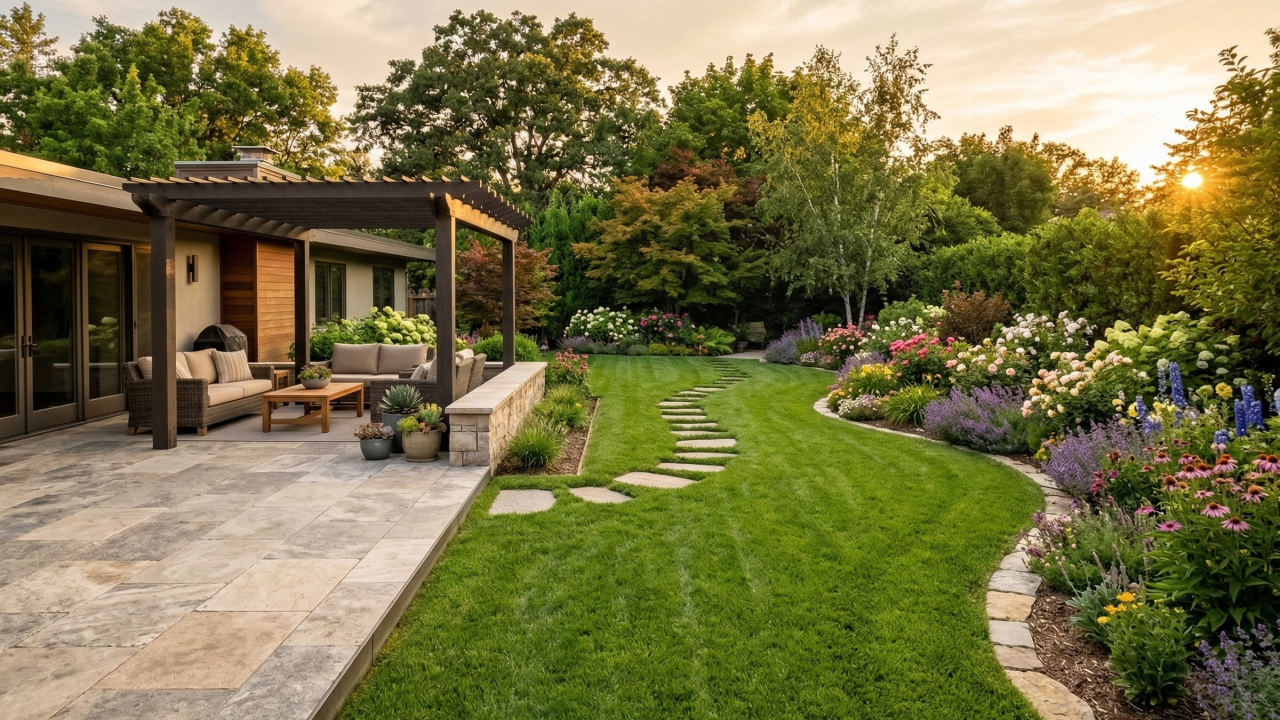
Ideally, your backyard is a sanctuary.
Realistically? It’s often a guilt trip.
You step outside for some fresh air, only to be stared down by a gritty pool deck and hydrangeas that look a little too crispy.
If you are planning a renovation—or just trying to stop your yard from becoming a jungle—you’ve likely heard the terms hardscaping and landscaping thrown around. While they’re two sides of the same coin, knowing the difference between hardscaping vs. landscaping is the only way to design a space that doesn't eat up every single weekend.
Let's cut through the jargon. Here is what you need to know to build a balanced yard (and how to maintain it without losing your mind).
What is Hardscaping?
Let’s start with the heavy lifting. What is hardscaping?
Hardscaping is the "bones" of your property. It’s the unmoving, non-living stuff that gives your yard structure. If you can stand on it without sinking into the mud, it’s probably hardscape. These elements are usually permanent, built from concrete, stone, wood, or brick. They turn a patch of grass into an actual living room—just one without a roof.
Common examples of hardscaping include:
- Patios and Decks: The foundation for your grill and lounge chairs.
- Walkways: So you aren't tracking dirt into the house.
- Retaining Walls: Essential for keeping soil where it belongs.
- Swimming Pools: The ultimate hardscape investment.
For Aiper users, the pool is the king of hardscaping. It’s the centerpiece. But let’s be honest: keeping that massive concrete or fiberglass bowl pristine is the hardest part of owning a "hardscape."
What is Landscaping?
So, if hardscape is the bones, what is landscaping?
Professionals sometimes call it "softscaping," which makes sense. This covers everything that is alive, growing, and changing. Landscaping softens the sharp edges of your stone and concrete. It adds texture, color, and—if you plan it right—cooling shade.
Key elements of landscaping include:
- Lawns: The green canvas for everything else.
- Trees and Shrubs: Privacy screens that grow.
- Gardens: Flowers, succulents, veggies—anything with roots.
- Soil and Mulch: The stuff keeping it all alive.
Here is the catch with landscaping: it’s needy. Unlike a brick wall, your landscape gets thirsty and hungry. Ignore it for a week in July, and you’ll notice.
What is Hardscape Landscaping?
You might see the phrase "what is hardscape landscaping" in design magazines. It sounds like a contradiction, right?
It actually refers to the art of integration. It’s about blending the two so your yard doesn't feel like a parking lot (too much hardscape) or an overgrown forest (too much landscape).
Hardscape landscaping happens when:
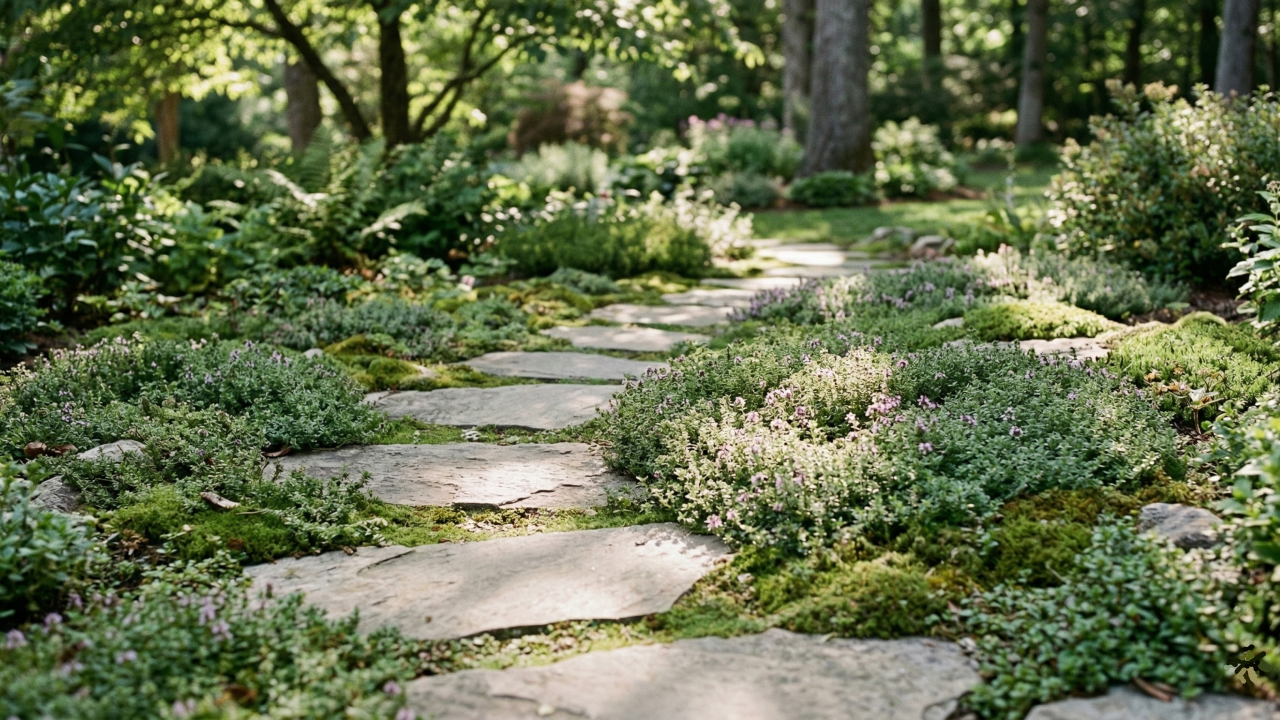
- You soften a stone walkway (hardscape) with creeping thyme (landscape) between the pavers.
- You install a pergola (hardscape) specifically to hold up climbing vines (landscape).
- You design a pool deck (hardscape) that curves around existing palm trees (landscape).
The magic is in the mix. But a complex mix usually means a complex maintenance schedule.
The Breakdown: Hardscaping vs. Landscaping at a Glance
Need a quick cheat sheet? Here is how the two stack up against each other.
| Feature | Hardscaping | Landscaping (Softscaping) |
|---|---|---|
| Primary Element | Inanimate (Non-living) | Living (Animate) |
| Materials | Stone, Concrete, Wood, Brick | Plants, Grass, Soil, Trees |
| Purpose | Structure, Function, Accessibility | Aesthetics, Comfort, Environment |
| Examples | Swimming Pools, Patios, Driveways | Lawns, Gardens, Hedges |
| Maintenance | Cleaning, Sealing, Repairing | Watering, Pruning, Fertilizing |
Work Smarter, Not Harder: The Smart Yard Solution
Here is the reality of the hardscaping vs. landscaping balance: they both require work.
Hardscapes—especially pools—are magnets for dirt, algae, and calcium buildup. Landscapes are constantly fighting a battle against dehydration. But we are living in the era of the Smart Yard. You don't need to spend your Saturday scrubbing tiles or dragging hoses around.
This is where we cheat a little. In a good way.
1. Mastering the Hardscape: The Aiper Scuba N3
Your pool is the crown jewel of your hardscape, but it’s also a pain to clean. Dead leaves, fine silt, and that sticky film on the waterline? They are inevitable. Enter the Aiper Scuba N3. Think of it as the custodian for your underwater hardscape. Designed for in-ground pools, the Scuba N3 doesn't just vacuum; it actively scrubs.
- The Relief: It handles the complex geometry of your pool—floors, walls, and even the waterline. You get a sparkling clean "hardscape" surface without breaking a sweat.
- The Tech: It maps your pool to ensure no tile is left untouched, handling the grit and grime so you can focus on the swimming part.
2. Nurturing the Landscape: The Aiper IrriSense 2
On the softscaping side, water is the enemy and the savior. Over-water, and you rot the roots. Under-water, and your expensive sod turns into hay.
This is where the Aiper IrriSense 2 steps in.
Powered by solar energy, this isn't just a timer; it’s a brain for your garden.
- The Relief: It delivers the exact amount of water your landscape needs. No more wasted runoff staining your sidewalks (hardscape), and no more dead petunias.
- The Tech: It automates the hydration process, ensuring the "living" part of your yard thrives. It keeps the green lush, providing that perfect contrast to your clean, sharp hardscaping.
Conclusion
Understanding hardscaping vs. landscaping is just the start. The real goal is creating a space where structure meets nature, and you aren't stuck working on it 24/7.
Whether you are laying down a new patio or planting a victory garden, maintenance shouldn't be a chore. By integrating smart tech like the Aiper Scuba N3 for your pool and the Aiper IrriSense 2 for your plants, you can finally stop working on your yard and start living in it.
Ready to upgrade your outdoor lifestyle? Check out the full Aiper Smart Yard ecosystem.
FAQ
Q: Does hardscaping increase home value?
A: Absolutely. Solid, functional hardscaping—especially well-maintained patios and pool decks—adds usable square footage. It creates "outdoor living space," which is a massive selling point.
Q: What should I do first, hardscaping or landscaping?
A: Always tackle the hardscaping first. It involves heavy machinery, digging, and moving earth. Get the "bones" (like the pool and walkways) set before you try to put the "skin" (plants) on.
Q: Is it hard to maintain hardscaping?
A: It depends. Stone patios are easy. Swimming pools? They require consistent attention to prevent algae and buildup. Using a robotic cleaner like the Aiper Scuba N3 cuts that effort down to almost zero.