
Heat-Stressed Grass Treatment: How to Revive Your Scorched Lawn

By the time summer really settles in, a lot of lawns start to look a little off. The color fades. The grass doesn’t bounce back when you walk across it. Some spots turn yellow or brown even though the sprinklers are still running. That’s usually when people start wondering if the lawn is dying, or if this is just what happens every summer.
Most of the time, the grass isn’t dead. It’s just worn down. Weeks of heat, strong sun, and dry soil take a toll. Using the right heat-stressed grass treatment at this point can be the difference between grass that slowly recovers and grass that never quite comes back.
This guide breaks down how to tell what your lawn is actually experiencing and outlines a practical, research-backed plan to revive burnt lawn areas using methods recommended by agricultural experts.
Heat Stress vs. Dormancy: Identifying the Symptoms
Not all brown grass means the same thing. Some lawns are actively suffering from heat stress, while others have entered dormancy as a survival response. Understanding the difference matters because the wrong treatment can do more harm than good.
Heat stress occurs when grass is still trying to grow but loses water faster than its roots can absorb it. High temperatures increase evapotranspiration, the combined water loss from soil evaporation and plant transpiration. When this loss outpaces irrigation or rainfall, grass begins to wilt, discolor, and weaken.
Dormancy is different. Dormant grass slows growth and turns tan to conserve energy. The plant is alive at the crown but temporarily shuts down until conditions improve. Overwatering dormant grass can compact soil and reduce oxygen around the roots, increasing the risk of disease.
A few simple observations can help clarify what’s happening.
| Color Pattern | Uneven yellowing | Uniform tan | Irregular blotches |
|---|---|---|---|
| Soil Condition | Dry and hard | Dry but stable | Often damp |
| Leaf Feel | Soft, folded | Dry, stiff | Slimy or matted |
| Footprint Test | Footprints remain visible | May linger | Disappear quickly |
If footprints stay visible for several minutes, moisture stress is likely present.

Step-by-Step Heat-Stressed Grass Treatment Plan
Once you’ve confirmed heat stress, the priority is protecting the grass crown and helping roots recover. The goal isn’t rapid green-up, it’s long-term survival.
Step 1. Deep and Infrequent Watering
Frequent light watering may seem helpful, but it usually causes shallow roots that are more vulnerable to heat. Instead, water deeply so moisture reaches 6 to 8 inches below the surface. This encourages roots to grow downward, where soil stays cooler and retains moisture longer.
The U.S. Environmental Protection Agency’s WaterSense program recommends watering early in the morning, generally between 6 a.m. and 10 a.m. During these hours, less water is lost to evaporation, and grass blades have time to dry before evening, which lowers disease risk.
Apply water slowly and evenly. If runoff occurs, pause and allow water to soak in before continuing.
Step 2. Precision Moisture Management
One of the trickiest parts of dealing with heat-stressed grass is figuring out when the lawn actually needs water, and when it’s had enough. It’s easy to assume more water will help, but soaking an already stressed lawn can backfire. Roots need air as much as they need moisture, and too much water can slow recovery instead of speeding it up.

That’s why some homeowners decide to stop guessing and use monitoring tools instead. Systems like the Aiper IrriSense 2 look at what’s actually happening in the soil and how much sun the lawn is getting, then adjust watering from there. It’s less about sticking to a timer and more about responding to real conditions. When heat waves drag on, and the weather changes from one day to the next, that kind of fine-tuning can make a real difference.
Step 3. Adjusting Mowing Height
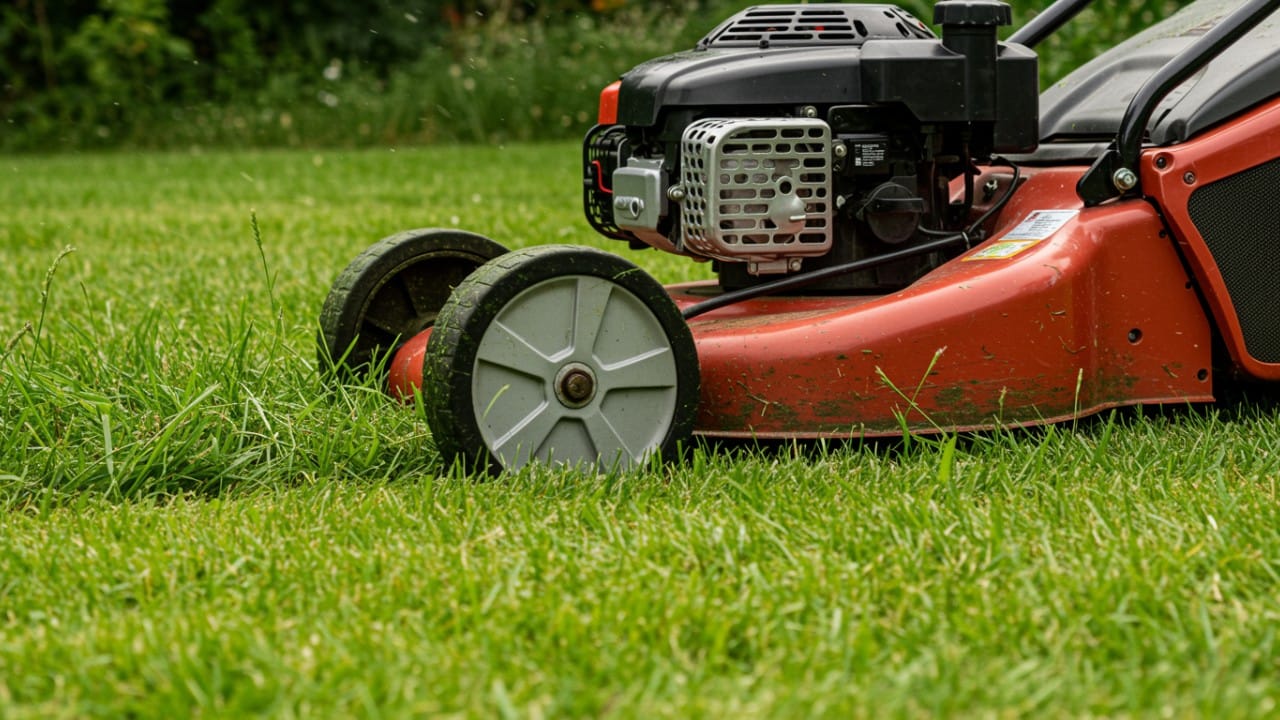
Hot weather is not the time to cut grass short. Lower mowing exposes the soil, lets moisture escape faster, and raises temperatures around the roots. Simply raising the mower to about 3 or 4 inches can make a noticeable difference by shading the soil and keeping it cooler.
Leaving the grass a little taller also gives the plant more leaf surface to work with, which helps it keep producing energy under stress. Try not to remove more than a third of the blade height in one mow, and if the heat is extreme, it’s often better to wait and mow later.
Step 4. Minimizing Lawn Traffic
Heat-stressed grass is easily damaged by pressure. Foot traffic, pets, and lawn equipment can crush grass crowns, slowing recovery or causing bare spots that may not fill back in.
Limiting activity allows the turf to focus its energy on root repair rather than physical recovery.
Common Mistakes to Avoid During a Heat Wave
When a lawn turns brown, it’s tempting to intervene aggressively. Unfortunately, some common responses can worsen the situation.
Applying High-Nitrogen Fertilizer
Avoid fertilizing during periods of high heat. Purdue University Turfgrass Science advises against summer fertilization for cool-season grasses because nitrogen promotes rapid top growth. Stressed roots cannot support that growth, often leading to fertilizer burn and further decline.
Using Strong Herbicides
It’s best to hold off on weed killers when it’s hotter than 85°F. Heat can make some herbicides turn into vapor, which can drift onto healthy grass or nearby plants and cause damage. Adding chemical stress on top of heat stress makes it much harder for your lawn to bounce back.
In really hot weather, sometimes the smartest move is just to do less and let the grass rest.
Long-Term Prevention: Building a Heat-Resistant Lawn
Recovery is only part of the equation. Building resilience helps prevent repeat damage next summer.
Doing core aeration in the spring or fall helps loosen compacted soil and lets water soak in more easily. That means roots can grow deeper and reach moisture even during hot, dry spells.
Planting or overseeding with drought-tolerant grass also makes a difference. Tall fescue, for example, grows deep roots and does well in many areas, while Bermuda grass handles southern heat better.
When you pair these steps with regular, smart watering, the lawn becomes much stronger and better prepared to handle summer heat before it ever becomes a problem.
FAQ about Heat-Stressed Grass
Will heat-stressed grass come back?
Most of the time, yes. If the base of the grass is still alive, cool-season lawns usually start to green up again within a couple of weeks once the heat eases and watering becomes consistent.
How long does it take for grass to recover from heat stress?
It depends on how badly the lawn was stressed, but many yards show improvement in about two to three weeks with steady care.
Is my grass dead or just heat-stressed?
Try gently pulling on it. If it comes up easily, like a loose rug, that area may be dead or damaged by grubs. If it stays rooted, the grass is likely just stressed or resting.
Conclusion
When summer heat takes its toll, trying to do too much can actually make things worse. Strong chemicals and quick fixes often end up stressing the lawn even more. Sticking to the basics: watering deeply, raising the mower a bit, and giving the grass some time usually works best. Watch how your lawn responds, and in most cases, it will start bouncing back once the weather cools down.