
How Do You Use PTFE Tape? 5 Steps for Leak-Free Garden Connections

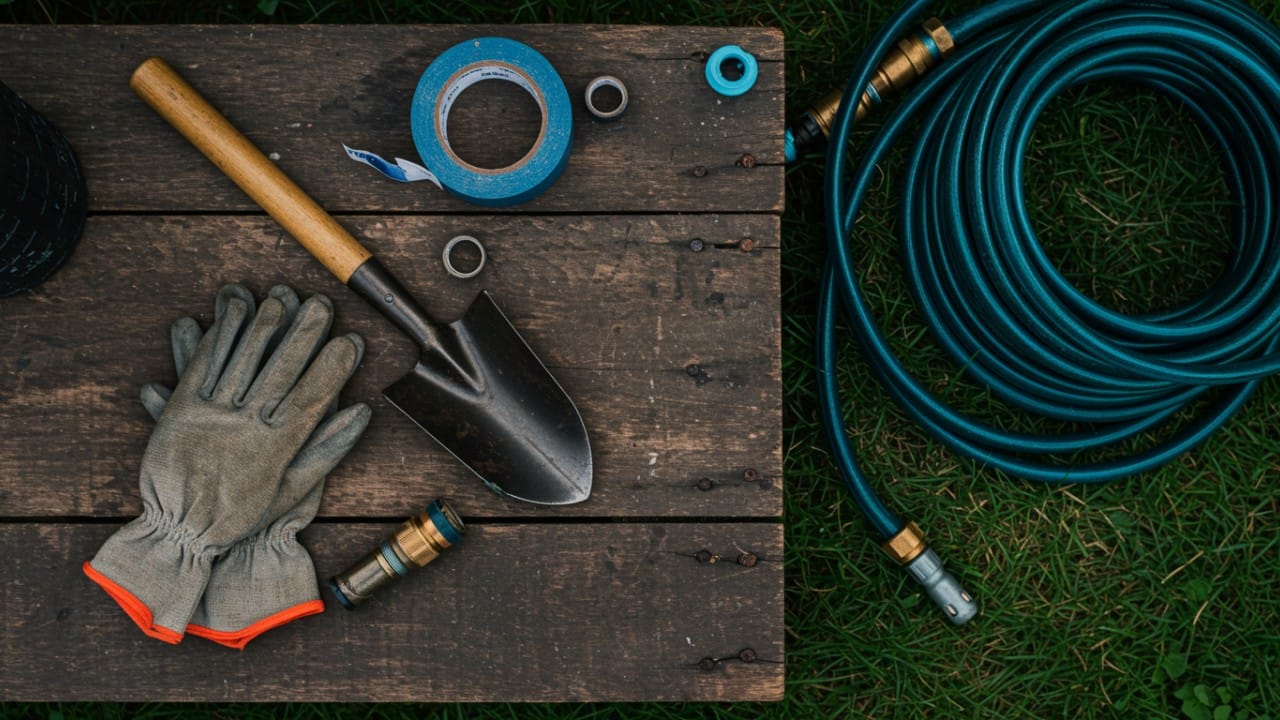
Is there anything more annoying than the sound of a dripping faucet when you're trying to enjoy your backyard? Drip. Drip. Drip.
It’s not just water hitting the concrete; it’s the sound of your utility bill ticking up, penny by penny. Whether you are wrestling with a new DIY watering system or trying to silence that old spigot behind the garage, the difference between a bone-dry connection and a puddle usually comes down to one inexpensive little tool: PTFE tape.
You’ve probably seen it before—that thin, white, flimsy film often called plumber's tape or thread seal tape. It’s a staple in every pro’s toolbox for a reason. But here is the catch: simply having a roll isn't enough. You have to apply it with a bit of finesse.
In this guide, we aren't just giving you the textbook definition. We’re going to show you exactly how do you use PTFE tape to ensure your outdoor faucets, irrigation pipes, and fittings stay sealed tight. Master this simple skill, and you’ll save yourself a headache—and save the garden from drowning.
What Is PTFE Tape and When Should You Use It?
PTFE (a mouthful regarding Polytetrafluoroethylene) is basically a silky, water-repelling skin for your pipes. When you wrap it around threads, it does two jobs:
1. It acts as a lubricant: It helps metal pipes screw together deeper and smoother without seizing up.
2. It fills the gaps: It squishes into the microscopic imperfections between the threads to stop water from sneaking through.
When to Use It (The Golden Rule)
Keep it simple: use thread seal tape on threaded connections. If you are screwing two hard pipes together—like PVC to a valve, or a showerhead arm to the wall—grab the tape.
- Installing irrigation valves or timers? Yes.
- Joining threaded PVC or metal pipes? Yes.
When NOT to Use It
This is where most people get it wrong and end up making leaks worse. Do not use plumber's tape if the connection has a rubber gasket or washer inside.
Think about your garden hose. You know that little black rubber ring inside the connector? That ring does all the sealing work. If you wrap tape around the spigot threads, it prevents the hose from screwing on all the way. The rubber ring never gets compressed, and water sprays everywhere. Put the tape away for hose connections.
The Real Cost of Leaks
Ignoring a small leak feels easy, but the numbers are ugly. The U.S. Environmental Protection Agency (EPA) WaterSense program estimates that household leaks waste nearly 1 trillion gallons of water annually nationwide. That’s enough to fill millions of swimming pools. A fifty-cent roll of tape can literally save thousands of gallons.
How Do You Use PTFE Tape Correctly? (Step-by-Step Guide)
Wrapping tape looks like the easiest thing in the world, right? But there is a right way and a wrong way. Do it wrong, and the tape just bunches up into a useless ball. Follow these steps to get it right the first time.
Step 1: Clean the Threads Like You Mean It
You wouldn't paint over a dirty wall, so don't tape over dirty threads. The male threads (the external ones) need to be pristine.
- Peel off any old, stringy tape from previous repairs.
- Grab an old toothbrush or a rag and scrub out the dirt, grit, or old pipe dope.
Why bother? Even a single grain of sand trapped under the tape can create a tiny channel for water to escape.
Step 2: Face the Right Direction (Don't Skip This)
If you only remember one thing from this guide, make it this: Direction matters.
You must wrap the tape in the same direction that the pipe turns (clockwise).
- The Trick: Hold the pipe in your left hand with the threads facing you. Hold the roll of tape in your right hand. Lay the end of the tape on top of the threads and unroll it away from you (downwards).
- The Logic: When you wrap clockwise, screwing the pipe into the fitting tightens the tape down naturally. If you wrap it backward (counter-clockwise), the motion of screwing the pipe in will just peel the tape right off. It’s frustrating, and it won't seal a thing.
Step 3: Apply Some Tension
Don't just drape the tape over the pipe like a blanket. You need to pull it taut as you wrap.
- Stretch the tape slightly so that you can actually see the shape of the threads pressing through the white film.
- This tension forces the tape into the "valleys" (grooves) of the threads. You want it snug, not floating on top.
Step 4: The Rule of Wraps
How much tape is too much?
For most 1/2" or 3/4" garden fittings, 3 to 6 full wraps is the sweet spot.
Find the Balance: If you only do 1-2 wraps, it’s probably too thin to seal. But be careful with plastic irrigation fittings. If you wrap it 10 times, you are artificially increasing the pipe's diameter. When you wrench that into a plastic valve, the outward pressure can crack the female fitting.
Step 5: Finish and Smooth
Once you’ve hit that 3-6 wrap mark:
- Pull the tape firmly to snap it off (or cut it if you want to be fancy).
- Run your thumb over the taped threads to smooth down the loose end.
- Screw the connection together immediately.
Common Mistakes to Watch Out For
Even with the best intentions, things go sideways. Here are the pitfalls to avoid during your irrigation system maintenance:
- The Hulk Grip: PTFE tape is slippery. It makes pipes feel like they can keep turning forever. They can’t. Tighten by hand first, then give it just a quarter-turn with a wrench. If you over-tighten, you risk stripping the threads or cracking the housing.
- The "Overhang": Make sure the tape doesn't hang over the opening of the pipe. If little shredded bits of tape break off inside, they flow downstream and get stuck in your sprinkler heads or smart valves.
- The Re-Do: Never try to unwind and reuse tape. Once it’s been squished into threads, it’s done. If you have to unscrew the pipe, strip the old tape and start fresh.
Applying Tape for Smart Irrigation Systems
Modern gardens are getting smarter. We’re seeing more homeowners install Wi-Fi controllers and flow meters to optimize water usage. But here is the thing: the most advanced software in the world can’t fix a bad physical installation.
Take the Aiper IrriSense 2, for example. It’s a precision device designed to monitor water usage in real-time and alert you to leaks via an app. But for the device to tell you the truth about your water usage, the intake connection needs to be flawless.
If water is dripping before it even gets into the sensor because of a bad seal, your data is off. By correctly applying PTFE tape to your spigot before attaching the IrriSense 2, you ensure that the physical connection is as reliable as the digital one. It’s a low-tech solution for a high-tech problem.
Pro Tip: The University of Florida IFAS Extension suggests checking all your irrigation connections when the seasons change. Heat and cold expand and contract pipes, which can loosen seals over time.
Quick Guide: Choosing the Right Tape Color
Not all tape is created equal. Most of the stuff you find in the junk drawer is white, which is great, but color codes exist for a reason:
Tape Color |
Density |
Primary Use |
Suitable for Garden? |
White |
Standard |
Basic plumbing, water lines |
Yes (Best Choice) |
Pink |
High |
Heavy-duty plumbing lines |
Yes (For larger pipes) |
Yellow |
High |
Gas lines / Propane |
NO (Dangerous) |
Green |
High |
Oxygen lines |
NO |
FAQ: Common Questions About Thread Seal Tape
Q: Do I need PTFE tape on garden hose fittings?
A: Generally, no. Garden hoses rely on that little rubber washer inside. Adding tape usually just gets in the way and causes leaks. Only use tape if it's a metal-to-metal connection without a washer.
Q: How many times should I wrap Teflon tape?
A: For most home tasks, 3 to 6 wraps work. If the tape is cheap and thin, go for 5-6. If it's thick quality tape, 3-4 might be plenty.
Q: Can I use PTFE tape on PVC pipes?
A: Absolutely. Just be gentle. Don't use too much tape and don't crank it down too hard, or you might crack the PVC fitting.
Final Thoughts
Mastering how do you use PTFE tape isn't exactly rocket science, but it is a skill that pays off. By cleaning your threads, wrapping in the right direction (clockwise!), and not overdoing it, you get connections that stay dry for years.
A watertight system is the first step toward a greener garden. Whether you are fixing a simple drip or upgrading to the Aiper IrriSense 2, take the extra two minutes to seal it right. Your wallet—and the planet—will thank you.
References:
● U.S. Environmental Protection Agency. (2024). Statistics and Facts. WaterSense.
● University of Florida IFAS Gardening Solutions. (n.d.). Irrigation System Maintenance.