
How to Open a Pool: A Step-by-Step Guide to a Scientific Clean
Opening a pool is a science, not a chore. Follow a 4-step workflow: physical prep, chemical shock, precision robotic cleaning, and smart balancing. This saves time, protects your equipment, and ensures a crystal-clear swim season.

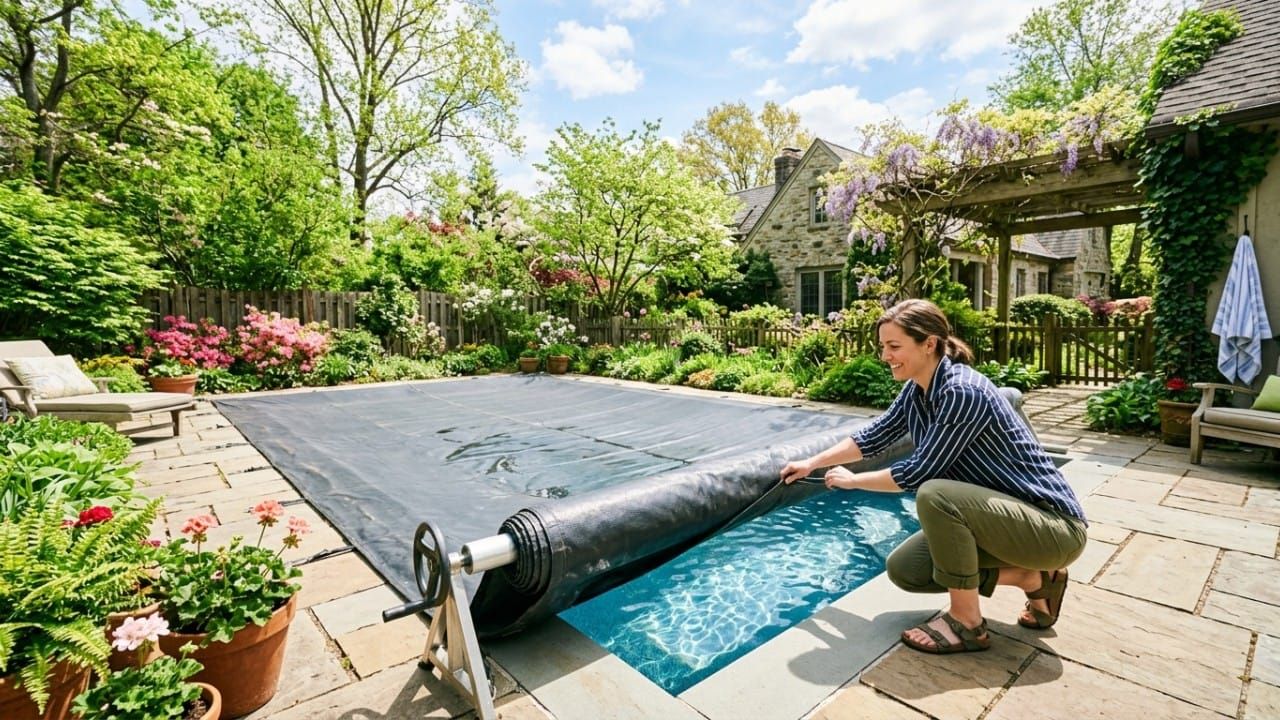
Opening a pool for the summer is a mechanical and chemical process, not just a weekend chore. Doing it wrong—like blindly dumping chlorine or tossing an expensive robotic cleaner into a swamp—can cost you hundreds of dollars in wasted chemicals and damaged equipment.
If you are wondering how to open a pool the right way, you need a strategy that pool professionals actually use. This guide bridges the gap between basic instructions and expert-level troubleshooting, ensuring you don't end up with a blown pump motor or cloudy water that lasts for weeks.
Welcome to the new era of pool maintenance. By following this scientific, step-by-step workflow, you can protect your equipment and achieve crystal-clear perfection without the frustration.
Quick Checklist: Costs, Tools, and Chemicals
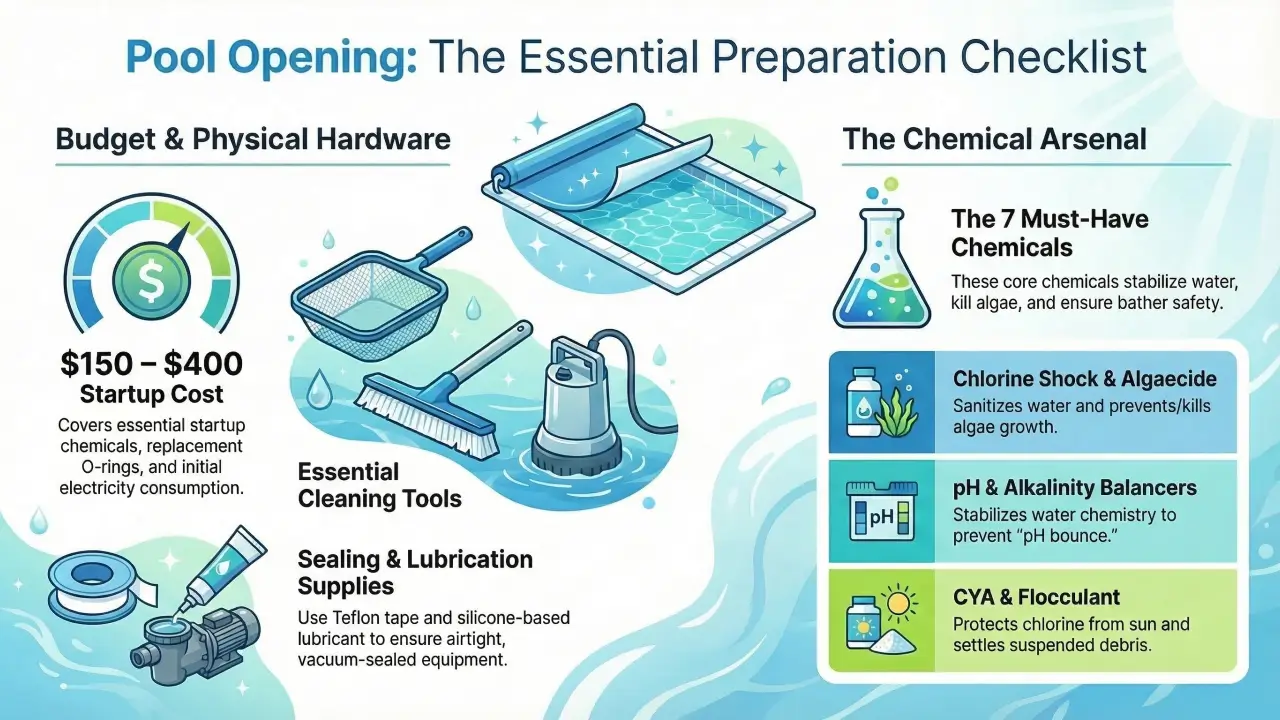
Before you touch the pool cover, gather your supplies. Depending on the condition of your pool, expect the cost to open a pool to range between $150 and $400 (covering startup chemicals, replacement O-rings, and electricity).
The Essential Hardware:
- Heavy-duty skimmer net and nylon/wire pool brush
- Teflon tape (plumber's tape) and Silicone-based O-ring lubricant
- Cover pump
The 7 Must-Have Opening Chemicals:
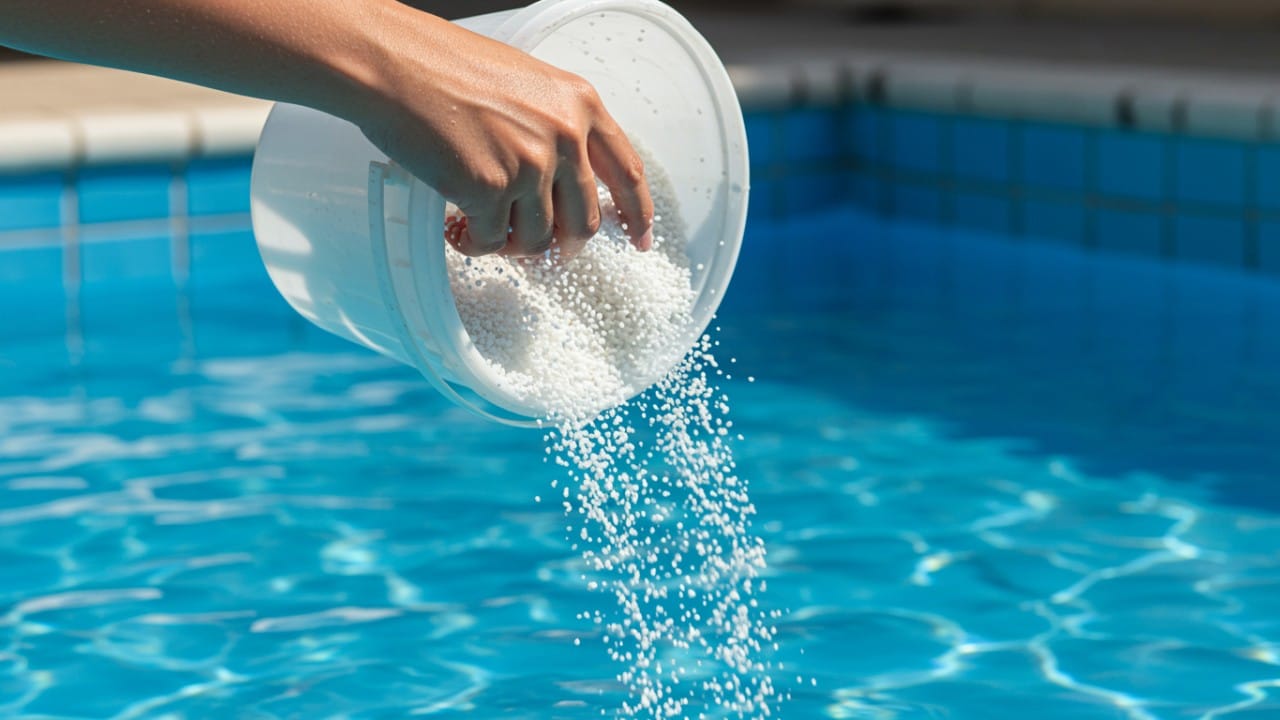
- Chlorine Shock (Calcium Hypochlorite or Liquid Chlorine)
- Cyanuric Acid (CYA) (Chlorine stabilizer)
- Alkalinity Increaser (Sodium Bicarbonate)
- pH Up / pH Down
- Flocculant (To settle suspended particles)
- Algaecide (Optional, as a preventative measure)
- Water Testing Kit (or a smart monitor)
Phase 1: Physical Cleaning & Hardware Reboot
The biggest mistake beginners make is turning the pump on without inspecting the hardware. This phase is about safely waking up your pool's circulatory system.
Step 1: Uncover and Triage
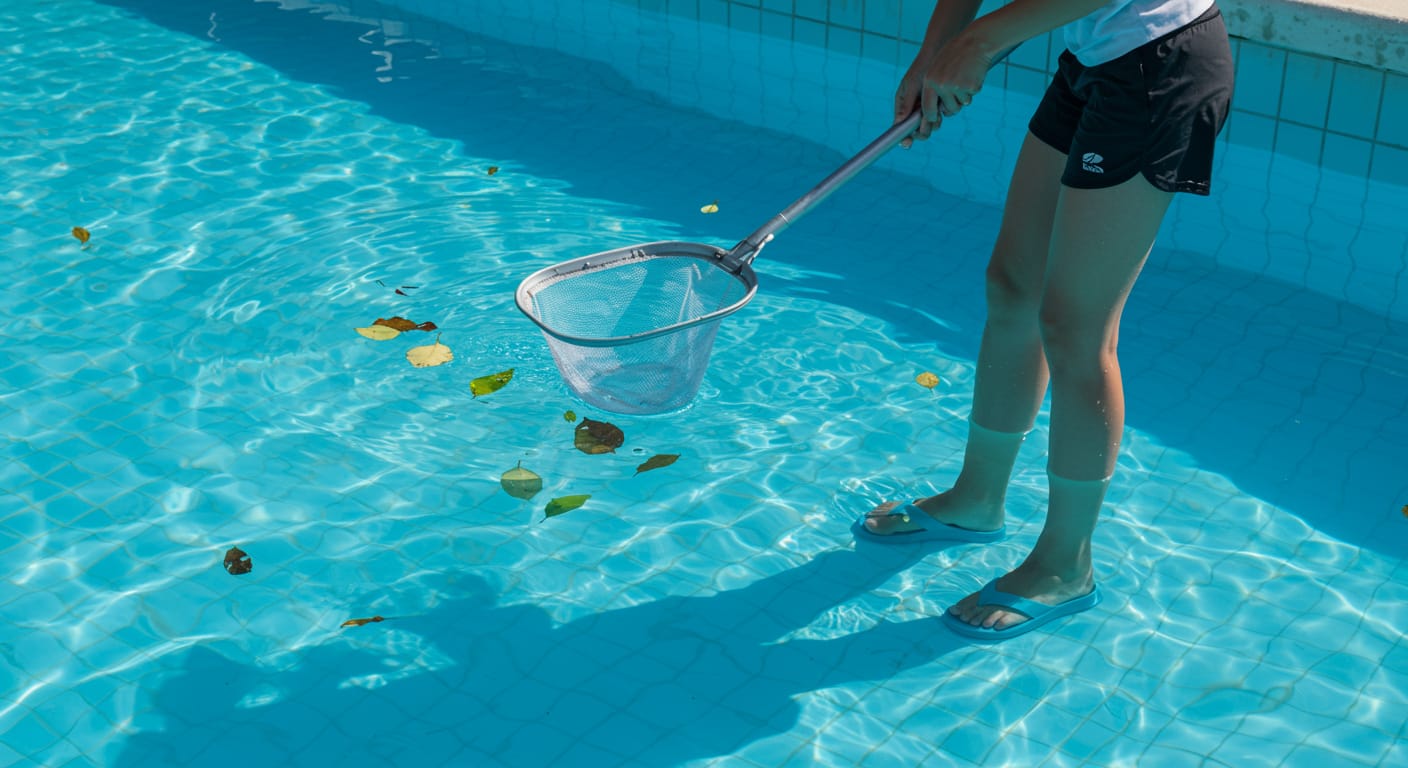
Pump off any standing water from your winter cover. Clean the cover, dry it completely, and store it. Manually use your skimmer net to remove large solid debris from both the water surface and the underwater pool floor—such as fallen branches and dense clusters of leaves. Do not worry about fine dirt yet.
Note for Above-Ground Pools: If you have an above-ground pool, ensure your return hoses and skimmer lines are securely clamped before moving to the next step, as these are prone to winter cracking.
Step 2: Lubrication and Plugs
- Remove all winterizing plugs from your skimmer and return jets.
- Reinstall the drain plugs on your pool pump and filter housing.
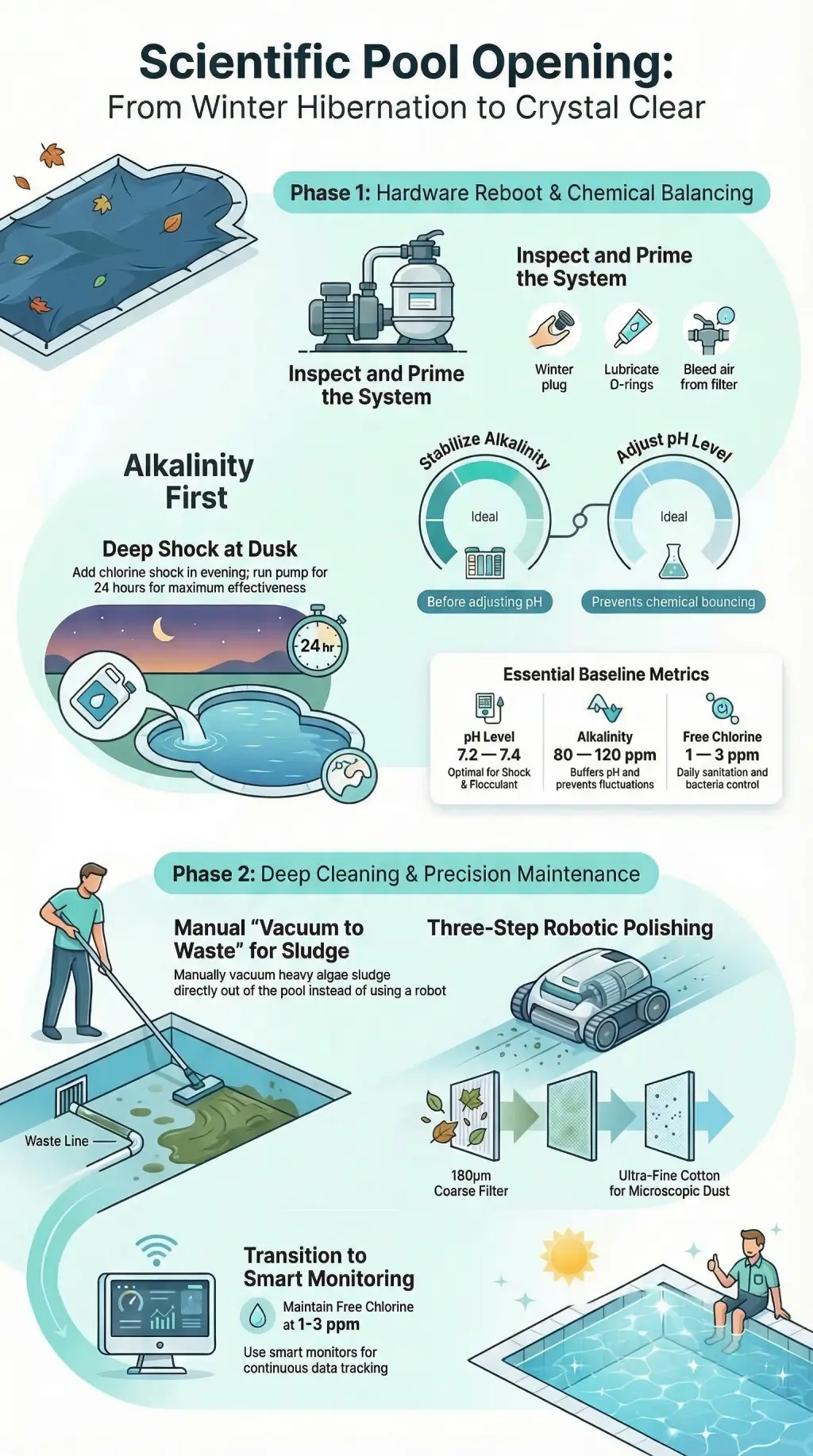
- Crucial Step: Check the O-ring on your pump lid. If it looks dry or cracked, replace it. Apply a generous coat of silicone-based lubricant to the O-ring to ensure a perfect vacuum seal.
Step 3: Priming the Pump and Air Bleeding
Never run a pool pump dry. Fill the pump strainer basket with water from a garden hose. Secure the lid tightly. If you have a sand or D.E. filter, open the air relief valve on top of the filter tank. Turn on the pump. You will hear air hissing out of the valve. Once a steady stream of water squirts out, close the valve immediately. Your system is now primed.
Step 4: Baseline Your Pressure Gauge
Look at your filter's pressure gauge. A clean system usually runs between 10 to 15 psi. Take note of this "clean starting pressure." When the gauge reads 8 to 10 psi above this baseline, it is time to backwash (for sand filters) or clean your cartridge filter.
Phase 2: Chemical Shock, Settle, and Vacuum to Waste
This is where the science happens. If you mess up the chemical order, you will be fighting cloudy water for weeks.
The Golden Rule: Alkalinity First
Always adjust Total Alkalinity before pH. Alkalinity acts as a buffer; if it's off, your pH will constantly bounce around. Aim for 80 to 120 ppm. Once Alkalinity is stable, adjust your pH to a strict 7.2 to 7.4 range for the opening process.
The CYA Check
Test your Cyanuric Acid (CYA) levels. CYA protects chlorine from the sun, but if it’s too high (above 50 ppm), it causes "chlorine lock," rendering your shock completely useless. If CYA is too high, the only fix is partially draining and refilling the pool.
The Deep Shock & Flocculant Drop
Once your pH is around 7.2, shock the pool at dusk. Leave the pump running for 24 hours.
If your pool is full of dead, suspended algae (milky white or green water), add a pool clarifier or a flocculant. Important: Flocculant only works if the pH is between 7.2 and 7.4, and the pump is turned OFF. Let the water sit still overnight. The flocculant will bind the microscopic algae into heavy clumps that sink to the bottom.
The Manual "Vacuum to Waste"
If you have a thick layer of dead algae sludge on the pool floor, do not deploy a robotic cleaner yet. The fine algae dust will simply pass through the robot's filters, shoot out the propeller, and turn your pool cloudy again. Instead, set your multiport valve to "Waste" and manually vacuum that heavy sludge directly out of the pool.
Phase 3: The Tech Takeover – Precision Cleaning
Once the water chemistry is stable, achieving a pristine pool floor requires a strict three-step approach:
- Evacuate the Sludge and Flocculant Clumps: If your pool floor is covered in a large amount of visible coagulated debris, continue using a manual vacuum or Vacuum to Waste first.
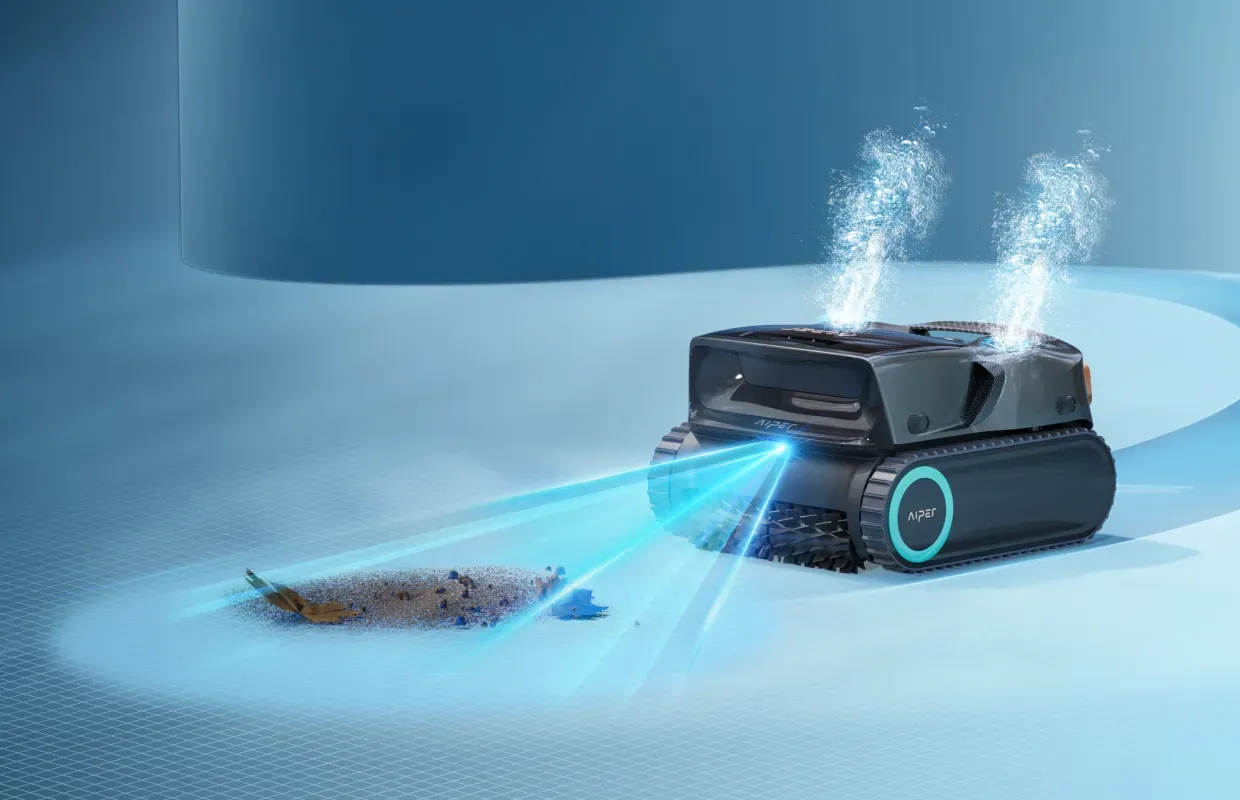
- Clear the Solid Debris: Now let Aiper’s intelligent robotic cleaners step in. Equip your robot with the 180μm coarse primary filter to pick up remaining solid debris.
- Polish the Fine Dust: Switch your robot to the ultra-fine secondary filter cotton to capture microscopic dust and silt.
Match the tech to your specific backyard needs:
- For the "Set It and Forget It" Minimalist: The Aiper Scuba S1 is the ultimate best-selling solution for frequent maintenance.
- For Tough Stains and Stubborn Debris: The Aiper Scuba X1 Pro Max provides enhanced scrubbing power.
- For Resort-Style Precision: The Aiper Scuba V3 maps your pool's topography for comprehensive coverage.
- The Ultimate Surface Solution: Deploy the Aiper Surfer S2, a solar-powered surface skimmer that captures floating debris.
Phase 4: Precision Balancing & Daily Maintenance
With the heavy physical cleaning complete, focus on water monitoring.
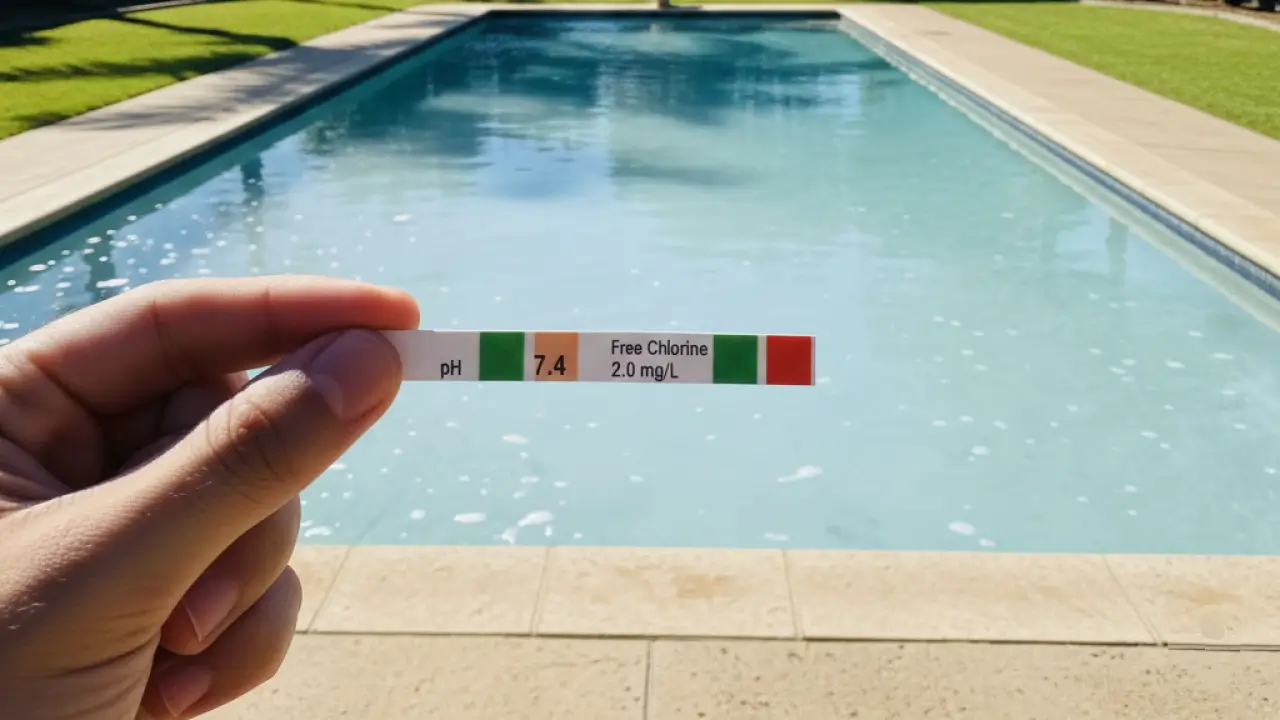
For ongoing daily maintenance, your top priorities are Free Chlorine and pH levels:
- Free Chlorine: Maintain between 1 and 3 ppm to sanitize the water.
- pH Levels: Keep between 7.2 and 7.6 for effective chlorine performance.
Stop relying on messy chemical drop kits. Test the water chemistry with the Aiper HydroComm Pure pool monitor, which continuously analyzes your water and sends data to your smartphone.
Frequently Asked Questions & Troubleshooting
Help! My pool pump won't prime and is making a high-pitched whining noise.
Turn off the power immediately. A whining pump usually means an air leak on the suction side. Check water level, skimmer doors, and the pump lid O-ring.
I added shock and flocculant, but the water is still cloudy.
Ensure the pump is off for flocculant settling, confirm pH is 7.2–7.4, and keep filtering if dead algae remain.
I found a leak dripping from my PVC fittings.
Unscrew the fitting, wrap threads with 3–4 layers of Teflon tape, and tighten again.
Can I put my robotic pool cleaner in green water?
Absolutely not. Green water indicates severe algae bloom and requires chemical shock and manual vacuuming first.
When is it safe to swim after opening?
When water is clear, the pool floor is visible, Free Chlorine is below 5 ppm, and pH is between 7.4 and 7.6.
Ready for a Sparkling Summer?
Opening your pool shouldn't be a test of endurance. By adopting a scientific approach—using manual techniques and chemistry for the heavy lifting, and Aiper’s advanced robotics for precision cleaning and monitoring—you transform a grueling weekend chore into a simple, satisfying workflow. Ditch the manual labor this season. Let the technology handle the heavy details, so you can focus on what a pool is actually meant for: diving in, cooling off, and creating unforgettable summer memories.
Ready to build your ultimate smart pool ecosystem? Explore the full range of Aiper Scuba vacuums, the Surfer S2, and the HydroComm water monitor today.