
How to Remove Pool Stains: Identify Metal vs Organic & Prevent Them

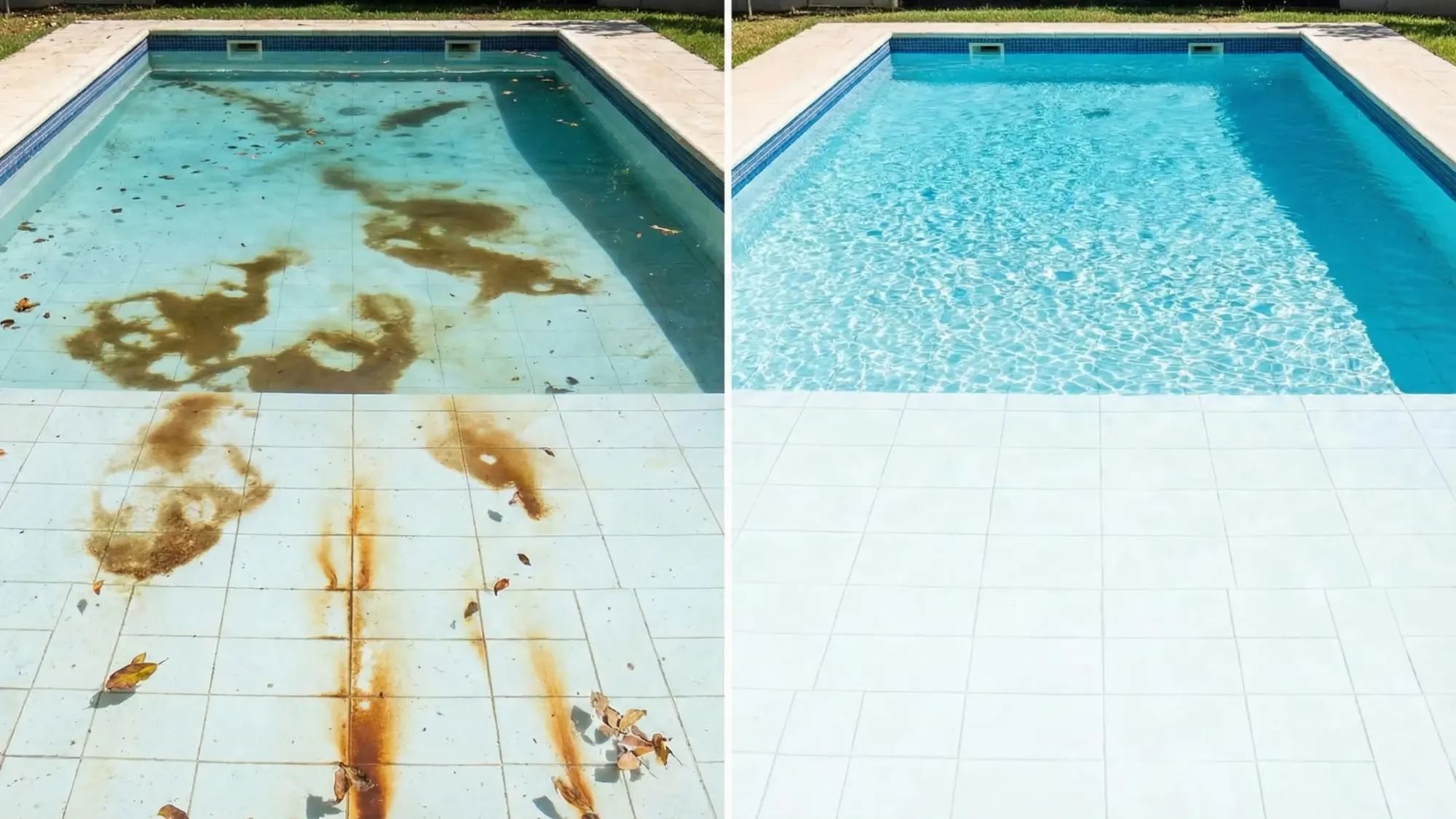
You walk out to your pool ready for a swim, only to find an ugly brown blotch on the bottom or a purple ring around the waterline. Your first instinct is probably to dump a bag of shock in the water and hope it bleaches it out.
Stop.
If that stain is caused by metal (like iron or copper), adding shock will not only fail to fix it—it can actually oxidize the metal and make the stain permanent.
Treating a pool stain is like treating an illness: you must diagnose the root cause before you prescribe the medication. This guide will walk you through exactly how to identify the stain, test it safely, and remove it without damaging your liner or plaster.
Diagnose Before You Treat: Is it Metal or Organic?
Before you buy a single chemical, you need to know if the stain is "alive" (organic) or "mineral" (metal). Most confusion comes from skipping this step.
The Vitamin C Spot Test (Testing for Metal)
This is the gold standard for identifying iron or copper stains.
- Get the Tester: Buy a small bottle of vitamin C tablets (ascorbic acid) from a pharmacy.
- Prepare: Crush a few tablets into a powder or put a whole tablet inside a thin sock.
- Test: Hold the tablet/sock directly against the stain for 30 seconds.
- The Result: If the stain lightens or vanishes, it is a metal stain. The ascorbic acid has chemically lifted the metal from the surface.
The Chlorine Puck Test (Testing for Organics)
Use this if you suspect leaves, algae, or dirt.
- Get the Tester: Take a chlorine tablet (trichlor puck) or a small handful of granular shock in a sock.
- Test: Hold it against the stain for 60 seconds. Note: Do not leave it longer on a vinyl liner to avoid bleaching the pattern.
- The Result: If the stain fades, it is an organic stain. The chlorine is breaking down the organic tannins or algae.
Stain Color Identification Guide
If you can't easily reach the stain to test it, the color is your next best clue.
| Stain Color | Likely Cause | Common Culprits |
|---|---|---|
| Green, Brown, or Yellow-ish | Organic |
Decaying leaves, dead algae, or dirt. (Exception: Bright yellow/brown can sometimes be Iron.) |
| Red, Rusty, or Orange | Iron | Rusted pool ladder, hairpins, fertilizer runoff, or high-iron well water. |
| Blue, Black, or Purple | Copper or Manganese | Corroded heater cores (from low pH), cheap algaecides with copper, or Black Algae in Pool: Causes & Treatment. |
| Pink or Reddish Clusters | Bacteria | "Pink Slime" (a bacterial biomass, often found on PVC pipes/lights). |
How to Remove Organic Stains (Algae & Leaves)
Organic stains are the "good" news. They are usually temporary and easy to fix with patience and chlorine.
1. Superchlorination (Shocking)
Because these stains are biological, high levels of sanitizer will bleach them out.
- Action: Raise your free chlorine levels to "Shock" level (usually 10-20 ppm).
- Duration: Maintain this high level for 48 hours.
- Tip: Be sure to check How Long After Shock Can You Swim: A Safety Guide before jumping back in.
2. Scrubbing and Enzyme Treatments
If shock doesn't work, the organic material might be trapped in the pores of the plaster or liner.
- Enzymes: Add a pool enzyme product. These digest the non-living organic oils and tannins that chlorine struggles to break down.
- Heavy Brushing: You must physically agitate the surface to allow the chlorine to penetrate. This is especially true if you are trying to learn how to clean a dirty pool wall. where biofilm accumulates.
How to Remove Metal Stains (Iron & Copper)
Metal stains are stubborn. You cannot bleach them; you must chemically dissolve them and then "sequester" (trap) them so they don't return.
Step 1: Lower Chlorine and pH
Ascorbic acid (the main stain remover) is destroyed by high chlorine.
- Let your chlorine level drop to 0 ppm.
- Simple Steps to Lower pH in Swimming Pool to 2. This slightly acidic environment helps lift the stain.
Step 2: Apply Ascorbic Acid
- Add commercial ascorbic acid (often sold as "Stain Free") according to the bottle's instructions.
- Set your pump to circulate.
- Watch the magic: Most iron stains will disappear within 30 minutes.
Step 3: The Critical Step—Sequestering Agent
This is where most people fail. The metal is now floating in your water, invisible. If you add chlorine now, it will oxidize and re-stain the wall immediately.
- Add a metal sequestering agent immediately after the stain lifts.
- This chemical "hugs" the metal particles, preventing them from sticking to the wall or reacting with chlorine.
- Only gradually bring your chlorine levels back up after 24 hours.
How to Prevent Stains From Returning
The best way to handle stains is to stop them before they bond to your pool surface.
1. Daily Debris Removal & Scrubbing
Organic stains occur when leaves, berries, or acorns sit on the pool floor for too long. If they rot in one spot, they leave a tannin mark. Similarly, the "bathtub ring" at your waterline is caused by pollen and oils baking onto the tile.
Consistent maintenance is key here. Ideally, you want a solution that doesn't require you to manually scrub the walls every single day.
A modern device like the Aiper Scuba X1 Pro Max is excellent for this preventive maintenance. Because it features Smart Pool Mapping, it ensures 100% of the pool floor is covered, picking up organic debris before it has time to break down and stain. Additionally, its MicroMesh™ Ultra-Fine Filter captures algae spores and fine dust that standard filters often miss.
Most importantly for stain prevention, the Scuba X1 Pro Max includes Smart Horizontal Scrubbing. It actively scrubs the waterline—the most common area for organic buildup—keeping that difficult area polished without you having to lean over the edge with a brush.
2. Manage Water Balance
- Watch your pH: If pH drops below 7.0, your water becomes acidic and eats the copper inside your pool heater. This copper then deposits blue/purple stains on your plaster.
- Monitor Water Quality: Using tools like Aiper’s HydroComm Pro allows you to monitor water quality and control cleaning from the app, ensuring you never miss a cleaning cycle even when you aren't poolside.
- Learn the Basics: If you are unsure about your chemical levels, review our guide on How to Test Pool Water: A Guide for Beginners
3. Test Source Water
If you fill your pool from a well, you are likely pumping iron and copper directly into the pool. If you have metal-heavy water, you must use a sequestering agent as a weekly maintenance dose.
Common Questions About Pool Stain Removal
Will shock remove metal stains?
No. Shock (high chlorine) causes metals to oxidize (rust). If you shock a metal stain, it will likely turn darker or black. Always test with vitamin C first.
Can algae permanently stain a pool?
Black algae can. It has roots that dig into plaster, tearing the surface and leaving permanent pockmarks. Regular green algae usually washes away easily, but if left for months, it can leave a greenish tint that requires acid washing to remove.
Does pool water stain clothes?
High copper levels in pool water can stain light-colored bathing suits green. High chlorine levels generally bleach clothes rather than staining them.