
How to Remove Tiny Algae (and Algae Dust) From Your Swimming Pool
Tiny algae dust in pools is difficult to remove because the particles are smaller than most pool filters can trap. Using flocculant, clarifier treatments, or ultra-fine robotic filtration can eliminate the dust and restore crystal-clear pool water.

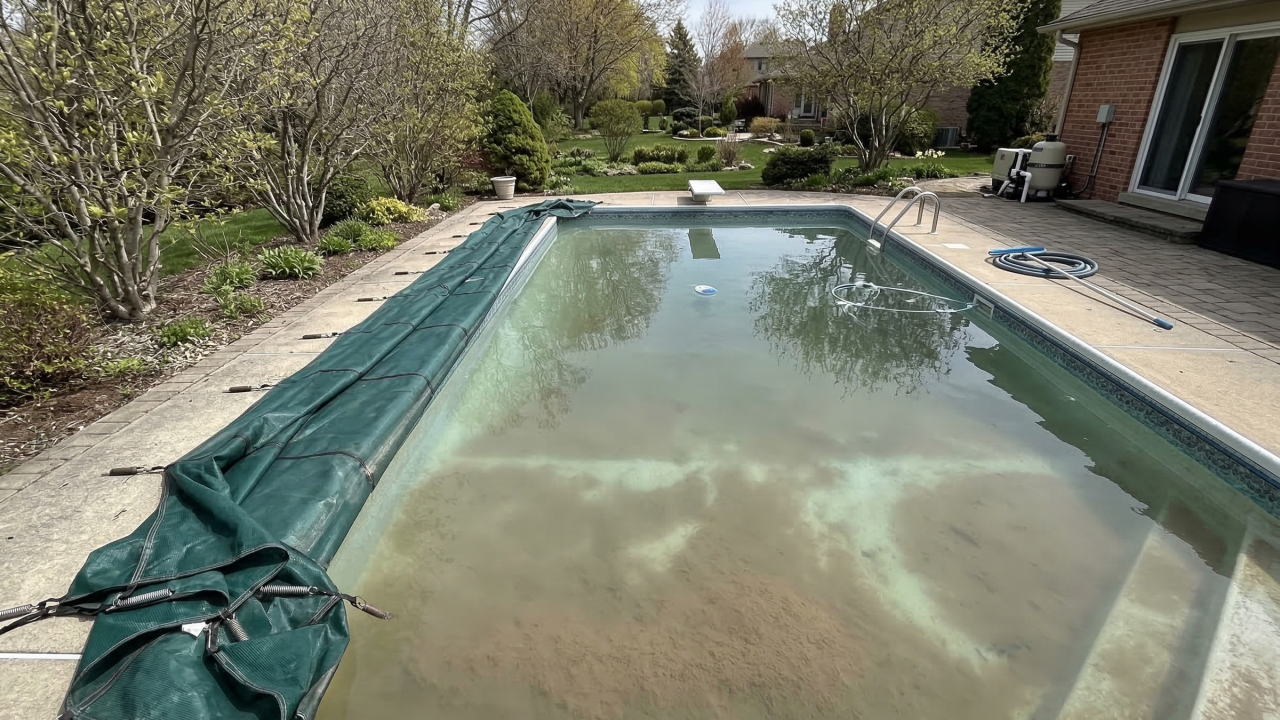
Spring is here, and it’s finally time to open the pool. But pulling back that winter cover often reveals a less-than-inviting green swamp rather than a crystal-clear oasis.
It can be incredibly frustrating: you tackle that initial spring algae bloom, you do everything right by heavily shocking the water, and the green color is finally gone. But now, you are left with cloudy water or a fine, powdery substance settling on the pool floor. Every time you try to vacuum it up, it seems to vanish, only to reappear hours later.
What you are likely dealing with is algae dust—the microscopic, dead remains of the algae you just killed. Because these particles are so incredibly small, they create a unique filtration challenge that standard pool maintenance routines struggle to fix.
Here is exactly why this tiny algae won't go away, and the step-by-step methods to finally clear it out of your water so you can actually start your swimming season.
Why Is Tiny Algae So Hard to Remove?
To fix the problem, you first have to understand why your pool equipment is failing to remove it. It all comes down to size.
The Micron Problem
Pool filtration is measured in microns (a microscopic unit of measurement). To put things in perspective, a single grain of sand is about 100 microns across. Dead algae dust is remarkably small, often measuring between just 1 to 5 microns.
The bottleneck is your main pool filter. A standard sand filter is only capable of trapping debris down to about 20 to 40 microns. Even a standard cartridge filter maxes out around 10 to 20 microns. Because the tiny algae dust is smaller than the pores of your filter, it simply slips right through the system.
The "Vacuuming in a Circle" Trap
This size discrepancy leads to the most common point of frustration for pool owners: the vacuuming loop. If you manually vacuum this fine powder while your pool system is set to the standard "Filter" setting, the dust gets sucked up, travels through your pipes, passes straight through the sand or cartridge filter, and shoots right back into the pool through the return jets. You aren't removing the algae; you are just relocating it.
Method 1: The "Floc and Drop" (Vacuuming to Waste)
If your pool is heavily clouded with suspended algae dust after your spring shock, the fastest and most aggressive method is using a pool flocculant (often called "floc"). Flocculant is a chemical that binds to the tiny algae particles, making them heavy so they sink directly to the pool floor.
Here is how to execute the "floc and drop":
- Adjust your pH: Ensure your pool pH is balanced (between 7.2 and 7.6) so the chemical can work effectively.
- Add the Flocculant: Broadcast the flocculant across the pool surface according to the bottle's dosage instructions.
- Circulate, then wait: Run your pump for two hours to mix the chemical, then turn the pump completely off for 12 to 24 hours. The tiny algae will coagulate and drop to the floor, looking like a thick, cloudy blanket.
- Vacuum to Waste: This is the critical step. You must set your multiport valve to the "Waste" This bypasses the filter entirely, sucking the algae dust off the floor and dumping it straight out of your pool's waste line or backwash hose.
Note: Vacuuming to waste will lower your pool's water level rapidly. Keep a garden hose running in the pool while you do this.
Method 2: Clumping with a Pool Clarifier
If the algae dust is only causing a mild haze and you do not want to drain water out of your pool by vacuuming to waste, a pool clarifier is your best option.
Unlike a flocculant that drops debris to the floor, a clarifier acts as a gentle coagulant. It acts like a magnet, clumping the 2-micron algae particles together until they form larger, 20-micron clusters. Once the particles are clumped together, they are finally large enough for your standard pool filter to trap them.
- The Process: Add the clarifier and run your pump 24/7 until the water is clear.
- The Catch: Because your filter is finally catching all that dead algae, the pressure will rise quickly. You will need to clean pool filter systems or backwash much more frequently during this process to ensure the system doesn't clog.
Method 3: Upgrading Your Filtration (The Smart Way)
Relying entirely on heavy chemical doses and manual labor is exhausting, especially when you are just trying to get the pool open for the summer. The smartest way to handle microscopic debris is to upgrade your physical filtration capabilities to catch the dust where it settles.
Using Skimmer Socks
A cheap and easy first line of defense is wrapping a skimmer sock (a fine mesh net) around your skimmer basket. This acts as a pre-filter, catching a surprising amount of fine debris and early-season pollen before it ever reaches your main pump.
Ultra-Fine Robotic Filtration
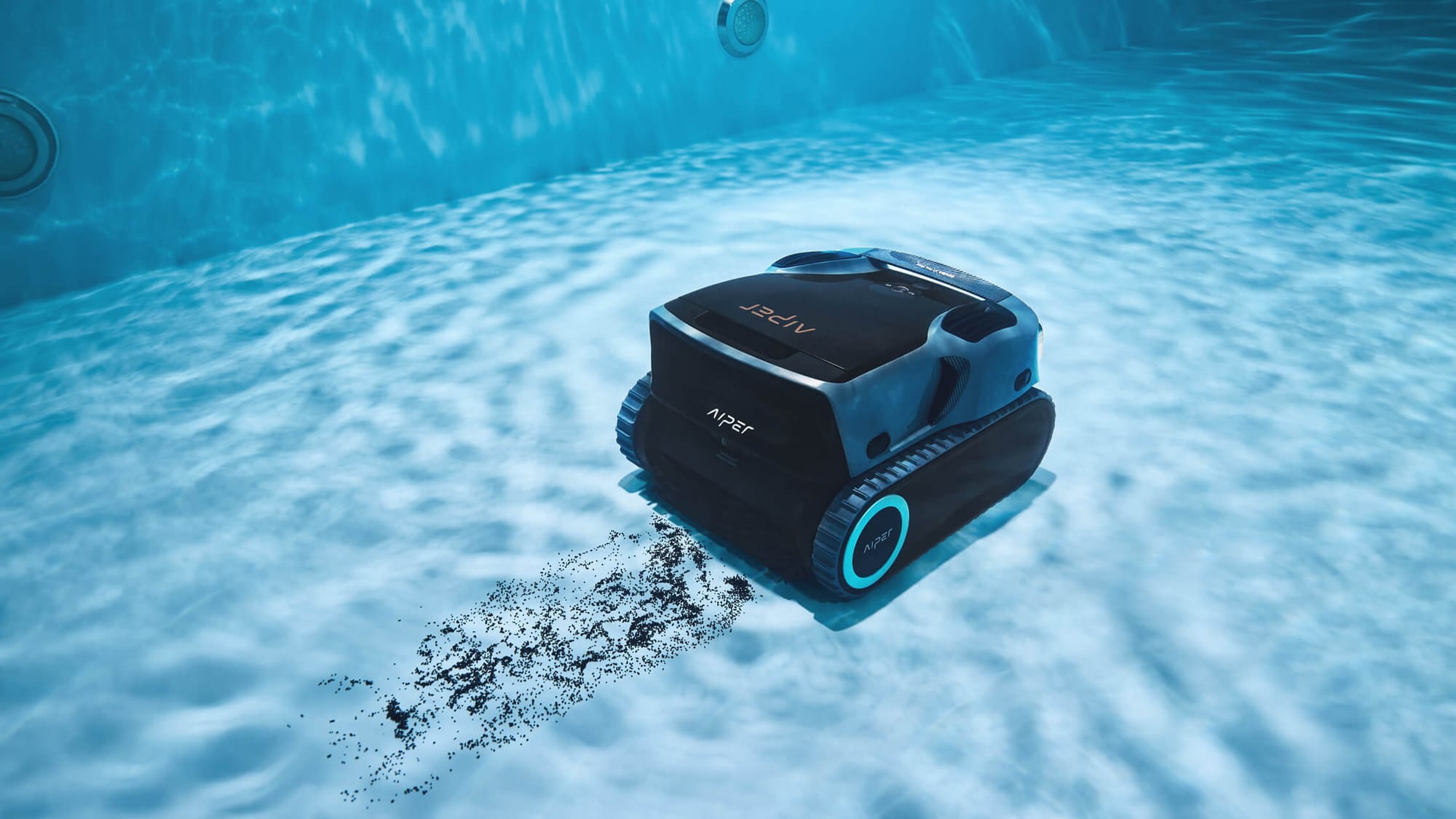
While standard sand filters let tiny algae pass through, a premium robotic pool cleaner equipped with micro-filtration acts as a powerful secondary defense system.
When you open your pool for the spring, you are rarely just dealing with one type of debris. You often have a mix of heavy mud, early-season leaves, and fine algae dust. Modern smart cleaners like the Aiper Scuba V3 and the Scuba X1 Pro Max are engineered with Advanced Multi-Layer Filtration specifically for this. They utilize capture sleeves for heavy mud and large particles (ideal for storm cleanup or pool openings), while their MicroMesh™ and ultra-fine filters simultaneously trap fine sand, dust, pollen, and micro-algae.
Choosing between the two depends on the scope of cleaning you need:
- The Scuba V3 is a highly efficient specialist for underwater surfaces, meticulously scrubbing the floors, walls, and waterline to trap settled algae dust.
- If you want to catch micro-debris and pollen before it even has a chance to sink, the Scuba X1 Pro Max is the ultimate upgrade. It operates as an All-in-One Cleaning System—meaning it thoroughly cleans the walls, floors, and waterlines, while also possessing the unique capability to skim the surface of the water.
By deploying a smart cleaner with multi-layer filtration, you trap the microscopic dust permanently inside the robot's basket, leaving your main pool filter to do its normal job without getting overloaded.
Preventing Algae Dust from Returning
Getting a handle on micro-debris during your spring opening sets the stage for a stress-free summer. Once the water is crystal clear, keeping it that way comes down to simple preventative maintenance:
- Maintain Free Chlorine: Keep your chlorine levels balanced (1-3 ppm) so organic matter doesn't have a chance to bloom and require shocking in the first place.
- Identify the Grime: Make sure what you are dealing with is actually free-floating algae dust, and not sticky pool biofilm clinging to your walls, which requires heavy brushing to break up.
- Run Your Robot Daily: Running an ultra-fine robotic cleaner daily removes organic matter before it breaks down into micro-particles.
FAQ on Tiny Algae
Does dead algae look like brown dust?
Yes. When green algae dies, it loses its color. Once it settles on the pool floor, it often looks exactly like fine dirt or sand. If you are struggling to identify the debris, our guide on how to get rid of brown dust on the bottom of a pool can help you determine if it's dead algae, environmental dirt, or even mustard algae.
Will my pool filter eventually catch dead algae on its own?
Usually, no. Unless you have a high-end Diatomaceous Earth (D.E.) filter—which naturally filters down to about 3-5 microns—a standard sand or cartridge filter will never catch fine algae dust without the chemical assistance of a clarifier to clump it together first.