
How to Tell If Grass Needs Water: A Complete Guide

Most homeowners struggle to find the right balance with lawn watering. Over-watering wastes water, increases utility bills, and can weaken the grass roots. Underwatering does the opposite, leaving lawns thin, brown, and stressed. The problem is that many people rely on a strict watering schedule instead of paying attention to what the lawn is actually saying.
Grass communicates its needs very clearly if you know what to look for. The smartest way to water is not by the calendar, but by listening to the grass itself. This guide walks you through both visual “look” tests and physical “feel” tests to help you determine when your lawn truly needs water. Hence, it lets you learn how to tell if the grass needs water.
3 Visual Signs Your Grass Is Thirsty (The "Look" Test)
Visual cues are the most important and easiest way to tell if your lawn needs water. These signs of dehydrated grass often appear before permanent damage sets in.
Color Changes (Blue-Gray Tint)
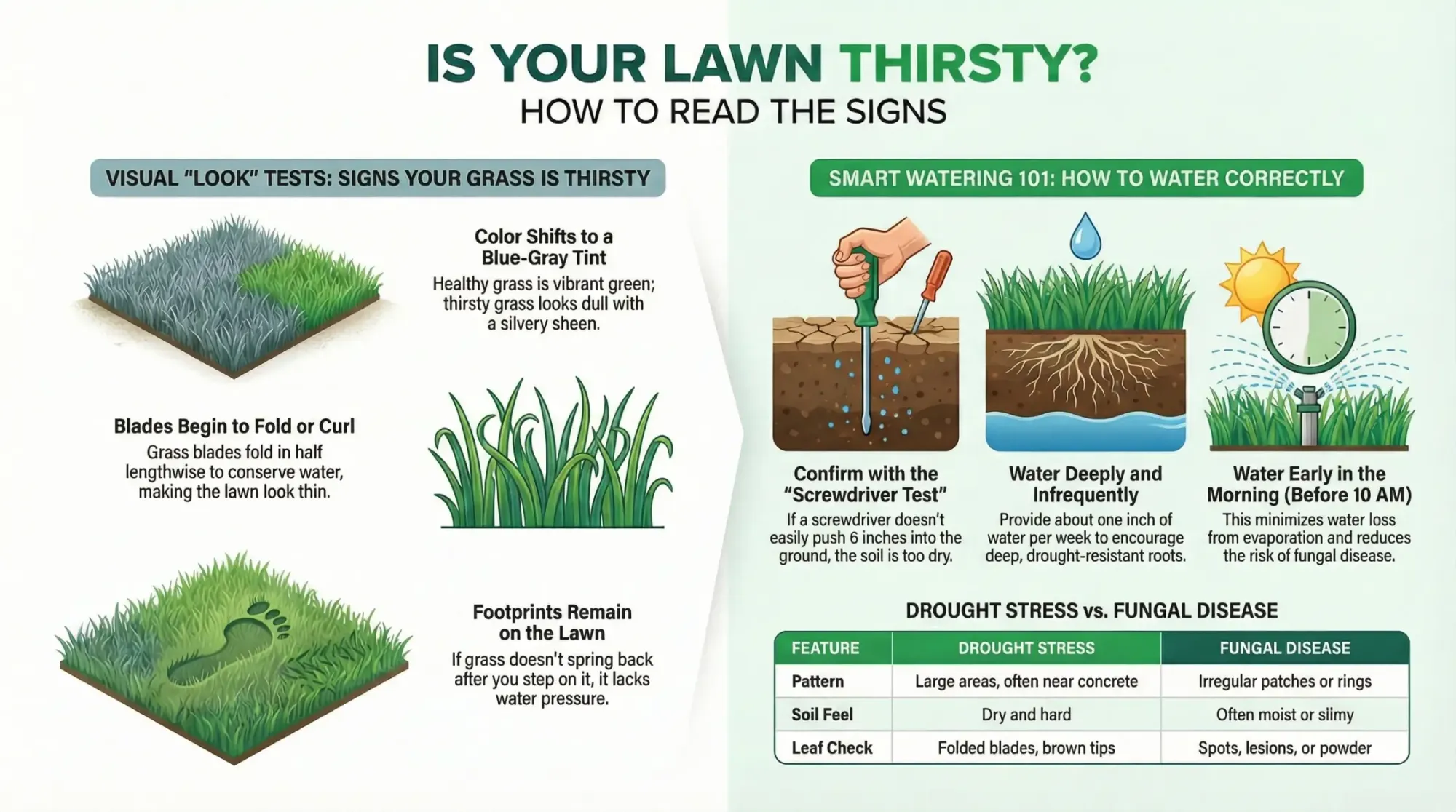
Healthy grass has a bright, vibrant green color. When it becomes thirsty, that color often shifts. Instead of green, the lawn may look dull with a blue-gray or silvery tint. This happens because the grass is losing moisture, and photosynthesis begins to slow down.
In sunlight, this color change can make the lawn appear slightly hazy or sheened. Many homeowners mistake this for a lighting issue, but it is one of the earliest warning signs of water stress.
Folding or Curling Blades
Another clear sign is a change in the shape of the grass blades. Well-hydrated grass blades are flat and open. When water is limited, blades often fold lengthwise or curl inward.
This is the plant’s way of protecting itself. By reducing surface area, the grass limits water loss, much like closing pores or hiding from the sun. If your lawn looks thin or narrow even though it was recently full, dehydration may be the cause.
The Footprint Test (Step Test)
The footprint test is one of the most reliable visual checks you can do. Simply walk across a section of your lawn and look back.
If the grass springs back up right away, it still has enough water pressure, known as turgidity. If your footprints remain visible and the blades stay flattened, the grass is under water stress and needs irrigation.
According to EPA WaterSense guidelines, the footprint test for grass is a primary indicator of water stress. If your grass does not bounce back after you step on it, it is time to water.
Physical Tests to Confirm Soil Moisture (The "Feel" Test)
Visual signs tell you most of what you need to know. Physical tests should be used as confirmation.
The Screwdriver Test
Push a standard screwdriver about six inches into the soil. If it slides in easily, the soil is moist. If you feel strong resistance or cannot push it in, the soil is too dry.
For a step-by-step guide on using tools to check your soil, read our detailed post on How to Measure Moisture Content of Soil.
Using a Soil Probe (For Precision)
For more accuracy, some homeowners use a soil probe to remove a small core of soil. Check the bottom of the sample. If it feels cool and damp, roots still have access to moisture. If it is dry and crumbly, watering is needed.
Common Mistakes: Dormancy vs. Drought vs. Disease
Brown grass does not always mean your lawn needs water. Understanding the difference can save you from unnecessary watering.
During extreme heat in mid-summer or cold winter months, grass may go dormant. This is a survival mechanism. Dormant grass turns brown but is not dead. Trying to force growth with heavy watering during severe heat can stress the lawn even more.
Is My Lawn Dry or Sick?
| Is My Lawn Dry or Sick? | Drought Stress | Fungal Disease |
|---|---|---|
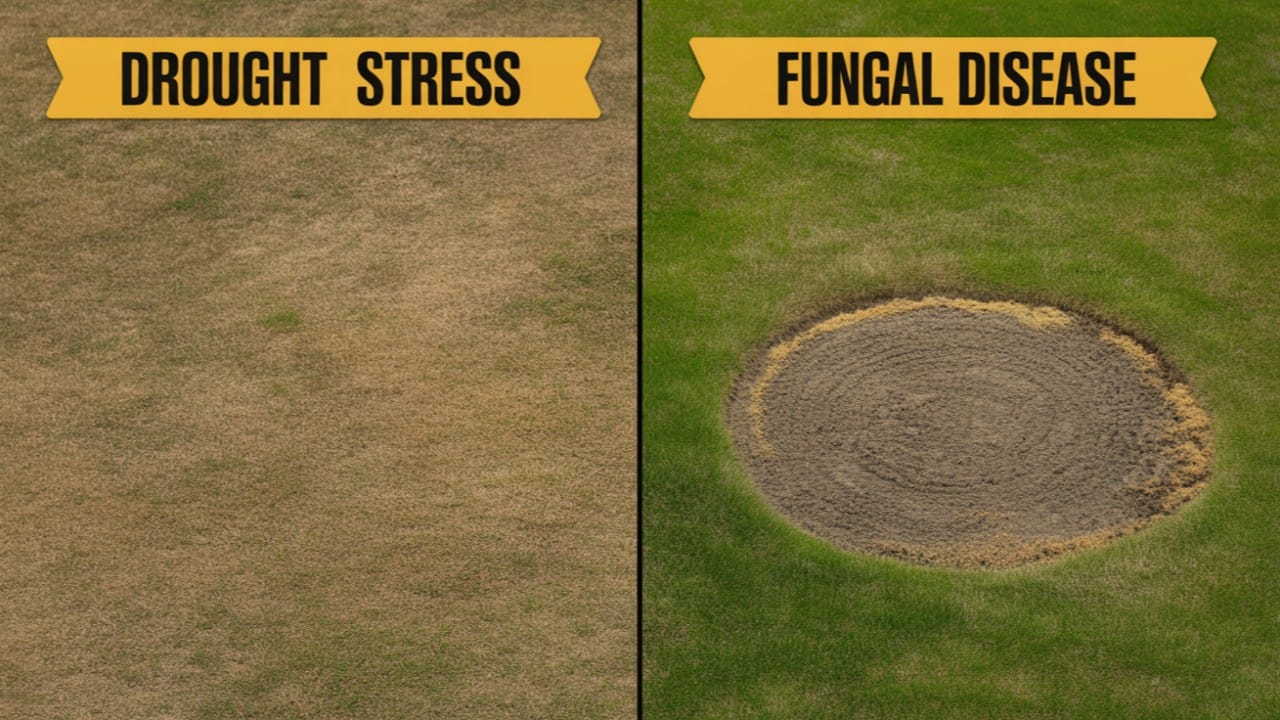
| Pattern | Large areas or spots near concrete | Irregular patches or rings |
| Soil Feel | Dry and hard | Often moist or slimy |
| Leaf Check | Folded blades, brown tips | Spots, lesions, or powdery coating |
If the soil feels moist but the grass shows spots or mold-like growth, disease is more likely than drought.
Expert Tips for Watering Your Lawn
Once you confirm your lawn needs water, proper technique matters.
Deep and Infrequent Watering
Avoid light, daily watering. Agronomy research and university extension services recommend deep and infrequent watering. About one inch of water per week encourages roots to grow deeper into the soil, making the lawn more drought-resistant and resilient.
Best Time of Day to Water
Early morning, before 10 AM, is the best time to water. Watering at midday leads to rapid evaporation, wasting water. Evening watering keeps grass wet overnight, increasing the risk of fungal disease.
Conclusion
Knowing when to water starts with observation. Watch for a blue-gray color shift, check whether footprints bounce back, and confirm soil moisture with a screwdriver test. These three checks together help you avoid over-watering and under-watering.
Before turning on the sprinklers today, take a few minutes to observe your lawn. Let the grass tell you what it needs.
FAQ
Q: How often should I water my lawn in extreme heat?
A: In extreme heat, follow the deep and infrequent rule but monitor closely. Watering two to three times per week is usually better than daily light watering, as it allows moisture to reach deeper roots.
Q: Does brown grass always mean it needs water?
A: No. Brown grass can indicate dormancy, disease, or insect damage such as grubs. Use the screwdriver test to check soil moisture before increasing watering.
Q: Can I overwater my grass?
A: Yes. Overwatering can suffocate roots by limiting oxygen in the soil and can promote root rot and fungal disease. More water is not always better for lawn health.
References
- Environmental Protection Agency. (2024, May 28). Statistics and Facts. WaterSense. https://www.epa.gov/watersense/statistics-and-facts
- UF/IFAS Extension. (n.d.). Let Your Lawn Tell You When To Water. University of Florida. https://sfyl.ifas.ufl.edu/media/sfylifasufledu/okaloosa/docs/faq-county-extension/Let-your-lawn-tell-you-when-to-water.pdf
- UF/IFAS Gardening Solutions. (n.d.). Lawn Management During Drought. University of Florida. https://gardeningsolutions.ifas.ufl.edu/lawns/maintenance-and-care/lawn-management-during-drought/