
How to Top Dress a Lawn: The Ultimate Guide for Lush Green Grass
Match your top dressing mix to your specific soil type (clay, sand, or loam) to avoid drainage issues. Apply a thin ¼-inch layer of compost or soil blend, ensuring grass tips remain visible above the surface.

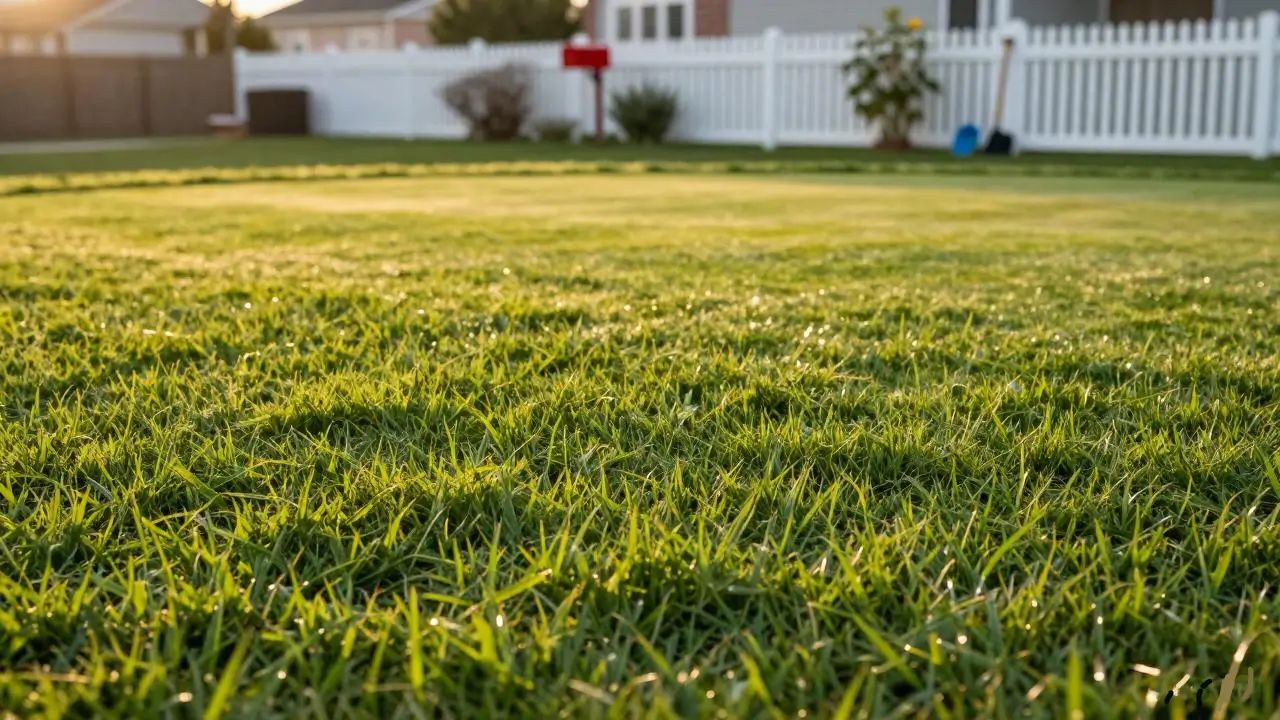
Walking across your lawn shouldn't feel like hiking a rocky trail. If your yard has developed bumps, low spots, or just looks tired despite your best mowing efforts, fertilizer isn't the fix. You need a technique that golf course superintendents have relied on for decades.
It’s called top dressing.
Learning how to top dress a lawn properly can smooth out uneven terrain, fix drainage issues, and degrade thatch naturally. It’s the difference between a "decent" yard and one that feels like a carpet.
Below, we’ll walk through the specific materials you need (and the one you must avoid), the step-by-step application process, and why smart hydration is the unsung hero of the whole operation.
What Is Top Dressing a Lawn?
Think of top dressing as a soil amendment that works from the top down. You are spreading a thin layer of compost, sand, or a specialized soil blend directly over your existing turf.
You aren't trying to bury the grass. Instead, you're adding just enough material to filter down to the soil surface. Once there, it speeds up the decomposition of thatch—that layer of dead organic debris sitting between the grass blades and the dirt. By breaking down thatch, you encourage healthier microbial activity and create a denser, smoother turf that handles stress better.
When Is the Best Time to Top Dress a Lawn?
Timing matters. You want to drop this new layer when your grass is growing aggressively enough to push through it.
- Warm-Season Grasses (Bermuda, Zoysia): Hit it in late spring or early summer.
- Cool-Season Grasses (Kentucky Bluegrass, Fescue): Aim for early fall. This is the sweet spot, especially if you plan to aerate and overseed at the same time.
Preparation: Choosing the Best Top Dressing Mix
This is where most DIY projects go off the rails. If you grab the wrong bag of dirt, you can ruin your drainage permanently.
There’s a persistent myth that sand fixes everything. Be careful. According to the University of Illinois Extension, dumping sand onto clay soil creates a mixture that rivals concrete. The sand particles fill the gaps between the clay, locking up the soil and blocking water flow.
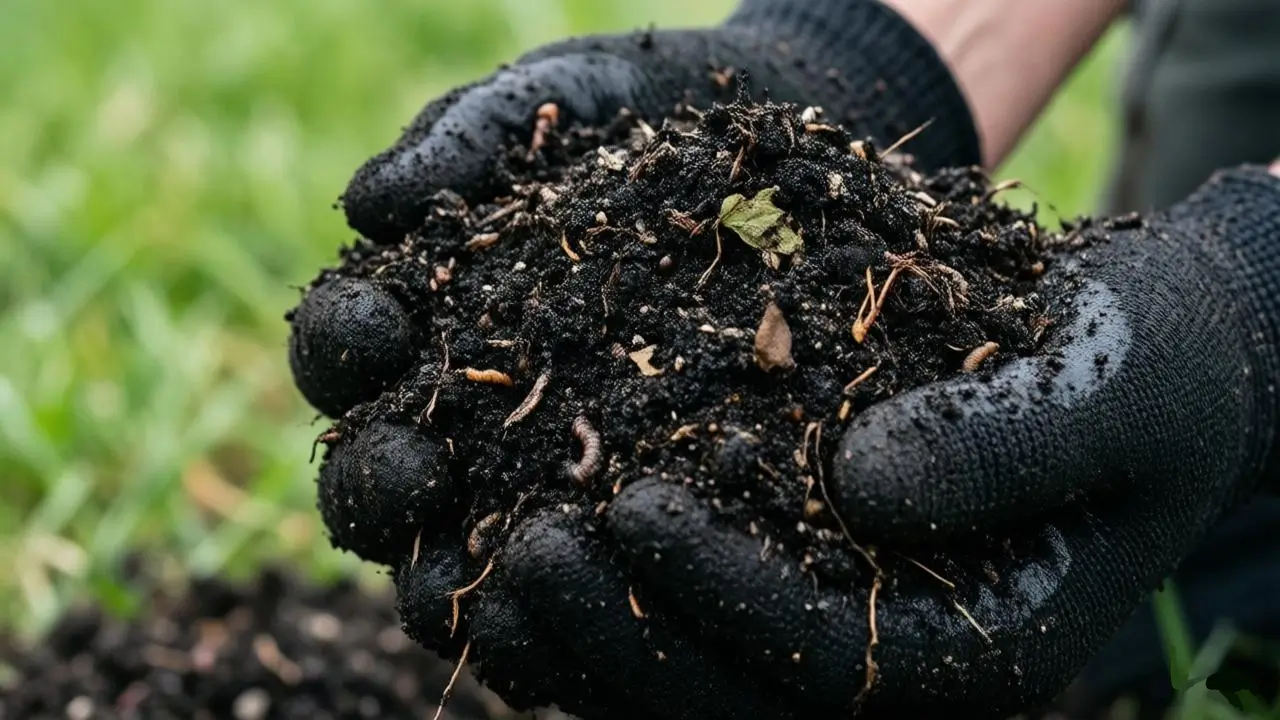
To avoid turning your backyard into a parking lot, match your top dressing mix to your native soil:
| Current Soil Type | Recommended Top Dressing Mix | Why? |
|---|---|---|
| Clay Soil | 100% Compost or Compost + Topsoil Blend | You need organic matter to break up the clay. Skip the pure sand. |
| Sandy Soil | Topsoil + Heavy Compost Blend | Adds density and helps hold onto water and nutrients. |
| Loam (Balanced) | Sand + Compost + Topsoil Blend | Keeps the structure balanced while smoothing things out. |
How to Top Dress a Lawn in 7 Steps
Ready to fix that bumpy yard? Here is your workflow.
Step 1: Prep and Mow Low
Get the grass out of the way. Mow your lawn a notch or two lower than normal. You don't want to scalp it down to the dirt, but shorter blades make it much easier for the top dressing to reach the soil surface rather than getting hung up in the canopy.
Step 2: Aerate and Dethatch
If the ground feels rock hard or spongy, deal with that first. Core aeration punches holes in the lawn, creating direct channels for your new top dressing mix to enter the soil profile. It’s a massive upgrade over just letting the dirt sit on the surface.
Step 3: Prepare Your Mix
Do the math before you buy. A solid rule of thumb is roughly 0.5 to 1 cubic yard of material for every 1,000 square feet. For spot treatments, bags from the hardware store work fine. For the whole yard, call a local landscape supply company for a bulk delivery.
Step 4: Apply the Top Dressing
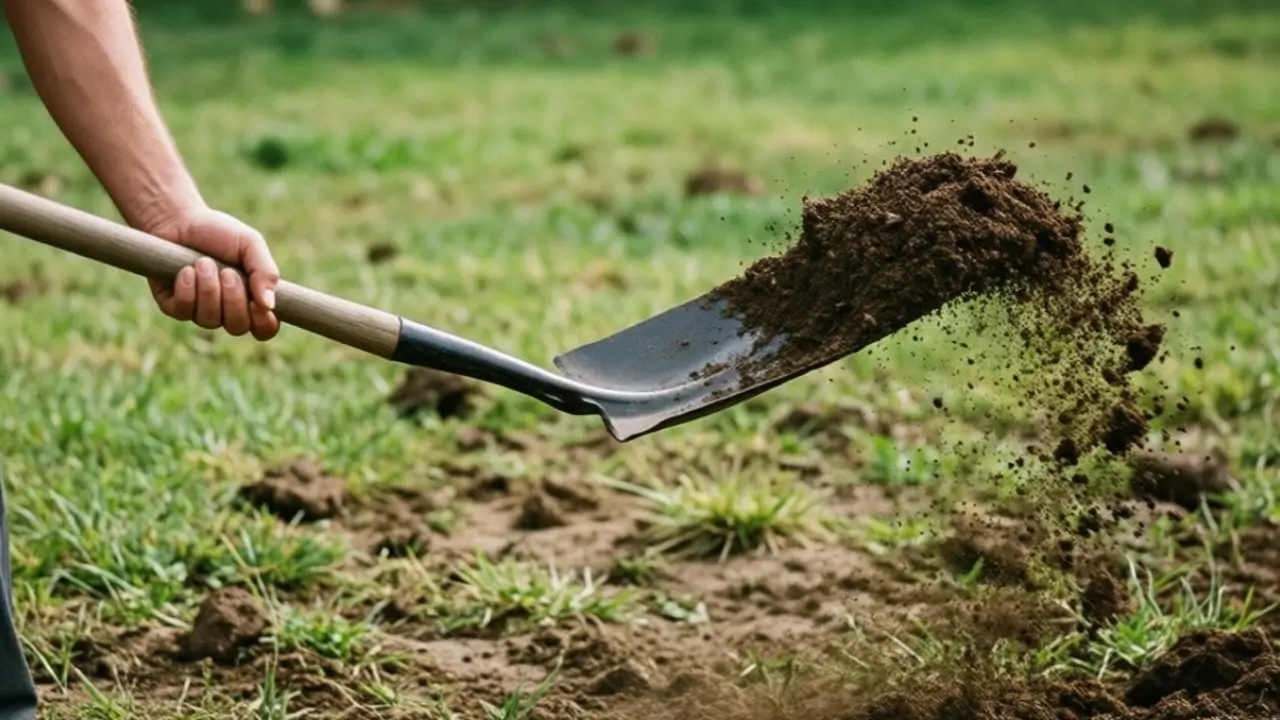
Work in zones. Shovel your mix onto the lawn in small piles. Don't stress about making it perfect immediately; just get the material distributed roughly where you need it.
Step 5: Spread and Level
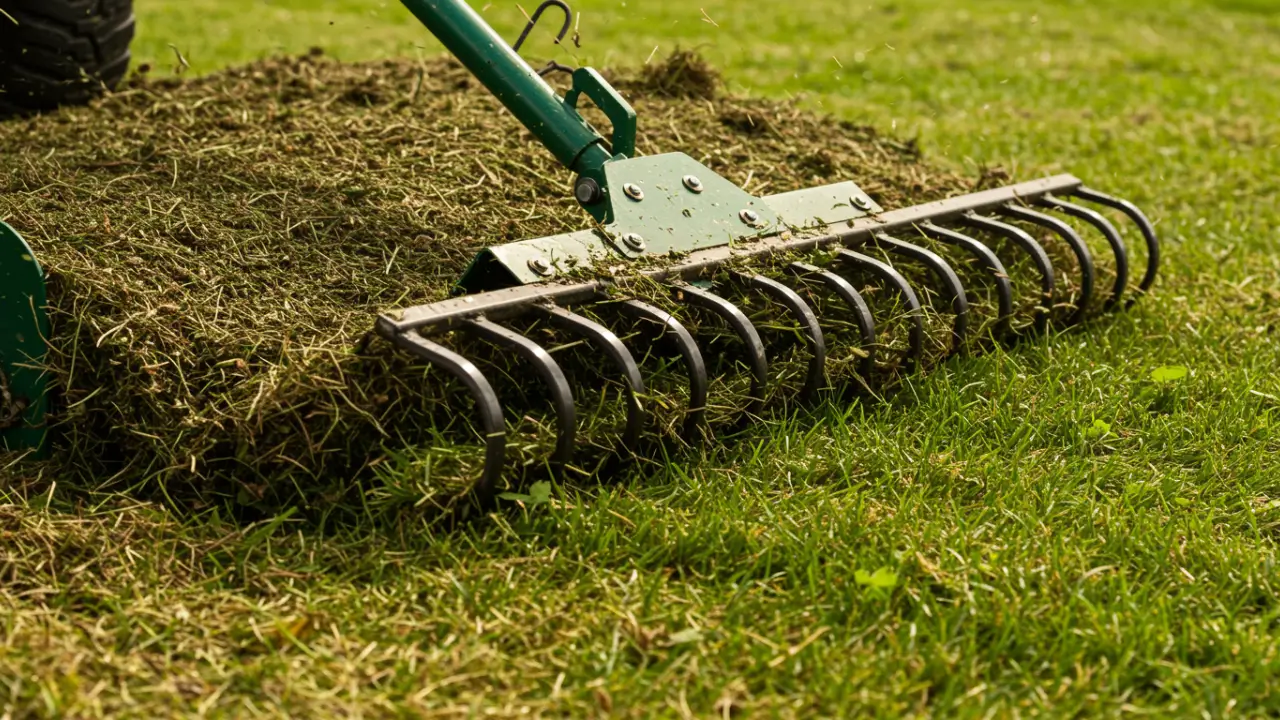
Now for the finesse. Grab the back of a garden rake or a dedicated leveling lute (a tool well worth renting or buying). Push and pull the soil across the grass to fill in the low spots. The goal? You should still see grass blades poking through everywhere. If the grass disappears, you’ve gone too thick. Aim for a depth of ¼ to ½ inch max.
Step 6: Overseed (Optional but Smart)
You’ve just created a perfect seedbed. Why waste it? Broadcasting grass seed over your newly dressed lawn ensures incredible seed-to-soil contact. It’s the fastest way to thicken up a thin lawn.
Step 7: Water Immediately
Give it a drink. Watering settles the material and jump-starts the integration process.
Aftercare: Watering After Top Dressing Your Lawn
The job isn’t done when the shovel goes away. The next 14 to 21 days are critical. If you overseeded, those seeds need to stay damp. If you just top dressed, the soil needs moisture to settle.
Here is the headache: Traditional sprinklers are often too aggressive. A high-pressure blast can wash your carefully leveled soil into clumps or create runoff. Plus, dragging a hose around three times a day is a chore nobody wants.
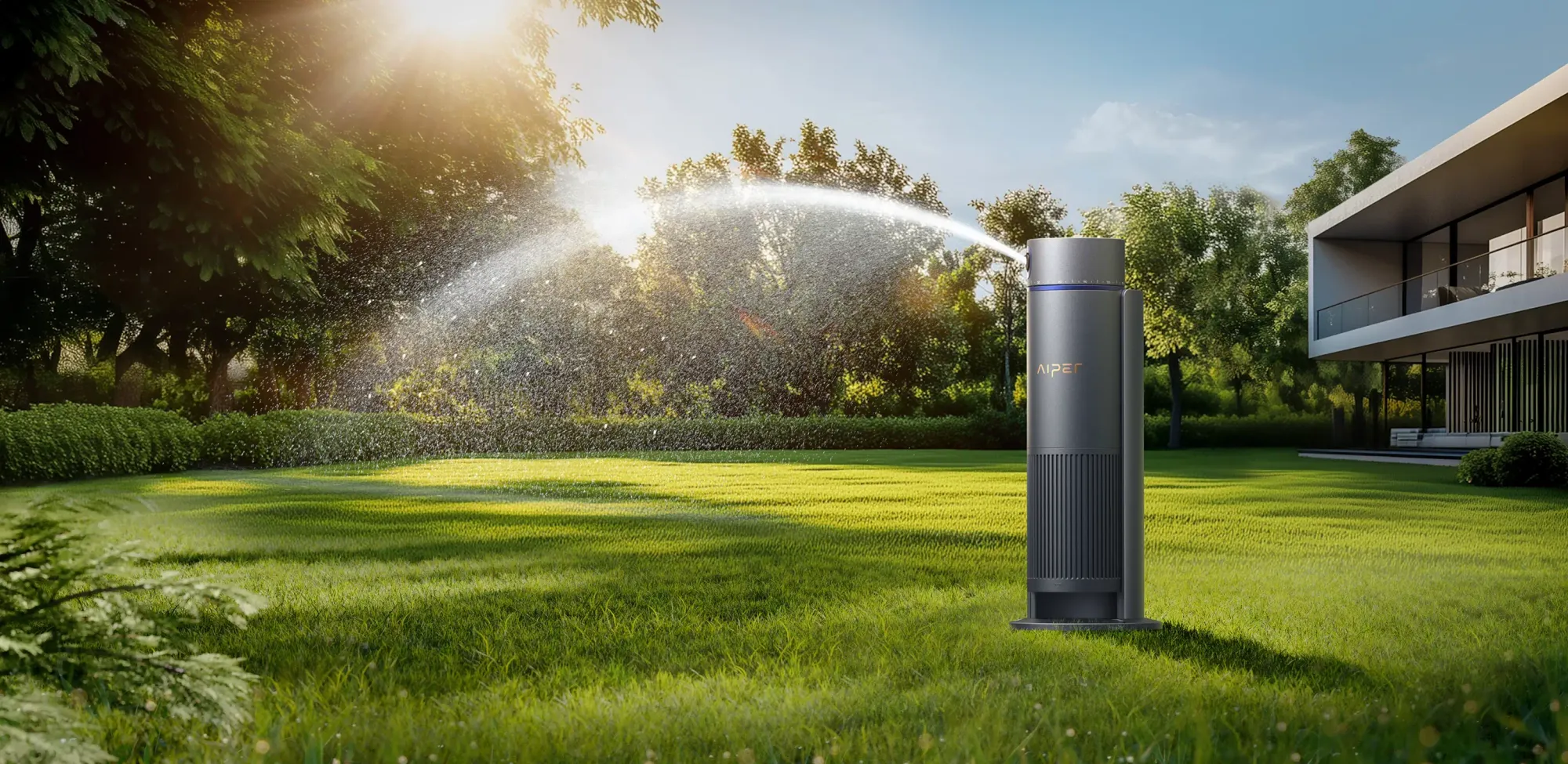
Smart Irrigation for Precision Care
This is where a tech upgrade pays off. Instead of relying on guesswork or complex underground installs, look at surface-level smart solutions.
Tools like the Aiper IrriSense 2 simplify this specific maintenance phase. It’s a 4-in-1 smart irrigation system that combines the controller, sprinkler, and valves into one unit you can drop anywhere.
For post-top dressing care, it solves a few specific problems:
- Gentle Application: The IrriSense 2 uses EvenRain™ technology with pressure stabilization. It delivers water uniformly without the heavy impact that disturbs your new soil layer.
- Set It and Forget It: New soil needs frequent, light watering. The app lets you automate this schedule based on local weather, so you aren't babying the lawn manually.
- Water Conservation: Keeping a lawn moist usually wastes water. This system maps your yard to avoid over-spraying, potentially saving up to 40% on water usage compared to "dumb" sprinklers.
Automating moisture management is the easiest way to ensure your hard work actually pays off.
Common Top Dressing Mistakes to Avoid
- Smothering the Turf: Grass needs sunlight. If you bury it completely, it dies. Keep the tips visible.
- Ignoring Thatch: If you have more than ½ inch of thatch, you have to remove it first. Otherwise, your top dressing sits on a layer of debris and never touches the soil.
- Using Potting Soil: It’s too light. Potting soil often contains perlite (the white specks), which floats to the top when it rains. Stick to compost or heavy earth blends.
FAQ About Top Dressing Lawns
Is topsoil the same as top dressing?
Not really. Topsoil is just the upper layer of dirt. Top dressing is a specific application method, usually involving a custom blend of materials (like compost mixed with sand) tailored to fix lawn issues.
How often should I top dress my lawn?
You don't need to do this often. Once every few years is standard for maintenance. If your yard is extremely bumpy, you might do a light pass once a year until it levels out.
Can I top dress without aerating?
You can, specifically for smoothing surface bumps. But combining it with aeration gets the material deeper into the ground, which does more for long-term soil health.
Conclusion
Mastering how to top dress a lawn is a power move for homeowners. It fixes the underlying structure of your yard, leading to turf that is smoother, greener, and more resilient.
Check your soil type, mix your materials right, and don't neglect the watering schedule afterward. With the right prep and perhaps a little help from smart tools like the IrriSense 2, you’ll be walking on a golf-course-quality lawn before you know it.