
Lawn Disease Identification Chart: Diagnose, Treat & Prevent

Nothing ruins a morning coffee like looking out at your yard and seeing a massive, ugly brown patch where green grass used to be. Is it just heat stress? Did a dog spot caused it? Or is a fungus quietly eating your turf alive?
Guessing gets expensive fast. If you treat a fungal infection by adding more water, you are actually feeding the disease. If you ignore it, you risk losing the whole lawn. You have to know exactly what the enemy is before you fight back.
This guide gives you a practical lawn disease identification chart to diagnose the issue immediately. We will also cover university-backed treatments and explain why a smart irrigation upgrade—specifically the Aiper IrriSense 2—is the secret to keeping your lawn immune.
Visual Lawn Disease Identification Chart (Quick Diagnosis)
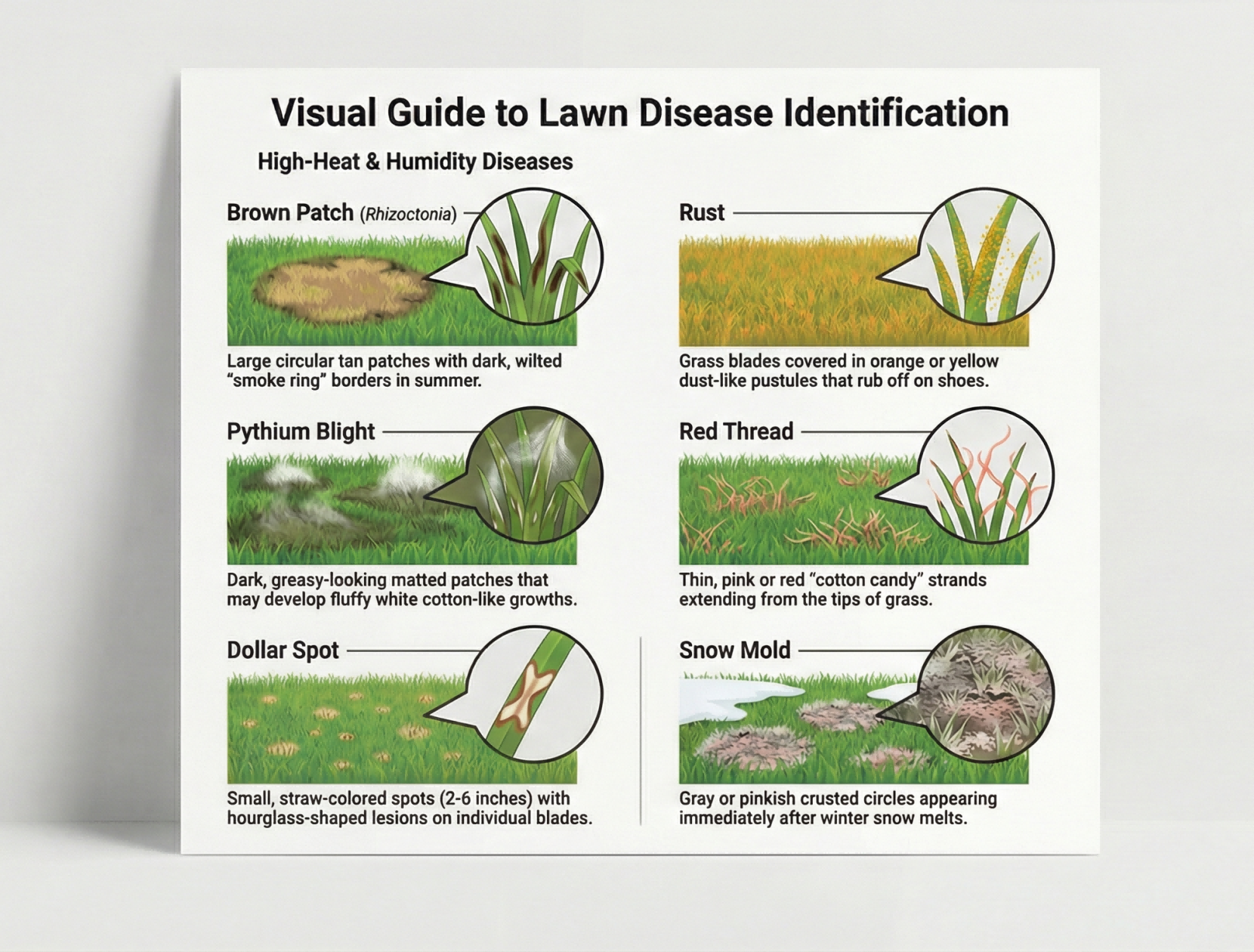
Fungal diseases often leave distinct "fingerprints" on your grass. Use this chart to match the visual symptoms to the likely culprit.
| Visual Symptom | Likely Disease | Season | Distinctive Features (Look Closely) | Primary Cause |
|---|---|---|---|---|
| Circular Brown Rings with a "Smoke Ring" Border | Brown Patch (Rhizoctonia) | Summer (Hot/Humid) | Patches range from a few inches to several feet. The outer edge often looks dark and wilted, like a "smoke ring," especially in the morning dew. Inside grass turns tan/brown. | Overwatering, High Nitrogen, Humidity |
| Silver Dollar-Sized Bleached Spots | Dollar Spot | Late Spring to Fall | Small, straw-colored spots about the size of a silver dollar (2–6 inches). If you inspect a single blade, you’ll see an hourglass-shaped lesion with reddish-brown borders. | Low Nitrogen, Drought Stress, Heavy Dew |
| Pink or Red "Cotton Candy" Strands | Red Thread | Spring / Fall (Cool/Moist) | Look for thin, red, thread-like strands extending from the grass blade tips. From a distance, the lawn looks like it has scorched, reddish patches. | Low Nitrogen, Cool & Wet Weather |
| Greasy, Dark Patches that Mat Together | Pythium Blight | Hot Summer | Also called "Grease Spot." Grass looks wet, dark, and oily. In humidity, you may see fluffy white cotton-like mycelium. It spreads extremely fast (within 24 hours). | Poor Drainage, Overwatering, Night Watering |
| Orange or Yellow Dust on Blades | Rust | Late Summer / Fall | The grass blades are covered in yellow-orange pustules. If you walk through it, your white shoes turn orange. | Low Nitrogen, Dry Periods followed by Humidity |
| Gray/White Crusted Circles after Thaw | Snow Mold (Gray or Pink) | Early Spring | Appears as snow melts. You see matted, crusty circles of gray or pinkish straw-colored grass. | Snow cover on unfrozen ground, long grass under snow |
Pro Tip: Before applying any chemicals, get close to the turf. The shape of the lesion on the individual grass blade is often the key to using this lawn disease identification chart effectively.
Common Lawn Diseases & Expert Treatments
Once you have used the chart above, it is time to take action. Here is a deeper look at the most common offenders and how university turf science programs recommend treating them.
1. Brown Patch
The Summer Humidity Killer According to Penn State Extension, Brown Patch thrives when night temperatures stay above 68°F and grass remains wet for long periods. It loves high-nitrogen fertilizer applied too late in the spring.
- The Fix: Apply a fungicide containing azoxystrobin or propiconazole.
- Cultural Control: Stop fertilizing with nitrogen in the heat of summer. Most importantly, water deeply but infrequently to let the grass blades dry out.
2. Dollar Spot
The Morning Dew Menace This is the most common turf disease on golf courses and home lawns. UMass Amherst research indicates that Dollar Spot actually flourishes in lawns that are low in nitrogen and suffering from drought stress, yet have wet leaves from dew.
- The Fix: Apply a nitrogen-rich fertilizer to help the grass outgrow the disease. Spot-treat with a liquid fungicide if severe.
- Cultural Control: Remove morning dew by dragging a hose across the lawn (or mowing).
3. Pythium Blight
The Rapid Destroyer This is the scariest disease on the list. Purdue University warns that Pythium can destroy a lawn in under 24 hours during hot, humid spells. It is almost always caused by water-logged soil and poor air circulation.
- The Fix: This requires specialized fungicides (like mefenoxam). You must act immediately.
- Cultural Control: Improve drainage immediately. Never water at night.
How to Prevent Lawn Diseases: The Role of Smart Irrigation
You might notice a pattern in the "Primary Cause" column of our chart: Overwatering, night watering, and poor drainage.
Fungi need moisture to reproduce. The most effective way to prevent lawn disease isn't a chemical—it's Smart Water Management. This is where upgrading to an intelligent system like the Aiper IrriSense 2 transforms your lawn care routine from reactive to proactive.
1. Stop The "Wet Feet" Effect (Weather-Sense Response)
Root rot and Pythium Blight have one main trigger: soil that never dries out. Old-school sprinkler timers are notorious for this. They run on a rigid schedule, meaning they will happily water your lawn even during a downpour, drowning the roots.
- The Aiper Solution: The IrriSense 2 uses Weather-Sense Response Technology to make decisions based on actual weather data, not just a clock.
- Benefit: If rain is in the forecast, the system holds back. This denies fungi the soggy environment they need to breed, while also potentially slashing your water usage by up to 40%.
2. Eliminate Puddles and Dry Spots (EvenRain™ Tech)
Uneven watering is a double-edged sword: puddles breed Brown Patch, while missed dry spots encourage Dollar Spot.
- The Aiper Solution: Utilizing EvenRain™ Technology, the IrriSense 2 mimics natural rainfall. It covers a massive area (up to 4800 sq. ft.) with uniform precision.
- Benefit: No more soggy zones or parched corners. Consistent moisture reduces plant stress, making your grass naturally resistant to infection.
3. Boost Immunity with Precise Nutrition
Just like humans, a well-fed lawn fights off sickness better. Diseases like Rust and Red Thread specifically attack "hungry" grass.
- The Aiper Solution: The IrriSense 2 is a world-first 4-in-1 system that integrates a Nutrient Dispenser.
- Benefit: You can deliver liquid nutrients directly through the water stream during irrigation. This ensures your lawn receives a steady, gentle diet, keeping the immune system of your turf strong without the risk of fertilizer burn.
4. Zone-Specific Care
Shady areas under trees stay wet longer (risk of moss/mold), while sunny slopes dry out fast. Treating them the same is a recipe for disease.
- The Aiper Solution: With support for up to 10 customizable zones via the App, you can water the sunny spots more and the shady spots less.
Conclusion
A yellowing lawn doesn't have to be a mystery. By using the lawn disease identification chart above, you can pinpoint the issue and stop it before it spreads.
However, the best cure is prevention. Fungal spores are always present in the air; they just need the right conditions to strike. By controlling the moisture environment with the Aiper IrriSense 2, you deny these diseases the damp, stagnant conditions they need to survive.
Ready to banish brown patches for good? Explore the Aiper IrriSense 2 Smart Irrigation System and give your lawn the intelligence it deserves.
FAQ about Lawn Disease Identification
Q: Does watering at night cause lawn fungus?
A: Yes, it is a major cause. Watering at night leaves grass blades wet for 8-10 hours, creating a perfect breeding ground for spores. The Aiper App allows you to schedule watering for the early morning (between 4 AM and 8 AM), so the sun can dry the blades quickly.
Q: Can grass recover from fungus?
A: In most cases, yes. The crown of the grass plant is often still alive even if the blades are brown. Once you treat the fungus and correct your watering schedule with a smart controller, the grass will usually push up new, green growth within 2-3 weeks.
Q: What does lawn fungus look like?
A: It varies by type, but common signs include circular patches of brown or dead grass, discolored spots on individual blades, or visible powdery coatings (orange, black, or white) on the turf. Refer to the visual chart above for specifics.