
Liquid vs. Granular Fertilizer: Which Is Best for Your Lawn?
Liquid fertilizer offers fast green-up, while granular provides long-lasting nutrients. Both require precise watering to prevent runoff. Choosing the right one depends on your lawn's immediate needs and your irrigation setup.

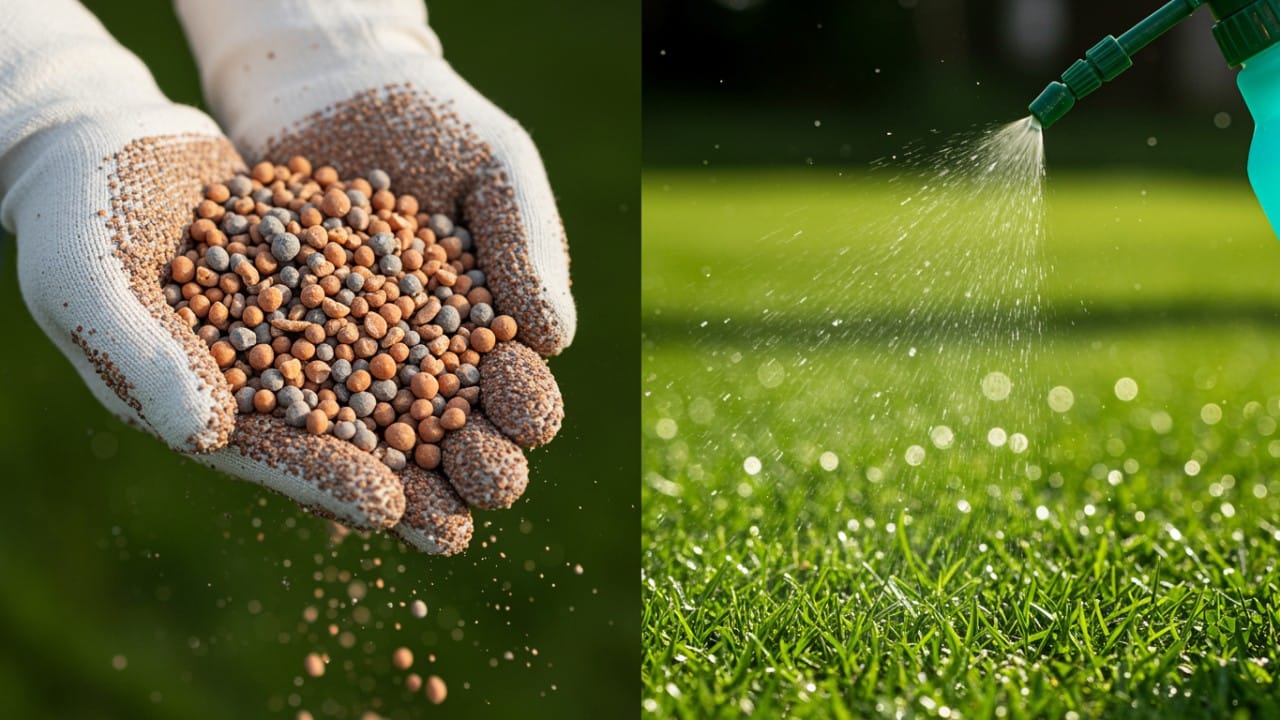
We’ve all been there. It’s Saturday morning, the coffee is still kicking in, and you’re standing in the lawn care aisle of your local home improvement store. To your left, a wall of colorful bags promising a golf-course green lawn. To your right, shelves of spray bottles claiming instant results.
The "analysis paralysis" is real. Do you go with the tried-and-true granular fertilizer, or do you experiment with the modern liquid fertilizer?
Making the wrong choice doesn’t just waste your weekend and your wallet; it can lead to patchy growth, chemical burns, or—worse—environmental harm. According to the EPA, improper lawn fertilization is a significant contributor to nutrient pollution in our waterways. But here is the secret most manufacturers won’t tell you: the difference isn't just about solid vs. liquid state. It’s about how your soil eats, and more importantly, how you water.
In this deep dive, we’re cutting through the marketing noise. We’ll break down the science of types of fertilizer, compare the economics of granular vs. liquid fertilizer, and reveal why smart irrigation is the missing link in your lawn care strategy.
The Basics: Understanding Fertilizer Types
Before we declare a champion, we need to understand the contenders. At a chemical level, all fertilizers deliver three primary macronutrients: Nitrogen (N), Phosphorus (P), and Potassium (K). However, the delivery mechanism changes everything.
What is Granular Fertilizer?
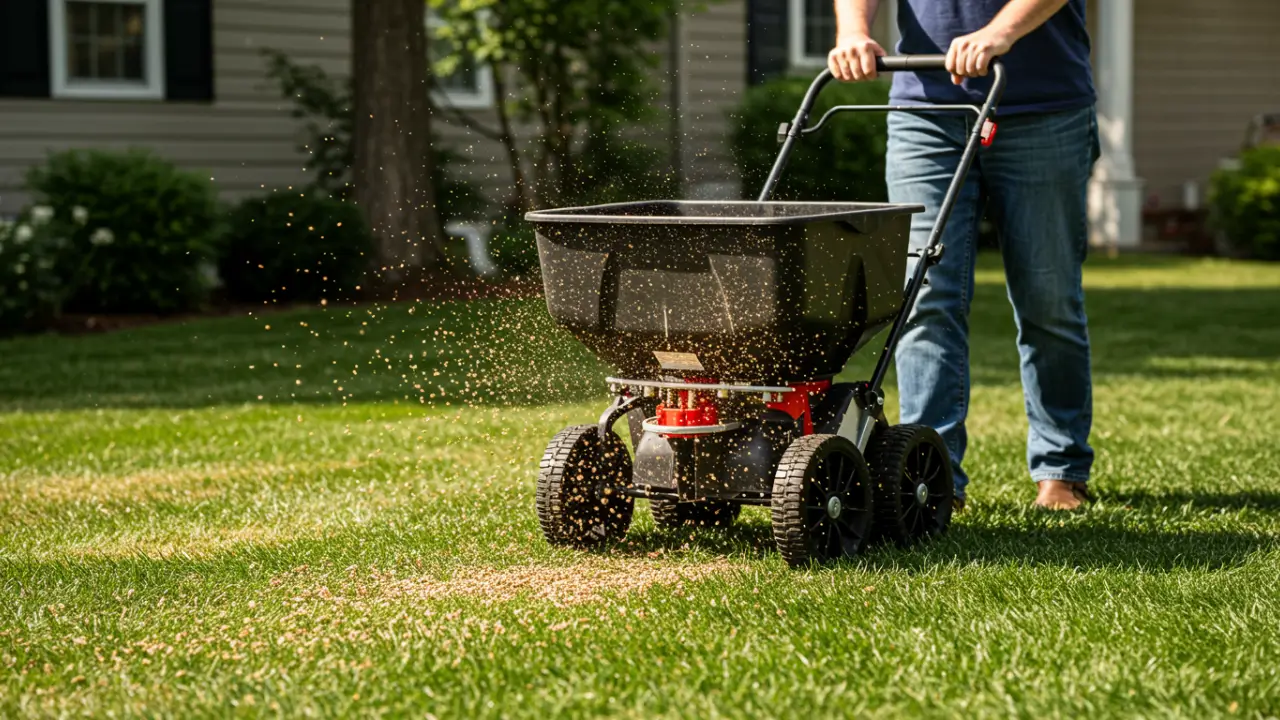
Think of granular fertilizer as the "slow cooker" of lawn food. These are solid, dry pellets that you spread across your lawn using a broadcast spreader.
- The Science: These pellets sit on the soil surface. They are typically coated in a semi-permeable polymer that requires water to break down.
- Release Profile: Granular options are overwhelmingly slow-release. As moisture penetrates the pellet, nutrients leach out gradually over 4 to 8 weeks. This provides a steady, drip-feed diet to the grass roots, promoting sustained growth rather than a sudden spike.
What is Liquid Fertilizer?
Liquid fertilizer is the "energy shot." It comes as a concentrated fluid or water-soluble powder that you mix with water (or attach to a hose-end sprayer) to apply directly to the turf.
- The Science: Because the nutrients are already dissolved, they don’t need to wait for rain to break them down.
- Release Profile: This is a quick-release The grass absorbs nutrients almost instantly through two pathways: the roots (once it soaks in) and the stomata (pores) on the grass blades themselves. This foliar absorption is why liquid options are often used by golf course superintendents for immediate color correction.
Liquid vs. Granular Fertilizer: A Detailed Comparison
Is granular fertilizer better than liquid? Not necessarily. It depends entirely on your lawn’s "metabolism" and your lifestyle. Let’s break it down by the metrics that matter.
1. Speed of Results (The "Green-Up" Factor)
If you are hosting a barbecue this weekend and your lawn looks sad and yellow, liquid fertilizer is your best friend. Because the plant can drink it immediately, you will often see a visible "green-up" within 3 to 5 days.
Granular fertilizer plays the long game. It won’t give you instant gratification. It requires watering-in and time to dissolve. Expect to wait 7 to 14 days to see a noticeable difference, but enjoy the fact that the green will last longer once it arrives.
2. Application Consistency (The "Striping" Risk)
We have all seen it: a lawn that looks like a candy cane—stripes of dark green next to pale yellow. This is the hallmark of poor granular application. If your spreader settings are off, or if you overlap your walking path incorrectly, granular fertilizer can result in "spatial variability" (fancy talk for patchy grass).
Liquid fertilizer offers superior homogeneity. Because the solution is mixed in a tank, every drop has the exact same ratio of N-P-K. It is generally easier to achieve a uniform blanket of nutrients, provided you keep your walking speed steady.
3. Salt Index and "Burn" Potential
Fertilizers are salts. Too much salt draws moisture out of the plant tissue, causing "fertilizer burn" (brown, crispy grass).
- Liquid: Generally has a lower salt index per application because it is highly diluted. However, applying it in the heat of a midday sun can scorch wet leaves.
- Granular: Higher salt content per pellet. If a pile of granules spills on one spot and isn't cleaned up, it will kill the grass underneath.
4. The Economics
For the average suburban homeowner with a massive backyard (10,000+ sq. ft.), granular fertilizer wins on price. Buying in bulk bags is significantly cheaper per pound of nitrogen.
However, liquid fertilizer is often more economical for smaller, urban lawns or specific spot treatments. You don’t need to buy a bulky mechanical spreader; a simple hose-end attachment often does the trick.
The "Hidden" Factor: Watering Liquid and Granular Fertilizer Correctly
Here is where the conversation usually stops—but it’s where the real problems begin. You can buy the most expensive fertilizer on the market, but without precise water management, you are literally flushing money down the drain.
The Environmental Reality Check
Both fertilizer types pose environmental risks if mishandled, but the mechanism differs.
- Liquid Risk: If you water too heavily immediately after spraying, the liquid solution can wash away (runoff) before it settles into the root zone.
- Granular Risk: The physical pellets pose a unique threat to hardscapes.
According to Penn State Extension, a leading authority in turfgrass science, one of the primary sources of urban water pollution is granular fertilizer landing on impervious surfaces like driveways and sidewalks.
"Granular fertilizer landed on impervious surfaces is a major source of pollution. It is imperative to sweep or blow granules from hardscapes back onto the turf." — Penn State Extension
If you leave pellets on your driveway, the next rainstorm washes them directly into the storm sewer, bypassing the soil entirely.
The Solution: Precision Tech Meets Lawn Care
Even if you are diligent about sweeping up granules, "invisible runoff" caused by over-watering is a massive issue. Over-watering creates leaching, pushing nutrients past the root zone where they pollute groundwater instead of feeding your grass.
This is where technology like the Aiper IrriSense 2 bridges the gap between amateur gardening and professional turf management. It’s not just a sprinkler; it’s a 4-in-1 Smart Irrigation System that integrates the controller, sprinkler, and valve into a single, solar-powered unit.
Here is why a smart system is the best partner for your fertilizer:
Map-Based Irrigation Stops Runoff:
Unlike "dumb" sprinklers that blindly soak everything in a circle, the IrriSense 2 allows you to map your lawn’s exact shape on your smartphone. You can create zones that strictly water the grass and ignore the driveway. This directly addresses the Penn State warning: you keep the water (and the dissolved fertilizer) on the turf, preventing runoff pollution.
EvenRain™ Technology for Activation:
Granular fertilizer needs to be "watered in" to activate. But if your sprinkler has low pressure or poor coverage, you get dry spots (no activation) and soaked spots (leaching). Aiper’s TÜV-certified pressure system and EvenRain™ tech ensure every square inch gets the same amount of hydration. This dissolves pellets uniformly, preventing chemical burns.
Conservation = Concentration:
By using real-time weather data and precise dosage, the IrriSense 2 can save up to 40% on water usage. This isn't just eco-friendly; it keeps the nutrient solution in the soil at the optimal concentration for root absorption, rather than diluting it with excess water.
Summary: Pros and Cons of Liquid vs. Granular Fertilizer
Need the "TL;DR" version? Here is how they stack up.
Pros and Cons of Liquid Fertilizer
Pros:
- Instant Gratification: Nutrients are available immediately.
- Uniformity: No "striping" or patchy spots.
- Multitasking: Can be tank-mixed with weed killers.
- Starter Friendly: Excellent for new sod that needs nutrients quickly.
Cons:
- Short Lived: Needs re-application every 2-3 weeks.
- Storage: Heavy bottles can be annoying to store.
- Pricey: Can get expensive for acre-plus lots.
Pros and Cons of Granular Fertilizer
Pros:
- Cost Effective: The cheapest way to feed a big lawn.
- Low Maintenance: Slow-release means you only fertilize 4 times a year.
- Shelf Stability: Dry bags last forever if kept dry.
Cons:
- The Waiting Game: Takes weeks to show full results.
- Runoff Hazard: High risk if pellets are left on driveways.
- Salt Burn: High salinity can burn grass if not watered in properly.
Decision Matrix: Which One Should You Choose?
Still on the fence? Use this scenario guide to pick the winner for your specific situation.
| If your lawn is... | You should choose... | The Reason |
|---|---|---|
| A New Lawn / Fresh Sod | Liquid | Young roots are short and need immediate, easy-to-absorb nutrients to establish. |
| Large & Established | Granular | For a healthy 5,000+ sq. ft. lawn, granular is more economical and requires less labor. |
| Suffering Summer Stress | Liquid | In high heat/drought, granular fertilizer won't break down. Liquid (applied in the evening) provides a safe, quick boost. |
| Hilly or Sloped | Liquid | Granular pellets can roll downhill or wash away in heavy rain before dissolving. Liquid sticks where it hits. |
FAQ on Lawn Fertilizatio
Q: Can I use both liquid and granular fertilizer?
A: Absolutely. This is a pro move called "hybrid fertilization." Use granular fertilizer for your main feedings (Spring, Summer, Fall) to provide a slow-release baseline. Then, use liquid fertilizer for "spot treating" yellow patches or giving the lawn a quick pop of color before a backyard party.
Q: Is granular fertilizer better than liquid for clay soil?
A: Liquid is often better for heavy clay soils. Granular pellets can struggle to penetrate hard-packed clay, whereas liquid solutions can seep into the soil pores more effectively.
Q: How long should I wait to mow after fertilizing?
A: For granular, wait until you have watered it in and the grass has dried (usually 24-48 hours). If you mow too soon, your mower’s vacuum might suck up the pellets. For liquid, wait until the grass is completely dry to the touch.
Conclusion
The debate of liquid vs. granular fertilizer doesn't have a binary answer. Liquid offers precision and speed; granular offers longevity and value. The "best" choice is the one that fits your lawn's immediate needs and your personal schedule.
However, remember that fertilizer is only half the battle. As noted by experts like Penn State Extension, the environmental impact of your lawn care depends heavily on how you manage the application—and specifically, how you manage water.
Whether you choose the slow-release reliability of granules or the quick fix of liquid, pairing your fertilizer with a precision tool like the Aiper IrriSense 2 ensures success. By automating the "watering in" process and preventing runoff with smart mapping, you’re not just growing grass; you’re cultivating a healthier ecosystem right in your backyard.
So, grab the bag or the bottle—but don't forget the smart sprinkler. Your lawn (and your neighbors) will thank you.