
Chlorine Lock: Why Your Pool Sanitizer Stopped Working (And How to Fix It)

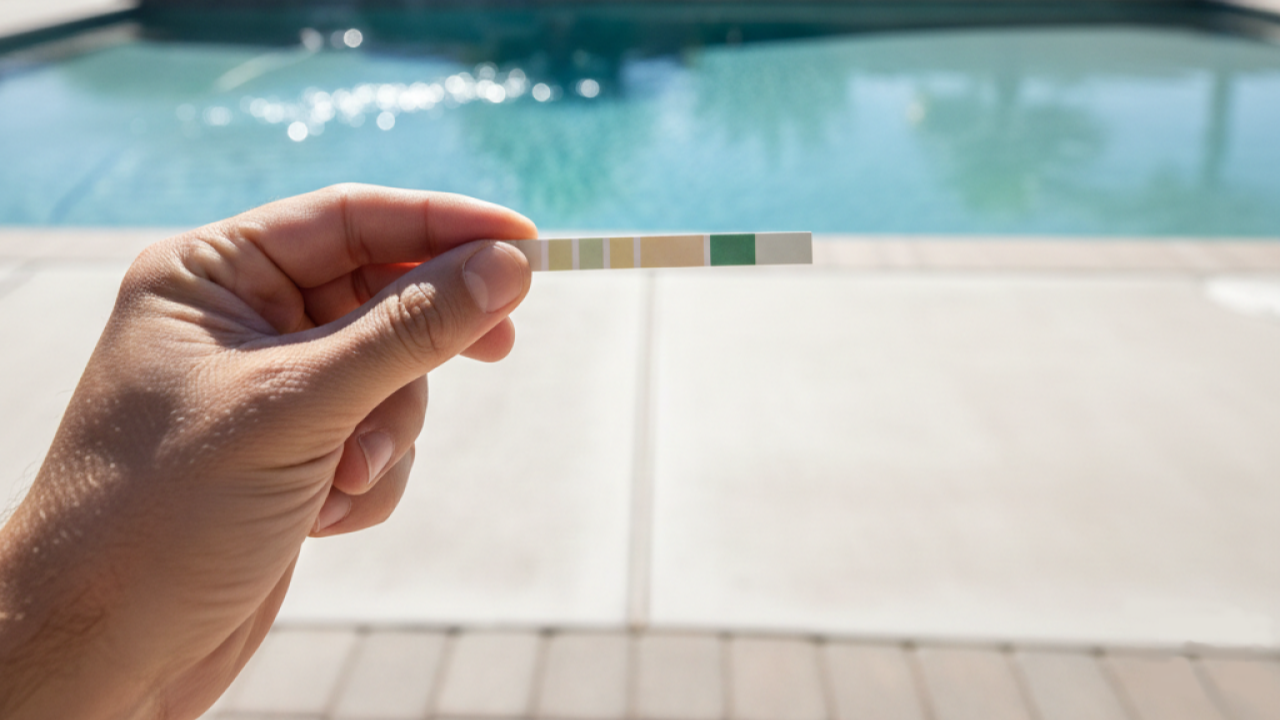
You added chlorine yesterday. You added more this morning. Yet, your test strip is pale, your water is cloudy, or worse—algae is starting to bloom.
It is one of the most frustrating (and expensive) moments in pool ownership: dumping chemicals into the water with absolutely zero result.
If this sounds familiar, you likely aren't dealing with a "lack of chlorine" problem. You are dealing with a chlorine lock. This condition renders your sanitizer useless, no matter how much you add. The good news is that it is fixable, but you have to diagnose the right type of lock first.
What Is Chlorine Lock? (Clearing the Confusion)
If you ask three pool professionals what "chlorine lock" is, you might get three different answers. This confusion happens because the term is often used to describe two completely different chemical situations. To fix your pool, you need to know which one you have.
Scenario 1: The Over-Stabilized Pool (High CYA)
This is the most common cause of "lock" in modern pools.
Cyanuric Acid (CYA), also known as stabilizer, acts as a sunscreen for your chlorine. Without it, the sun would burn off your chlorine in hours. However, you can have too much of a good thing.
The Analogy: Think of CYA as a protective suit for your chlorine molecules.
- Ideal Level (30–50 ppm): The chlorine wears a light jacket. It is protected from the sun but can still move freely to attack algae and bacteria.
- High Level (100+ ppm): The chlorine is trapped in a straightjacket. It is present in the water, but it is so "stabilized" that it cannot move or sanitize anything.
Scenario 2: The Chloramine Trap (Combined Chlorine)
In this scenario, your chlorine isn't locked by stabilizer; it is locked by contaminants.
When Free Chlorine attacks ammonia or nitrogen (from sweat, urine, or garden debris), it binds to them and becomes Combined Chlorine (also called chloramines). This is "used" chlorine. It is still in the water, but it can no longer kill bacteria.
Note: If your pool smells strongly of "chlorine," you are actually smelling chloramines. A clean, healthy pool should have very little scent.
How to Diagnose the Problem (Don't Guess, Test)
Stop adding chemicals. Pouring more chlorine into a locked pool is literally pouring money down the drain. You need to test your water specifically for the two scenarios above.
Step 1: Check Your Cyanuric Acid (CYA)
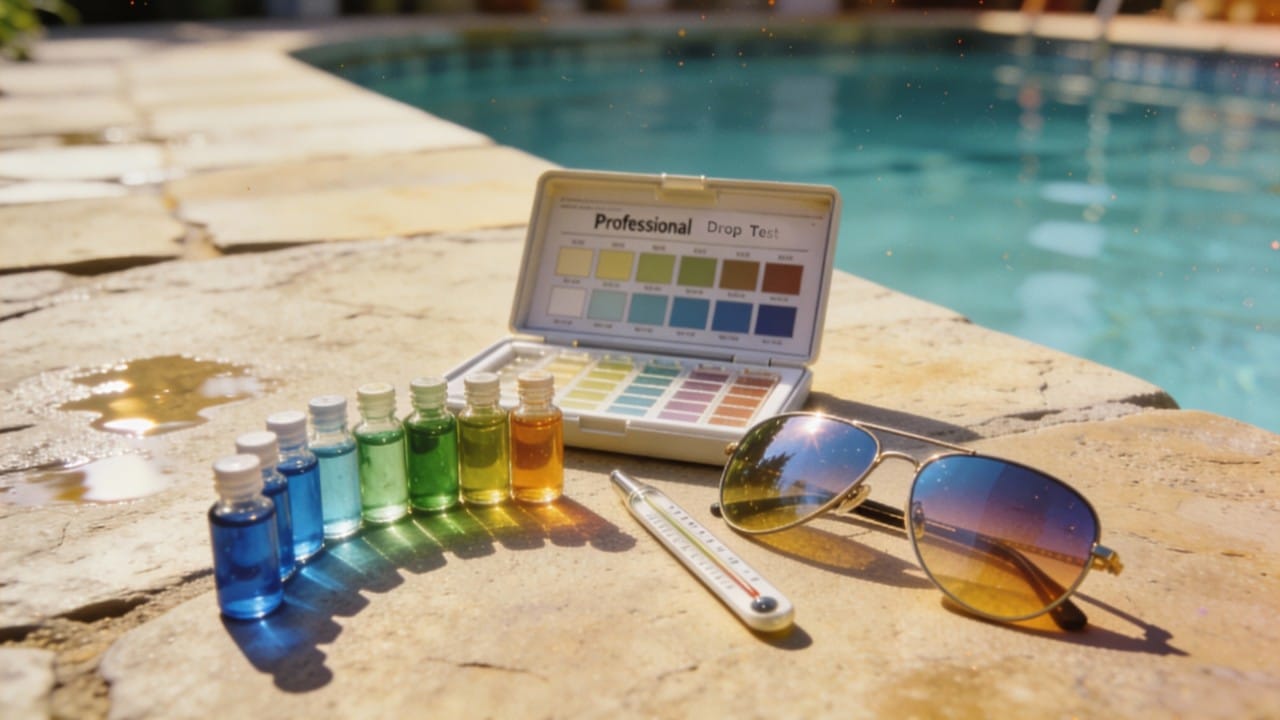
Use a liquid test kit or bring a water sample to a local pool store for a professional read.
- 30–50 ppm:
- 80+ ppm: You are entering the danger zone.
- 100+ ppm: Your chlorine is significantly locked.
Step 2: Compare Free vs. Total Chlorine
Most basic test strips show "Total Chlorine" and "Free Chlorine."
- Free Chlorine (FC): The active sanitizer available to do work.
- Total Chlorine (TC): The sum of Free Chlorine and "used" Combined Chlorine.
The Formula:
Total Chlorine - Free Chlorine = Combined Chlorine
If your Combined Chlorine is above 0.5 ppm, your sanitizer is being overwhelmed by contaminants.
How to Fix Chlorine Lock (The Solutions)
Once you have your test results, choose the matching solution below.
Method A: Fixing High CYA (The Partial Drain)
If your CYA is over 100 ppm, there is no magic chemical that reliably removes it from the water. Despite what some products claim, the only 100% effective method is dilution.
- Drain: Pump out 25% to 50% of your pool water (depending on how high the level is). Note: Never drain a pool completely without professional advice, as high water tables can damage the shell.
- Refill: Fill the pool with fresh water.
- Retest: Check the CYA levels again. Repeat until you are in the 30–50 ppm range.
Method B: Breaking Chloramines (Breakpoint Chlorination)
If your CYA is normal but your Combined Chlorine is high, you need to shock the pool. But simply adding a bag of shock won't work—you have to hit Breakpoint Chlorination.
To break the molecular bond of chloramines, you must add enough chlorine to reach 10 times the level of Combined Chlorine.
- Calculate: If your Combined Chlorine is 2.0 ppm, you need to add enough shock to reach 20 ppm of Free Chlorine instantly.
- Execute: Add the required amount of calcium hypochlorite (cal-hypo) or liquid chlorine at dusk.
- Circulate: Run your pump overnight.
- The Warning: If you only add enough to reach 15 ppm in the example above, you will not break the lock—you will actually create more You must hit the tipping point.
Is It Safe to Swim with Chlorine Lock?
No.
If your chlorine is locked—whether by high CYA or chloramines—it is not sanitizing the water. Even if the water looks clear, dangerous bacteria like E. coli or algae spores can be multiplying unchecked. Always resolve the lock and confirm you have active Free Chlorine before allowing anyone back in the pool.
Prevention: Stop the Lock Before It Starts
Fixing chlorine lock is labor-intensive and wasteful. The best strategy is to prevent it from happening in the first place.
Manage Your Stabilizer Input
The most common cause of high CYA is the overuse of stabilized chlorine tablets (Trichlor pucks). Every puck you add increases the CYA level, and CYA never evaporates.
- The Fix: If your CYA is creeping up, switch to Liquid Chlorine or Cal-Hypo (powder shock) for a few weeks. These sanitizers do not contain stabilizer.
Reduce Organic Debris (The Robot Advantage)
The less organic waste (pollen, algae spores, and leaves) in your pool, the less your chlorine has to work, preventing the buildup of chloramines.
Consistent physical cleaning is your first line of defense. This is why robotic pool cleaners are worth the investment—they significantly reduce the strain on your pool chemistry. Using a high-performance cleaner like the Aiper Scuba X1 Pro Max can significantly reduce the strain on your pool chemistry. Because the Scuba X1 Pro Max is designed with dual-filtration and vigorous scrubbing capabilities, it removes the organic contaminants and fine debris that usually consume your chlorine.
By automating the removal of debris from the floor, walls, and waterline, you ensure your chlorine is free to fight bacteria rather than getting "locked" up fighting leaves and dirt.
Weekly Maintenance Routine
- Test Weekly: specifically for CYA and Combined Chlorine.
- Shock Weekly: Use a non-stabilized shock to keep chloramines from building up.
- Circulate: Run your pump at least 8–10 hours a day (or variable speeds 24/7) to ensure chemicals are mixed.
Conclusion
Chlorine lock can feel like a mystery, but it is really just a chemistry imbalance. Whether you are battling the "sunscreen effect" of too much stabilizer or the "trap" of chloramines, the path to clear water always starts with accurate testing.
Don't let frustration lead to blind chemical dumping. By understanding the numbers and keeping your pool physically clean with reliable robotic pool cleaners, you can break the lock effectively and get back to enjoying safe, crystal-clear water.
Frequently Asked Questions
Can low pH cause chlorine lock?
No. Low pH makes chlorine more aggressive and dissipate faster, while high pH makes chlorine sluggish. However, pH issues are not technically "chlorine lock." You must balance pH (7.4–7.6) for chlorine to work, but pH alone does not "lock" it in the way CYA does.
Does chlorine lock cause cloudy water?
Yes. Because locked chlorine cannot kill organic contaminants, the water often turns cloudy or hazy as bacteria and early-stage algae begin to grow.
What is the fastest way to lower CYA?
Draining and refilling is the only reliable, fast method. "CYA Reducer" chemicals exist but are often slow, expensive, and yield mixed results.
References
To ensure the accuracy of the chemical procedures described above, we have relied on standards set by public health and industry authorities.
- Centers for Disease Control and Prevention (CDC): Chloramines and Pool Operation. (Explains the health risks of chloramines and the necessity of breakpoint chlorination).
- Indiana Department of Health: How to Shock the Pool (Breakpoint Chlorination). (Provides the specific "10x" calculation required to break chloramine bonds).
- Orenda Technologies: The CDC’s Limit for Cyanuric Acid. (Details the science behind Cyanuric Acid's "slowing" effect on chlorine efficacy).