
The Ultimate Pool Maintenance Schedule: A Year-Round Plan for Every Pool

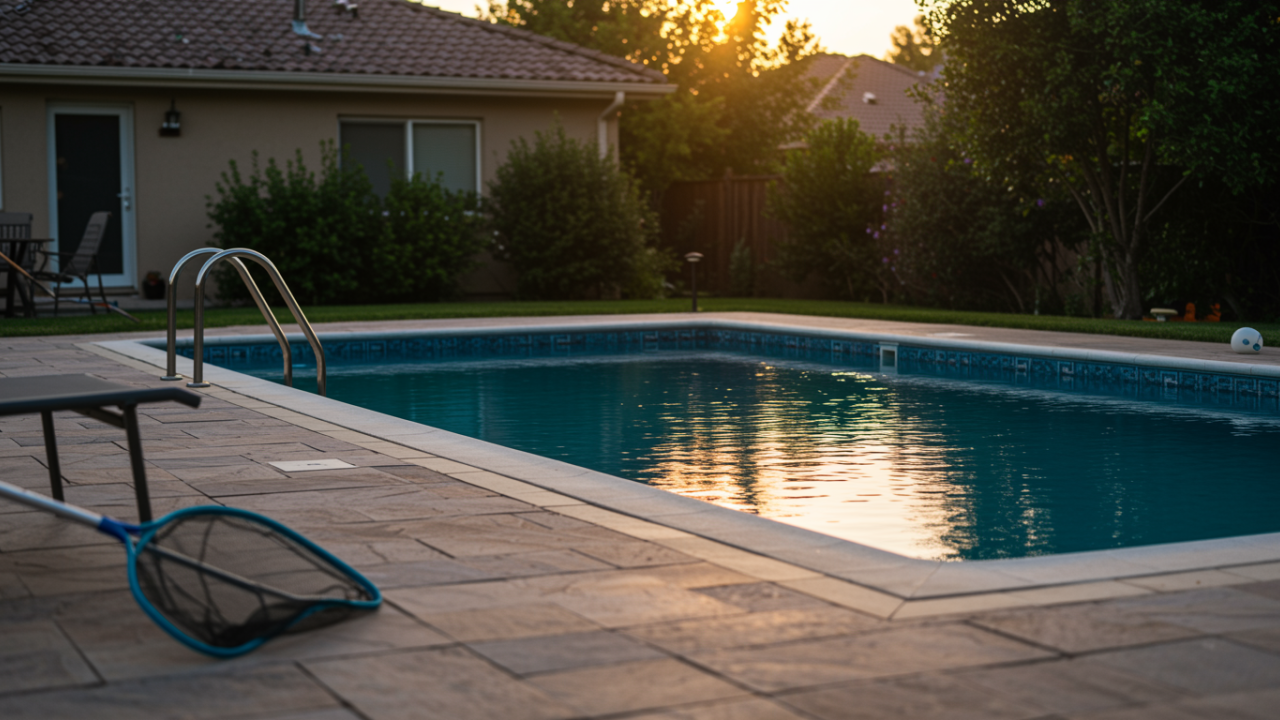
In the U.S., thousands of pool-related emergency visits each year are linked to pool chemicals—often from fumes, splashes, or handling mistakes—so a “good routine” has to be a safe routine, too.
A reliable pool maintenance schedule isn’t one long checklist you follow forever. It’s a cycle that changes with weather, water temperature, debris, and how often people swim. When your schedule matches the season, you avoid the classic spiral: cloudy water, algae, surprise store runs, and hours lost to scrubbing.
What Is a Good Pool Maintenance Schedule (The Weekly Baseline)?
A “good” schedule is the one you can actually keep. For most owners, that means a short weekly routine that protects water clarity and equipment before problems snowball.
The 3 C’s
1.Circulation is moving water through the filter so debris can be trapped and chemicals can mix evenly. Pump run time changes with season and water temperature, so it’s best treated like a dial you adjust, not a fixed number.
2.Cleaning is removing the physical stuff: leaves, bugs, dust, sand, and the film that builds up on walls and the waterline. This is usually the biggest time sink, which is why robotic cleaners and robotic skimmers can meaningfully change how your schedule feels.
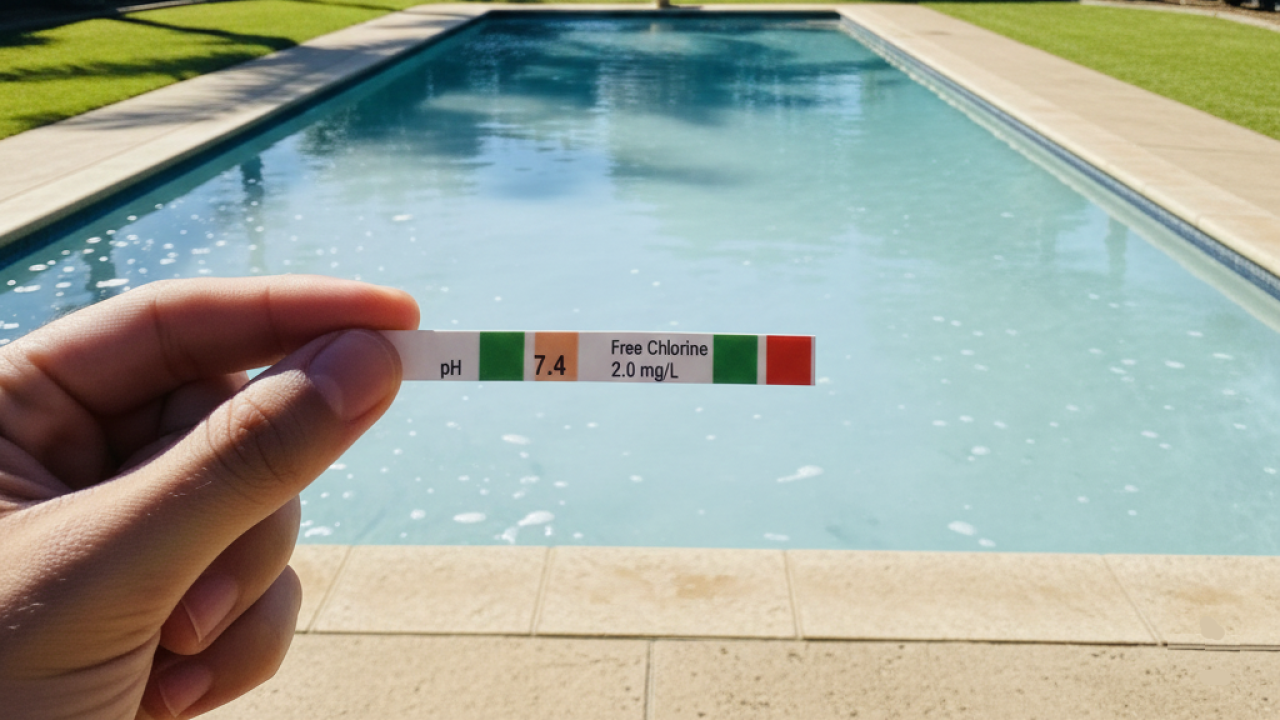
3.Chemistry is keeping water comfortable and safe by watching pH, sanitizer level, and overall balance. For example, CDC guidance commonly referenced for pools includes keeping pH in the 7.2–7.8 range and free chlorine at least 1 ppm (and at least 2 ppm if using cyanuric acid stabilizer), with adjustments depending on your setup and product label directions. citeturn2search1
Weekly Checklist
- Skim the surface so debris doesn’t sink and break down.
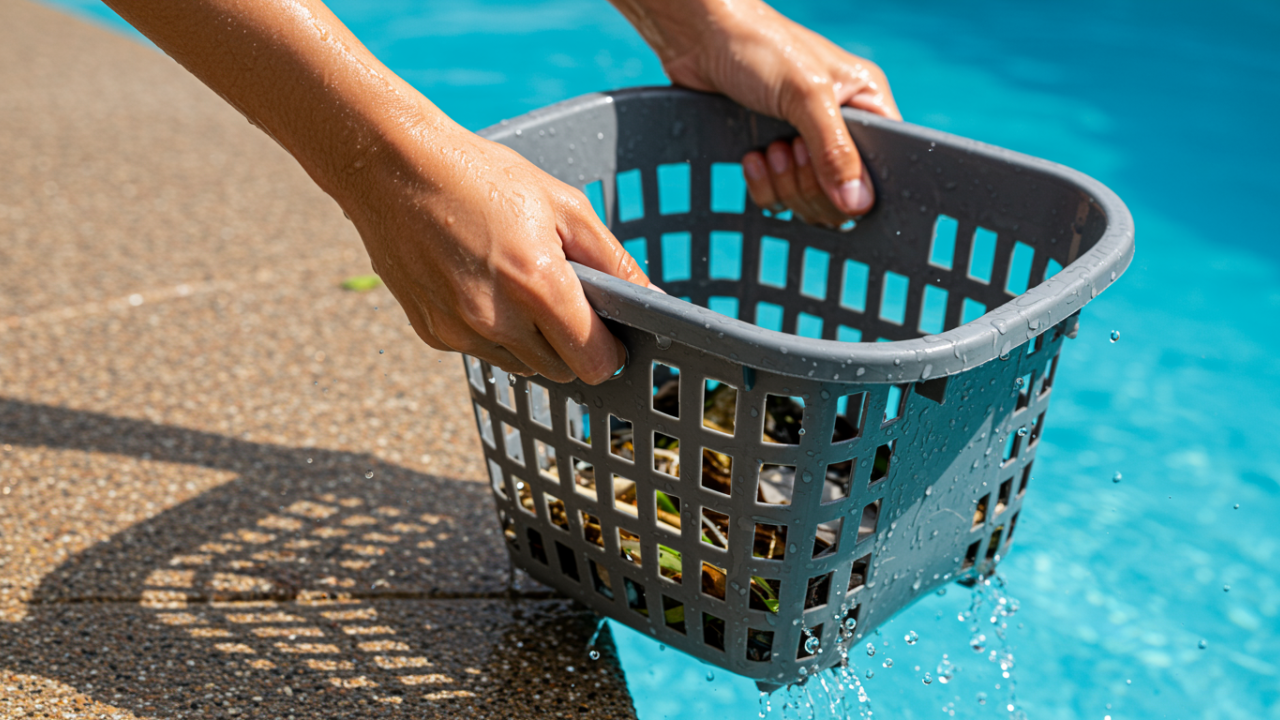
- Empty baskets (skimmer and pump basket, if present).
- Brush problem areas (steps, corners, and the waterline band).
- Vacuum or run a robotic cleaner for settled debris.
- Check filter pressure/flow and clean or backwash as your manual specifies.
- Test water and adjust in small steps (follow labels; never mix chemicals).
Quick Targets (Safe Ranges)
Use these as general guardrails, then follow your test-kit instructions and local guidance for your pool type. CDC’s commonly cited pool guidance includes pH 7.2–7.8 and minimum free chlorine levels as noted above. citeturn2search1
For a practical “what each number means” view, use Pool Chemistry Cheat Sheet as the deeper hub (it’s better to keep the detailed adjustment steps there to avoid cannibalizing that post).
Your Year-Round Pool Maintenance Calendar (Month-by-Month at a Glance)
A calendar beats a vague promise. It helps you separate what’s weekly from what’s seasonal, and it reduces the chances you’ll miss a key transition moment (like the first leaf drop or the first real cold snap).
The Master Table
| Season window (typical) | What changes | What to prioritize | Best “avoid a headache later” move |
|---|---|---|---|
| Late winter → early spring | Water warms, debris returns | First deep clean + first full balance | Inspect equipment before heavy use |
| Mid–late spring | Pollen, early algae risk | Consistent cleaning + steady testing | Don’t let fine debris sit on the floor |
| Summer | Heat, swimmers, UV | More frequent testing + consistent cleaning | Retest after parties and storms |
| Early fall | Leaves begin | Surface debris control | Keep debris from sinking and rotting |
| Late fall | Heavy leaf load, cold nights | Prep for closing or cold protection | Don’t wait for the first hard freeze |
| Winter | Low use; freeze risk varies | Protection and prevention | Follow a climate-appropriate plan |
The “Weather Triggers” That Change Your Schedule
Real pools don’t follow neat calendars. Heat waves, storms, and wind can turn a “weekly” routine into a “right now” routine because they change debris load and how fast sanitizer gets used up. When conditions shift quickly, you tighten the schedule temporarily, then relax back to baseline once water is stable again.
Open vs. Closed Season (Simple Rules)
Open season means you’re circulating and filtering routinely, even if you swim only sometimes. Closed season means the pool is winterized or running at a minimal, protection-focused level. The right approach depends on your climate and equipment, so treat winter decisions as a “follow your manufacturer and local pro guidance” area rather than internet improvisation.
Seasonal Pool Maintenance (High-Level Workflow Shifts)
Seasonal pool care is mostly about changing your focus, not doing every task all at once.
Spring
Spring is about waking the system back up: remove winter debris, confirm circulation is normal, then bring chemistry back into range. For the step-by-step opening order, use Spring Pool Maintenance Tips & Tricks.
Summer
Summer is high demand mode. More swimmers and stronger sun typically mean you test more often and stay proactive about debris so it doesn’t turn into cloudiness or algae pressure. For heatwave-specific tactics, use Summer Pool Maintenance Guide.
Fall & Winter
Fall is debris season. Winter is protection season. The goal is to prevent organic buildup and avoid cold-weather damage in freeze-prone regions by following a proper, climate-appropriate approach. For specifics, use Fall & Winter Pool Maintenance Guide
How Often Should You Test Pool Water (and Adjust Chemicals)?
Chemistry doesn’t need to be complicated, but it does need to be consistent. The more your pool conditions swing—heat, storms, parties—the more often you test, because that’s when sanitizer and pH can move fastest.
Testing Frequency
CDC-facing pool guidance often emphasizes frequent checks (especially in public pool contexts), with more frequent monitoring during heavy use. Homeowners often test less in low-use weeks, but the core idea still holds: test more often when conditions change fast.
Core Readings
At minimum, keep eyes on pH and free chlorine, and use alkalinity as a stability check. If you use stabilizer (cyanuric acid), it affects how chlorine performs, which is why recommended minimums change when CYA is present.
Chemical Order (Safety-First)
The safest approach is label-first: add chemicals separately, give the pump time to circulate between additions, and never mix products together.
Tailor the Schedule: Chlorine vs. Saltwater Pools (What Changes, What Doesn’t)
Saltwater pools still rely on chlorine for sanitation; the difference is how chlorine is produced and what equipment needs periodic attention. That’s why your cleaning and testing baseline stays similar, while your “equipment check” cadence can differ.
What Stays the Same
You still need circulation, filtration, routine cleaning, and frequent checks of sanitizer and pH. The pool doesn’t care how chlorine got there—only whether the level stays where it needs to be.
Chlorine Pools
Chlorine pools often revolve around how you dose sanitizer (tablets, liquid, etc.) and how stable it stays during heat and high swimmer load. Your schedule pressure points are usually keeping chlorine steady and responding quickly after storms or big swim days.
Saltwater Pools
Saltwater pools add system-specific checkpoints like inspecting the salt cell for scale and staying aware of corrosion protection components where applicable. Because this varies by model and install, the safest guidance is to follow your generator manufacturer’s inspection/cleaning recommendations and your pool pro’s advice for your specific pool metals and bonding setup.
Above-Ground vs. In-Ground Pools: Which Needs More Attention?
Neither pool type is “no work.” They just concentrate work in different places.
In-Ground
In-ground pools often have more wall and waterline area, and deeper zones where fine debris can settle. If you ignore the waterline band, buildup can become a recurring scrub job.
Above-Ground
Above-ground pools often have fewer return jets, which can create dead spots where debris lingers. Liners also benefit from basic visual checks during major temperature swings.
The “Effort Hotspots” (Where Most Time Goes)
Across both, the time drains are consistent: surface debris, settled debris, brushing problem zones, and keeping baskets and filters from getting overloaded. That’s why automation tends to create the biggest lifestyle difference.
Can Robotic Pool Cleaning Automate Your Pool Maintenance Schedule?
Robots don’t replace pool ownership, but they can replace the repetitive cleaning labor that makes pool care feel constant.
Manual vs. Automated Care
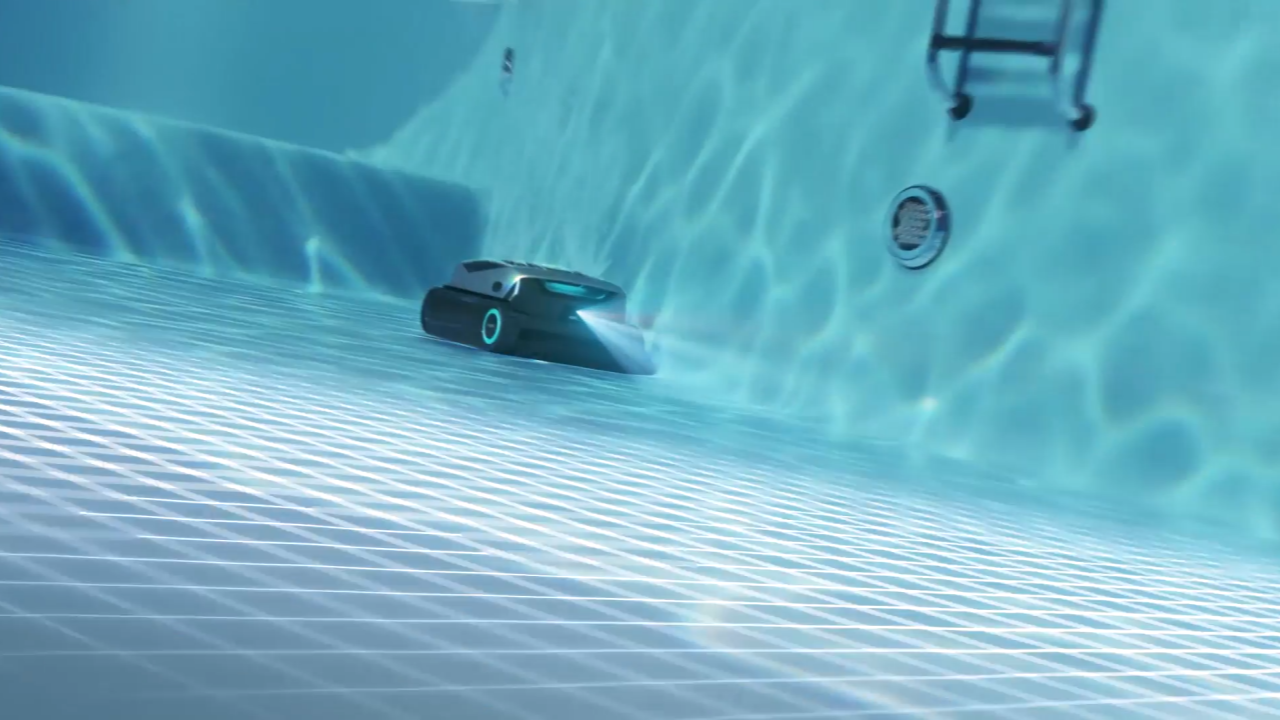
In a manual schedule, you’re the skimmer, the vacuum, and the brush. In an automated schedule, your role becomes more like a supervisor: you still test water, but cleaning happens in the background more consistently.
What Robots Don’t Replace
You still need to manage chemistry, keep the circulation system healthy, and do basic safety checks. A robot supports the routine; it doesn’t remove the need for balanced water and functioning filtration.
The “Manager Mindset”
- Run cleaning on a repeatable cadence instead of “when it looks bad.”
- Empty/rinse the robot’s basket or filter as needed.
- Keep skimmer/pump baskets clear so circulation stays strong.
- Continue testing chemistry, especially after storms and parties.
How Aiper Helps You Bring Vacation Home (With Less Pool Work)
The easiest way to make a schedule stick is to remove the chores people skip first. For most pool owners, that’s daily skimming and routine vacuuming.
Aiper’s cordless approach fits naturally into a “do less, stay consistent” routine, especially during summer debris loads and fall leaf season. For example, Aiper offers a cordless robotic pool cleaner (Scuba X1 Pro Max) and a cordless robotic pool skimmer (Surfer S2) that are positioned to take cleaning tasks off your hands so you can spend more time enjoying your pool.
Conclusion
A pool stays easier when you treat maintenance as a year-round rhythm, not a once-a-week rescue mission. Keep the weekly baseline steady, shift priorities with the season, and use weather triggers to tighten the routine only when conditions demand it. That approach prevents most of the “suddenly green” moments and keeps your system running with less stress.
If you want the biggest time win, automate the repetitive cleaning work so your schedule becomes simpler to follow. You still manage water balance and basic system health, but you spend fewer hours doing the heavy lifting.