
Why Your Pool Robot Gets Stuck on the Main Drain (And How to Fix It)

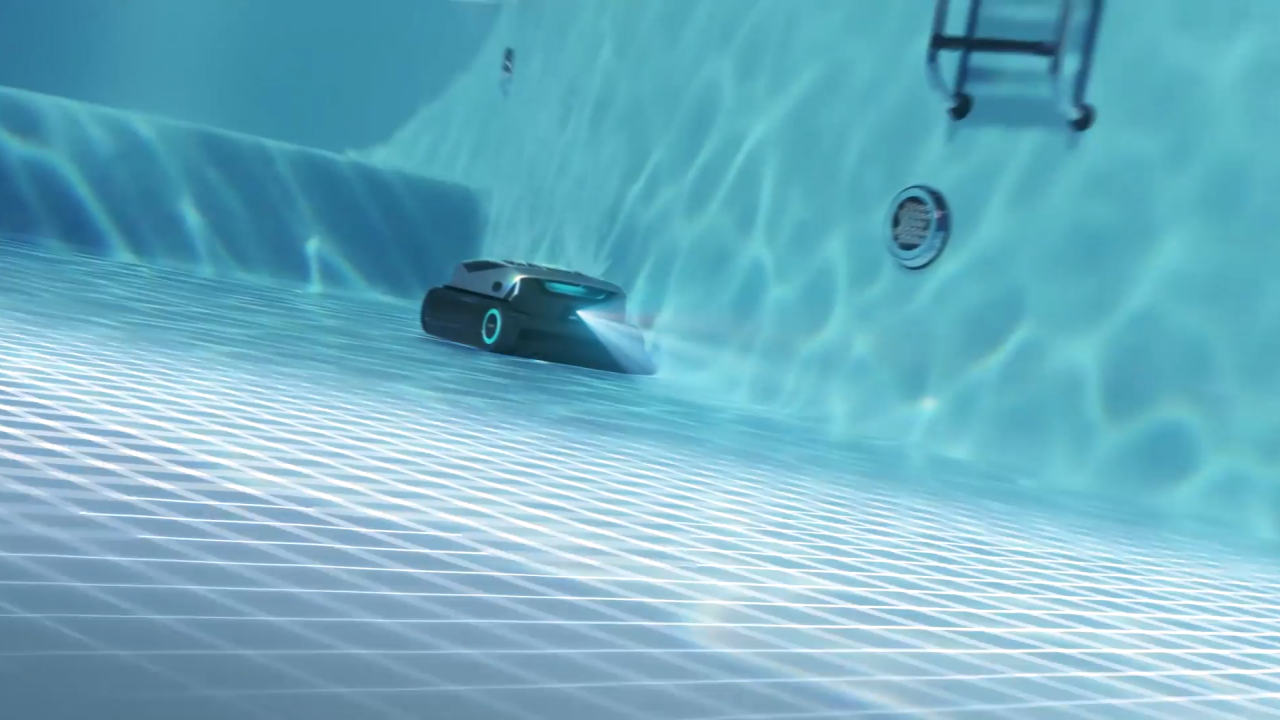
You bought a robotic pool cleaner to save time, not to add a new chore to your list. Yet, for many pool owners, the reality involves walking outside to find their expensive robot spinning its wheels helplessly on top of the main drain, unable to move.
It’s incredibly frustrating to have to "babysit" a device that is supposed to be automatic. But here is the good news: this usually isn't a defect in your robot. It is a common physics problem involving suction and geometry.
In this guide, we will explain exactly why this happens and walk you through a three-step solution—starting with a free valve adjustment, moving to a simple DIY hack, and concluding with a permanent hardware upgrade if necessary.
Why Robotic Pool Cleaners Get Stuck on Main Drains
To understand the fix, you have to understand the forces at play. It usually comes down to two specific factors: the shape of the drain cover and the power of the water flow.
The “High-Center” Problem: Drain Cover Geometry
Most modern pools use VGB-compliant drain covers. These covers are designed to protect swimmers by preventing body or hair entrapment, a standard mandated by the U.S. Consumer Product Safety Commission (CPSC).
To meet these safety standards, many drain covers use a domed or raised shape. That raised shape creates a problem for robots. When the robot drives over the dome, its chassis lifts off the pool floor. The tracks or wheels lose contact with the surface, causing the robot to "high-center"—much like a car stuck on a speed bump—and spin in place.
Suction Lock: The Conflict Between Pump and Robot
Your pool pump is designed to pull water down through the main drain. At the same time, your robot is trying to vacuum water up into its filter.
When these two forces meet, they create a "suction lock." The drain pulls the robot down with significant force, pinning it to the floor. According to basic fluid dynamics and injury reports, even moderate suction from a pool pump is strong enough to immobilize lightweight equipment. Once this lock occurs, the robot’s tracks can’t generate enough traction to break free.
Method 1: Adjusting Pool Valves (The Free Fix)
Before you buy accessories or change hardware, try adjusting your pool valves. This method costs nothing and solves the issue for many pool owners.
Closing the Main Drain Line to Stop Suction Lock
Most pools have valves near the pump that control the water flow from the skimmer and main drainage. By temporarily diverting suction away from the drain, you remove the force holding the robot down.
Steps:
- Turn off the pool pump for safety.
- Locate the intake valves at your equipment pad.
- Slowly close the valve that controls the Main Drain (or restrict it significantly).
- Open the Skimmer valve fully to maintain water flow to the pump.
- Turn the pump back on and test the robot.
Without that downward suction force, the robot can usually drive over the drain cover without getting "magnetized" to it.
Optimizing the Cleaning Schedule
If you are using a robotic pool cleaner vs. a suction cleaner, you have a major advantage: your robot works independently of the pool's filtration system.
You can avoid suction lock completely by timing your cleaning cycle. Simply schedule your robot to run when the main pool pump is off.
Tip: If you are unsure about your pump schedule, check our guide on how to calculate pool pump run time to find a window where the water is calm.
Method 2: DIY Modifications for Your Robot
If valve adjustments do not solve the problem (or if you have a high-domed drain that traps the robot even without suction), simple DIY changes can help.
The “Pool Noodle” Hack: Increasing Buoyancy
Many pool owners use foam to reduce the robot’s effective weight on the drain cover.
- The Hack: Cut a small section (4–6 inches) of a pool noodle.
- The Fix: Zip-tie it securely to the robot’s handle.
- The Result: The added buoyancy helps the robot "float" slightly when it climbs the drain, preventing it from pressing down hard enough to get stuck.
Changing the Robot’s Starting Location
Robots often follow repeated movement patterns. If you drop the robot in the same spot every time, it may reach the drain at the exact same angle during every cycle.
- Simple Fix: Start the robot from a different corner of the pool or rotate it before placing it in the water. This small change can break the navigation loop that leads the robot into the trap.
Method 3: Hardware Solutions for the Drain Cover
When free fixes and DIY options fail, hardware changes provide a long-term solution.
Installing Aftermarket Main Drain Clip-Ons (Ramps)
Many pool supply stores sell plastic drain "ramps" or "shields" that clip onto standard drain covers. These devices modify the shape of the drain, turning the steep dome into a gentle slope that the robot can easily climb over.
Upgrading to Robot-Friendly VGB Drain Covers
If you are considering a pool renovation, ask your contractor about low-profile or "flat" anti-entrapment covers. These are designed specifically to minimize obstruction for robotic cleaners while remaining fully compliant with safety laws.
The Role of Navigation Technology
Not all robots get stuck equally. The technology inside your cleaner plays a major role in how it handles obstacles.
Random Bounce vs. Systematic Path Planning
Older robots often use "random bounce" patterns. They move until they hit a wall, turn, and repeat. This increases the statistical chance that the robot will hit the drain repeatedly, eventually getting stuck.
Modern units, like the Aiper Scuba X1 Pro Max, utilize systematic path planning. By mapping the pool and cleaning in structured rows (S-patterns), these robots reduce unnecessary passes over the main drain. While no robot is immune to physics, smart navigation significantly reduces the frequency of the issue compared to random-pattern models.
Conclusion
A pool robot getting stuck on a drain is usually a physics issue, not a broken machine. Raised drain covers and suction forces create a trap that can stop even high-end cleaners.
Before spending money on accessories, start with Method 1: Adjust your valves or schedule your cleaning when the pump is off. In many cases, this simple step is all it takes to keep your pool robot moving freely. If the problem persists, a simple DIY float or a drain ramp can ensure your robot finishes the job without you having to rescue it.
Ready to upgrade to a smarter clean? Explore how the obstacle-avoidance technology in the Aiper Scuba Series can help make your pool maintenance hands-free.
Frequently Asked Questions (FAQ)
Why does my pool robot get stuck in the same spot every time?
Robots often repeat movement patterns based on where they start. If the drain sits in a central location, the robot reaches it from the same angle each cycle. Changing the starting point breaks this pattern.
Is it safe to remove the main drain cover entirely?
No. Never remove a main drain cover. It is a critical safety device required by federal law (VGB Act) to prevent anti-entrapment incidents. Removing the cover exposes swimmers to life-threatening suction force. For more on keeping your pool area safe, read our guide on pool safety for families.
Do battery pool cleaners get stuck less often than corded ones?
Battery-powered robots often get stuck less frequently because they operate independently of the pump. Since you can run them while the pool pump is off, you eliminate the "suction lock" factor entirely.