
Why Your Pool Vacuum Keeps Flipping Over (And How to Fix It)
A pool vacuum flips due to balance issues caused by buoyancy, suction flow, or hose torque. Fix suction-side cleaners by straightening hoses, adjusting weights, and checking swivels. For robotic units, ensure proper submersion to release trapped air and check for worn treads.

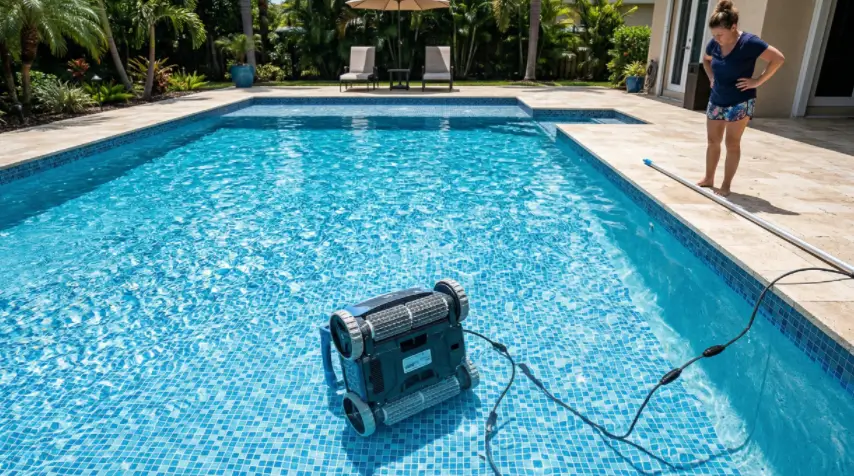
If your pool vacuum keeps flipping over, you’re not alone and you’re not “doing it wrong.” It’s just a frustrating physics problem.
A cleaner flips when it loses its balance. Usually, that balance issue comes from one of three things: buoyancy (air), suction/flow, or something pulling the cleaner sideways (often the hose).
And when it happens, it stops being “automatic.” You end up babysitting a machine that’s supposed to give you time back. Pool upkeep already adds up fast—costing about $180 per month during the season when the pool is in use, before repairs or upgrades.
Now let’s fix the flipping, starting with the easiest wins.
Troubleshooting Suction and Pressure Pool Cleaners
Most flip-over problems happen with traditional suction-side and pressure-side cleaners because they rely on hoses, flow, and the pool’s circulation system. That combo can create twisting force and lift.
If you want a quick refresher on how these cleaner types work, and why hoses create so many headaches, see our breakdown of Robotic vs. Suction Pool Cleaners.
Issue 1: Hose Memory and Tangling
“Hose memory” is exactly what it sounds like. If your hose sits coiled up in storage, the plastic “remembers” that shape. Then, when the cleaner moves, the hose naturally tries to curl back into loops.
Those loops don’t just look messy. They pull the cleaner sideways, twist it as it turns, and can roll it right onto its back.
The Fix (simple, but effective):
- Reset the hose shape with heat and time. Disconnect the hose sections and lay them perfectly straight in the sun for up to a couple of days to help remove the “memory.”
- Check your hose length. Excess hose length can tangle and make it hard for the hose swivels to untwist the line.
When you’re simply tired of wrestling with hoses, it’s often the point where pool owners start looking at cordless robotics. Because a model like our Scuba V3 operates entirely without hoses, it removes this major flipping trigger from the equation completely.
Issue 2: Incorrect Hose Weight Placement
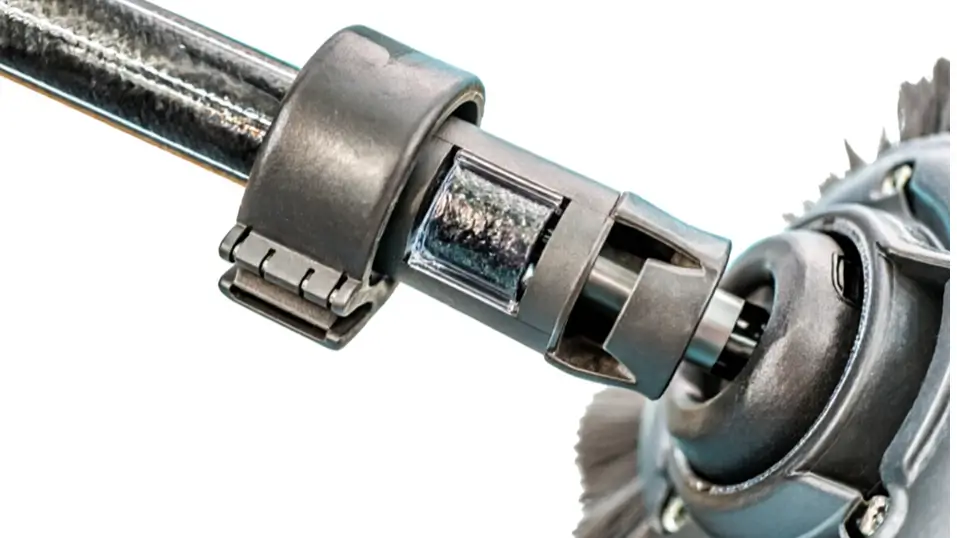
If you’re asking, “why is my pool cleaner not sitting flat?” this is one of the first things to check. Hose weights control the cleaner’s angle and keep the hose from lifting the front of the unit like a lever.
The Fix (adjust, don’t guess):
- Turn the pump off before you move weights or disconnect anything.
- Start by placing the first weight close to the cleaner head (many guides put it within roughly 4–12 inches of the swivel head).
- Adjust about 1 inch at a time, testing after each move, until the cleaner stays planted and turns without rolling.
Issue 3: Too Much (or Too Little) Suction
When flow is wrong, your cleaner can’t “ride” the pool surface correctly. Too much suction can make a cleaner hop, lift, or “kite” off the floor. Too little suction makes it weak and slippery, so it loses traction and rolls when turning.
The Fix (tune the flow safely):
- Turn the pump off before you touch valves or skimmer parts.
- Empty all baskets first (skimmer and pump).
- Make small adjustments using your suction regulator or flow control, testing the cleaner's speed and grip after each change.
If you’ve hit the point where you don’t want your cleaner’s behavior tied to pump suction at all, a self-powered robot can feel like a reset. For instance, our Scuba X1 Pro Max uses smart pool mapping rather than relying on your skimmer line to move, guaranteeing consistent coverage without the suction struggles.
Issue 4: A Stuck Hose Swivel
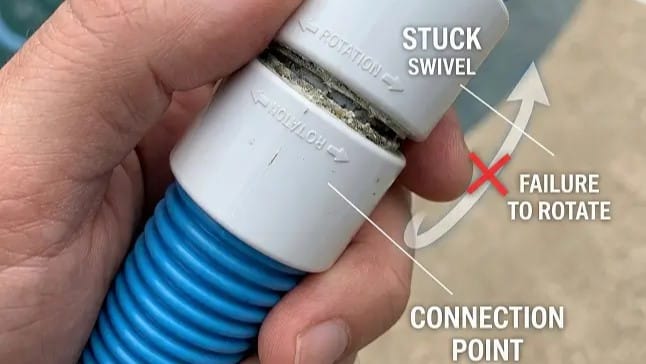
Your cleaner’s swivel is there for one reason: to stop the hose from twisting the cleaner. If the swivel joint jams with sand, grit, or debris, the hose can’t untwist as the cleaner changes direction. That twist force gets transferred directly into the cleaner body until it rolls.
The Fix:
- With the pump off, disconnect and inspect the swivel connection. Rinse it and make sure it rotates freely. If it still feels gritty or stiff after cleaning, the swivel may be worn out and due for replacement.
Why is My Robotic Pool Cleaner Flipping Over?
Robotic cleaners are mechanically different. They don’t rely on your pump suction or long hoses, so flipping is usually caused by air, traction loss, or a mechanical imbalance.
Trapped Air in the Unit
Air makes a robot buoyant, and buoyancy makes it unstable.
The Fix:
- Lower the robot into the water slowly. Tilt it gently to help trapped air escape. Let the bubbles completely stop before starting the cycle.
- Note: If you’re using a model like our Scuba V3, this “slow submerge” habit matters because consistent contact with the pool surface is what allows the robot's sensors to follow its planned routes steadily.
Worn Treads or Brushes
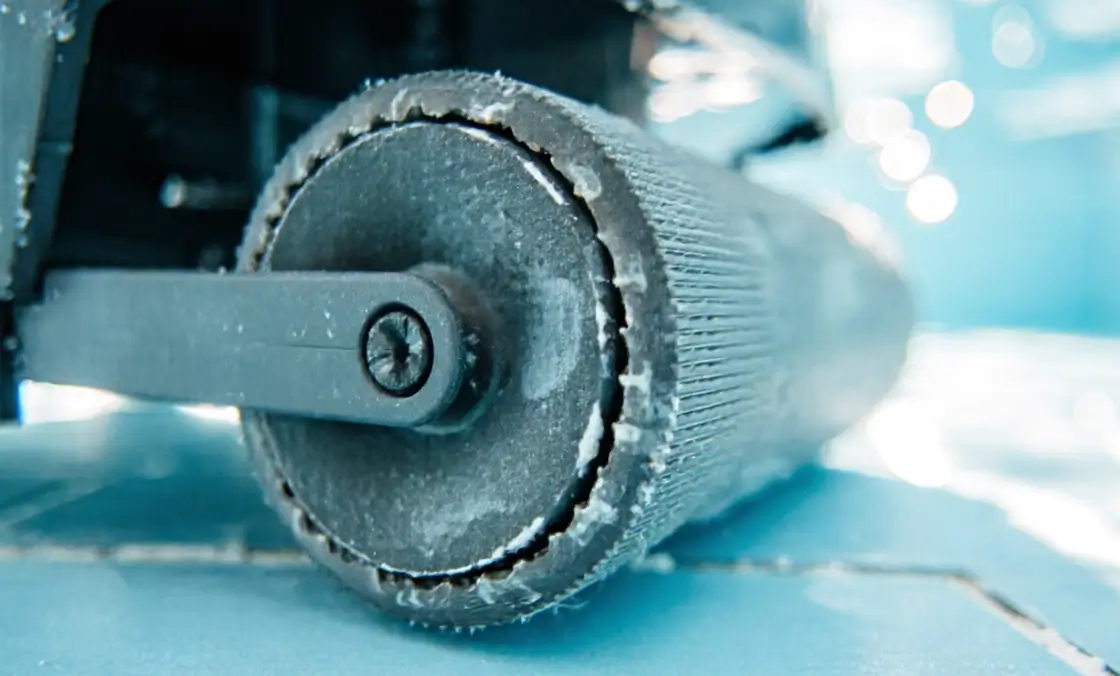
If your robot climbs walls and then suddenly falls backward, slips, or flips during turns, it’s often a traction issue.
The Fix:
- Look for uneven wear on the rubber tracks or treads.
- Check the scrubbing brushes for flattening, missing sections, or stiffness. If the robot can’t grip the pool surface, it can’t stabilize itself.
Why Does My Pool Vacuum Keep Going in Circles?
If your cleaner is doing donuts, here’s the direct answer: a cleaner goes in circles when one side has more drive or drag than the other, or when a hose keeps pulling it in the same direction.
Common causes:
- Wheel or track jamming (hair, leaves, or grit caught on one side).
- Uneven wear (one tread is significantly more worn than the other).
- Hose "memory" loops constantly steering the cleaner back on itself.
- Water flow that’s too high, forcing the cleaner into tight, repeated patterns.
Is It Time to Replace Your Pool Cleaner?
Sometimes the fix is a simple tweak. Sometimes it’s a signal that you’re spending too much time fighting the machine.
What is the Life Expectancy of a Pool Vacuum?
Most pool vacuums and automatic cleaners are not forever tools. Automatic cleaners typically last about 3 to 5 years, with longer life possible only through strict maintenance. If your cleaner is constantly flipping, circling, and needing manual rescues—and it’s already a few seasons old—replacing it is often cheaper than the endless cycle of buying small parts and wasting your weekend time.
Upgrading to a Cordless Robotic Cleaner
If you’re tired of stiff hoses, shifting weights, and suction valve drama, upgrading to a cordless robotic cleaner removes the most common flip triggers: hose torque and pump-driven suction chaos.
Here’s how we think about it at Aiper: your backyard should feel like a break, not a maintenance schedule.
What upgrading changes immediately:
- No hose memory: No hose means that entire category of flipping disappears.
- No suction balancing: A robot doesn’t depend on your skimmer valves to move.
- More consistent coverage: Robotic cleaners are built to seamlessly transition from floors to walls.
- A holistic ecosystem: By utilizing a completely cordless ecosystem—from floor-cleaning robots like our Scuba series to dedicated surface-clearing devices like our Surfer S2 (which handles heavy leaf loads before they ever sink)—you get more "pool is ready" time and less tinkering time.
Conclusion
When your pool vacuum keeps flipping over, it’s almost always a balance problem. Start with the simple stuff: hose memory, weight placement, and a free-moving swivel. Then check your suction flow. If you’re using a robotic cleaner, think air first (slow submerge), then traction.
If you’re spending more time adjusting your vacuum than enjoying your water, that’s the real signal. Your pool is supposed to be the easy part of your backyard. Quiet water. Clean lines. More weekends.