
Pool Vacuum vs. Skimmer: Do You Really Need Both?

A pool can look perfect on top and still be a mess below. One windy afternoon, and you’ll see it: leaves and bugs floating at the surface, but a dusty “film” building on the floor. That’s the real problem behind pool vacuum vs skimmer—they don’t compete. They do different jobs.
A skimmer is your surface catcher. It pulls in floating debris before it sinks, breaks down, or gets pushed around by wind. A pool vacuum is your floor solution. It targets heavy debris and fine sediment that a skimmer can’t touch.
If you’re trying to cut pool work (and not run your pump harder than you need to), the goal isn’t choosing one tool. It’s using each one in the smartest way—so you stop chasing the same dirt twice and start getting consistent clean with less effort.
Pool vacuum vs skimmer: what’s the real difference?
When you compare pool vacuum vs skimmer, the cleanest answer is simple: one cleans what floats, the other cleans what sinks. Most “my pool won’t stay clean” problems happen when you only cover one layer.
Floaters
Skimmers target debris that rides the surface. That includes leaves, petals, bugs, pollen, and the thin “slick” that can form from sunscreen and body oils. If floating debris isn’t removed quickly, it can get waterlogged and sink—or break apart into smaller bits that spread through the pool.
Sinkers
Vacuums handle what settles. This is the grit and dust that ends up on the floor, along steps, and in corners where circulation is weaker. Fine debris can make the pool look dull or hazy even when the surface looks clean.
Why it matters
Surface debris is moved by wind and surface flow. Floor debris is controlled by gravity and low-flow zones. Because those forces are different, one tool rarely covers both jobs well.
What does a pool skimmer do (and why is it time-sensitive)?
A skimmer is designed to remove debris early—before it sinks, stains, or breaks down.
How pool skimmer works
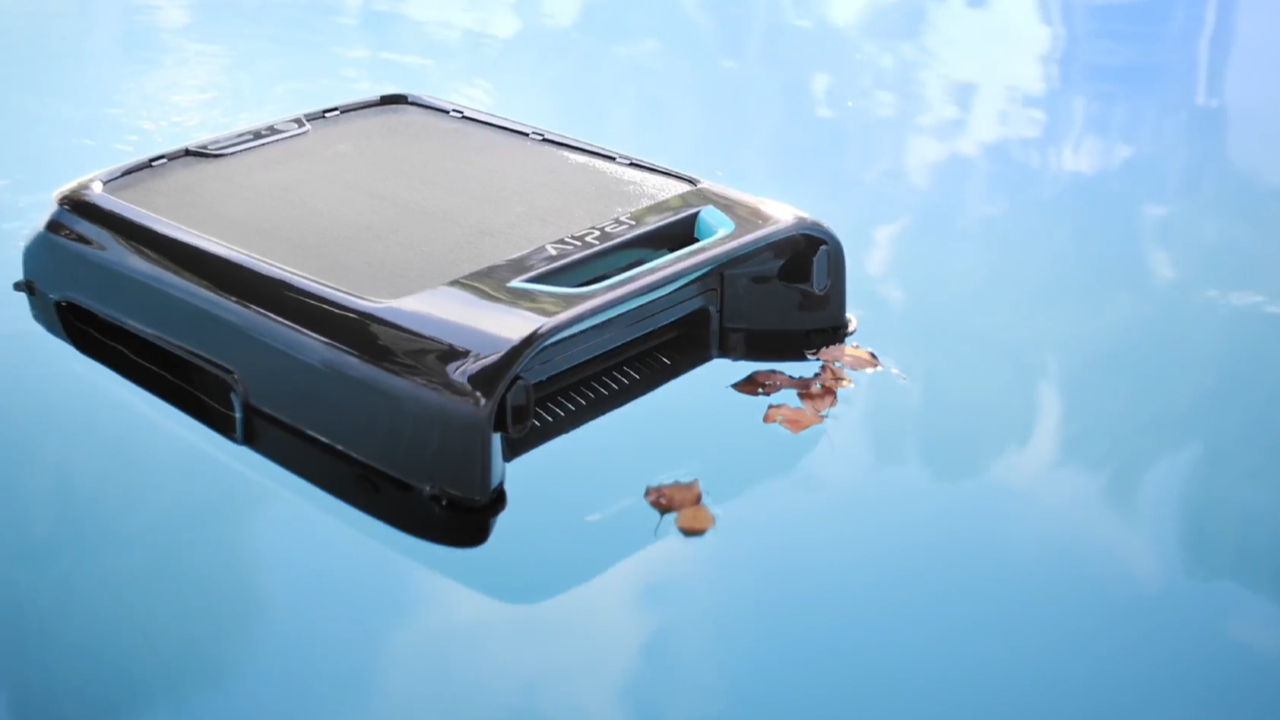
A typical pool skimmer is built into the pool wall and connected to the circulation system. When the pump runs, it creates suction at the skimmer opening. Water and floating debris are pulled in, larger debris is trapped in the basket, and the water continues to the pump and filter.
Weir + basket
Most skimmers use a weir door (a small flap) that helps pull a thin layer of surface water into the opening, plus a basket that catches leaves and larger debris before they reach the pump. In plain terms, the skimmer is a “front door” for the pool’s circulation system, and the basket is a first line of defense for the equipment.
Sinking window
Surface cleaning is time-sensitive because many “floaters” don’t float forever. Leaves and insects soak up water, get heavier, and drop. Once debris sinks, it stops being a skimmer problem and turns into a floor-cleaning problem—usually harder to see and more likely to break into smaller pieces.
What does a pool vacuum do that a skimmer can’t?
A skimmer can’t reach the floor. It can only pull what the surface flow brings to it. That leaves a whole category of debris untouched.

Sediment
Sand, grit, and heavier debris settle quickly and sit in places where flow is weak. Even with a strong pump, that material often stays put until it’s physically disturbed and removed.
Fine debris
Fine particles like dust, silt, and dead algae are common reasons a pool looks “cloudy” or dull. Brushing can lift them into the water, but lifting isn’t the same as removing. A vacuum (manual or robotic) is what actually collects that debris and takes it out of circulation.
Manual vs automatic
Manual vacuuming can work, but it often adds setup time and friction. Common pain points include:
- Connecting hoses and priming (removing air)
- Losing skimmer suction while vacuuming
- Moving too fast and stirring debris into a cloud
- Needing to keep an eye on the filter pressure and flow
Automatic and robotic options reduce that hands-on workload because the cleaning is less dependent on your pump suction and your technique.
Skimmer vs vacuum run time: why suction “tug-of-war” happens
This is the classic debate: “When I vacuum, my skimmer stops working well.” In many traditional setups, that’s not your imagination.
One pump issue
Many pools use one pump to pull water from the skimmer and main drain. If you add a suction-side vacuum, you’re often redirecting that same limited suction to the vacuum line.
Lost skimming
When suction is pulled away from the skimmer, the surface loses its “pull.” Floating debris can linger, spin in place, or drift to the far end of the pool. Then it sinks later. That’s how a vacuum session can accidentally create more floor cleanup later.
Easiest fixes
Without getting into risky DIY plumbing changes, the most practical fixes are:
- Use independent, cordless cleaning devices so vacuuming doesn’t steal skimmer suction
- Time skimming during peak debris hours (windy daytime), and vacuum/robot-clean when the pool is calm
- Keep the skimmer basket and pump basket clean so your system can move water efficiently
On the energy side, it’s also worth remembering that pool pumps can be a significant electricity user. The U.S. Department of Energy notes pool pumps can be among the largest electric motors in a home and can cost up to about $270/year to operate, depending on use and rates. ENERGY STAR also emphasizes that lowering pump speed can sharply reduce energy use.
Can you use one without the other?
You can—but most people don’t love the results.
Vacuum only?
A vacuum can remove what already sank, but it does not replace surface skimming and circulation needs in most pools. If surface debris isn’t removed early, it tends to become tomorrow’s floor debris. Vacuum-only often turns into “cleaning the same mess twice,” just later and harder.
Skimmer only?
Skimmer-only setups often look good until you check the floor. Grit, dust, and fine debris still collect in dead zones. You can brush to lift it, but lifting it doesn’t guarantee it gets removed quickly. That can mean longer filtration time and more frequent intervention.
The cleanest combo
Most pools stay easiest to manage when surface debris is removed consistently and the floor is cleaned on a schedule that matches your yard, weather, and swimmer use.
Modern efficiency: how robots reduce manual work (and protect your equipment)
Older “suction-side” cleaning can feel like a trade: either you skim well or you vacuum well. Modern robotics are designed to reduce that trade.
Separate systems
Cordless robotic cleaners and robotic skimmers use their own power and their own debris storage. That means surface cleaning can keep happening while the floor is being cleaned, without competing for pump suction.
Filter load
When debris is captured in a robot’s basket or onboard filter, less debris is forced through your pool’s main filtration loop. Practically, that can mean less frequent basket cleanouts and fewer moments where circulation is restricted by a clogged basket or dirty filter. You still need normal filtration and chemistry, but your system is less likely to get overwhelmed by “bulk debris.”
Energy angle
If your goal is “least labor and least electricity,” reducing unnecessary pump runtime helps. ENERGY STAR notes that pump power demand drops sharply as speed drops, which is why right-sizing and smart operation matter.
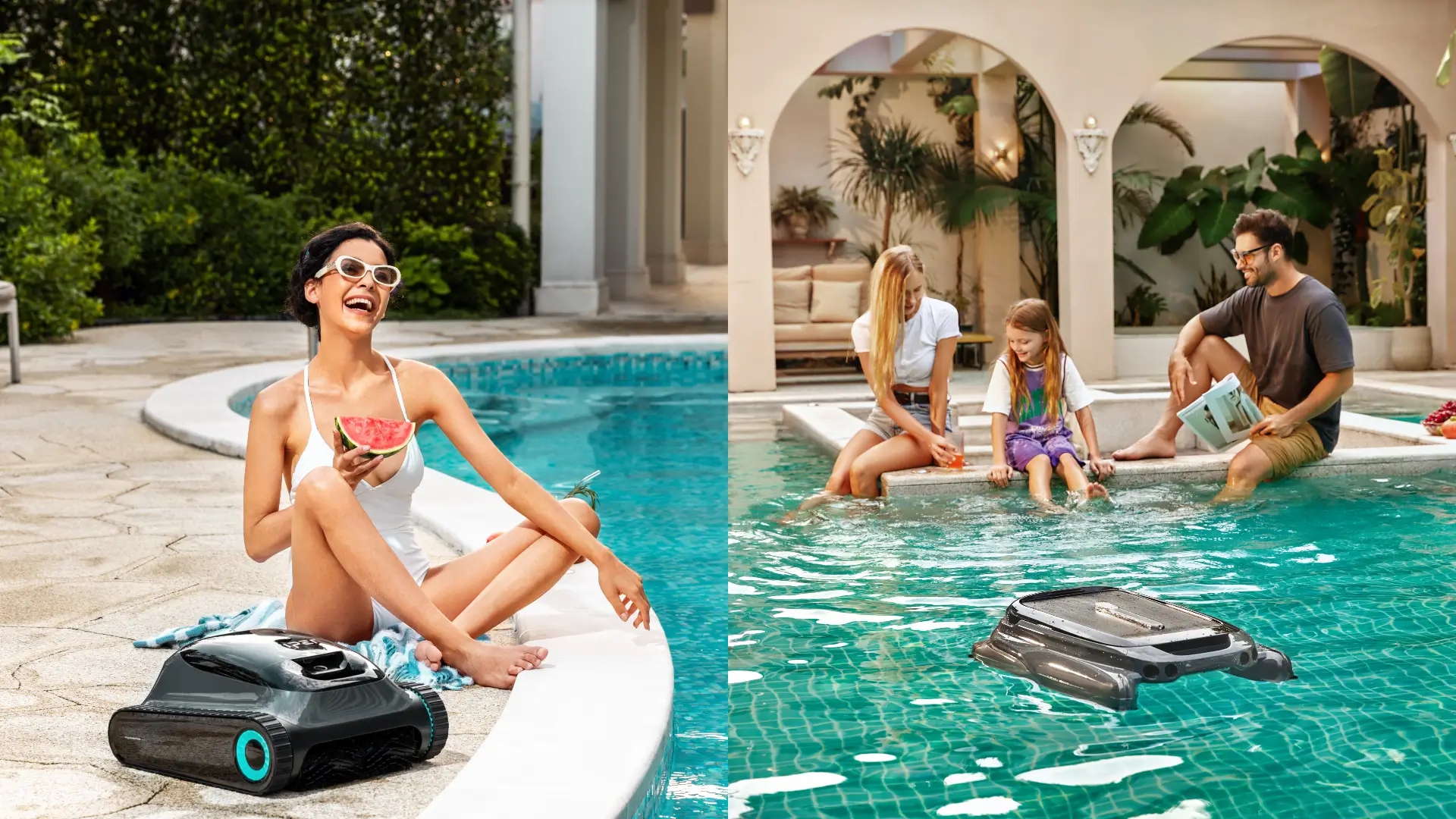
How Aiper Helps You Bring Vacation Home (With Less Pool Work)
The fastest way to stop the pool vacuum vs skimmer tug-of-war is to separate the jobs.
Surface debris is a “right now” problem. If you leave it, it sinks, breaks apart, or drifts into corners. A cordless robotic skimmer like the Aiper Surfer S2 can keep cruising the surface on its own—catching floaters as they show up. It’s built for hands-off surface cleanup with a top-load basket, app control, and solar + DC charging, so you’re not tied to the pool pump schedule.
Meanwhile, the floor is a different story. Dust, sand, and heavier debris settle where circulation is weakest. A cordless robotic cleaner like the Aiper Scuba X1 Pro Max is designed to take on that “floor burden,” including broader coverage like walls and the waterline—without stealing suction from your skimmer.
Used together, the rhythm feels simple: the surface stays clearer through the day, and the bottom stays cleaner on your schedule. Less valve fiddling. Less hose setup. More pool time that actually feels like a break.
Conclusion
If you’re stuck on pool vacuum vs skimmer, the real answer is that they solve different layers of the same problem. Skimming is about speed—removing floaters before they sink and spread. Vacuuming is about removal—lifting and capturing the debris that gravity already pulled down.
Most pool owners who try to “skip one” end up paying for it in time: either more brushing and filtration to handle floor dust, or more vacuuming because surface debris keeps sinking. The easiest path is a simple routine that covers both layers, with as little pump drama as possible.
Frequently Asked Questions
Is a pool vacuum the same as a skimmer?
No. A skimmer targets floating debris and helps feed surface water into the circulation system. A vacuum targets debris that has settled on the floor (and sometimes walls, depending on the cleaner).
Do I need to run my skimmer while vacuuming?
If your vacuum relies on pump suction, vacuuming can reduce skimming performance because both tasks compete for the same suction. With independent cordless devices, both can run without that tradeoff.
What is more beneficial: a robotic skimmer or a robotic vacuum?
Most pools benefit from both because surface debris and floor debris behave differently. A robotic skimmer helps prevent sinking. A robotic vacuum/cleaner removes what already settled and helps with fine debris that makes water look dull.
How often should I skim and vacuum my pool?
Skimming is usually most helpful daily during windy or high-debris periods. Vacuuming/robot cleaning depends on debris load, but many owners run it multiple times per week, and more often after storms or heavy swimmer days.