
Rain Sensor for Irrigation System vs. Weather Sense: Which Do You Need?
Upgrade from reactive rain sensors to predictive Weather-Sense technology. Smart systems save water, prevent disease, and automate lawn care by adjusting to forecasts rather than just reacting to moisture.

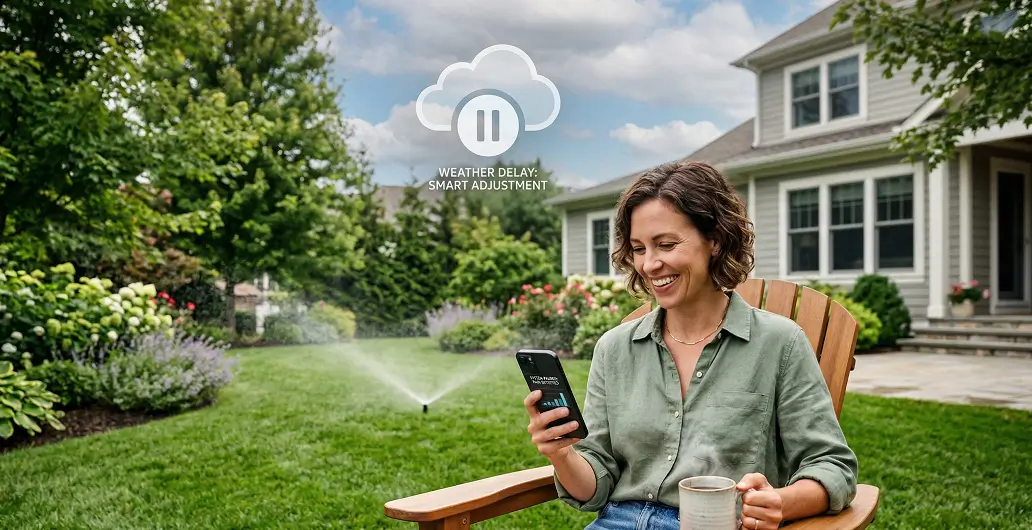
We’ve all seen it happen. You’re driving down the street during an absolute downpour, and there’s a sprinkler system blasting away on someone’s front lawn. It’s frustrating to watch, isn't it? Every single minute those sprinklers run in the rain means hundreds of litres of water going straight down the drain. Your water bill creeps up, and ironically, your grass ends up waterlogged and prone to disease rather than healthy.
That exact scenario is why a rain sensor for an irrigation system became such a big deal. The idea was brilliant in its simplicity: when it rains, the watering stops. Problem solved, right? Well, not quite.
Lawn care technology has moved forward a lot lately. What started out as basic, moisture-triggered mechanical switches has evolved into smart, data-driven "Weather-Sense" systems that can actually predict a storm before a single drop hits the ground.
In this guide, we’re going to break down exactly how traditional rain sensors stack up against modern Weather-Sense setups. By understanding the quirks, the pros, and the cons, you can figure out what’s actually going to work best for your lawn, your free time, and your wallet.
What Are Rain Sensors and How Do They Work?
If you’re wondering what are rain sensors actually doing up there on your roof or fence line, the answer might surprise you. They’re basically just simple mechanical switches. They connect to your outdoor watering controller and physically interrupt the electrical circuit when things get wet. There's no complex algorithm running in the background. It’s just basic physics.
Most common rain sensors for irrigation systems rely on a couple of old-school designs:
- Hygroscopic Disks: These are essentially small, synthetic corks stacked inside a plastic housing. When it rains, they absorb moisture and swell up. As they expand, they push against a switch that cuts the power to your sprinklers.
- Catch-Basins or Tipping Buckets: Think of these as tiny measuring cups. Rainwater pools inside the basin. Once the water gets heavy enough (say, after a few millimetres of rain), the weight tips a mechanical lever and shuts everything down.
These units are usually wired straight into your sprinkler controller, though some newer ones use basic wireless radio signals. But here’s the crucial catch—these devices are entirely reactive. They don't know a storm is brewing. They only stop the show after the rain has already started falling.
The Pros and Cons of a Traditional Rain Sensor on a Sprinkler System
For a long time, slapping a rain sensor on sprinkler system controllers was the best way to keep your water usage in check. And to be fair, they still have a few solid points in their favour.
The Good Stuff:
- They're Cheap: You can pick them up without breaking the bank, and they’re widely available at almost any hardware store.
- They're Simple: The mechanical design is incredibly straightforward, which makes basic troubleshooting pretty easy if something goes wrong.
- They Work During a Storm: If a heavy storm rolls through right when your sprinklers turn on, they will eventually swell up and shut the water off.
The Downsides:
- Always a Step Behind: This is their biggest flaw. If your system is scheduled to run at 5:00 AM, and the forecast predicts a massive storm for 8:00 AM, a traditional sensor won’t stop that morning cycle. That water is completely wasted.
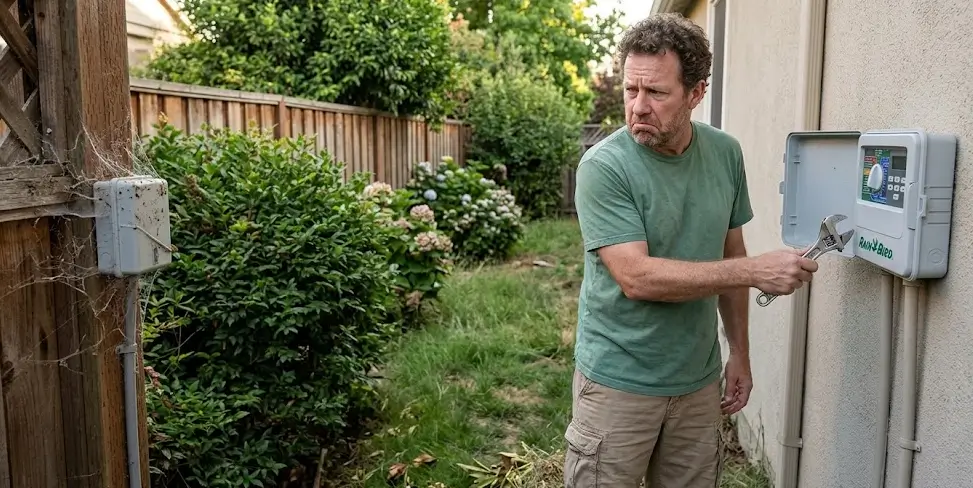
- A Nightmare to Maintain: Because they sit out in the open, they clog easily. Spiders build webs inside the housing, leaves get stuck in the cups, and dirt jams the disks. Suddenly, your sensor is totally useless.
- Environmental Guesswork: If you mount a sensor in direct sunlight, the wind and heat might dry the disks out too fast. Your sprinklers will turn back on while the soil is still soaking wet. Put them in deep shade, and they stay wet for days, starving your garden of hydration.
What’s worse, they tell you absolutely nothing about the actual condition of your soil. Once the rain stops, you’re left guessing. You'll probably find yourself jumping online to figure out exactly how long to wait after rain to water your lawn just to avoid causing a fungal outbreak.
Enter "Weather Sense": The Future of Sprinkler System Sensors for Rain
Fast forward to today, and our backyards are getting a serious tech upgrade. Instead of waiting for a piece of plastic to fill with water, the latest yard gadgets use real-time data to make incredibly smart watering decisions.
We call these advanced sprinkler system sensors for rain "Weather-Sense" technology. These setups use your home Wi-Fi to pull hyper-local forecasts and meteorological data from the cloud. It’s a massive leap from reacting to a storm to actually predicting one.
A true Weather-Sense setup does a lot of the heavy lifting for you. It automatically cancels a scheduled watering session before the first drop even falls if rain is on the radar. It also scales back on watering during overly humid or unseasonably cool days because it knows the ground won't dry out as fast. Oh, and you can say goodbye to climbing ladders to clear out dead bugs—there are no physical cups or disks to maintain.
Over time, this transition saves an incredible amount of water and actually encourages deeper, stronger root growth, saving your lawn from the shallow roots caused by chronic overwatering.
Why Aiper IrriSense 2's Weather-Sense is the Smarter Choice
Plenty of modern controllers claim to be "smart," but they usually just look at basic rain percentages and call it a day. To get your lawn looking its absolute best, you need something that adapts to your property's specific microclimate. This is exactly where the Aiper IrriSense 2 shines.
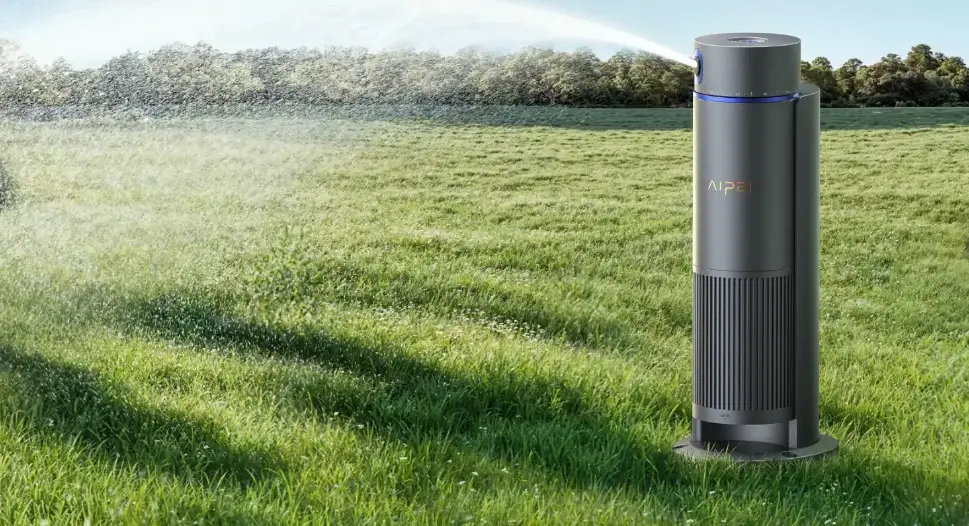
It’s built as the world's first 4-in-1 multi-zone smart irrigation system (packing a controller, sprinklers, electrical valve, and chemical feeder into one sleek unit). But the real standout feature is its proprietary Weather-Sense Response System.
Instead of just blindly trusting a generic forecast, it lets you set the rules. You can actually customise the system to pause irrigation only when local humidity hits a certain threshold. That way, your sprinklers won't skip a much-needed cycle just because of a light, passing drizzle.
Dialling in that kind of accuracy can cut your water usage by up to 40%. That’s a difference you’ll actually notice on your water bill.
Beyond the savings, avoiding overwatering is simply the best way to protect your soil. Flooding your grass washes vital nutrients away. Watering smarter ensures that any organic soil amendment you’ve applied stays exactly where it needs to be—feeding the microbes in your lawn instead of washing down the street.
Making the Switch: Upgrading Your Lawn Care
Look, old-school mechanical sensors were a great innovation back in the day. But we’ve moved past them. Weather-based smart tech gives you pinpoint accuracy, total automation, and genuine peace of mind.
If you’re still relying on a clunky mechanical switch—or if you don’t have any rain detection set up at all—it might be time to rethink things. It’s highly recommended to explore the broader benefits of upgrading to a smart irrigation system. You’ll save water, spend far less time doing manual yard work, and enjoy a visibly greener lawn. Plus, upgrading isn't a massive landscaping headache anymore. Systems like the IrriSense 2 are designed for a modular, tool-free 15-minute DIY installation, meaning no digging up your yard.
Frequently Asked Questions About Rain Sensors vs. Smart Weather Systems
Do I really need a rain sensor for my irrigation system?
Absolutely. Without some form of rain detection, you're guaranteed to waste water and potentially drown your lawn. However, skipping the old physical sensor and going straight for a smart, weather-based system will save you a lot of maintenance headaches down the road.
Can a smart weather system replace my old rain sensor?
Yes, 100%. Because smart systems use live Wi-Fi weather data to figure out exactly when to water, those old mechanical moisture detectors are completely obsolete. You can safely toss the old sensor when you upgrade.
How does a sprinkler system know it is raining?
A traditional setup only knows it's raining when physical water droplets hit the device and trigger a mechanical switch. Smart systems take a totally different approach—they check the local meteorological forecast and adjust your watering schedule before the storm even hits your neighbourhood.