
How to Save 40% on Your Water Bill with Smart Scheduling
Switch to weather-based smart scheduling to cut water bills by 40%. By using real-time evapotranspiration data, you prevent overwatering and keep your lawn healthy without wasting resources.

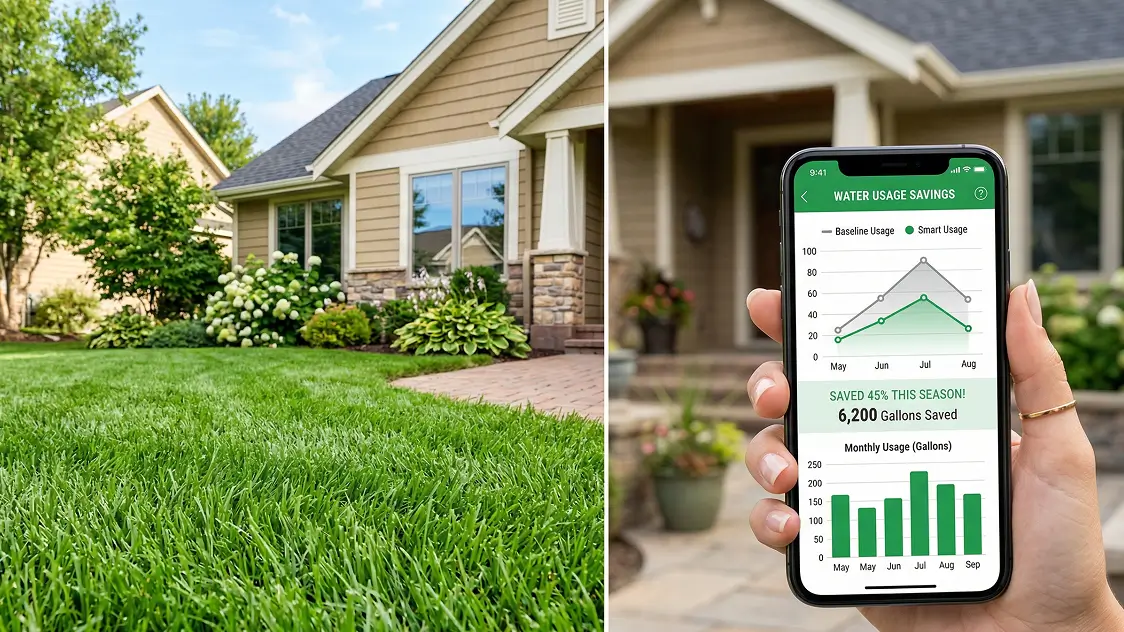
Nobody likes opening their August utility bill to find a jaw-dropping total just because they tried to keep the grass alive. Over the years, we've been conditioned to accept that a nice yard simply means wasting money. But you don't actually have to make that trade-off. If you are wondering how to save 40% on your water bill with smart scheduling, the fix is pretty straightforward: ditch the rigid timer and let real-time weather data take the wheel.
Automation completely removes the guesswork. It stops overwatering in its tracks and gives your grass the exact hydration it needs. Here is a look at the mechanics behind weather-based yard care, the traps people fall into when setting it up, and the exact steps you need to take to lower those monthly costs.
The Mechanics: How Smart Scheduling Actually Works
The old-school approach to lawn care usually involved a plastic dial in your garage. You'd set it to run for 20 minutes every Monday, Wednesday, and Friday. And it ran—whether it was pouring rain, freezing cold, or the middle of a drought.
The U.S. Environmental Protection Agency (EPA) WaterSense program highlights just how much of a game-changer modern Weather-Based Irrigation Controllers (WBICs) really are. Rather than blindly following a clock, these units pull local meteorological data to customize your watering based on what is happening outside right now.
Evapotranspiration and Capable Hardware
To get a grip on the underlying science, you need to look at understanding evapotranspiration rates. Think of evapotranspiration (ET) as the total amount of moisture your yard loses to the air through evaporation and plant transpiration. A solid smart schedule uses local ET numbers to replace exactly what was lost. Nothing more.
But hitting that steep conservation goal isn't just about software pausing the sprinklers when clouds roll in. It demands physical precision. Homeowners constantly worry that cutting back on water means their lawn will turn brown.
The best setups pair weather intelligence with capable hardware. Devices such as the Aiper IrriSense 2 use smart scheduling alongside precise mapping features, putting water specifically where your yard needs it and keeping it off the driveway. Beyond that, built-in safeguards like TÜV-certified pressure stabilization and EvenRain™ technology mean the system sprays evenly, even if the water pressure at your house drops unexpectedly. You can actually pull up an app on your phone to check your real-time usage and savings. It proves you can conserve massive amounts of water while keeping the grass totally healthy.
The Financial Breakdown: Traditional vs. Smart Timers
Does upgrading make financial sense? The numbers definitely say yes. According to EPA reports, swapping an old clock timer for a WaterSense-labeled controller saves the average household somewhere between 7,600 and 15,000 gallons annually.
In one specific case study out of Houston, Texas, a family managed to save over 200,000 gallons in just six months after a professional hooked up and dialed in a weather-based unit.
To give you a clearer picture, here is how the two systems compare over a typical summer season:
| Feature | Traditional Clock-Timer | Smart Weather-Based Controller |
|---|---|---|
| Watering Logic | Runs blindly on a fixed schedule | Adapts dynamically to local weather patterns |
| Estimated Water Waste | Massive (waters the driveway during rain) | Minimal (pauses or cancels automatically) |
| Lawn Health Impact | High risk of shallow roots or fungus | Deep root growth due to optimal moisture |
| Manual Adjustments | You have to tweak it all season long | Handled entirely by Wi-Fi and app algorithms |
| Average Water Savings | 0% | Up to 35% - 45% (when configured correctly) |
Dragging a hose around the yard or constantly trying to figure out how to tell if grass needs water gets old fast. Letting an algorithm handle the scheduling lifts that burden entirely, which shows up as immediate cash saved on your utility bill.
Where People Go Wrong With Automated Yard Care
As advanced as this tech is, it won't run itself perfectly out of the box. The EPA warns that achieving these savings requires proper installation, programming, and upkeep. Here are the hurdles people hit most often.
The "Plug and Play" Myth
Too many people think they can just connect the box to Wi-Fi and head back inside. If you feed the algorithm bad data, it will give you bad results. You have to specify your soil type—clay holds moisture much longer than sand, for instance. You also need to enter the grass species and the yard's slope to stop runoff before it happens.
Overlooking Broken Pipes
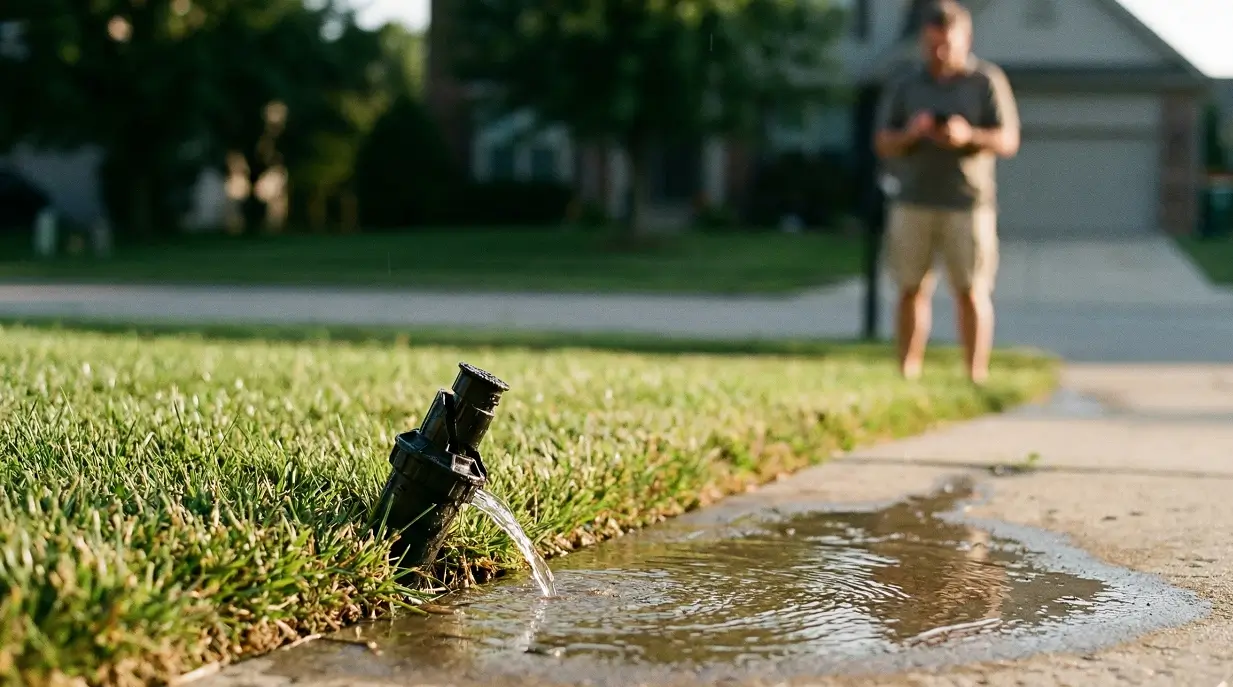
Software can't fix a broken sprinkler head. If a mower clips a nozzle or an underground PVC pipe cracks, the controller will keep pushing water right through the leak. Doing a quick visual lap around the yard every few weeks is mandatory to catch physical waste.
Overcomplicating the Installation
Setting up an intelligent system used to mean tearing up the turf, running wires, and burying manifold valves. That route is incredibly expensive and tears up your property.
Homeowners looking to skip the trenches are moving toward above-ground, all-in-one models. The Aiper IrriSense 2, for example, packs the controller, sprinkler head, chemical sprayer, and solenoid valve into a single unit. Because it sits entirely above the ground, there is no heavy machinery required. You drop it in the yard, attach a hose, and let it work. That flexibility makes it a highly renter-friendly lawn care and smart irrigation option as well.
4 Steps to Dial In Your Watering Schedule
Ready to stop throwing money at the water company? Here is your game plan for getting everything set up right the first time.
Step 1: Check Your Existing Gear
Before buying anything, go outside and run your current sprinklers for five minutes. Are they watering the sidewalk? Are puddles forming in the low spots? Figure out what physical issues exist before throwing a software solution at the problem.
Step 2: Pick the Right Hardware
Keep an eye out for units carrying the EPA WaterSense badge. You'll need to decide between retrofitting a wall-mounted box to your existing buried pipes or grabbing a modern 4-in-1 above-ground unit to skip the digging entirely.
Step 3: Feed the App Accurate Data
Don't rush the setup wizard when you open the device's companion app.
- Soil Type: Figure out if your dirt is sandy, loamy, or heavy clay.
- Sun Exposure: Does the zone get baked in full sun all day, or is it heavily shaded?
- Sprinkler Type: Be specific, because a rotor sprays very differently than a fixed head.
Step 4: Watch and Adjust
Pay close attention to the grass during that first month. If you spot dry patches, bump the baseline duration up slightly. If the lawn feels like a swamp, dial it down. These systems are incredibly smart, but they need a little human guidance during the break-in phase.
The Bottom Line
Taking control of your lawn care goes way beyond just having the nicest house on the block. It’s about not wasting resources and keeping cash in your bank account. If you grasp how the tech works, avoid the typical setup traps, and pick solid equipment, you can radically change your property's water footprint.
Take a look at how you're watering your grass right now, and think about making the switch. Both your yard and your wallet will appreciate it.
FAQs
How do I save 40% on my water bill with smart scheduling safely?
To hit max savings without ruining the grass, pair a weather-tracking unit with accurate yard data. Plug your exact soil type, sunlight levels, and grass type into the app. It calculates exactly what the yard loses to evaporation and replaces only that amount, giving the plants just enough water to thrive.
Do smart sprinklers actually save money?
They absolutely do. You have to pay for the hardware upfront, but the EPA points out that a typical home can save up to 15,000 gallons a year. Depending on what your city charges for water, the equipment usually pays for itself in utility savings within a season or two.
Can weather-based controllers adjust for sudden rain?
Yes. Good controllers constantly talk to local weather stations via Wi-Fi. If a popup storm rolls through, the schedule pauses or cancels automatically so you aren't running sprinklers in the middle of a downpour.