
Is Your Overwatered Lawn Dying? 5 Signs and the Smart Way to Fix It
Overwatering drowns grass roots and invites disease. Switch to deep, infrequent watering and use smart irrigation tech to fix runoff and save water.

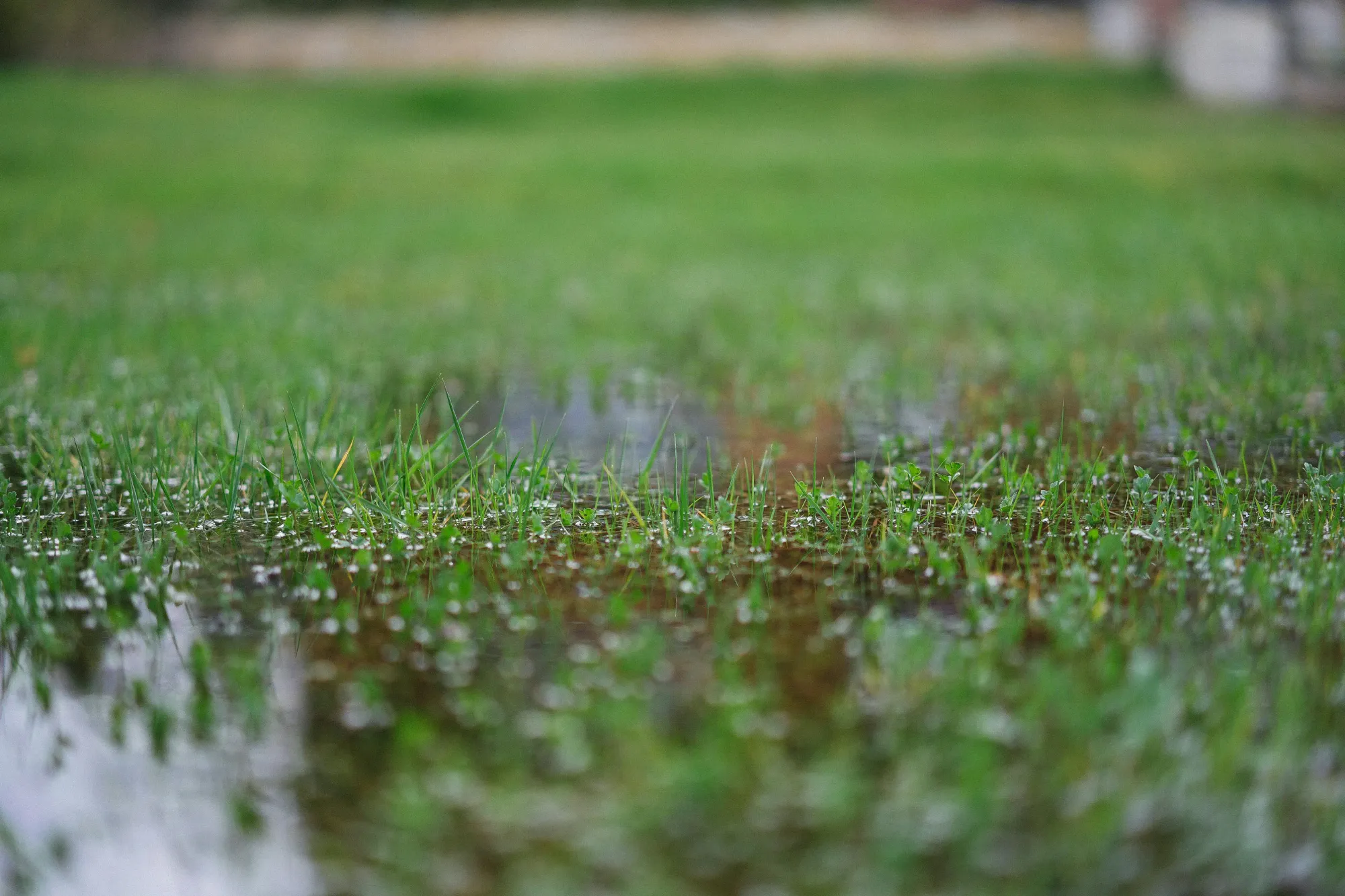
Picture this: The summer sun is beating down, the neighborhood block party is just around the corner, and you want your yard to look like a lush, emerald carpet. Your instinct? Turn on the sprinklers and let them run. If a little water is good, a lot of water must be better, right?
Not exactly. While it is easy to assume that a struggling yard simply needs a longer drink, here is a hard truth of landscaping: an overwatered lawn is often in far more danger than a thirsty one.
When you drown your grass, you are essentially suffocating the root system. Soil needs oxygen just as much as it needs moisture. Without it, roots begin to rot, inviting a host of fungal diseases and aggressive weed takeovers that can destroy months of hard work.
If your yard is looking a bit sad despite your rigorous watering schedule, it might be time to put down the hose. In this guide, we will walk you through the telltale signs that you are giving your grass too much water, share expert-backed recovery steps, and introduce you to modern, smart irrigation tech that guarantees a lusher lawn, the smarter way.
5 Telltale Signs of an Overwatered Lawn
It is incredibly easy to cross the line from well-hydrated to waterlogged. Before you adjust your sprinkler timers, step outside and look for these five glaring indicators of over-hydration.
Sign 1. The "Sponge" Test Fails
The most obvious sign of a waterlogged yard is the physical feel of the ground beneath your feet. Walk across your grass hours after your sprinklers have shut off. Does the ground feel firm with a slight give, or does it feel like you are stepping on a wet kitchen sponge? If water squishes up around your shoes, or if your footprints remain deeply indented in the turf for hours, the soil has reached its maximum saturation point.
Sign 2. A Sudden Invasion of Mushrooms and Fungus
Nature abhors a vacuum, but it absolutely loves a damp, dark environment. If you start noticing clusters of mushrooms sprouting up overnight, or if you see fuzzy, web-like growths on your grass blades in the early morning, you have a moisture problem. Fungal diseases thrive in lawns that never get a chance to dry out.
Sign 3. Yellowing, Limp Grass Blades
It seems counterintuitive, but grass that is receiving too much water will often look a lot like grass that is experiencing a drought. The blades may lose their vibrant green hue, turning a sickly yellow or pale green. Because the drowned roots are rotting, they can no longer absorb essential nutrients like nitrogen and iron from the soil. The grass is literally starving while floating in water.
Sign 4. A Thriving Weed Population
While your premium grass varieties are struggling to breathe in the soggy soil, certain stubborn weeds are throwing a party. Smooth crabgrass, yellow nutsedge, and creeping Charlie absolutely love poorly drained, swampy environments. If these invasive species are suddenly dominating your turf, your watering habits might be to blame.
Sign 5. Constant Runoff on Sidewalks and Driveways
Watch your sprinklers while they run. Is the water soaking deeply into the earth, or is it quickly pooling up and cascading down your driveway and into the street? Runoff means your soil cannot absorb any more moisture—either because it is heavily compacted, or because it is simply full. This is a massive waste of water resources and a clear sign you need to adjust your schedule.
The Science of Hydration: What the Experts Say
To truly fix lawn drainage issues and watering mistakes, we need to look at what environmental scientists recommend. According to the U.S. Environmental Protection Agency (EPA) and their WaterSense guidelines, the biggest mistake homeowners make is watering a little bit every single day.
The "Soak and Dry" Method The EPA and agricultural university extensions universally recommend "deep and infrequent" watering. This means watering your yard heavily 1 to 2 times a week (depending on your climate) and then allowing the top couple of inches of soil to completely dry out before watering again.
Why? Because when you let the surface dry, grass roots are forced to grow deeper into the soil in search of moisture. Deep roots create a resilient, drought-tolerant lawn. Conversely, watering every day creates lazy, shallow root systems that are highly susceptible to disease and heat stress.
Timing is Everything Furthermore, official guidelines suggest that the best time to water your grass is in the early morning (between 4:00 AM and 10:00 AM). Watering in the middle of the day leads to rapid evaporation, while watering late at night lets moisture sit on the blades for hours, creating a perfect breeding ground for fungus.
How to Fix a Waterlogged Yard: Immediate Steps
If you have recognized the signs above, do not panic. Grass is resilient. Here is how to execute a rescue mission.
Step 1: Turn Off the Tap
The very first thing you must do is halt all irrigation. Turn off your controllers and let the sun do its job. Depending on your climate and soil type (clay soils hold water much longer than sandy soils), you may need to wait anywhere from a few days to a full week before the soil dries out enough to breathe.
Step 2: Core Aeration
If your lawn has been waterlogged for a while, the soil is likely heavily compacted. Renting a core aerator (a machine that pulls small plugs of dirt out of the ground) to perform a proper lawn aeration is the best way to instantly introduce oxygen back into the root zone. This allows trapped gases to escape, water to drain properly, and roots to finally stretch out.
Step 3: Apply Organic Soil Amendments
Once the lawn has dried out and been aerated, the soil needs rehabilitation. Using a microbial organic soil amendment can help break down toxins, improve future water retention without waterlogging, and nourish the soil back to health.
Why Smart Irrigation is the Ultimate Cure
You can manually fix an overwatered yard once, but how do you prevent it from happening again? The traditional sprinkler dial—the beige plastic box in your garage where you set a static timer—is the root cause of most residential overwatering. It blindly sprays water on Tuesdays at 5 AM, regardless of whether it just rained for three days straight.
To truly eliminate the guesswork, the modern home requires a modern solution. Enter the Aiper IrriSense 2, the world’s first 4-in-1 Multi-Zone Smart Irrigation System.
Designed to replace complex, expensive, and outdated in-ground equipment, the IrriSense 2 acts as a controller, sprinkler, electrical valve, and chemical feeder all in one sleek unit. Here is how it fundamentally changes the way you care for your yard:
Weather-Sense Response System
Never water during a rainstorm again. The IrriSense 2 integrates real-time weather forecasting. It automatically pauses your watering schedule if rain is predicted, preventing over-saturation and saving you money. You can even customize the trigger conditions in the app—for example, telling the system to skip watering if local humidity hits a certain percentage.
Perfect Precision with EvenRain™ Technology
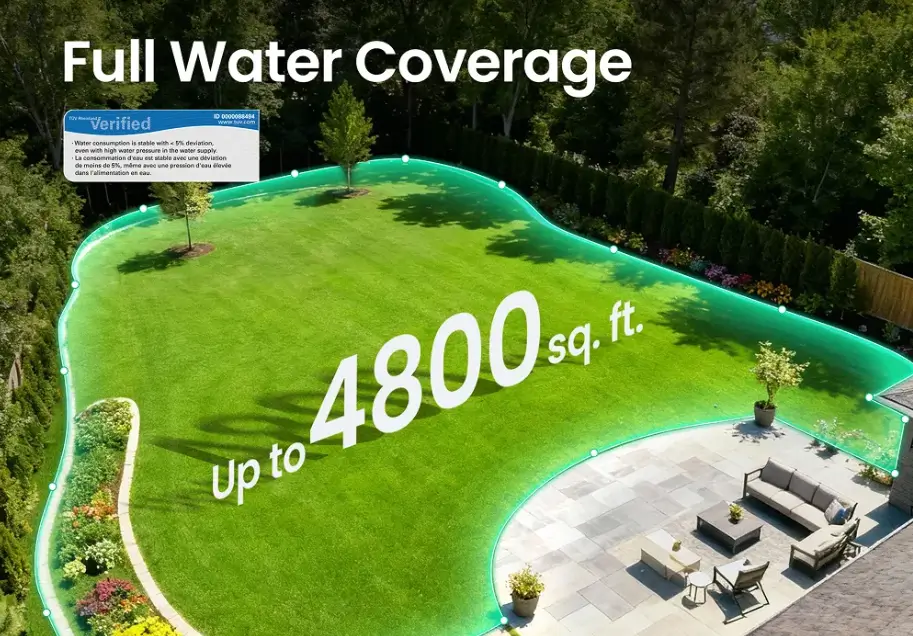
Traditional sprinklers often leave dry patches in the corners and swampy puddles in the center. Aiper’s EvenRain™ technology simulates natural, gentle raindrops, ensuring a perfectly uniform distribution of water covering up to 445 square meters (about 4,800 square feet) from a single device. No more dry spots. No more flooded zones.
Plant-Specific Multi-Zone Control
Your delicate flower beds do not need the same amount of water as your robust Kentucky Bluegrass. The IrriSense 2 supports up to 10 independent watering zones. Through the Smart App Control Hub, you can map out your yard and set highly specific watering routines for the lawn, the shrubs, and the garden, ensuring every plant gets exactly what it needs—and nothing it doesn't.

The Ultimate Difference
| Feature | Traditional Sprinkler Systems | Aiper IrriSense 2 |
|---|---|---|
| Weather Adaptability | Blindly waters on a fixed schedule, rain or shine. | Weather-Sense: Pauses automatically based on local weather forecasts. |
| Water Distribution | Uneven coverage; creates puddles and dry spots. | EvenRain™: Uniform, gentle rainfall effect over 445m². |
| Customization | One-size-fits-all timing for the entire yard. | Multi-Zone: Up to 10 distinct mapped zones for plant-specific care. |
| Resource Efficiency | High waste, no insight into usage. | 40% Water Conservation: Real-time data tracking via the smart app. |
Frequently Asked Questions About Overwatered Lawns
How long does it take for an overwatered lawn to recover?
With immediate intervention (stopping irrigation and aerating the soil), you will typically see improvement in 1 to 2 weeks. However, if root rot is severe, it may take a full growing season and some reseeding for the lawn to completely bounce back to its lush state.
Will a smart irrigation system be difficult to install?
Not at all. While traditional systems require professional trenching and complex wiring, the Aiper IrriSense 2 features a 15-Minute DIY Installation. Its modular, tool-free design means you can set it up in your yard and connect it to the app over Wi-Fi in less time than it takes to drink your morning coffee.
Should I fertilize a waterlogged lawn to help it turn green again?
No. Adding synthetic nitrogen fertilizer to a stressed, drowning root system can actually burn the remaining healthy roots and accelerate the decline. Wait until the soil has dried, oxygen has returned, and the grass shows signs of natural growth before introducing gentle, microbial soil amendments.
Conclusion: Water Smarter, Not Harder
It turns out that loving your yard too much can actually be its downfall. But once you know the physical red flags—whether it's stepping on a literal sponge or finding unexpected mushrooms—you can easily course-correct. The fix really comes down to following the EPA's golden rule: soak the ground deeply, do it less frequently, and always aim for those early morning hours.
Nursing an overwatered lawn back to health definitely requires some downtime and patience. Keeping it from happening again, though? That just takes better tech. Moving to an all-in-one setup like the Aiper IrriSense 2 completely removes the human error from your watering routine. You'll end up saving up to 40% on water usage while ensuring your plants get exactly the hydration they actually need.
If you're tired of stressing over sprinkler timers, it might be time to let a smart system do the heavy lifting for your landscape.