
Types of Sprinklers: A Complete Guide to Choosing the Best One
Select sprinklers based on soil and slope, not just price. Spray heads fit small areas, while rotors handle slopes best. Never mix types in one zone to prevent uneven watering.

If your lawn has random yellow patches or your water bill keeps creeping up every summer, the problem may not be your grass. It could be your sprinkler. Many homeowners never stop to think about the different types of sprinklers available and how much that choice affects water use and turf health.
Not all sprinklers are created equal. A small flat yard needs a different setup than a sloped lawn with heavy clay soil. In this guide, we will walk you through the pros and cons of the most common sprinkler options and help you match the right hardware to your landscape so you can water er, not harder.
Common Types of Sprinklers and How They Work
When we talk about irrigation, we are really talking about how water is delivered to the soil. The pattern, pressure, and speed of application all matter. The University of Georgia Extension provides detailed irrigation guidance that makes one thing clear: precipitation rate and operating pressure should always guide your decision.
Let’s break down the main categories.
Spray Heads (Fixed Sprinklers)
Spray heads, sometimes called fixed spray sprinklers, are common in residential systems. These heads produce a continuous fan-shaped spray of water and do not rotate.
The pattern can be adjusted for full circle, half circle, or quarter circle coverage, which makes them precise for small, regular-shaped areas.
According to the University of Georgia Extension, spray heads typically perform best at lower pressures, around 20 to 30 psi. They also have a high precipitation rate, meaning they apply water quickly. This can be useful when you need fast coverage, but it can also create problems.
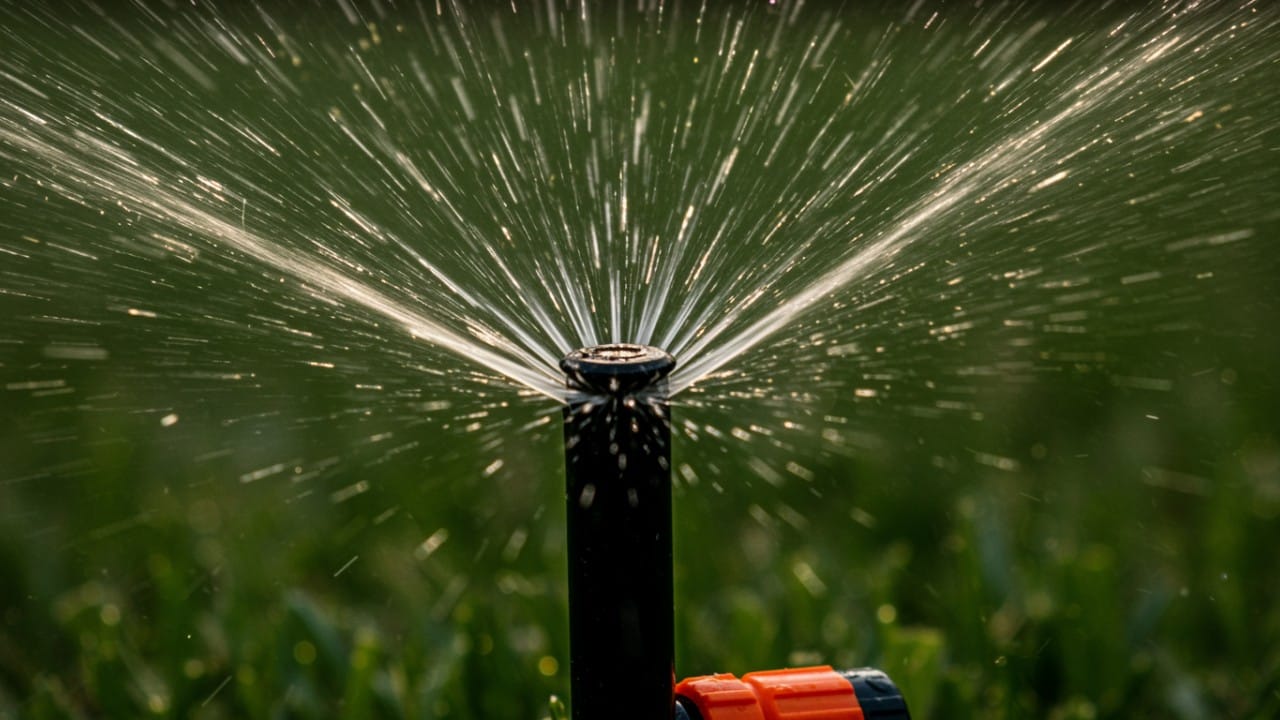
On clay soil especially, spray heads can cause runoff if you run them too long. The soil cannot absorb the water as quickly as it is applied. You may see puddling near sidewalks or water flowing into the street. In sandy soil, this is less of a concern because sand drains quickly.
Best use case: small lawns, narrow strips of grass, and areas with uniform shapes.
Rotary Sprinklers (Rotors)
Rotary sprinklers, often just called rotors, operate differently. Instead of spraying a constant fan of water, they rotate a single or multiple streams of water slowly over the lawn. This motion spreads water across a larger area.
The rotors generally require higher operating pressure, often above 40 psi. They also have a lower precipitation rate compared to spray heads. In simple terms, they water more slowly.
That slower application rate is a big advantage. On clay soils or sloped areas, rotors allow water to soak in rather than run off. This makes them a better option for medium to large lawns, especially where drainage is a concern.
Because they cover a wider radius, you need fewer heads for large open spaces. That can reduce installation costs and simplify the system design.
Best use case: medium to large lawns, sloped areas, and heavy soils that need slow watering.
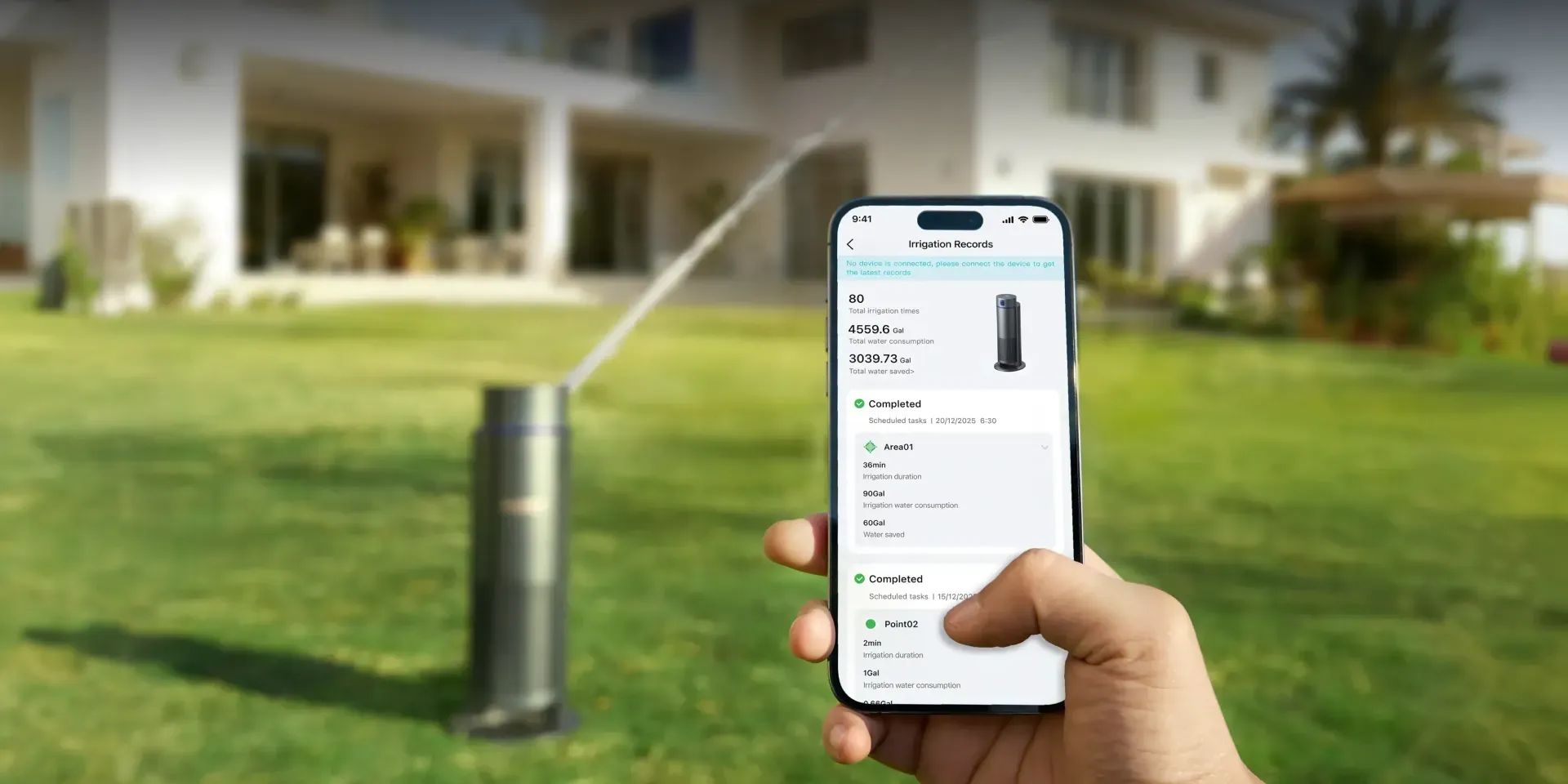
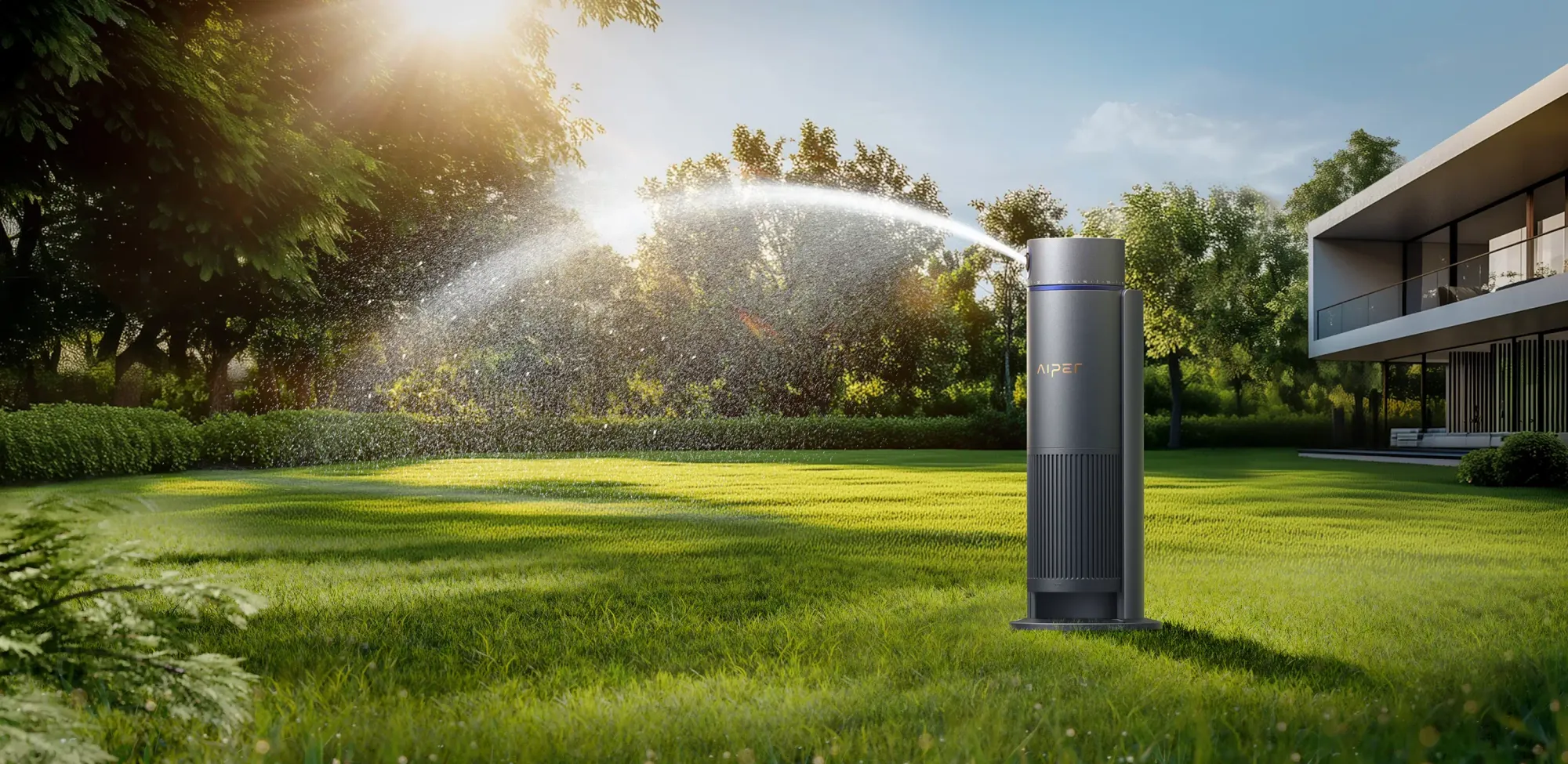
After explaining standard rotors, mention that modern technology has evolved this concept. Some new devices, like Smart Rotary Sprinklers, sit above ground and use intelligent mapping to act like a multi-zone rotor system without the need for digging trenches.
Impact Sprinklers
Impact sprinklers are the classic sprinklers many people remember from childhood. They make a distinct clicking sound as a spring-loaded arm taps the stream of water and causes the head to rotate.
These sprinklers throw a strong, concentrated stream of water over long distances. They are excellent for very large areas such as big backyards, pastures, or athletic fields.
One of the biggest advantages of impact sprinklers is durability. They are less prone to clogging and can handle water with some debris in it. That makes them suitable for well water or non-potable water sources.
The downside is noise and appearance. They are not subtle. The clicking sound can be distracting, and some homeowners prefer the cleaner look of low-profile rotor heads.
Best use case: very large areas, rural properties, or situations where water quality is not perfect.
Oscillating Sprinklers
Oscillating sprinklers are common portable sprinklers that connect to a garden hose. They consist of a long tube with multiple small openings, and the tube moves back and forth to distribute water in a rectangular pattern.
This design makes them ideal for rectangular lawn areas or side yards. If your grass sits between two straight property lines or along a driveway, an oscillating sprinkler is often the easiest solution.
They are simple to set up and relatively inexpensive. However, they rely heavily on consistent water pressure and even placement. Wind can distort the spray pattern, and coverage is not always perfectly uniform.
Best use case: rectangular lawns, temporary watering setups, and homeowners who prefer portable equipment.
Drip Irrigation Systems
Drip irrigation is technically part of irrigation, but it is not meant for turfgrass. Instead of spraying water over an area, drip systems deliver water slowly and directly to the root zone through tubing and emitters.
This method is ideal for flower beds, shrubs, trees, and vegetable gardens. It keeps foliage dry, which helps prevent leaf diseases. It also reduces evaporation and runoff.
If you are trying to water a lawn with drip lines, you will be disappointed. Turf requires more uniform surface coverage than drip systems can provide.
Best use case: planting beds, shrubs, and gardens, not grass.
Comparison Table: Finding the Best Match for Your Lawn
Here is a side-by-side comparison to help you see the differences more clearly.
| Sprinkler Type | Ideal For | Water Pressure Needed | Coverage Pattern |
|---|---|---|---|
| Fixed Spray | Small areas, strips | Low (20–30 psi) | Fan |
| Rotor | Medium to large lawns | Medium to High (40+ psi) | Circular rotating |
| Impact | Very large areas | Medium to High | Circular stream |
| Oscillating | Rectangular lawns | Medium | Rectangular |
| Drip Irrigation | Beds and shrubs | Low | Point source |
Use this table as a starting point, but do not ignore soil and slope. Those details matter just as much as lawn size.
Key Factors When Choosing a Sprinkler
Choosing between the different types of sprinklers is not only about coverage. You also need to consider how water behaves once it hits the ground.
Soil Type and Slope
Sandy soil drains quickly. Water moves through it fast, which means you may need more frequent watering but in shorter cycles.
Clay soil holds water tightly. It absorbs water slowly and can become compacted. If you apply water too fast, it runs off before it has a chance to soak in.
For slopes, this becomes even more important. Water always moves downhill. Rotors are usually the better option on slopes because their lower precipitation rate allows gradual infiltration. Spray heads can work on flat areas but may cause runoff on inclines.
Take a few minutes to examine your soil. Dig a small hole and feel the texture. It is a simple step that many homeowners skip.
Matched Precipitation Rates
This is one of the most important principles in irrigation design.
The University of Georgia Extension strongly advises against mixing different sprinkler types within the same irrigation zone. The reason is precipitation rate. Spray heads apply water much faster than rotors. If you combine them on the same valve, one section of your lawn will be flooded while another remains dry.
Imagine running a zone for 20 minutes. The spray heads may deliver enough water in 10 minutes, but the rotors may need 30 minutes to match that depth. There is no single run time that satisfies both.
For proper irrigation, each zone should contain only one type of sprinkler with similar precipitation rates. This ensures even coverage and healthier turf.
Installation and Efficiency Tips
Even the best sprinkler type will fail if installed poorly. Here are a few practical tips I always share with homeowners.
- Ensure Head-to-Head Coverage
Each sprinkler should throw water to the next sprinkler head. This is called head-to-head coverage. It prevents dry spots between heads. If water only reaches halfway, you will see uneven growth patterns in the lawn.
- Check Water Pressure Before Buying
Before purchasing rotors or impact sprinklers, test your home’s water pressure. If pressure is too low, those heads will not perform correctly. Spray heads are generally more forgiving in lower pressure systems.
- Adjust Run Times Seasonally
Grass does not need the same amount of water in spring as it does in peak summer heat. Adjust your controller regularly instead of setting it once and forgetting it.
Beyond choosing the right hardware, automating and optimizing your schedule makes a huge difference. If you are curious about the broader benefits of modernizing your irrigation system, take time to explore how technology can help you manage watering more efficiently and reduce waste.
FAQ
Can I mix spray heads and rotors on the same zone?
No. As explained in the matched precipitation section, they apply water at different rates, which leads to uneven watering. Keep each zone consistent.
What is the best type of sprinkler for low water pressure?
Fixed spray heads generally require less pressure than large rotors or impact sprinklers. If your system operates around 20 to 30 psi, spray heads are usually the safer choice.
How long should I run my sprinklers?
There is no single answer because soil type, grass species, and weather all play a role. A good starting point is to aim for about 1 inch of water per week, including rainfall.
To measure accurately, perform a catch can test. Place small containers around your lawn, run the sprinklers, and measure how long it takes to collect a specific depth of water. That gives you real data instead of guessing.
Summary
The best sprinkler is not the most expensive one or the one your neighbor uses. The right choice depends on your lawn’s shape, size, soil type, and slope. Fixed spray heads work well for small areas with lower pressure.
Rotors handle larger spaces and slopes better. Impact sprinklers cover very large areas. Oscillating sprinklers are practical for rectangular lawns. Drip irrigation belongs in garden beds, not turf.
Before you buy anything, map out your yard. Measure distances, note slopes, and check your water pressure. When you understand how the different types of sprinklers function and how they interact with your soil, you make decisions based on facts instead of guesswork. That is how you protect both your lawn and your water bill.