
Can You Fill a Pool With Well Water? (A Practical Safety Guide)
You can fill a pool with well water safely by testing water for metals/hardness first, using a hose pre-filter, pacing the fill to protect the well pump, adding a metal sequestrant promptly, and removing sediment before balancing pool chemistry to avoid pump damage and discoloration.

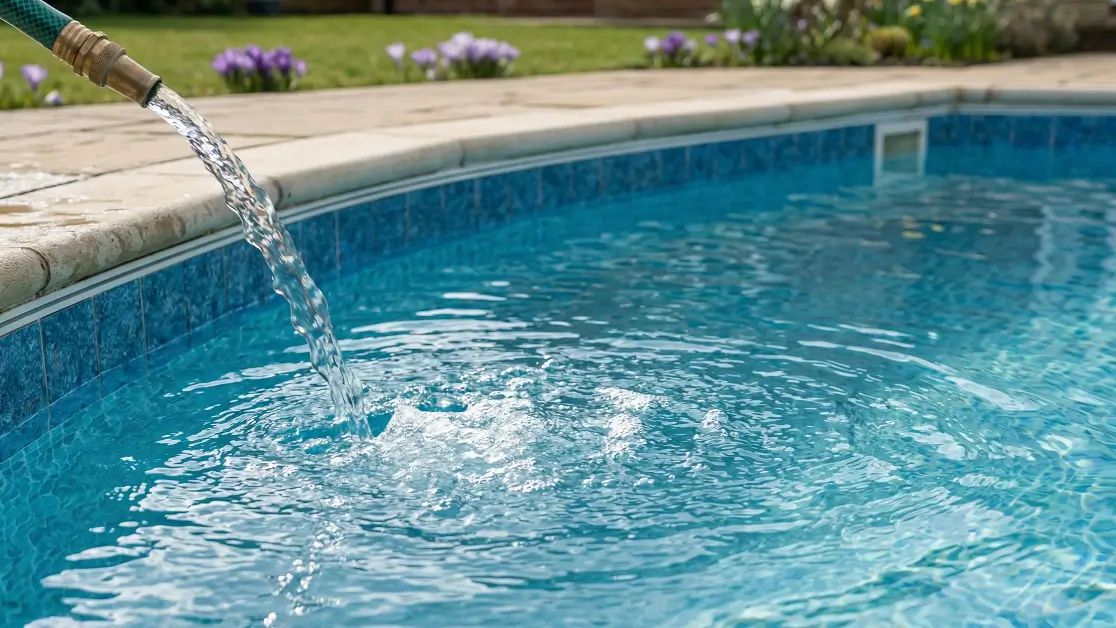
If your home runs on a private well, filling a pool can feel a lot less like a fun summer project and a lot more like a gamble. Sure, skipping a water delivery sounds like a money-saver, but nobody wants to risk burning out a pump, draining the well too fast, or ending up with discolored water that takes forever to fix.
So here is the straightforward answer to can you fill a pool with well water: Yes, you absolutely can, but you need to be intentional about both your well system and your pool chemistry. With the right prep, filling from a well can be affordable and stress-free. Without that prep, the money you save upfront can disappear into extra chemicals, stains, scale, and even costly pump or well repairs.
Let’s discuss in detail.
The 3 Biggest Risks of Filling a Pool With Well Water
Well water itself is not the problem. The issue is what may be in it and how much strain it can place on a residential well system during a long fill.
1. Overworking Your Well Pump
Filling a pool can mean running water for hours at a time. That puts pressure on your system in two ways. First, your well may not recharge as quickly as you are pulling water out. Second, your pump may be forced to work much longer than it typically does during normal household use. Industry guidance for homeowners points out that adding water-heavy uses like irrigation or swimming pools can create pressure and capacity problems if the system was not built for that kind of demand.
The biggest risk is drawing the well down so far that the pump starts pulling air or loses water supply. Contractors often warn that using water faster than the well can replenish it may run the well dry, interrupt household water service, and damage the pump. That is why shorter fill sessions with breaks in between are often recommended when you are unsure about your well’s yield.
The safest mindset is simple: if your pressure drops, your flow changes, or the water suddenly looks different while filling, stop and reassess instead of pushing through.
2. Heavy Metals and the “Brown Water” Problem
This is one of the most common well water surprises. Everything looks fine at first. Then you add chlorine, and suddenly the pool turns yellow, orange, or brown.
That usually points to metals in the water, especially iron and manganese. A pool operator training manual used in public health settings explains that iron can make water look green at first and then shift to yellow-orange once chlorine is added. It also notes that manganese can cause a brownish-black discoloration. The same guidance recommends testing for iron before adding well water and using a sequestrant when levels are high to keep those metals from dropping out of solution.
Even if your well water looks crystal clear coming out of the hose, dissolved metals may still be present. They often stay invisible until an oxidizer like chlorine causes a visible reaction. In other words, brown water is not bad luck. It is chemistry.
For context, the EPA’s Secondary Drinking Water Standards list iron at 0.3 milligrams per liter and manganese at 0.05 milligrams per liter for nuisance issues like staining and discoloration. These are not health-based limits, but they are very relevant when you are trying to avoid pool stains.
3. Hard Water and Scale Buildup
A lot of wells produce hard water, which means the water contains elevated amounts of dissolved calcium and magnesium. In a pool, that can lead to scale, cloudy water, and buildup on surfaces and equipment, especially if the pH starts creeping upward.
Guidance tied to the Model Aquatic Health Code lists a preferred calcium hardness range of 200 to 400 parts per million for balanced pool water and notes that high calcium levels contribute to cloudiness and scale formation.
If your well water is hard, it is much easier to account for that before filling than to try fixing it after the pool is already full. For practical help, see this related guide on how to lower calcium hardness: lower calcium hardness in your pool water.
How to Fill a Pool With Well Water Safely
This is where the whole decision becomes manageable. The benefit is real, but it only works if you reduce the risk in the right order.
Step 1: Test Your Water Before You Start
Testing turns guesswork into useful information.
Before you commit to thousands of gallons, get a clear picture of your source water. At a minimum, you should check for metals that cause staining, especially iron and manganese, and get baseline numbers for pH, total alkalinity, and calcium hardness. Public health recommendations for private wells also suggest at least annual testing for total coliform bacteria, nitrates, total dissolved solids, and pH, while noting that pH and dissolved solids can affect scaling and plumbing.
If you have never tested your well water for metals, this is where many pool owners get caught off guard. The water can look perfectly clean until you start sanitizing it.
Step 2: Use a Hose Pre-Filter
A hose pre-filter is a simple way to reduce what goes into the pool during the fill. It can be especially helpful for sediment and other visible particles that would otherwise settle on the bottom and turn into a cleanup job later.
It helps to keep expectations realistic here. Not every hose filter is designed to remove dissolved metals, so think of it as a useful first line of defense, not a complete solution. Even so, reducing sediment and debris from the start makes it easier to get the pool clear more quickly.
Step 3: Pace the Fill to Protect Your Well
If you already know your well’s yield and your pump is built to handle long runs, you may be able to fill continuously. If you do not know those things, it is smarter to fill in stages and watch how your system responds.
Well contractors often recommend filling in shorter bursts with recovery time in between, especially for lower-yield wells or during dry conditions. A cautious approach many homeowners follow is two hours of filling followed by one hour of rest, repeated as needed. That is not a universal rule, but it lines up with the broader professional advice to let the well recover between long runs. The best guidance will always come from your pump manufacturer and a local well professional who understands your system.
You also want to protect your drinking water supply while filling. Wellowner guidance stresses the importance of preventing back-siphoning by using backflow prevention devices on spigots and yard hydrants and by keeping hoses out of chemical containers. That matters during a pool fill because the hose may sit near pool water or chemicals for long periods.
Step 4: Add a Metal Sequestrant Right Away
If your testing shows iron or manganese may be an issue, timing matters.
A public health pool operator manual recommends testing for iron before adding well water and using a sequestrant when iron levels are high to prevent precipitation. It also explains that sequestrants help keep minerals dissolved in the water instead of letting them drop out and stain the pool.
The practical takeaway is simple: if you wait until after a heavy chlorine dose, you may trigger the discoloration you were trying to avoid. Follow the product label carefully and do not mix chemicals casually.
Step 5: Remove Sediment and Balance the Water
Well water often brings in fine silt that settles on the floor once the water has had time to circulate. Deal with the physical debris first before trying to fine-tune every chemistry reading.
In practice, that usually means letting particles settle, vacuuming or filtering them out, and then adjusting pH and sanitizer levels. A pool operator manual notes that keeping pH in range matters both for swimmer comfort and for preventing issues like corrosion and discoloration. It specifically highlights a pH range of 7.2 to 7.8 in situations involving iron.
In practice, this means turning off the circulation, letting the particles settle, and thoroughly vacuuming them out. If your pool ends up covered in this dust-like debris, a device like the Aiper Scuba V3 is the ideal cleanup solution. It features MicroMesh™ multi-layer filtration and a powerful 4,800 GPH suction system specifically designed to capture abrasive well silt. Because it is completely cordless and self-contained, it delivers a spotless floor without sending that heavy sediment straight into your pool's main filter system.
Once the physical debris is completely removed, you can accurately adjust your pH and sanitizer levels. Public health pool operator guidelines note that keeping your pH tightly balanced—specifically between 7.2 and 7.8—is critical in situations involving well water to prevent metal corrosion and discoloration.
For a step-by-step breakdown of this cleanup phase, check out our companion guide: How to Get Fine Debris Out of a Pool.

Cost Comparison: Well Water vs. Water Delivery
The potential savings are real, but so is the equipment risk.
Water delivery costs vary by location, but HomeGuide’s 2026 pricing guide estimates pool water delivery at around 200 to 600 dollars per truckload, with a total of about 800 to 2,400 dollars to fill an average 20,000-gallon pool. Many trucks carry about 6,000 gallons at a time.
Using well water may seem free, but there are still costs involved, including electricity and often extra chemicals. HomeGuide estimates that the electricity needed for a typical well-water fill may only cost a few tens of dollars, though the real amount depends on pump size, how long it runs, and your local electric rate.
A simple way to estimate electricity use is:
kilowatts = horsepower × 0.746
Then multiply kilowatts by total run time and your cost per kilowatt-hour. This horsepower-to-kilowatt conversion is a standard utility calculation used in operator training.
The harder cost to predict is wear and tear. Angi estimates that replacing a well pump can cost anywhere from about 1,500 to 6,500 dollars. That is why many homeowners decide to pay for delivery if they are uncertain about their well’s capacity.
So the real comparison looks like this:
If your well is strong and your water tests clean, filling from the well can be a smart and affordable choice. If your well is marginal or your water is high in metals or extremely hard, trucked-in water may be the easier and lower-stress option.
Final Thoughts
Yes, you can fill a pool with well water. The safest way to do it is to approach it like a controlled project: test the water first, address metals before adding chlorine, pace the fill so you do not overwork your well, then remove sediment and balance the chemistry in a sensible order.
The biggest mistake is rushing it. That is when pumps get overworked, wells get drawn down too far, and metal-related discoloration shows up right when you want the pool to be ready.
If you want post-fill cleanup to be easier, staying on top of fine debris removal makes a big difference, especially when silt settles after the fill.
You can explore Aiper’s cordless robotic pool cleaners here: https://aiper.store/us/series/robotic-pool-cleaners
FAQs About Using Well Water for Pools
How long does it take to fill a pool with a garden hose?
The basic formula is pool gallons divided by hose flow rate. Iowa State University Extension notes that hose flow drops as hose length increases and gives an example of a 100-foot hose with a 5/8-inch diameter delivering about 11 gallons per minute.
What chemicals do you need when filling a pool with well water?
At a minimum, you will usually need the standard chemicals for sanitizer and pH balance. If your well water contains iron or manganese, you may also need a metal sequestrant. Public health pool operator guidance specifically recommends sequestrants to reduce staining and discoloration from metals such as iron, copper, and manganese.
Can filling a pool run well dry?
Yes, it can happen if you draw water faster than the well can recharge, especially with low-yield wells, during drought conditions, or while the house is also using a lot of water. Wellowner guidance notes that adding a swimming pool can place enough extra demand on a water system to create capacity issues if the system was not designed for it.