
What Is an AI Pool Cleaner? (And Why You Need One)
Learn what an AI pool cleaner actually does and how cognitive AI with vision cameras delivers faster, truly hands-free cleaning.

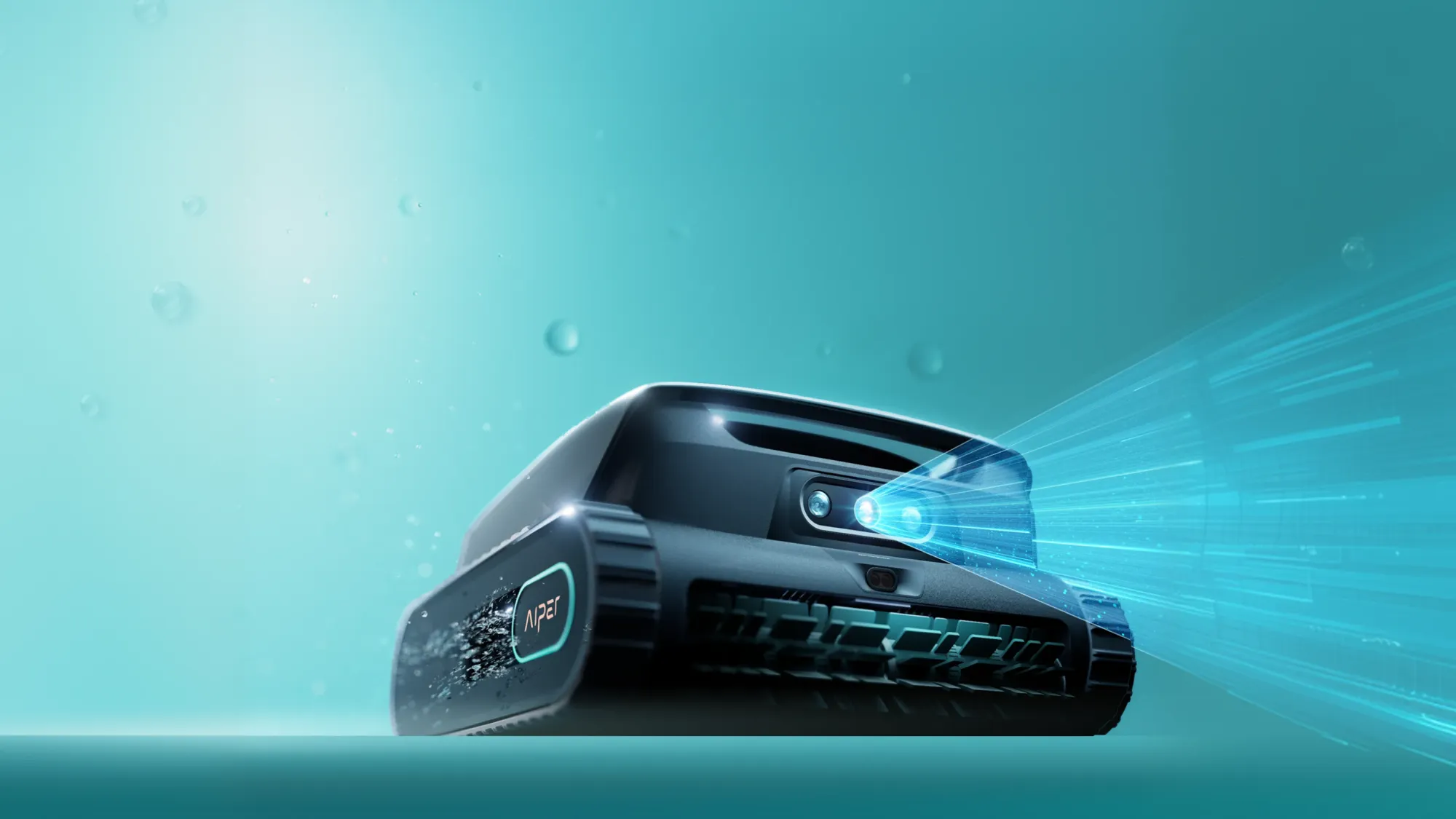
The average pool owner spends three to four hours each week on manual cleaning, skimming, and chemical checks. That is time you could spend swimming, not working. Most early robotic cleaners promised to solve this, but they act like blindfolded janitors. They bump around randomly until they get lucky, missing corners and getting stuck on drains. A true AI pool cleaner changes this entirely.
Cognitive AI does not just move; it sees, thinks, and plans. It uses forward-facing cameras and sensors to actively hunt debris instead of waiting to run over it. This technology is not a marketing gimmick. It represents the difference between a robot that needs constant babysitting and one that truly manages itself.
True artificial intelligence means your pool stays consistently clean without intervention. You get the clear water and the freedom to actually enjoy your backyard.
What Is an AI Pool Cleaner?
Cognitive AI transforms your pool robot from a simple machine into an autonomous cleaning system. True artificial intelligence means the device processes its environment in real time rather than following blind routines. The global market for these smart systems reached $1.37 billion in 2024 and is expanding rapidly as homeowners recognize the difference between gimmicks and genuine smart technology.
Cognitive AI basics
Standard robots rely on pre-programmed timers and simple sensors. They clean on a schedule regardless of whether your pool is dirty or clean. Cognitive AI changes this by giving the robot a “brain” that interprets data from multiple sensors to make decisions. It recognizes when debris appears and adjusts its behavior accordingly.
AI vision systems
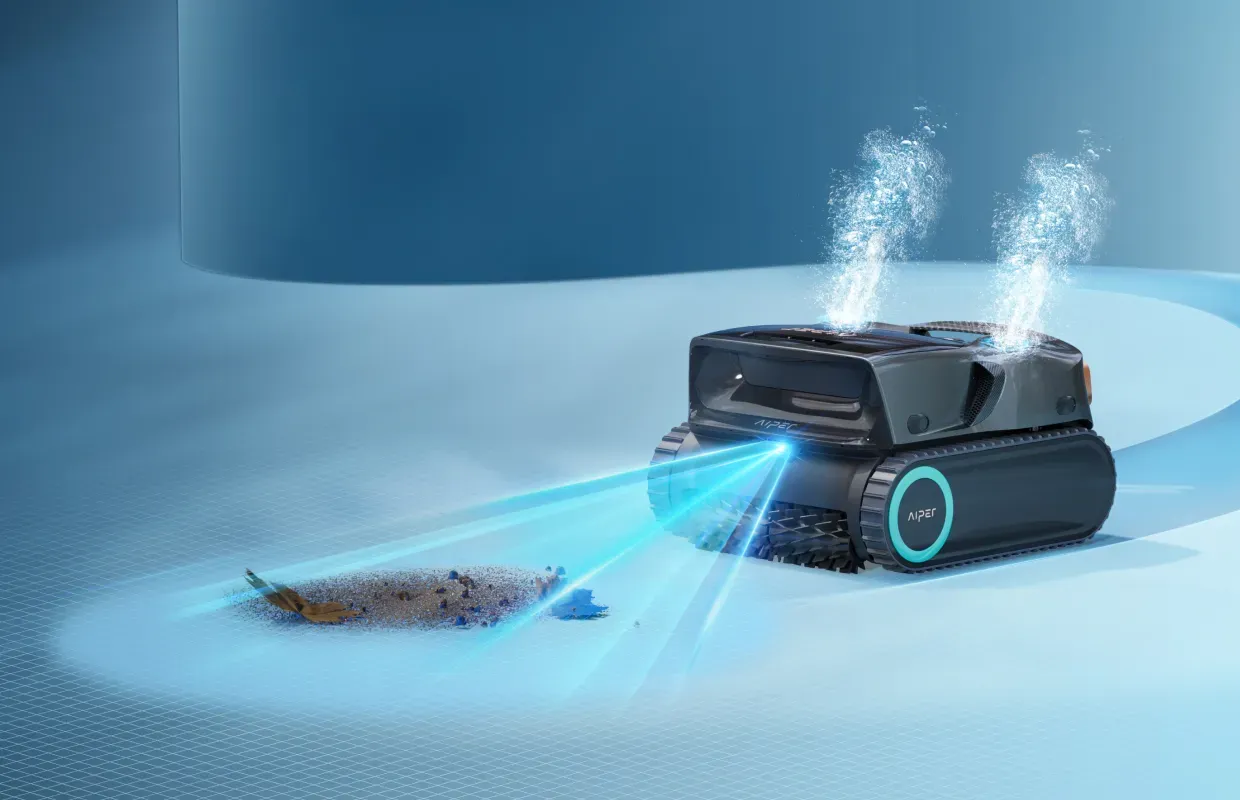
Forward-facing cameras serve as the robot’s eyes underwater. These systems detect obstacles and debris up to 2 meters ahead, allowing the unit to react before contact occurs. This vision capability separates modern AI cleaners from older units that rely solely on touch sensors and gyroscopes.
Smart path planning
Random-path cleaners waste significant energy and time. Industry data shows these older units revisit 37–44% of already-cleaned area during each cycle. AI path planning eliminates this redundancy by mapping the pool geometry and tracking cleaned zones, ensuring every movement serves a purpose.
How Does AI Vision Work Underwater?
Underwater environments present unique challenges for computer vision. Turbidity, light refraction, and movement require specialized technology to maintain accuracy. Modern AI pool cleaners overcome these obstacles through hardware and software engineered specifically for submerged operation.
Camera technology
High-resolution forward-facing cameras capture the pool floor and walls in real time. Unlike basic sensors that detect touch, these cameras recognize visual patterns. They function effectively at depths typical of residential pools and maintain clarity despite water movement.
Debris identification
The system distinguishes between different debris types—leaves, hair, sand, and silt—within 3 seconds of detection. This classification allows the robot to adjust its cleaning intensity and path. Heavy leaf loads trigger different responses than fine dust, ensuring appropriate cleaning force for each situation.
Obstacle avoidance
Drains, steps, and ladders no longer trap the unit. The vision system identifies these features before contact, allowing the robot to navigate around them smoothly. This prevents the interruptions common in older models that require manual freeing from pool features.
Can a Robot Really Manage Itself for a Week?
Autonomous operation represents the ultimate convenience in pool maintenance. Instead of daily manual starts, true AI cleaners monitor pool conditions and decide when cleaning is necessary. This shifts the burden from constant human oversight to initial setup only.
Autonomous scheduling
Advanced AI systems analyze factors like pool size, debris accumulation rates, and weather conditions to create optimized cleaning schedules. The robot determines whether it needs to run daily or can skip a day based on actual pool conditions. This eliminates unnecessary cleaning cycles while maintaining water clarity.
Condition monitoring
The system tracks cleaning history and current water conditions to predict maintenance needs. When integrated with smart home systems, these units can report status updates and maintenance alerts to your phone. Pool service companies report 15% labor savings after deploying robotic cleaners with these autonomous capabilities.
Standard vs. AI Pool Cleaners: Do You Need the Upgrade?
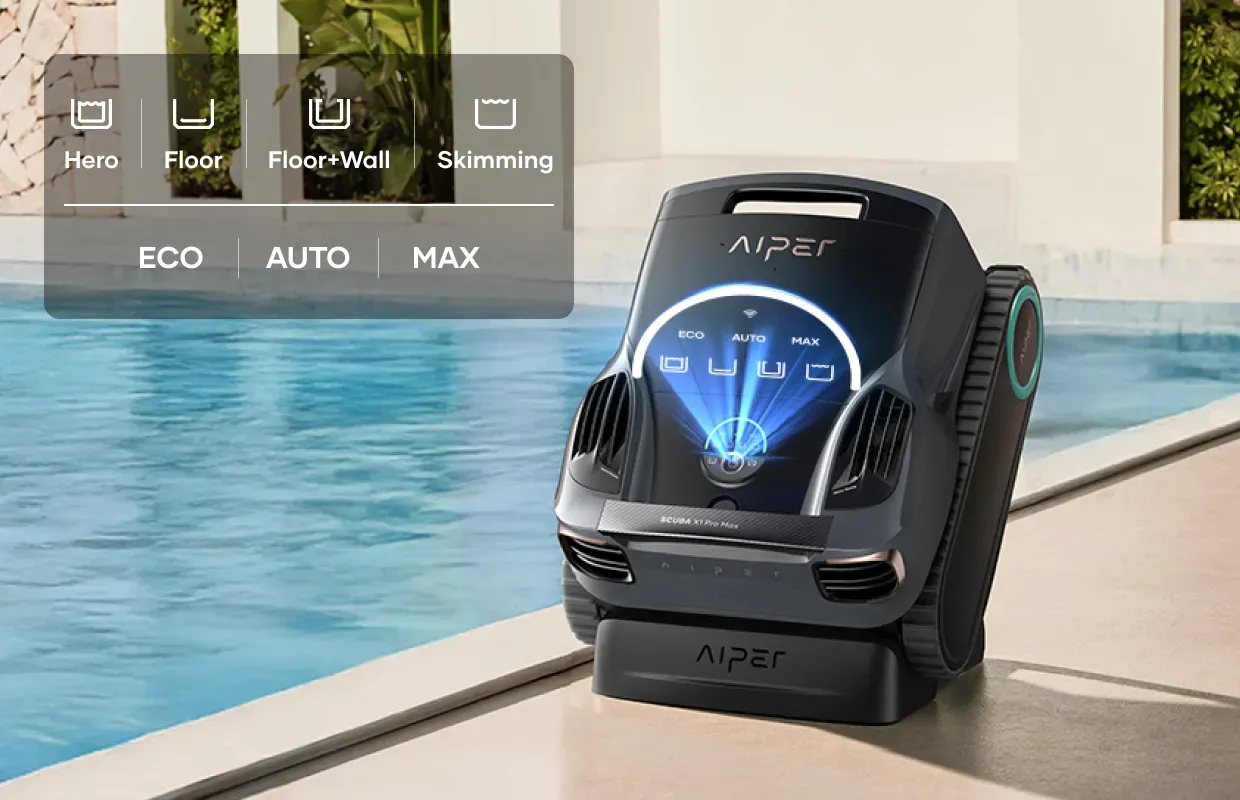
The difference between entry-level and cognitive AI models extends beyond price tags. Performance gaps affect cleaning time, energy consumption, and your personal schedule. Understanding these distinctions helps determine whether the investment matches your lifestyle needs.
Random bounce limits
Traditional cleaners use randomized movement patterns or simple gyroscopes. They clean inconsistently, often missing corners and struggling with walls. Manual cleaning typically achieves only 70–85% debris removal depending on operator technique and time available.
Cognitive advantages
AI-driven systems deliver 95–99% debris removal through systematic coverage. They consume significantly less energy—operating on 100–200 watts compared to 1,800–2,500 watts for standard pool pumps—while requiring only 15–25 hours of human interaction annually versus 120–180 hours for manual methods.
| Feature | Standard Robotic Cleaner | AI Cognitive Cleaner |
|---|---|---|
| Navigation | Random patterns or gyroscope-based | AI vision + dToF mapping |
| Debris Detection | Contact only (bump and turn) | Visual identification up to 2m |
| Scheduling | Timer-based only | Condition-responsive AI |
| Coverage Efficiency | Revisits 37–44% of areas | Systematic, no redundancy |
| Annual Time Cost | 120–180 hours (manual management) | 15–25 hours (minimal oversight) |
How Aiper Scuba V3 Delivers True Cognitive AI
Scuba V3 moves beyond simple automation to offer genuine cognitive intelligence. It combines computer vision with adaptive path planning to eliminate the redundant patterns and missed spots common in older models. This system does not just circulate through your pool; it actively observes, identifies, and responds to specific conditions in real time.
For homeowners ready to reclaim their weekends, the Scuba V3 translates advanced robotics into tangible daily benefits. Here is how the technology works in your pool:
- AI Patrol Cleaning: A forward-facing camera identifies over 20 types of debris—including leaves, hair, and sand—from up to 2 meters away, reacting within 3 seconds. This allows the robot to target dirt actively rather than bumping randomly, delivering cleaning speeds up to 10 times faster than traditional pathing while conserving energy.
- VisionPath™ Adaptive Navigation: By merging AI vision with dToF (Direct Time-of-Flight) sensors, the Scuba V3 first scans your pool floor to understand its geometry, then executes a precise cleaning pattern. This dual-mode approach ensures comprehensive coverage without wasting time on already-clean areas, while intelligent obstacle recognition prevents the unit from getting trapped on drains or steps.
- Cognitive AI Navium™ Mode: After initial activation, the system autonomously manages your pool maintenance for a full week. It analyzes pool size, weather conditions, and cleaning history to create its own schedule—running only when necessary and eliminating the need for daily manual intervention. This delivers the continuous, hands-free peace of mind that defines modern pool ownership.
Conclusion
Your backyard should be a place to unwind, not a source of weekend chores. Traditional pool cleaning demands hours of your attention each week, but cognitive AI changes the equation entirely. By choosing a system that sees, thinks, and manages itself, you trade constant oversight for consistent clarity.
The technology handles the debris while you handle the relaxation. You reclaim the time for morning swims, evening gatherings, or simply doing nothing at all. This shift from manual labor to autonomous maintenance embodies what it means to “Bring Vacation Home”—your pool stays ready, and you stay free to actually enjoy it.
Ready to upgrade your pool care? Explore the cognitive power of the Aiper Scuba V3.
FAQs on AI Pool Cleaner
What does it actually do?
Standard pool robots circulate randomly until a timer stops them. An AI pool cleaner uses computer vision to actively hunt debris instead of waiting to bump into it. The system recognizes over 20 distinct debris types—including leaves, hair, and sand—within three seconds of visual contact. This allows the unit to adjust its path immediately and clean up to 10 times faster than traditional random-path models, focusing energy only on areas that actually need attention.
How does vision work underwater?
Underwater computer vision combines high-resolution forward-facing cameras with dToF (Direct Time-of-Flight) sensors to overcome challenges like light refraction and turbidity. This setup maintains an effective detection range of two meters, giving the robot sufficient distance to spot obstacles, drains, and debris before physical contact occurs. The system processes these visual inputs in real time to calculate avoidance maneuvers, preventing the unit from becoming trapped while ensuring comprehensive floor coverage.
Is it worth the cost?
Consider the economics of pool maintenance. Professional cleaning services typically charge $100 to $200 per month, or $1,200 to $2,400 annually. DIY manual cleaning consumes over one hundred hours of personal labor each year—time valued at roughly $3,000 to $4,500 if outsourced at standard handyman rates. An AI wireless robotic pool cleaner operates on approximately 100 to 200 watts, significantly less than the 1,800 to 2,500 watts required by traditional booster pump systems. Between eliminated service fees, reduced energy consumption, and reclaimed personal time, the investment typically offsets its price within the first two pool seasons.