
Why Do People Rake and Pick Up Leaves in Fall? A Complete Lawn Guide
Raking leaves prevents grass from suffocating and stops moisture from breeding fungal diseases like snow mold. Clear heavy leaf coverage to let roots breathe, then use smart irrigation to maintain safe, precise moisture levels before winter.

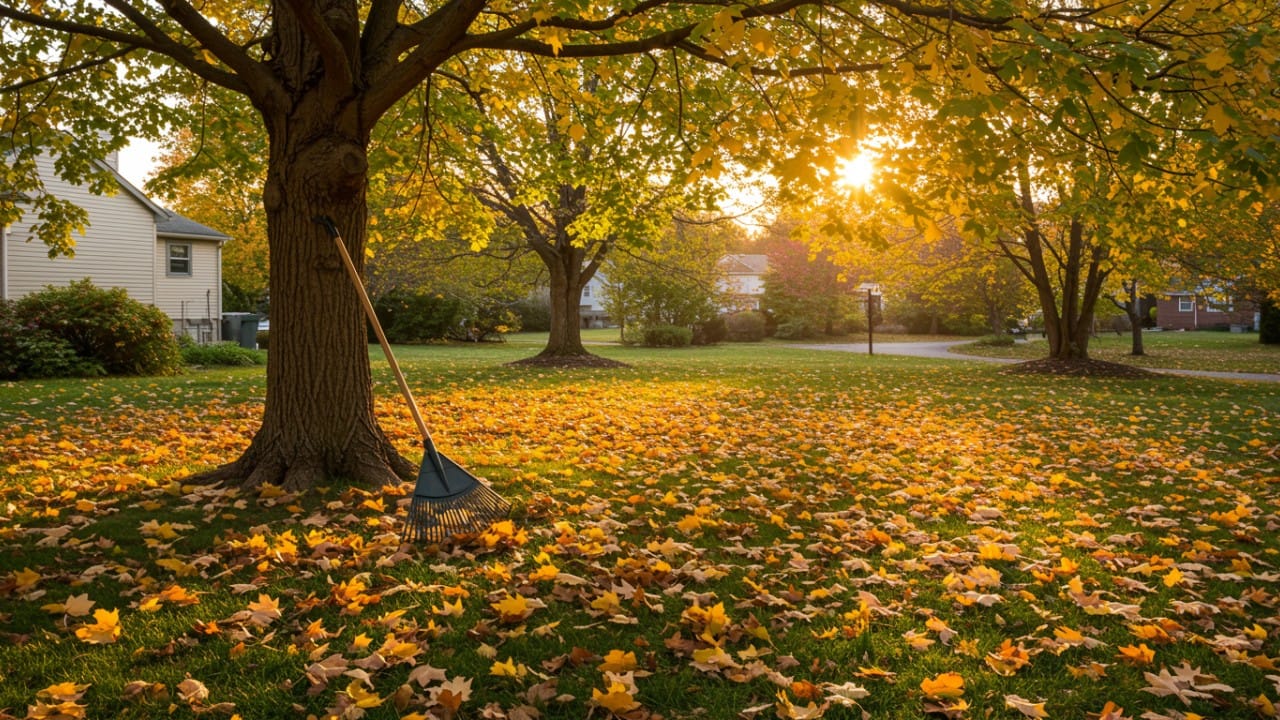
Fall puts on a spectacular show. Amber and crimson leaves transform your property for a few fleeting weeks, right up until they pile up and become a massive weekend headache. If you’re staring down at your yard right now wondering why do people rake and pick up leaves in fall, the answer boils down to survival: your grass is suffocating.
A handful of scattered leaves won't hurt anything. But let a thick, soggy blanket of foliage sit on your turf, and you're begging for long-term damage. Let's break down what's actually happening under all that yard waste, how to tackle the cleanup, and why getting your lawn's moisture levels right afterward is the secret to a perfect spring yard.
The Real Reasons: The Science Behind Fall Leaf Raking
You have to look below the surface to see the real damage. Fall doesn't signal the end of the growing cycle. For cool-season grasses, it’s actually the most critical window of the entire year.
Blocking Crucial Sunlight
Right now, your grass is working overtime. It's aggressively absorbing sunlight, moisture, and nutrients to build deep roots and store carbs for the freezing winter ahead. Throw a dense layer of fallen oak or maple leaves on top, and you've basically thrown an impenetrable tarp over your lawn. Sunlight gets cut off. Photosynthesis stops cold. Give it a few weeks, and the grass trapped underneath will weaken, turn a sickly yellow, and die off. The result? Barren, muddy craters waiting for you when the snow melts.
Suffocation and Severe Disease Risk
Sunlight starvation is just half the problem. Unraked leaves engineer a toxic microclimate right at the soil level. Think about typical fall weather: heavy morning dew, random rain showers, and plunging temperatures. A thick leaf mat traps all that moisture directly against the grass blades. It chokes off the airflow.
You're basically building a greenhouse for devastating lawn fungi. Turf experts at the University of Nebraska-Lincoln warn that leaving a thick layer of leaves on your lawn can smother the turf and significantly increase the risk of snow mold disease. Snow mold is stubborn. It attacks under the winter snow cover and reveals itself as nasty gray or pinkish webbing that destroys huge chunks of turf. Raking rips off that bandage. It ventilates the grass, lets the soil breathe and dry out, and wipes out the threat of costly fungal infections.
Two Common Ways to Handle Fall Leaves: Removal and Mowing
Do you really need to bag every single leaf? Or can you just run them over with the mower and call it a day? It's an endless debate, but the truth is you need both strategies depending on what your yard actually looks like right now.
Here is a quick comparison profile to help you decide the best course of action:
Profile 1: Raking and Bagging (Total Removal)
- Best For: Yards buried in heavy, dense leaf cover (you can't see the grass anymore), or packed with stubborn, waxy oak leaves that refuse to break down.
- Impact on Lawn: Stops suffocation instantly. Wipes out fungal breeding grounds and gives roots the direct sunlight they crave.
- Effort Level: Grab the ergonomic rake, the heavy-duty tarps, and mentally prepare yourself for a workout.
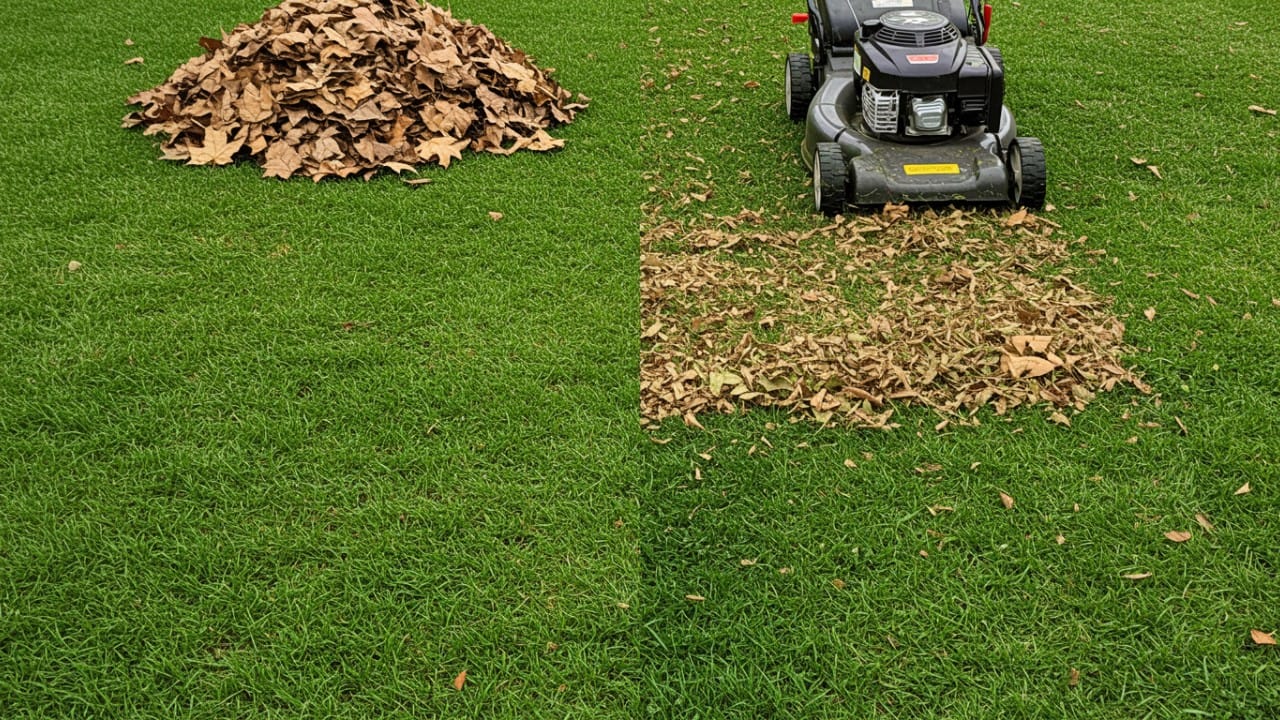
Profile 2: Mulching (Mowing Over)
- Best For: Light dustings of leaves. If the green grass is still clearly poking through, you're good to go.
- Impact on Lawn: A massive boost for soil health. Shredding leaves into dime-sized flakes lets them slip between grass blades. They rot down fast, feeding the soil with rich organic matter and free nitrogen.
- Effort Level: Slap a mulching blade on your mower and handle it during your normal Sunday cut.
Pro Tip: If your yard is hiding under six inches of dead leaves, do not try to mulch them. You’ll just manufacture a thick, impenetrable thatch layer that ruins the soil. Rake the heavy stuff first, then mulch whatever is left behind.
Want a deeper dive into which method is best for your specific lawn size and grass type? Check out our comprehensive guide on [mulching leaves vs. raking].
Crucial Next Steps: Post-Cleanup Care & Moisture Control
So, the heavy lifting is over. The yard looks immaculate. But don't put your tools away just yet. Your turf is incredibly vulnerable right now. The grass can finally breathe, which opens the perfect window for the final pieces of the autumn lawn puzzle: aeration, overseeding, and dialing in your moisture control.
The Recovery Period
Being buried under leaves compacts the soil. Core aeration—literally pulling tiny soil plugs out of the earth—lets oxygen, water, and nutrients drive deep into the root zone. Got bare patches from summer heat or leaf rot? Throw down some seed right after aerating so it can germinate before the ground freezes solid.
The Danger of Autumn Overwatering
With fresh seed down and roots hungry for nutrients, watering becomes a high-stakes game. And fall weather doesn't make it easy. It’s notoriously unpredictable. You might get a dry, unseasonably warm week followed by three days of freezing rain.
Relying on a traditional, dumb sprinkler timer on a fixed schedule is a recipe for disaster. Remember the snow mold warning? Pumping extra water onto your yard during a damp, chilly October week just recreates the exact soggy, fungus-friendly mess you tried to fix by raking.
Enter Smart Irrigation
You want the roots hydrated, but you definitely don't want root rot. Upgrading to a smart irrigation system changes the math entirely. A smart sprinkler controller like the Aiper IrriSense 2 rips the guesswork out of the equation. Stop blindly watering every Tuesday and Thursday. This thing actually adapts to the weather by syncing with real-time local forecasts.
Heavy autumn rainstorm rolling in? The system skips the cycle. Temperature taking a nosedive? It throttles the output to keep freezing water from shattering delicate roots. By handing moisture control over to intelligent tech, your recovering lawn gets exactly the tailored hydration it needs to fight off fungus and drive roots deep before winter hits.
Common Mistakes to Avoid During Fall Leaf Cleanup
Even if you mean well, it’s easy to mess up fall yard maintenance. Dodge these common traps:
Mistake 1: Waiting Until the Trees are Completely Bare
People hate raking, so they wait until late November when the last leaf drops. Huge mistake. The bottom of that pile will rot, mat down, and suffocate your grass for weeks. Bite the bullet and do two or three light cleanups throughout the season. Your back will thank you, too.
Mistake 2: Shutting Down the Sprinklers Too Early
Once temperatures dip, a lot of folks winterize their irrigation systems the second the leaves start falling. But grass still needs about an inch of water a week right up until the freeze. Starve your lawn of water in October, and it goes into winter totally dehydrated. Don't expect a fast green-up in the spring if you do this.
Mistake 3: Ignoring the Gutters and Perimeters
It’s easy to focus on the center of the lawn and ignore the edges. Leaves piling up against your foundation, wrapping around tree bases, or clogging gutters are an open invitation for pests, rodents, and severe water damage. Blow or rake these perimeters clean before you finish up.
Conclusion: Build a Strong Foundation for Spring
Fall lawn care is an investment in your property's future. You aren't just raking to keep up neighborhood curb appeal; it’s basic biology. Clearing the heavy debris guarantees your grass gets the sunlight it desperately needs, while wiping out the damp pockets that invite fungus.
Step outside this weekend and take a hard look at your yard. If dead leaves cover more than a third of your grass, grab the rake. Once the debris is clear, seize the moment to fortify the roots. Pair proper leaf removal with intelligent, weather-adaptive watering, and you build an unbreakable foundation. When the snow melts next year, you’ll be the one with the thickest, greenest lawn on the street.
FAQ About Fall Lawn Care
Q: What happens if you don't pick up leaves in the fall?
A: Leave a thick blanket of leaves sitting there all winter, and they’ll block the sun, halt photosynthesis, and trap moisture against the soil. It chokes the roots and sets up the perfect storm for fungal diseases—like snow mold—to wipe out huge patches of your grass.
Q: Does raking leaves actually help the grass?
A: Absolutely. Raking tears away the physical barrier sitting between your turf and the sun. It lets the roots breathe, take in oxygen, and absorb controlled hydration from your smart sprinklers. It’s arguably the most effective move you can make to ensure your yard survives dormancy and bounces back strong in the spring.
Q: Can I just mow over the leaves instead of bagging them?
A: You can, but only if the leaf cover is light. If the green grass is still highly visible, using a mulching mower to chop leaves into fine bits is a great way to feed nitrogen back to the soil. But if the lawn is completely buried, mowing will just manufacture a suffocating layer of thatch. Get the rake out instead.