
How to Dispose of Old Pool Chemicals Safely in Australia
Dispose of old pool chemicals in Australia through council hazardous waste services. Keep them sealed in original packages, separate chlorine and acid, and handle different chemicals safely to protect people and the environment.

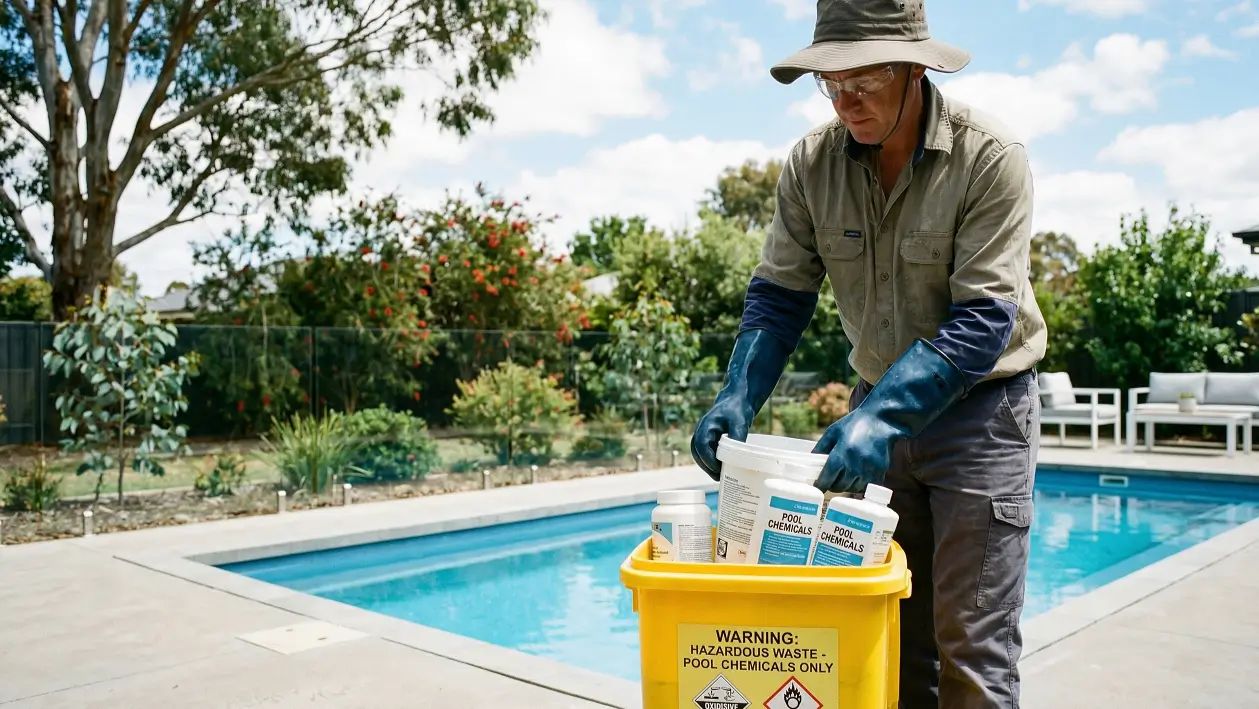
If you’ve owned a pool for a few years, there’s a good chance your shed or garage has become an unofficial storage depot for half‑used chemical containers, unlabelled bottles, and chlorine granules that have long since passed their prime. Old pool chemicals can feel like a problem you’d rather ignore—but leaving them to gather dust isn’t just untidy; it’s a genuine safety risk.
Pool chemicals are not ordinary household waste. Dumping them in the bin, pouring them down the drain, or mixing them together in a well‑meaning attempt to “use them up” can lead to dangerous chemical reactions, fires, or serious harm to local waterways. The good news is that safe disposal is usually straightforward when you know the right steps.
In this guide, we’ll walk through what not to do, how to handle different types of chemicals, where to find official disposal services across Australia, and how to avoid being left with a shed full of expired products in the future.
Why Old Pool Chemicals Can Be Dangerous
Most swimming pool chemicals fall into one of a few hazardous categories: they are corrosive, oxidising, or toxic. Chlorine‑based products, for example, are strong oxidisers. When they come into contact with organic material, acids, or even moisture, they can generate heat, release toxic chlorine gas, or cause a fire. Hydrochloric (muriatic) acid is extremely corrosive, capable of damaging pipes, concrete, and skin on contact.
As chemicals age, their stability can change. According to industry guidelines, expired products may not only lose their effectiveness but can also become more unpredictable. Granular chlorine that has absorbed moisture may self‑heat; old acid containers can corrode and leak. Improper disposal—such as throwing these items into household rubbish—creates risks for waste collection workers, damages collection trucks, and can contaminate groundwater when materials end up in landfill.
Understanding these risks is the first step toward handling old pool chemicals responsibly.
What Not to Do with Old Pool Chemicals
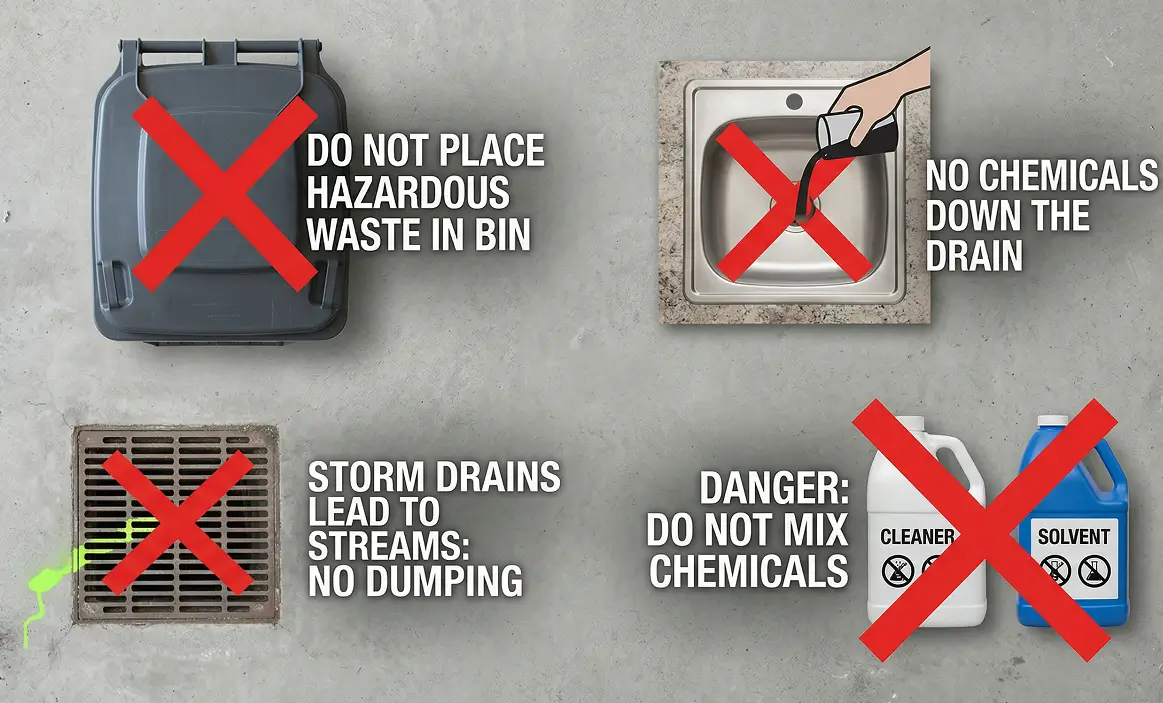
Before we cover the correct disposal process, it’s essential to be crystal clear about what you should never do. Even well‑intentioned shortcuts can have serious consequences.
- Never put old pool chemicals in your household rubbish or recycling bin. This is the most common mistake. Waste collection vehicles compact loads, and mixing incompatible chemicals under pressure can trigger fires or release toxic fumes. Council waste facilities are not equipped to handle hazardous materials from household bins.
- Never pour them down the drain, toilet, stormwater drain, or onto the ground. Drains lead to wastewater treatment plants that are not designed to handle concentrated pool chemicals. Stormwater drains flow directly into creeks, rivers, and oceans, posing a major environmental threat.
- Never mix chlorine with acid, different types of chlorine, or any other chemical. Mixing chlorine with acid releases deadly chlorine gas(see our pool chemicals safety guide). Combining different chlorine products—such as calcium hypochlorite (granular or tablet) with sodium hypochlorite (liquid)—can cause violent reactions or explosions.
- Never transfer chemicals into unlabelled food or drink containers. This is a dangerous practice that has led to accidental poisonings. A soft‑drink bottle that once held pool acid looks no different to a thirsty child or visitor.
- Never attempt DIY disposal shortcuts. Do not try to burn chemicals, dilute them in your backyard, or neutralise them with household products unless you are a trained chemist. These methods often go wrong and can cause injury or environmental damage.
Note: If a container is leaking or badly damaged, do not casually decant it into another random bottle. Keep it isolated in a well‑ventilated area away from any other materials, and contact your local council’s hazardous waste program or a professional disposal service for specific instructions.
How to Dispose of Old Pool Chemicals Safely in 5 Steps
For most Australian homeowners, following these five steps will provide a safe, responsible path to clearing out unwanted pool chemicals.
Step 1: Identify the Chemical
Carefully examine the labels on each container. Look for active ingredients such as calcium hypochlorite, sodium hypochlorite, hydrochloric acid, or algaecides. If a container is unlabelled and you are not absolutely certain what it contains, treat it as hazardous waste and do not attempt to use or guess its contents. Mark it “unknown chemical” when you present it for disposal.
Step 2: Keep Original Packaging
The original container is designed for that specific chemical. It provides vital information for waste facility staff and ensures safe transport. If the original container is damaged but still intact enough to contain the chemical, place it inside a larger, leak‑proof, non‑reactive container (such as a clean plastic bucket) without removing the product. Do not combine multiple chemicals into one container.
Step 3: Seal and Store Safely for Transport
Check that lids are tightly screwed on and that there are no leaks. Store containers upright in a sturdy, leak‑proof tray or a plastic storage bin during transport. Keep chemicals separate from each other—especially chlorine and acid—and secure them in your vehicle so they cannot tip over. Ideally, place them in the boot (trunk) with good ventilation.
Step 4: Use a Local Hazardous Household Waste or Council Collection Service
For most Australian households, the safest option is to take old pool chemicals to an approved household hazardous waste drop-off service or council collection program. These services are designed to handle chemical waste safely and in line with local regulations. Avoid trying to dispose of chemicals through general waste channels, and always check the accepted items and booking requirements before you go.
Step 5: Consider Commercial Operators
If you live in a regional area where no council collection is available, or if you have a large quantity of chemicals, professional hazardous waste removal services can be engaged. Look for licensed contractors who specialise in chemical waste. There is usually a fee, but it provides peace of mind and ensures compliance with all regulations.
How to Dispose of Different Types of Pool Chemicals
Different pool chemicals require slightly different handling due to their unique properties. Here’s how to manage the most common types.
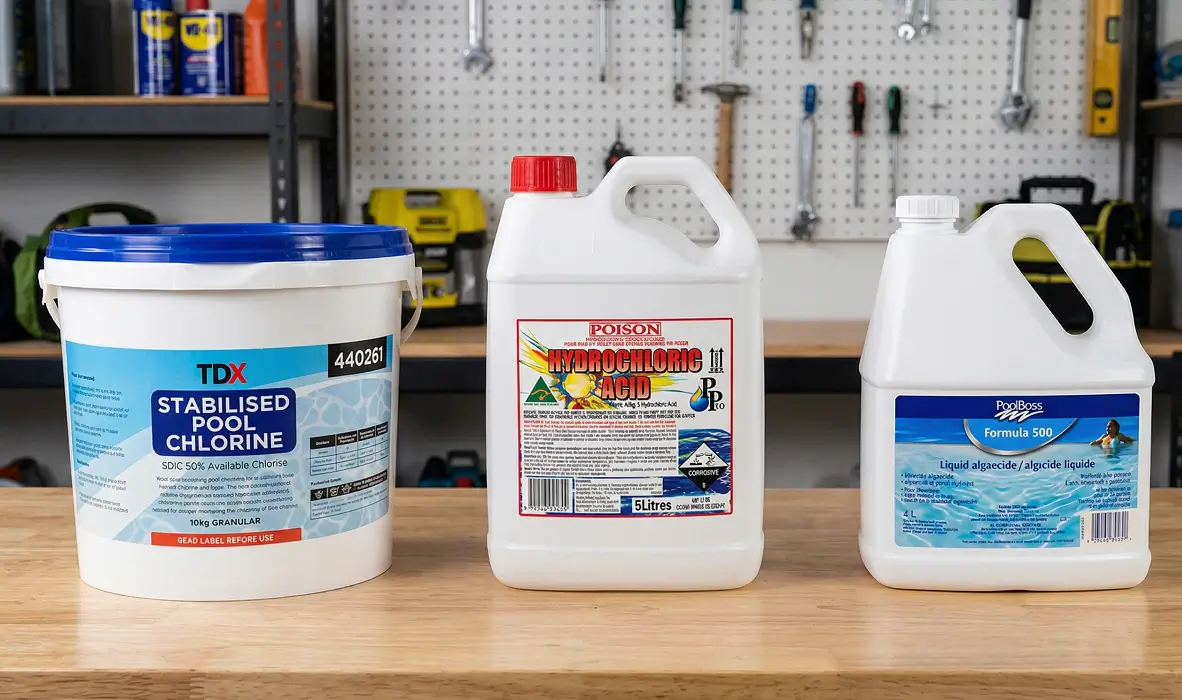
Chlorine & Shock (Calcium Hypochlorite, Lithium Hypochlorite, Dichlor, etc.)
Dry chlorine products present a significant fire risk, especially if they become contaminated or absorb moisture. Do not store them near acids, oils, or organic materials. Keep them in their original containers with lids tightly sealed. When transporting to a disposal facility, ensure they are kept cool and dry. Never mix different types of chlorine for disposal.
Hydrochloric (Muriatic) Acid
Acids are highly corrosive and can damage surfaces, vehicles, and skin. Keep the container upright and ensure the lid is secure. If the original bottle is deteriorating, place it carefully inside a larger, acid‑resistant container (such as a sturdy plastic bucket) without opening it. Do not attempt to neutralise it with household products; let the waste facility handle it.
Algaecides & Reagents
Many algaecides contain quaternary ammonium compounds or copper‑based ingredients that are toxic to aquatic life. Test kit reagents often contain small amounts of acids, dyes, or other chemicals. Even in small volumes, these should not be poured down the drain. Collect them with your other pool chemicals and dispose of them through the same hazardous waste pathways.
Finding Pool Chemical Disposal Near You in Australia
Locating the nearest drop‑off point is often the only hurdle. Here’s where to start in each state.
- New South Wales: Look for Household Chemical CleanOut events on the EPA NSW website. These events are held regularly across the state, often at council depots or mobile collection points.
- Victoria: Visit Sustainability Victoria’s Detox Your Home Permanent drop‑off sites are available at several locations, including Melbourne, Bendigo, and Geelong, with pop‑up events in other areas.
- Queensland: Check your local council’s waste and recycling page. Brisbane City Council offers hazardous waste disposal at specific transfer stations; similarly, the Gold Coast and other major centres run regular collections.
- Western Australia: The Household Hazardous Waste program operates through local councils. Contact your local shire or city for drop‑off dates.
- South Australia: Household Hazardous Waste drop‑off days are coordinated by Green Industries SA and local councils.
- Tasmania, ACT, Northern Territory: Each territory has council‑based programs; a phone call to your local council’s waste services team is usually the fastest way to get accurate information.
If you cannot find a local option, a quick online search using terms like “pool chemical disposal near me” or “hazardous waste drop off” will often bring up the most up‑to‑date regional services.
How to Avoid Ending Up with Leftover Pool Chemicals Again
Prevention is the best strategy. Accumulating half‑used containers is not only a disposal headache but also a safety risk. Here are two practical ways to keep your chemical stock under control.
Buy for the season, not for the decade
Pool chemicals have a shelf life. Instead of buying large bulk packs that may take years to use, estimate your consumption for a few months and purchase accordingly. This is especially true for granular chlorine and liquid chlorine, which degrade more quickly in Australian conditions.
Improve routine maintenance
Many pool owners end up buying emergency chemicals because they are trying to fix a problem that regular maintenance could have prevented. By keeping your pool clean and balanced on an ongoing basis, you reduce the need for “shock” purchases that often leave leftover stock.
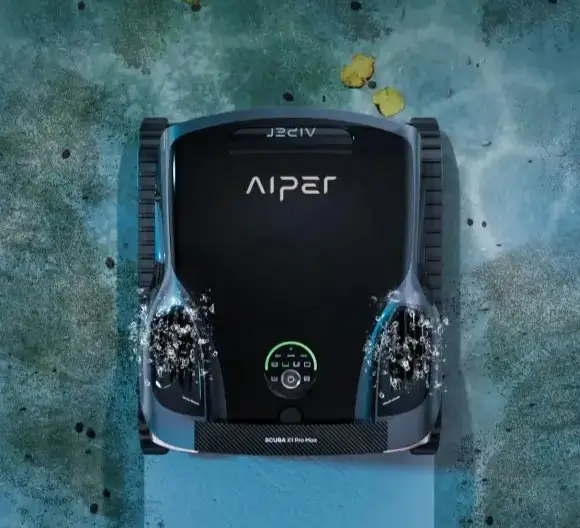
Smart maintenance tools can help with this. For example, Aiper Scuba X1 Pro Max helps remove debris and fine contaminants before they build up into larger water-quality problems. A cleaner pool usually means more predictable chemical demand, fewer emergency treatments, and less risk of ending up with half-used pool chemicals sitting in storage until they expire.
Final Takeaway
Old pool chemicals are a reality for most pool owners, but they don’t have to become a dangerous problem. The three golden rules are simple: don’t dump, don’t mix, and always use official hazardous waste pathways.
Take a few minutes to go through your shed or garage. Identify any expired or unwanted pool chemicals, keep them in their original containers, and use your local council’s hazardous waste service to dispose of them safely. By doing so, you’re protecting your family, your community, and the environment.
FAQ
Can I pour pool chemicals down the drain?
No. Never pour pool chemicals down any drain, including sinks, toilets, or stormwater drains. They can damage plumbing, harm wastewater treatment processes, and contaminate rivers and creeks.
Are expired pool chemicals dangerous?
Yes. Over time, chemicals can become unstable, lose their effectiveness, or react unpredictably. Expired chlorine products, for instance, may self‑heat or release gases. Expired acid can corrode its container. It is safer to dispose of them than to risk using them.
How do I dispose of pool hydrochloric acid?
Hydrochloric (muriatic) acid should be taken to a licensed hazardous waste drop‑off point, such as a Chemical CleanOut event (NSW) or Detox your Home (VIC). Keep it in its original container with the lid tightly sealed and transport it upright, separate from other chemicals.
Can old pool chemicals still be used?
Only with caution. If the product is clearly labelled, within its use‑by date (or within manufacturer guidelines), unopened or well sealed, and has been stored correctly in a cool, dry place away from incompatible materials, it may still be usable. If any of these conditions are uncertain, disposal is the safer choice.
How should I store old pool chemicals safely before disposal?
Store them in a cool, dry location away from heat sources, direct sunlight, doors, and windows. Keep them in their original containers with lids tight, and ensure they are stored upright. Separate chlorine from acids, and keep all chemicals out of reach of children and pets. If you are waiting for a disposal event, place containers in a sturdy, leak‑proof tray to contain any potential spills.