
Glass Media for Swimming Pool: The Ultimate Upgrade Guide
Switching to glass pool filter media improves filtration down to 3 microns, reduces chemical usage by 50%, and lasts up to 10 years, offering a superior ROI compared to traditional silica sand.

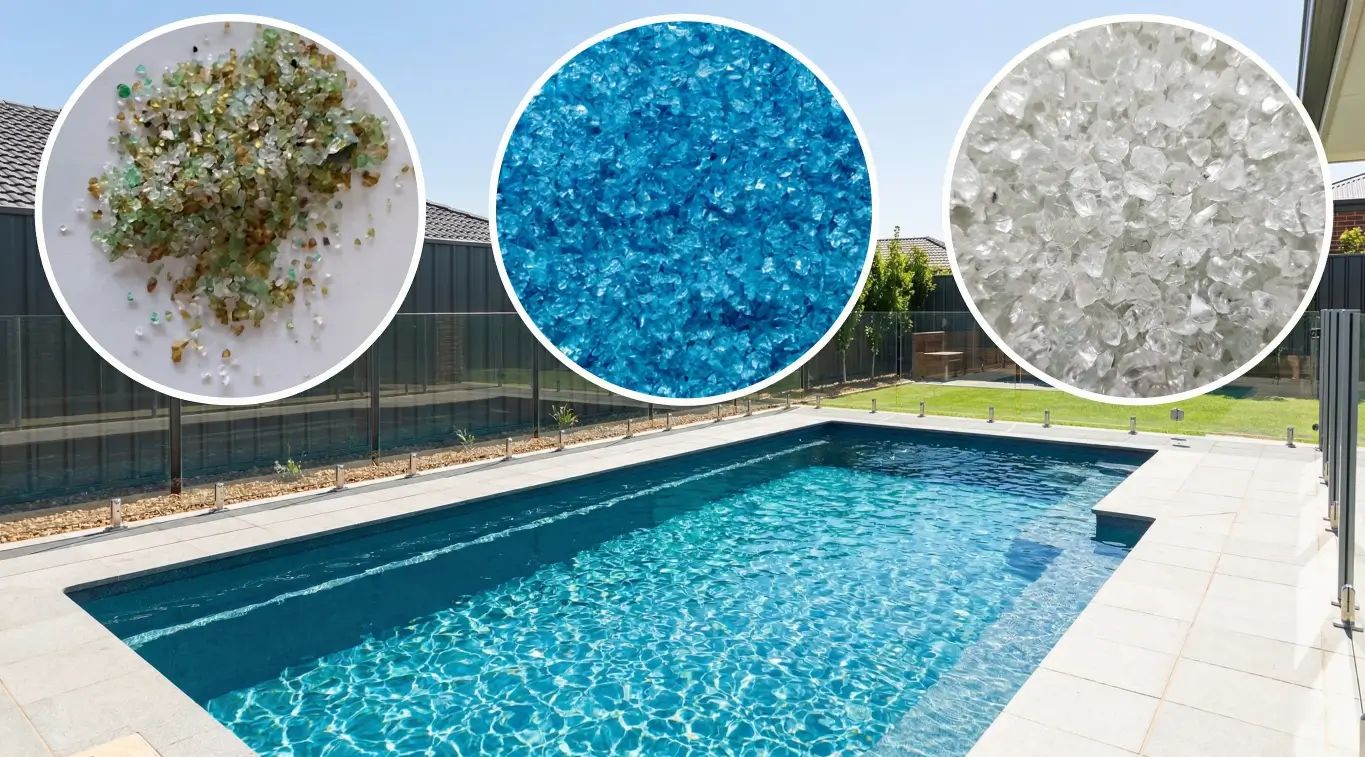
Running a pool in Australia isn’t cheap—and if your filter’s burning through water and chemicals, you’ll feel it on the bill pretty quickly.
A lot of homeowners stick with sand simply because it’s what they’ve always used. But that usually means regular backwashing, the odd cloudy spell, and a steady top-up of chemicals just to keep things looking right. More and more people are moving over to pool filter glass media instead. It drops straight into your existing system and, in most cases, cuts down the ongoing effort without needing any major upgrades.
Here’s a practical look at how it works, what actually improves, and whether it’s worth the switch for your setup.
What is Glass Pool Filter Media?
Glass pool filter media is made from recycled glass that’s been cleaned and processed into small, smooth granules. It’s designed to replace silica sand inside a standard pool filter.
Where sand tends to do most of its filtering near the top layer, glass media works more evenly through the full depth of the tank. That alone makes a noticeable difference in how consistently it performs.
It also carries a mild surface charge, which helps it grab onto fine particles and organic matter as water passes through. In simple terms: less stuff slipping through, and less work for your chemicals to do afterwards.
Top Benefits of Upgrading to a Glass Media Filter
Upgrading to a glass filter media would allow your existing system to double in performance. It requires no further equipment and works at all temperatures with all types of pools.
The glass filtration will give your pool the following benefits:
Prevents Bio-Fouling
The presence of biofilm decreases the effectiveness of chloramines and disinfectants. Pool filter glass is bio-resisting and completely eliminates the growth of bacteria in the filter bed. This prevents the formation of slime.
Reduces Chemical Usage
As the water clarity increases and cloudiness decreases, the glass media reduces the need for expensive disinfectants and frequent chlorination. Thus, cutting chemical use by up to 50%, it becomes an eco-friendly alternative to sand filters.
Saves Water
Glass media also eliminates the channelling that occurs in the sand media. Its density improves the water flow, and thus, it needs less backwashing. This saves up to 10,000 litres of water annually and is more efficient.
Maintains Consistent Pressure
With better water flow, the built-up pressure on the pool pump is also reduced. Unlike sand media that hardens over time and creates pressure fluctuation due to debris settling in the sand bed, glass media is consistent and durable.
Long Lasting
The lifespan of glass media is 10 years and is longer-lasting than traditional filters. With less chemical usage and maintenance needed, the glass filtration is a cost-effective investment with a quick ROI.
Reduces Wear on Pool Equipment
Pool filter glass traps micro-debris inside the tank so less silt settles on the pool floor, reducing wear on the equipment. Aiper scuba cleaners also have the ability to capture micro-debris as small as 3 microns with specialised mesh filters.
Perfect for Mineral Pools
The glass filter media has a slight negative charge, which works well with flocculants and coagulants to remove the dissolved components. This synergy makes it a recommended filter media for magnesium or mineral pools.
Glass Media vs. Silica Sand vs. Zeolite
The measure of the efficiency of a filter medium is based on its ability to capture infinitesimally small particles. For most pool filtration systems, the top three media types used are glass media, silica sand and zeolite.
When it comes to microscopic filtering, the glass and zeolite media can capture particles as small as 3 to 5 microns compared to the 20 to 40 micron range of silica sand.
The sand media only captures particulates within the top 6 inches of the media. It also forms clumps or channels, which allows the water to flow untreated. Although it has a low initial cost, the frequent backwashing and replacement mount the worries.
Zeolite (made from volcanic mineral) offers superior ammonia reduction and improves the swimmer’s health. It also provides excellent filtration, but it is more expensive than sand and is hard to find.
The glass media, on the other hand, improves the filter's efficiency and resists clogging. Its low density allows the water to flow through the entire depth. However, it has the highest initial cost.
Here is the visual breakdown of each pool filter media type.
Feature |
Glass Media |
Silica Sand |
Zeolite |
Material |
Recycled Glass |
Silica |
Volcanic Mineral |
Filtration Level |
3 to 5 Microns |
20 to 40 Microns |
3 to 5 Microns |
Lifespan |
8 to 10 Years |
3 to 5 Years |
5 to 7 Years |
Backwash Frequency |
Every 2-3 Months |
Every 1-2 Weeks |
Every 3-4 Weeks |
The pool glass filter requires the least backwashing time and frequency, and thus is more long-lasting.
How to Switch from Sand to Glass Filter Media (Step-by-Step)
You don’t need to be a pro to do this—it’s a manageable weekend job for most people.
Step 1: Shut Everything Down
Turn off the pump and release any pressure in the system before opening the filter.
Step 2: Remove the Old Sand
Scoop or vacuum out the sand, then rinse the tank thoroughly. It’s a good time to check for cracks or worn parts.
Step 3: Cover the Standpipe
Block off the standpipe opening so nothing falls in while you’re working.
Step 4: Add Water First
Fill the tank about halfway with water before adding the glass. This helps protect the internal components.
Step 5: Pour in the Glass Media
Add it slowly. If you’re using two grades, start with the coarser layer, then the finer one.
Step 6: Rinse Before Use
Run a rinse cycle followed by a short backwash to clear out any dust before normal operation.
How to Choose the Right Pool Filter Glass: Single vs. Dual Grade
The consumer believes that all crushed glass is created equally. But if improper grades in glass filtration are used, they can destroy the lateral pipes in the filter.
Traditionally, manufacturers require a "Coarse Grade" at the bottom for protection of the laterals, a "Fine Grade" at the top. This is a multi- or dual-graded glass media which, although it offers in-depth filtration, requires specific installation knowledge.
But today, retailers offer a single product, a "Medium Grade" for convenience. Such uniform-graded media uses a single grade and behaves like sand with better filtration. However, it sometimes restricts the flow of fine particles if not backwashed properly.
Single graded ones are typically used for standard residential pool filtration. Whereas the dual-graded glass media are used where water turbidity is high, such as in commercial or industrial wastewater applications.
We would suggest consulting your filter housing manual before choosing the single or dual-graded glass filtration.
Conclusion
While the initial cost of a filter glass is higher than that of a filter sand, the ROI is incredible. Not only will this simple weekend DIY project last up to 10 years, save thousands of litres of water, and provide a cleaner environment for pool devices such as your Aiper robotic cleaning device.
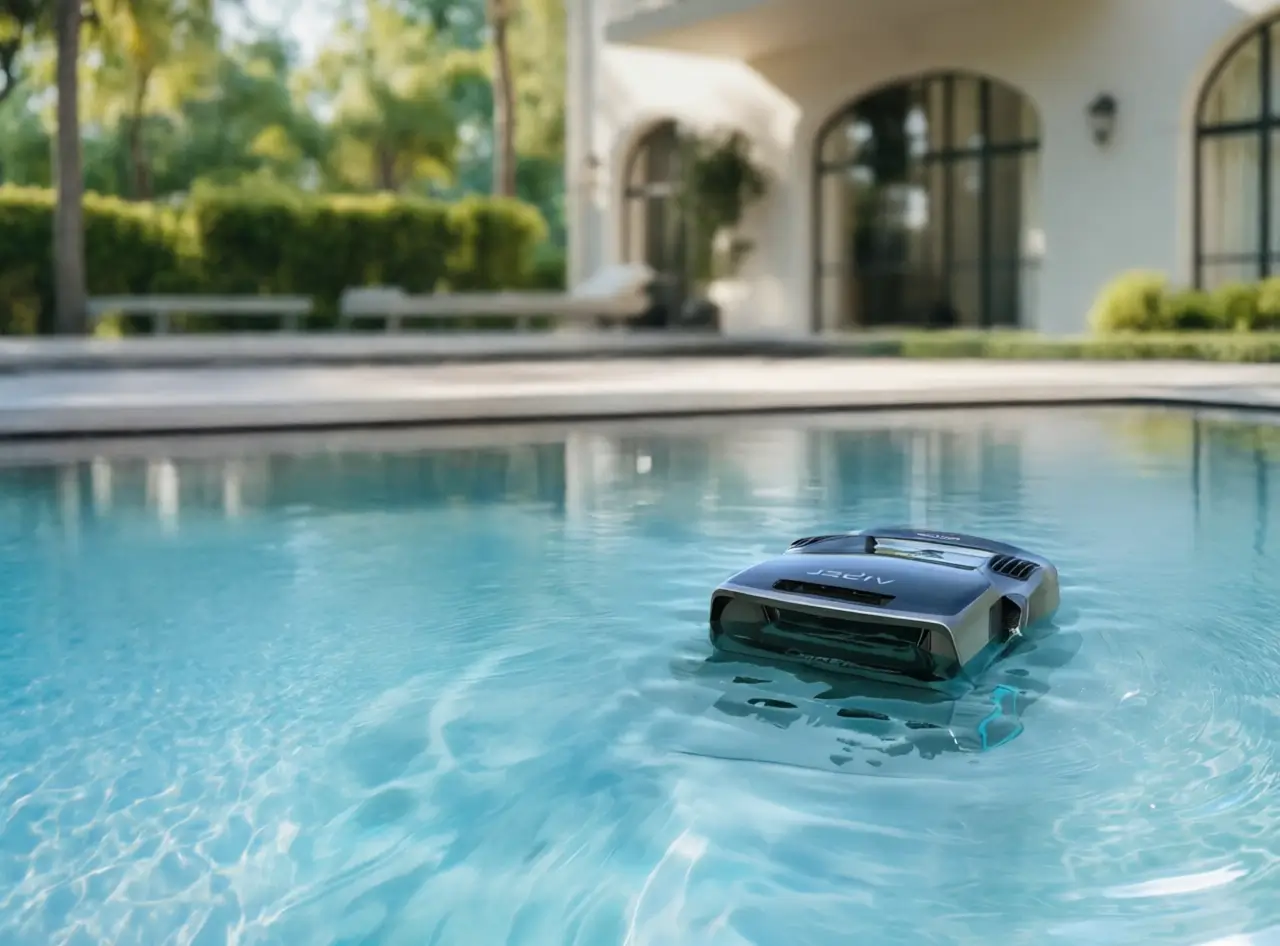
Using pool filter glass combined with the Aiper Scuba X1 Pro Max will greatly reduce your maintenance headaches for the next decade.
FAQs
Is glass media better than sand for a pool filter?
Yes. Glass filtration removes the finest material (3 microns instead of 20), lasts twice as long, and saves up to 25% on backwash water. It also reduces chemical use costs and prevents slime or biofilm from coating the sand filters.
Can I use pool filter glass in my existing sand filter?
Yes, glass is a direct drop-in replacement for silica sand. You don't have to worry about buying a new filter tank. Simply remove the old media, fill the filter with water and media, and rinse thoroughly.
How often should I change glass pool filter media?
You'll probably only have to replace your glass filter media every 8 to 10 years, whereas sand filter media has a lifespan of only 3 to 5 years.