
How to Lower Calcium Hardness in Your Swimming Pool: A Complete Guide
Lowering high pool calcium hardness requires partially draining and refilling with soft water. Maintain a balanced LSI and brush your waterline regularly to prevent stubborn scale buildup and protect your pool surfaces.

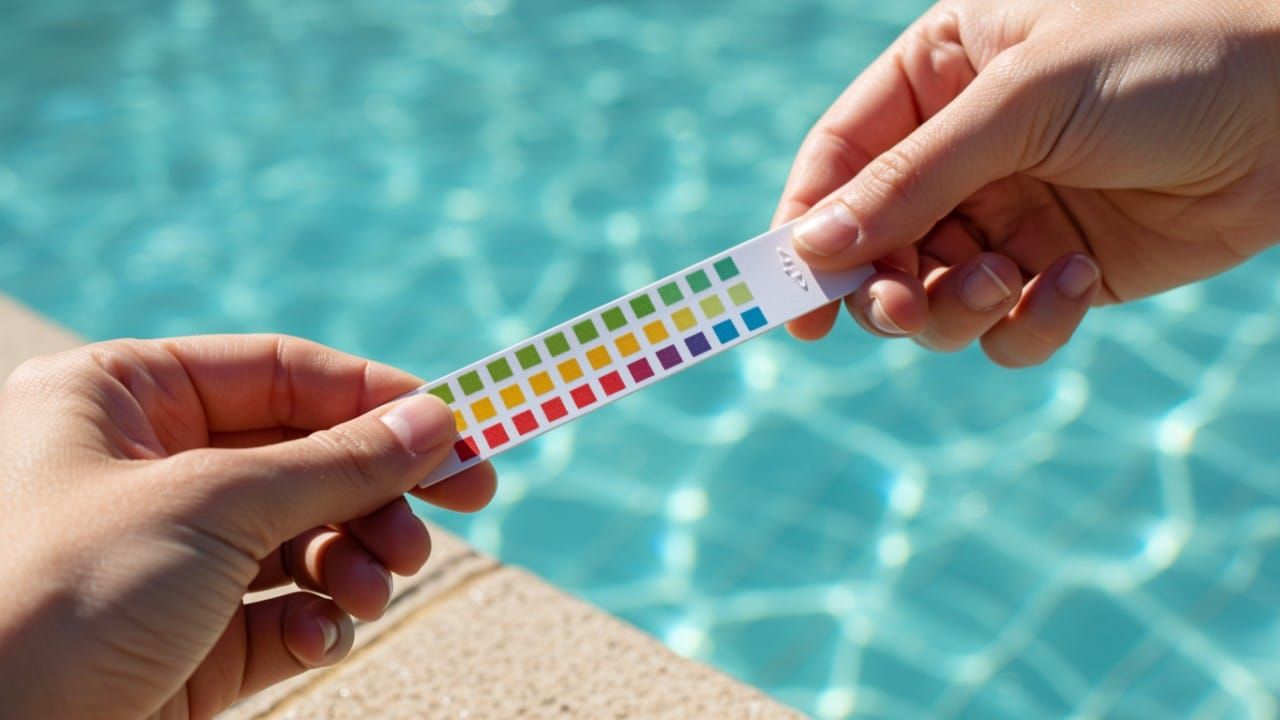
You know the look. The water isn't quite sparkling, or maybe you have spotted a rough, white residue along the waterline that scrubbing just won't shift. You check your chemistry—chlorine is good, pH is stable. So, what is going on?
Nine times out of ten, the culprit is hard pool water.
In Australia, dealing with water hardness in pool maintenance is practically a national pastime, especially given our evaporation rates in summer. While calcium is vital for protecting your pool’s shell, too much of it turns destructive, clogging up filters and leaving ugly scale on your surfaces.
If you are trying to figure out how to lower calcium hardness in your swimming pool, you aren't alone. Unlike pH, you can't just toss in a powder to fix it. But don't stress—it is manageable if you follow the right steps.
Here is the lowdown on calcium hardness, based on local Aussie standards, and the most practical ways to get your water balance back.
What is the Calcium Hardness in Swimming Pool
Before we start draining anything, let's get clear on what we are fighting. Calcium Hardness (CH) is simply a measure of dissolved calcium in your water.
Think of it like a nutrient for your pool walls.
- Too low (Soft Water): The water gets "hungry." It will actually eat away at the calcium in your plaster or pebblecrete, causing pitting. It can also corrode your metal heater elements.
- Too high (Hard Water): The water becomes "stuffed." It can't hold any more calcium, so it pushes it out. That is when you see scale forming on tiles and pipes.
What is the Ideal Calcium Hardness Range?
So, what is the magic number? The official word from the Swimming Pool & Spa Association of Australia (SPASA) and Australian Standard AS3633 puts the safe zone anywhere between 80 and 500 ppm.
That is a pretty huge window. In practice, most local pool techs will tell you to aim tighter—somewhere between 200 and 400 ppm if you have a concrete or pebbled pool. This helps keep your LSI (Langelier Saturation Index) balanced. Got a fibreglass or vinyl setup? You are generally safe sticking to the lower end of those figures.
Why Is My Calcium Hardness So High?
If you feel like you are fighting a losing battle against hardness, local environmental factors are usually to blame:
- Evaporation: When water evaporates under the scorching sun, the pure water leaves, but the calcium stays behind. Over a typical summer, this concentration naturally ramps up.
- Source Water: Depending on your postcode (like parts of Adelaide or regional WA), your tap water might be "hard" right out of the hose.
- Chemicals: Using Calcium Hypochlorite (Cal-Hypo) shock? You are adding a tiny bit of calcium with every dose.
Signs You Need to Lower Pool Calcium
Your pool will usually tell you when things are off before you even dip a test strip:
- Cloudy Water: If your chemistry looks right but the water is dull, you might have microscopic calcium floating around.
- Scale: Crusty white deposits on the waterline, spillways, or inside your salt cell.
- Sandpaper Feel: The floor or walls feel rough to the touch (calcium nodules).
- Flow Issues: Heaters or filters blocking up from internal scaling.
Visuals aren't everything, though. SPASA advises getting a professional water test at a pool shop at least once a year. Standard home test strips can be a bit tricky to read accurately for hardness.
How to Lower Calcium Hardness in Swimming Pool
If your results come back soaring over 500 ppm, standard weekly maintenance won't cut it. Here are the three ways to actually fix it.
Method 1: The Partial Drain and Refill (The Gold Standard)
The most reliable fix is dilution. You need to swap out the "hard" water for fresh "soft" water.
Step 1: Check Your Tap Water
Test your fill water first. If your hose water is already 300 ppm and your pool is 400 ppm, draining won't achieve much. You might need trucked-in water or Method 3.
Step 2: Do the Maths
Don't guess. Use this simple calculation to figure out how much water to dump:
(Current Level - Target Level) ÷ (Current Level - Source Water Level) = Percentage to Replace
Example: Your pool is at 600 ppm. Your tap water is 0 ppm. You want to hit 300 ppm. You need to replace 50% of your water.
Reference Table: Approximate Water Replacement Needed(Assuming source water has low calcium hardness)
| Current Hardness (ppm) | Target Hardness (ppm) | Approx. Water to Replace |
|---|---|---|
| 500 ppm | 300 ppm | ~40% |
| 600 ppm | 300 ppm | ~50% |
| 800 ppm | 300 ppm | ~60–65% |
| 1000+ ppm | 300 ppm | ~70% (Consider full refill) |
Step 3: Drain Safely
- Heads Up for Fiberglass/Vinyl Owners: Never drain your pool completely without talking to a pro. Groundwater pressure can actually pop a fiberglass shell out of the ground or ruin a vinyl liner.
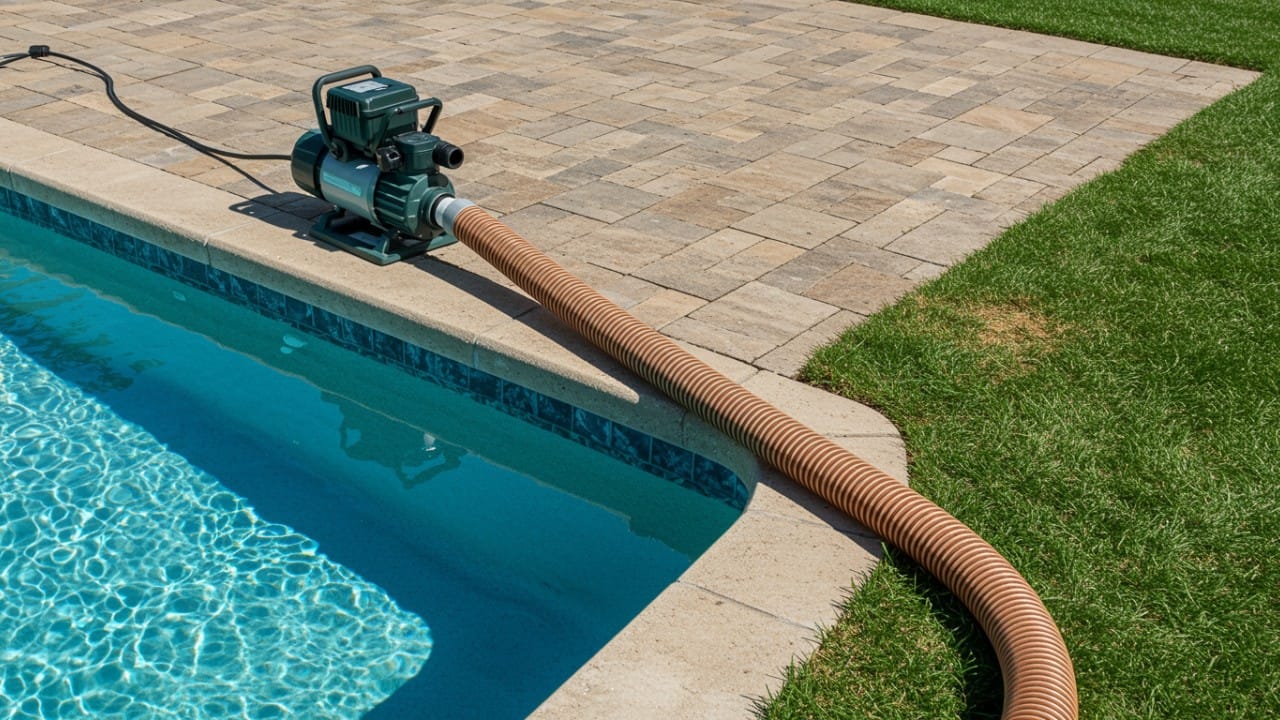
- Use a submersible pump. Drain about 30cm at a time, refill, and re-test. It takes longer, but it is safer.
Method 2: Flocculants (The Chemical Alternative)
If you are on strict water restrictions, you can try a flocculant made to bind calcium.
- Add the flocculant (follow the bottle instructions exactly).
- Raise your pH to 8.2 (calcium drops out of solution better at high pH).
- Circulate, then turn the pump off.
- Wait 24 hours. The calcium should clump and sink to the floor.
- Vacuum to Waste: You have to manually vacuum this sludge out. Don't put it through your filter, or you will turn your filter media into cement.
Method 3: Reverse Osmosis (The Pro Solution)
For those in drought areas or with expensive water, look for a mobile Reverse Osmosis (RO) service. A truck pulls up, filters your water through industrial membranes, and pumps it back in drinkable. You save about 85% of your water, though it costs more upfront.
Common Myths About Hardness
Myth 1: "Calcium Reducers" remove calcium.
Most bottles labeled "Calcium Reducer" are actually sequestering agents. They don't remove a single gram of calcium. They just wrap around the molecules to stop them from sticking to your walls. Stop using the product, and the scale comes back. Think of it as a band-aid, not a cure.
Myth 2: Evaporation lowers hardness.
Complete opposite. Evaporation removes pure water and leaves the minerals behind, making the remaining water harder.
Prevention: Managing Scale and Waterline Maintenance
Once you have fixed the levels, the goal is keeping them there.
Watch the LSI
Balance is key. Even if your calcium is a bit high (say, 450 ppm), you can stop scale from forming by keeping your pH and Alkalinity on the lower side. It’s all about the Langelier Saturation Index (LSI).
Mechanical Prevention
Even with balanced water, you will get evaporation at the waterline, leaving that stubborn white ring.
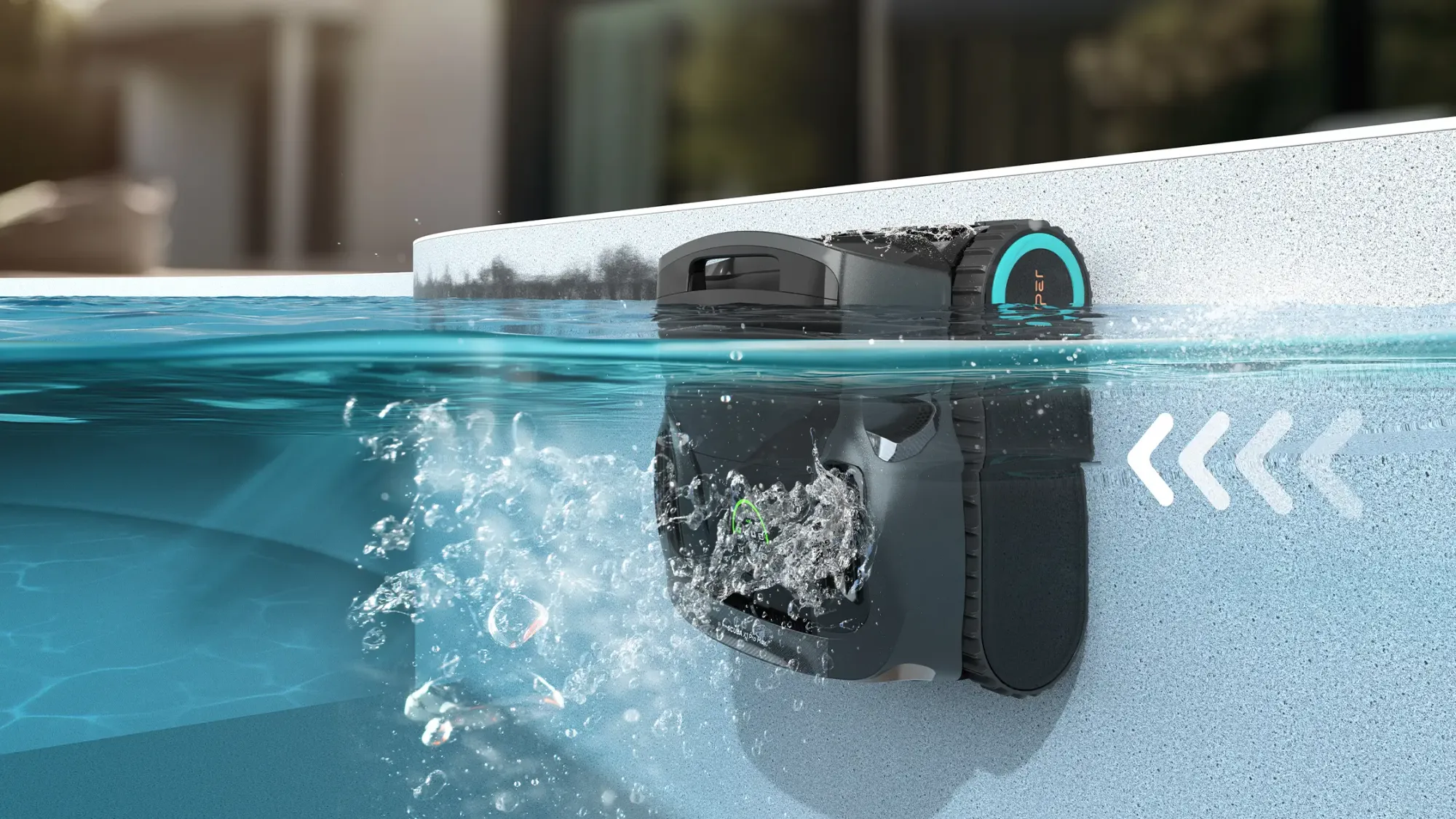
You can't beat mechanical scrubbing for this. A robotic cleaner like the Aiper Scuba S1 Pro is particularly good here because of its WaveLine Technology™. Instead of just climbing the wall and dropping back down like older models, it moves sideways along the waterline. That horizontal scrubbing action is exactly what you need to dislodge calcium deposits while they are still soft.
Think of it as preventative maintenance—let the robot do the heavy lifting so you aren't out there with a pumice stone later.
Conclusion
Managing water hardness in pool environments doesn't have to be a headache. While our summers make it a challenge, understanding the science puts you in control.
Remember the golden rules:
- Test regularly: Use a professional service or high-quality kit.
- Dilute intelligently: Use our chart to know how much water to swap.
- Scrub frequently: Prevent buildup with consistent brushing or a smart cleaner.
By keeping your calcium hardness within the SPASA-recommended 80-500 ppm range, you protect your investment and ensure your swim is always silky smooth.
FAQs About Pool Calcium Hardness
Q: Can I swim in a pool with high calcium hardness?
Yeah, it is generally safe. It’s not a health risk like bacteria. However, super hard water can dry out your skin and hair, and might sting your eyes a bit.
Q: Does vinegar lower calcium hardness in pools?
Vinegar (acetic acid) can clean a specific spot of scale on a tile, but it won't treat the whole pool. You would need massive amounts, which would wreck your pH balance.
Q: How often should I test for calcium hardness?
SPASA suggests a pro test annually. But if you have a concrete pool or live in a hard water area, testing monthly during swim season is a smart move to catch rising levels early.