
7 Pool Water Restrictions Tips to Avoid Fines in Australia

It’s hitting 35 degrees, the kids are desperate to swim, but you’re worried about the water level dropping. It’s the classic Aussie summer struggle: keeping your pool healthy without breaking strict council rules or getting hit with a nasty fine. You don't want a green swamp, but you also can't waste water. It’s a tricky balance. To help you get through the season, we’ve broken down the confusing regulations state-by-state and compiled seven practical pool water restrictions tips.
These aren't just theories; they are real strategies to keep your water in the pool where it belongs, potentially saving you thousands of litres—and a lot of stress—this summer.
Understanding Water Restrictions by State (NSW, VIC, QLD, WA)
Water restrictions are not uniform across Australia; they are set by state authorities and local councils, and can change based on dam levels and climate conditions. It is absolutely crucial to check your local council’s website for the most current, precise rules. The following is a general summary of the prevailing "vibe" and common rules as of late 2023.
New South Wales (NSW):
In Sydney, the Illawarra, and the Blue Mountains, Sydney Water enforces permanent water conservation measures. Key rules for pool owners include that a hose can only be used with a trigger nozzle, and standard sprinklers are prohibited. Filling or topping up a pool with a hose is generally permitted, but it must be done efficiently to avoid waste. According to Sydney Water, "You must use a trigger nozzle on your hose when watering gardens, lawns or topping up your pool."
Victoria (VIC):
Melbourne typically operates under "Permanent Water Saving Rules." The state encourages a daily target of 155 litres per person. For pool owners, this means you can usually top up, but you must use a handheld hose with a trigger nozzle or a watering system with an automatic timer. Leaving a hose running unattended is a quick way to land in trouble.
Queensland (QLA):
Regulations here can be a mixed bag, splitting between Southeast Queensland and regional areas. In many council zones, water conservation is permanent. Similar to NSW, using a hose without a trigger nozzle is often prohibited. If you are on tank water, the rules might be more relaxed, but verifying with your local provider is essential.
Western Australia (WA):
The Water Corporation manages restrictions, with a common winter sprinkler ban (June to September). Pool covers are heavily promoted and often mandated for new pools. Topping up pools is typically allowed outside sprinkler ban hours, but using a pool cover is the single most recommended action to conserve water.
7 Expert Tips to Handle Pool Water Restrictions
Adopting smart pool maintenance habits is the best defence against water loss and restriction breaches. Here are seven essential tips.
1. Install a Pool Cover (The #1 Water Saver)
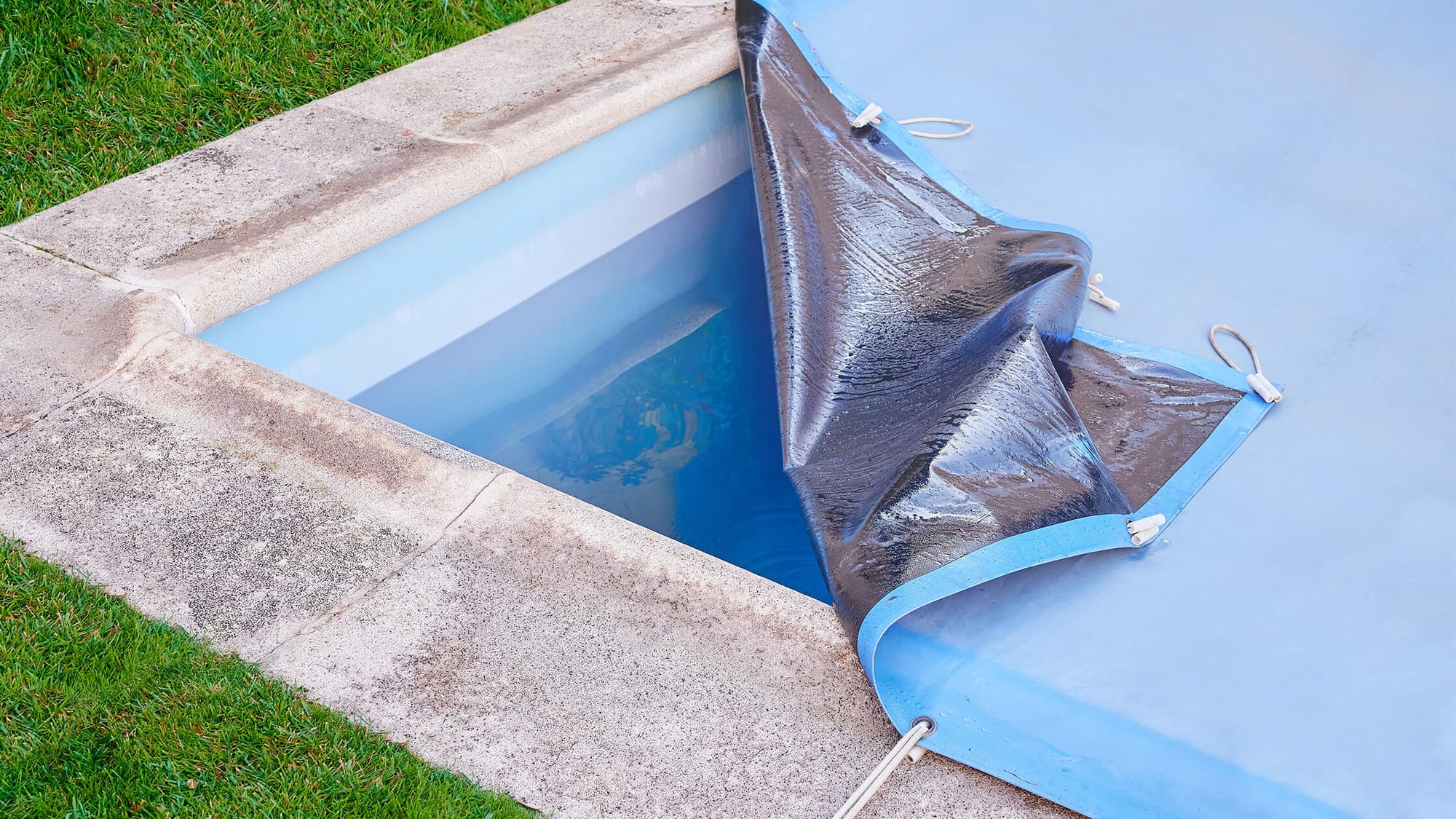
Think of a pool cover as your first line of defence. Without one, you are essentially letting the Australian sun drink your pool dry—losing thousands of litres to evaporation every single month. It’s the single most effective change you can make. In fact, the Swimming Pool & Spa Association of Australia (SPASA) advises that a proper cover can stop up to 95% of that water loss. It’s not just about following the rules; covering up also locks in warmth and stops debris from fouling your water, saving you money on chemicals, too.
2. Conduct the Bucket Test (Detect Costly Leaks)
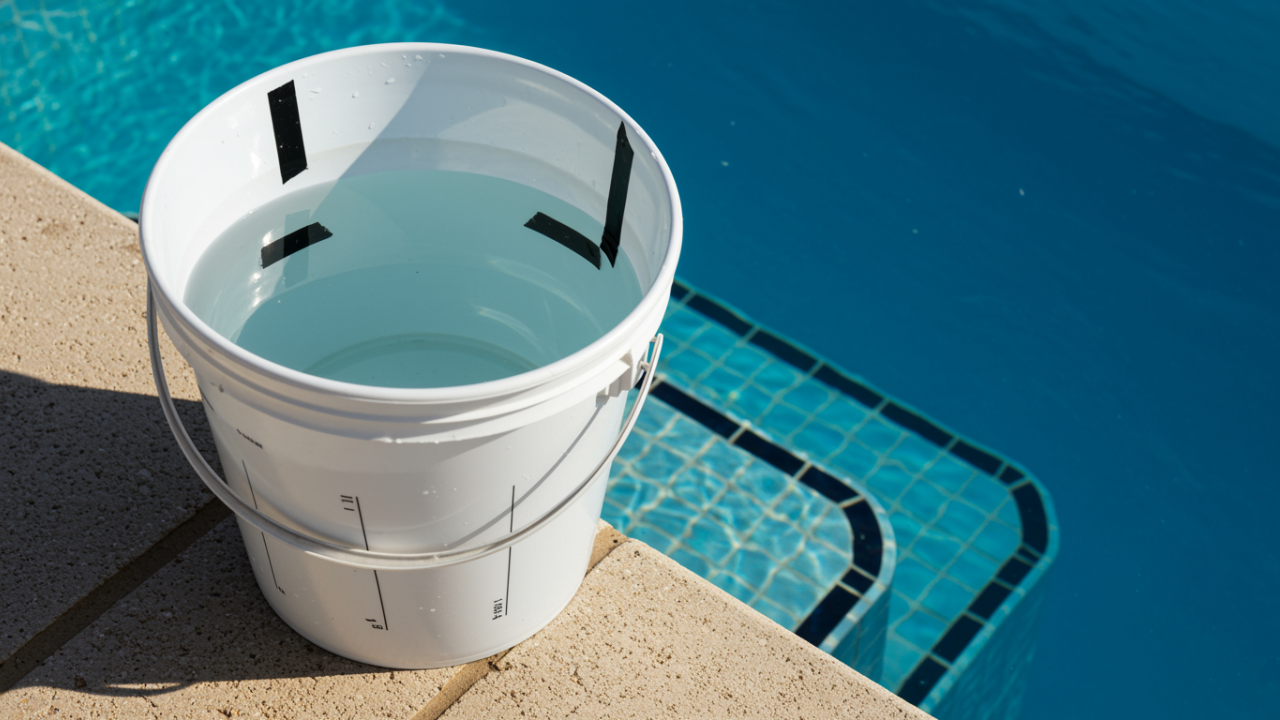
Is your water loss due to evaporation or a leak? The simple "Bucket Test" can tell you.
- Fill a bucket with pool water and place it on the first or second step of your pool.
- Mark the water level inside the bucket.
- Mark the pool water level on the outside of the bucket.
- Wait 24-48 hours (without using the pool or cover).
- Compare the two water levels. If the pool water level (outside the bucket) hasdropped significantly more than the bucket’s internal water level, you likely have a leak and should call a professional.
3. Optimise Filtration & Stop Over-Backwashing
Backwashing a sand or DE filter is a major source of water waste, using hundreds to thousands of litres each time. Only backwash when necessary—when the pressure gauge reads 7-10 psi above the clean, starting pressure. Consider a cartridge filter system, which doesn’t require backwashing, only periodic hosing down.
Pro Tip: Use a Robotic Pool Cleaner
This is where modern technology delivers significant water savings. Traditional pool cleaning often relies on your main filtration system, increasing the frequency of backwashing. A cordless robotic pool cleaner, like the Aiper Scuba X1 Pro Max, operates with its own self-contained filtration system. It picks up and traps debris in its internal basket, preventing it from ever reaching your main filter. This can reduce your filter’s workload and backwashing frequency by 50% or more, saving a substantial volume of water over a season.
4. Lower Your Water Level Strategically
Keep your pool water level only halfway up the skimmer box opening. A higher water level leads to increased “splash-out” from swimmers, which is pure waste. During heavy rain, you may even need to lower the level slightly beforehand to prevent overflow.
5. Harvest Rainwater for Topping Up
Divert downpipes from your roof into your pool during rain events (where safe and practical). Alternatively, install a rainwater tank and use a submersible pump to transfer the water to your pool. This is a free, restriction-proof source of top-up water.
6. Maintain Perfect Chemical Balance
Prevention is cheaper than cure. Keeping your pH, alkalinity, and sanitizer levels in perfect balance prevents algae blooms. A green pool often requires a partial or complete drain-and-refill to fix, which is a huge waste of water and likely illegal under restrictions. Test your water weekly.
7. Shelter Your Pool from Wind
Wind dramatically accelerates evaporation. If possible, plant strategic hedges or install lattice fencing to act as a windbreak. Even a lower, porous barrier can reduce wind speed across the pool’s surface, cutting evaporation.
Common Mistakes That Lead to Fines
Avoid these easily preventable errors:
- Using a hose without a trigger nozzle: This is illegal in almost all permanent water conservation areas.
- Hosing down hard surfaces: Washing your pool deck, paving, or driveway with a hose is almost always banned, even at lower restriction levels. Use a broom or a bucket.
- Filling a new pool without a permit: Installing and filling a new pool (often over 10,000 litres) usually requires council approval and may be prohibited during higher restriction stages. Always check first.
- Letting sprinkler overspray hit the pool: If you are permitted to water gardens, ensure your sprinklers do not waste water into the pool.
Water Savings Calculation: The Impact of Being Water-Wise
How much can you really save? The following table illustrates the potential monthly water loss for a standard 50,000-litre pool in a warm, dry climate versus one maintained with water-wise practices.
| Source of Water Loss | Standard Pool (Litres/Month) | Water-Wise Pool (Litres/Month) | How to Achieve the Saving |
|---|---|---|---|
| Evaporation | 7,500 – 15,000+ | 375 – 750 | Use a quality pool cover (95% reduction). |
| Backwashing Filter | 2,000 – 4,000 | 500 – 1,000 | Optimise backwash cycles & use a robotic cleaner to reduce filter load. |
| Splash-Out & Usage | 500 – 1,000 | 250 – 500 | Maintain lower water level and encourage mindful swimming. |
| Total Estimated Loss | ~10,000 – 20,000L | ~1,125 – 2,250L | Combination of all above practices. |
Table based on average Bureau of Meteorology (BOM) evaporation data and industry estimates. Your actual savings will vary based on climate, pool size, and usage.
Conclusion
Being a responsible pool owner during Australian summers means mastering water conservation. By understanding your local rules, installing a pool cover, maintaining your equipment wisely, and embracing efficient technology like robotic cleaners, you can dramatically cut your water use, avoid fines, and enjoy your oasis with a clear conscience. It’s a win for your wallet, your pool, and the community.
Upgrade your pool care routine this summer. Explore how an energy-efficient Aiper robotic pool cleaner can help you save water and time, letting you spend less on maintenance and more on enjoying your pool.
Frequently Asked Questions (FAQ)
Q: Can I top up my pool during Level 2 restrictions in Sydney?
A: Sydney Water does not typically use "Level" classifications for permanent rules. Under their current permanent measures, you can top up your pool with a hose fitted with a trigger nozzle. However, rules can change, so always confirm directly on the Sydney Water website.
Q: How much water does a pool cover save in Australia?
A: A pool cover is the most effective saving device. According to SPASA and other water authorities, a well-fitted pool cover can reduce evaporation—your pool's largest water loss—by up to 95%. In hot, dry regions, this can save over 100,000 litres of water per year for an average-sized pool.
Q: Is it illegal to wash my pool deck with a hose?
A: In the vast majority of Australian states and under most local council permanent water saving rules, yes, it is illegal to use a hose to clean hard surfaces like paths, driveways, and pool decks. You must use a broom, a bucket of water, or a high-pressure cleaning device that recycles water (where legally permitted).