
Cordless Pool Cleaners vs Traditional Robots: What Homeowners Should Know in 2026


Over the last few years, something subtle has been happening in the pool world. The familiar plug-in robot with its long floating cable is no longer the only serious option. Cordless pool cleaners have stepped in with better batteries, smarter navigation, and a noticeably simpler setup. And for many European homeowners, that shift mirrors what’s happening inside the house. If everything else is wireless and automated, why not the pool as well?
Traditional robotic cleaners earned their place. They showed us that automated pool cleaning actually works. But in 2026, the conversation has shifted. Homeowners are asking more practical questions now. How easy is it to use? Is it safe around water and children? Does it genuinely make maintenance easier week after week?
The Evolution of Pool Cleaning Technology
Pool care hasn’t always been this advanced. It began with manual tools: poles, vacuum heads, skimmer nets. Effective, yes. Convenient? Not exactly. Then plug-in robotic cleaners arrived and changed expectations. Suddenly, a machine could clean floors and walls without constant supervision.
Automation became less of a luxury and more of a necessity as pools grew larger and designs more complex. Busy homeowners didn’t want to spend Saturdays pushing hoses around. Robotic systems took over the heavy lifting.
Now in 2026, cordless pool vacuum cleaners are attracting attention for a few clear reasons:
- Battery technology has improved, supporting longer cleaning cycles without bulky power units.
- Smart navigation and AI-based mapping have reduced missed spots and repetitive movement.
- Safety and convenience concerns have made cable-free operation more appealing.
This shift isn’t about novelty. It’s about simplifying routine maintenance.
How Traditional Robotic Pool Cleaners Work
Traditional robotic cleaners rely on an external power supply connected by a floating cable. Electricity flows through that tether to power the motors, pumps, and navigation systems.
Movement generally follows preset patterns. Some units incorporate gyroscopes or sensors, but many still depend on structured paths to cover the floor and sometimes the walls.
Strengths of Traditional Pool Robots
There are solid reasons these models dominated for years:
- Long, continuous cleaning cycles without battery limitations.
- Reliable performance across a wide range of pool sizes.
- Strong capability in heavy debris environments.
Because they remain plugged in, they can operate for extended periods, which can benefit very large pools.
Common Limitations Homeowners Report
But the cable is frequently mentioned as the main drawback:
- Tangling that restricts movement or requires repositioning.
- Setup that involves managing an external power unit.
- Electrical components positioned near water sources.
- Reduced adaptability in irregular or multi-level pool layouts.
Over time, cable wear and storage concerns can add to maintenance tasks.
How Cordless Pool Cleaners Work
Unlike tethered systems, cordless pool cleaners operate on integrated rechargeable batteries. Everything happens inside the unit itself. No cable trails behind it. No external power box sits at the edge of the pool.
That difference changes the overall experience.
Battery-Powered Cleaning Explained
Modern lithium-based battery packs are built for endurance and efficiency. They support strong suction while maintaining balanced energy use.
Navigation has also evolved. Many advanced units rely on sensor arrays, accelerometers, and mapping algorithms that adapt in real time. Instead of repeating fixed patterns, they analyze and adjust.
For instance, systems like the Aiper Scuba X1 Pro Max use multi-sensor scanning and adaptive navigation to evaluate pool shape and refine cleaning routes accordingly.
Without a tether limiting motion, the cleaner can move more freely across floors, walls, slopes, and waterlines.
Key Benefits Driving Adoption
The growing popularity of cordless pool vacuum cleaners comes down to practical advantages:
- Faster setup with no cable placement.
- Improved mobility in pools with curves or varied depths.
- Reduced trip hazards around the pool perimeter.
- Lower maintenance related to cable wear.
For many households, eliminating the cable removes the most persistent inconvenience.
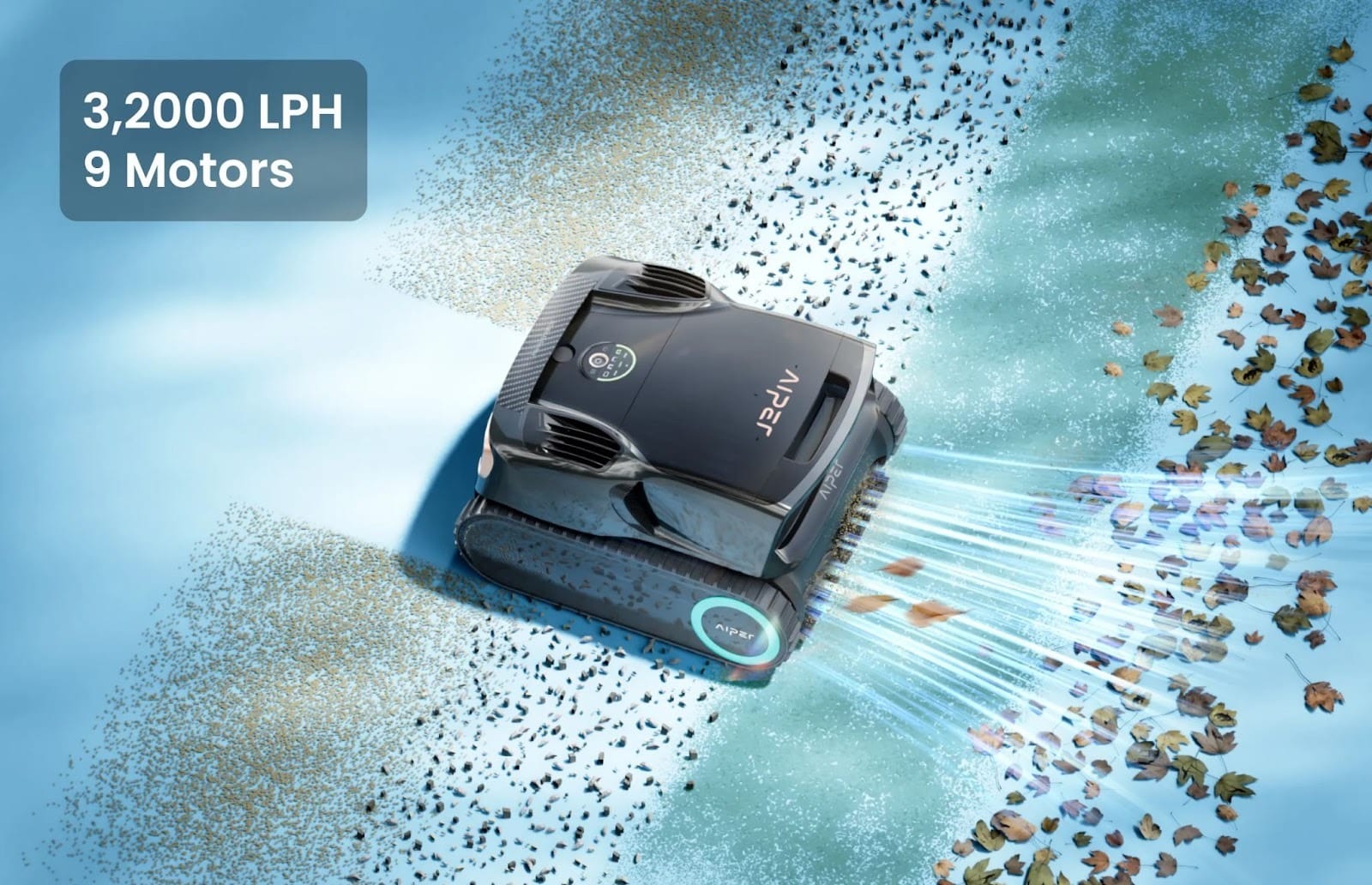
Cordless Pool Cleaners vs Traditional Robots: Side-by-Side Comparison
Traditional robots remain dependable. Yet cordless pool cleaners continue narrowing the gap while improving daily usability.
Modern Cordless Technology in Practice: Addressing Common Homeowner Pain Points
Challenge: Uneven Cleaning Coverage in Complex Pool Designs
Pools with curves, slopes, or integrated seating areas often reveal weaknesses in rigid navigation systems.
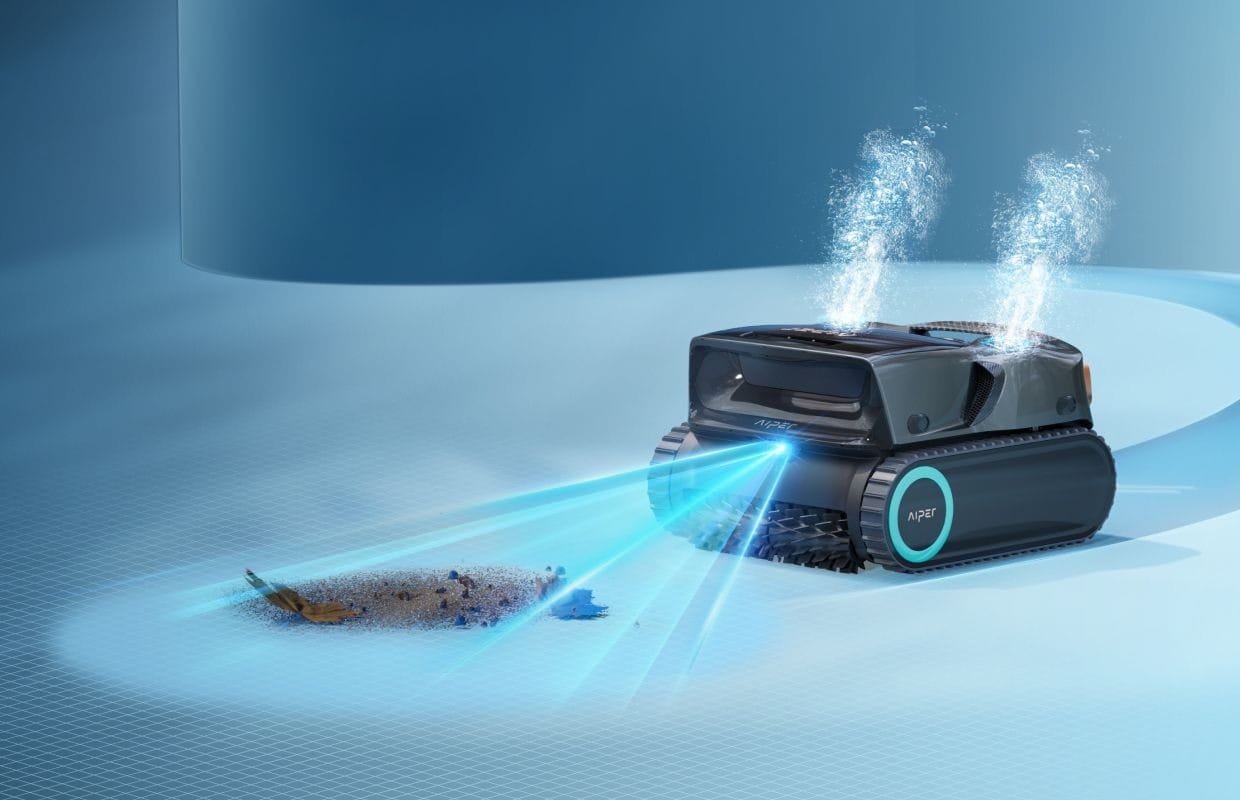
Advanced mapping systems help solve this. Models like the Aiper Scuba X1 Pro Max incorporate dozens of sensors and 360° mapping to adjust routes dynamically.
This leads to more consistent coverage and fewer missed areas.
Challenge: Fine Debris and Water Clarity
Outdoor pools across Europe deal with pollen, dust, and algae spores. These particles can be small enough to bypass standard filters.
Ultra-fine filtration systems, such as 3μm MicroMesh™ filters in advanced cordless units, capture microscopic debris more effectively. The result is clearer water and more stable chemistry.
Challenge: Difficult Retrieval and Post-Cleaning Handling
Lifting a water-filled robot out of the pool can be physically demanding.
New cordless models introduce features like surface parking or float-to-edge systems at the end of a cleaning cycle. These features simplify retrieval and reduce strain during weekly maintenance.
Challenge: Limited Cleaning Duration
Battery runtime used to be a concern with early cordless designs.
Premium cordless pool vacuum cleaners now offer extended runtime capable of cleaning full residential pools without interruption. Energy management systems prioritize suction and intelligent navigation to avoid wasted cycles.
What European Pool Owners Should Prioritize When Choosing Cordless vs Traditional Robots
When evaluating traditional robots against cordless pool cleaners, consider:
- Pool size and architectural complexity.
- Seasonal debris levels.
- Safety preferences regarding cables near water.
- Interest in app-based control and automation.
Large rectangular pools may still benefit from continuous plug-in operation. More intricate designs often align better with adaptive cordless systems.
Cost vs Value: Are Cordless Pool Vacuum Cleaners Worth the Investment in 2026?
Upfront pricing for cordless pool vacuum cleaners may exceed entry-level plug-in units. However, value extends beyond purchase price:
- Reduced cable replacement costs.
- Potential energy savings.
- Lower physical effort and improved convenience.
Battery durability has improved significantly. Many advanced systems are engineered for multi-year reliability.
So, are cordless pool cleaners any good in 2026? For many homeowners, yes. They now deliver strong performance alongside convenience and safety improvements.
Over time, ease of use often outweighs the initial cost difference.
Conclusion
Choosing between traditional robots and cordless pool cleaners depends on pool design, usage patterns, and personal preferences. Traditional systems remain reliable. Yet cordless innovation continues redefining expectations for automation and user experience.
Before deciding, assess how you use your pool and how much interaction you want with cleaning equipment. For homeowners exploring advanced cordless options, the Aiper Scuba X1 Pro Max is available through the Aiper Store and represents the progression of modern pool technology.
FAQs
1. Are cordless pool cleaners any good?
Yes. Modern cordless pool cleaners offer improved battery life, advanced navigation, and effective filtration suitable for most residential pools.
2. What are common problems with cordless vacuums?
Earlier models struggled with runtime. Newer systems focus on extended battery performance and efficient charging.
3. How long do cordless pool vacuums last?
With regular maintenance and proper battery care, many units last several years.
4. Are cordless pool cleaners suitable for all pool types?
Most residential pool shapes and materials are compatible, though extremely large commercial pools may require extended runtime solutions.
5. How often do cordless pool cleaners need charging?
Typically after each full cleaning cycle, depending on runtime and pool size.