
How Long Does It Take to Heat a Pool? (Your Complete Calculation Guide)
Heating a pool depends on its volume, temperature gap, heater BTU output, and environment—not averages alone. Gas heaters raise temperature 1–2°F per hour; heat pumps add 3–5°F per day.

It can be incredibly frustrating to plan a weekend pool party, turn on the heater on Friday morning, and realize the water is still freezing by Saturday afternoon.
If you've been scouring forums for answers, you've probably seen panicked new pool owners complaining that their expensive heat pump suddenly "broke" overnight. In reality, their heater is perfectly fine—the local air temperature just dropped below 50°F, making it physically impossible for the pump to pull heat from the air.
If you are staring at your pool thermometer and wondering when you can actually jump in, you aren't alone. The most accurate answer to "how long does it take" is that it depends on your specific setup. Heating a pool isn't like microwaving leftovers; it requires moving massive amounts of thermal energy into thousands of gallons of water.
Here is everything you need to know to calculate exactly how long it will take to get your pool to a comfortable temperature, and the steps you can take to speed up the process.
The Short Answer: Average Pool Heating Times
If you just need a quick benchmark to set your expectations, here are the industry averages based on the equipment you own:
- Gas Heaters: Expect your pool to heat by 1°F to 2°F per hour.
- Electric Heat Pumps: Slow and steady. Expect a temperature rise of 3°F to 5°F per day.
- Solar Heaters: Speed is entirely dependent on direct sunlight and the size of your solar panels.
The 4 Key Factors That Determine Your Heating Time
To figure out your specific timeline, you need to look past the averages and understand the four variables currently battling it out in your backyard.
1. Your Pool’s Volume (Total Gallons)
Water is heavy and requires a tremendous amount of energy to heat. A small 10,000-gallon plunge pool will reach your target temperature significantly faster than a sprawling 30,000-gallon family pool, even if they are using the exact same heater.
2. The Temperature Gap (Starting Temp vs. Target Temp)
How much work does your heater actually have to do? Heating a pool from a chilly 60°F up to a comfortable 80°F is a 20-degree gap. That requires twice as much energy—and twice as much time—as heating a 70°F pool up to 80°F.
3. Your Heater Type and Size (BTU Output)
Pool heaters are measured in BTUs (British Thermal Units). The higher the BTU rating, the faster the heater can transfer warmth into your water. To calculate the exact number of BTUs required to heat your specific pool, you can use this standard industry formula:
Pool Gallons × 8.33 × Desired Temperature Rise = BTUs Required
4. Environmental Factors (Ambient Air, Ground Temp, and Wind)
Your heater is fighting a constant battle against the environment. If the ambient air is cold, if a stiff breeze is blowing across the water's surface, or if the ground surrounding your inground pool is freezing, your pool is actively losing heat while the heater is trying to add it.
Heating Speeds by Heater Type (Rules of Thumb)
Understanding your equipment will help you manage your timeline and avoid the common frustration of expecting gas-heater speeds from an electric heat pump.
| Heater Type | Average Heating Speed | Ideal Use Case |
|---|---|---|
| Gas Pool Heater | 1°F to 2°F per hour | Rapid heating, sudden weather drops, heating attached spas. |
| Electric Heat Pump | 3°F to 5°F per day | Consistent, daily heating in warmer, humid climates. |
| Solar Pool Heater | Weather dependent | Eco-friendly, gradual warming over several days or weeks. |
Gas Pool Heaters (The Fastest Option)
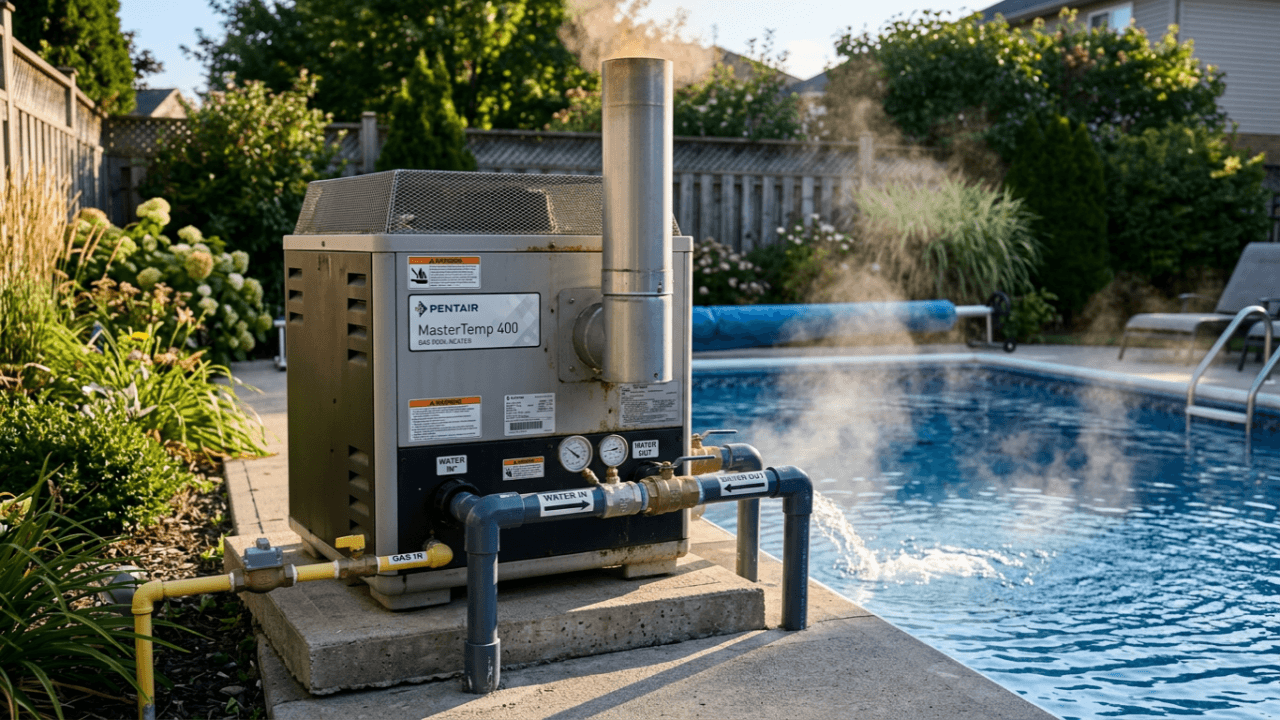
Gas heaters burn natural gas or propane to create a flame, rapidly heating the water as it passes through. They are the only option if you need to heat a pool from freezing to comfortable in less than 24 hours.
Electric Heat Pumps (Slow and Steady)
Heat pumps do not generate their own heat. Instead, they pull warm air from the environment, compress it, and transfer it into the water. Because they rely on ambient air, they are incredibly energy-efficient but very slow. If you own a heat pump, you must plan days in advance.
Solar Pool Heaters (Completely Weather Dependent)
Solar heaters pump pool water through black tubes sitting on your roof. They are fantastic for maintaining a baseline temperature throughout the summer for free, but they cannot be relied upon to quickly heat a pool for a specific event.
Pro Tips to Heat Your Pool Faster (and Stop Losing Heat)
Always Use a Solar Pool Cover (The Non-Negotiable Step)
Roughly 75% of a pool's heat loss occurs through surface evaporation. Running a heater without a pool cover is like running your home's furnace with all the doors and windows wide open. A solar blanket stops evaporation dead in its tracks, trapping the heat you just paid for and drastically reducing your heating timeline.
Run Your Heat Pump During the Warmest Part of the Day
If you use a heat pump, do not run it overnight when the air is cold. Heat pumps operate by pulling warmth from the ambient air. Run your pump during the peak afternoon heat to maximize its efficiency and speed up the warming process.
Improve Water Circulation for Even Heating
Heat naturally rises. If your pool water is stagnant, the top six inches might feel like bathwater while the bottom remains freezing cold—a phenomenon known as thermal stratification. Keeping the water moving mixes these layers, allowing the entire volume to heat faster and more efficiently.
For instance, a robotic pool cleaner like the Aiper Scuba V3 helps with this naturally. As it navigates the bottom of your pool to scrub the floor, its movement and suction actively circulate the lower, colder layers of water up toward the surface. By running a cordless robotic pool cleaner while your heater is on, you disrupt those stubborn cold spots and help your system distribute heat much more effectively.
Conclusion: Planning Ahead is Key
Heating a pool takes time, energy, and a bit of environmental luck. By understanding your specific heater's capabilities and doing the simple math for your pool's volume, you can accurately predict your timeline and avoid weekend-ruining surprises. Remember to always use a solar cover, keep the water circulating, and give your system the time it needs to do its job.
Common Heating Timelines Addressed (FAQ)
How long does it take to heat a pool from 60 to 80 degrees?
This is a massive 20-degree jump. With a properly sized gas heater, this will take roughly 10 to 20 hours of continuous operation. With an electric heat pump, assuming the outside air is warm enough for it to function efficiently, this process will take 4 to 6 days.
How long does it take to heat a pool by 20 degrees?
Regardless of your starting temperature, a 20-degree rise requires the same amount of energy. Plan for an overnight run (10-20 hours) with a gas heater, or nearly a full week with a heat pump.
How can I heat up my pool fast?
The absolute fastest way to heat a pool is to fire up a properly sized gas heater while simultaneously covering the pool with a high-quality solar blanket to trap the heat inside.