
How to Get Fine Debris Out of a Pool (Stop the Dust Cloud)

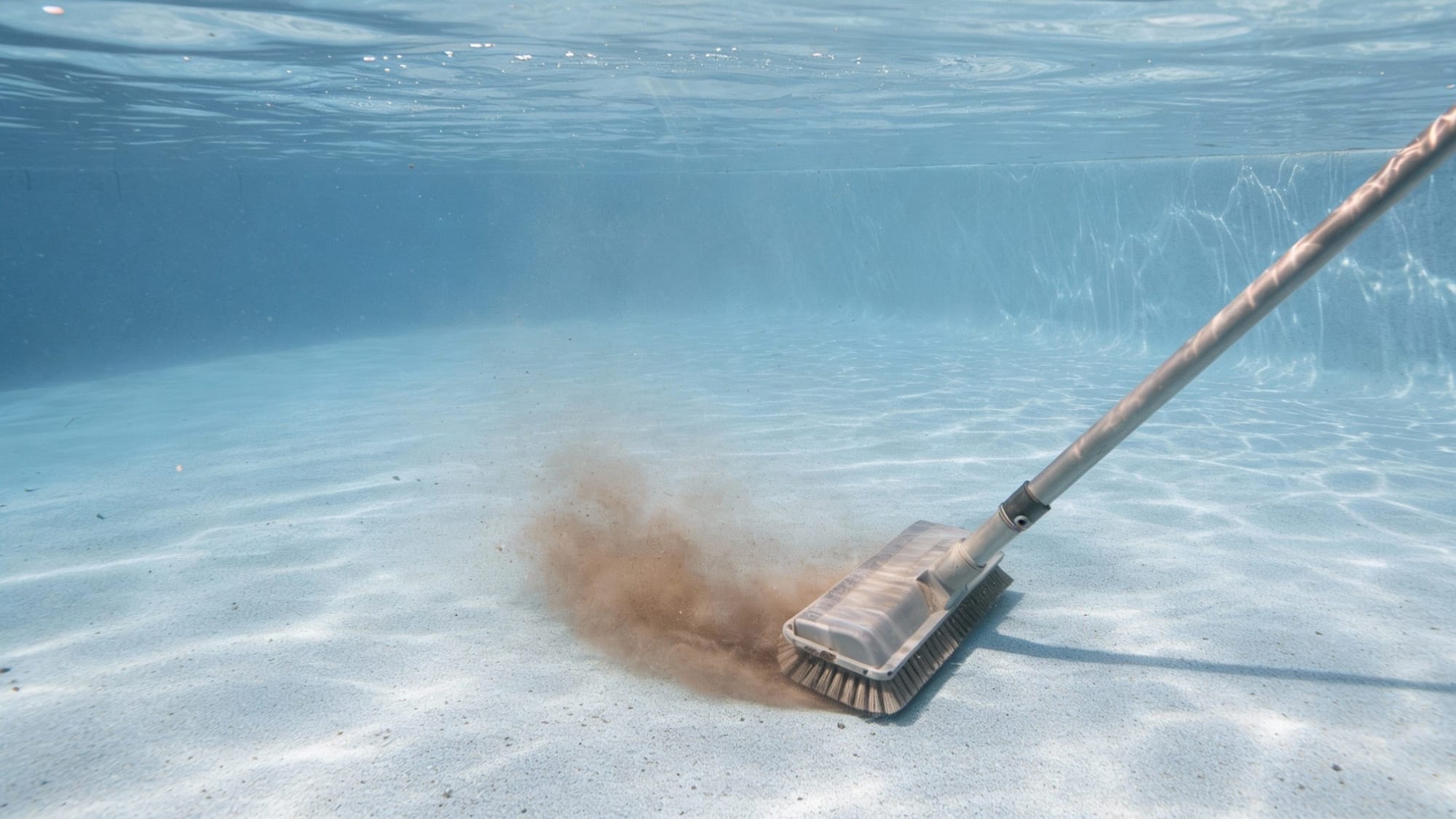
Fine dust in pool water is the worst kind of mess. You vacuum, the floor looks clean for a minute, then the cloud comes back and settles again. If you’re trying to figure out how to get fine debris out of a pool (or remove fine sediment from a pool), the problem is usually not your effort. It’s the size of the particles.
Most standard filters are not built to catch ultra-fine silt. A typical sand filter, is often described as catching about 20–40 microns, and many cartridge filters are commonly described as catching around 10–15 microns. That’s still too “open” for some pollen, silt, and dead algae dust, so the particles pass through and can blow back into the pool through the return jets.
There are two reliable ways to stop the loop:
- The Chemical Route: Uses a flocculant that clumps dust so it drops to the floor, but manufacturers often warn you to vacuum to waste/drain (so you lose water and then refill).
- The Mechanical Route: Uses ultra-fine filtration to trap dust before it can recirculate, down to 3 microns in the robot’s filter basket.
Why Does My Pool Vacuum Stir Up Dust, And It Comes Back?
When your pool vacuum is stirring up dust, and it keeps coming back, it’s usually one of three things: your filter can’t catch particles that small, unfiltered water is sneaking past the filter, or it isn’t “dirt” at all (it’s algae acting like dirt).
Filter Limits
“Fine debris” often means particles so small you can’t even see them well until they clump together. For context, some pool pros note that DE filters can filter down to about 1–6 microns, while cartridge filters are often in the 5–20 micron range, and sand is coarser.
That’s why your pool can look dusty even when the system is “running.” The dust gets picked up, then it slips through and returns right back into the water. (A common reference point: the naked eye typically can’t see particles until they’re roughly 50–60 microns.)
Bypass Signs
If the dirt seems to blow back into the pool through the return jets, don’t assume it’s only “too-fine dust.” It can also be a bypass problem.
Quick signs to look for:
- You see debris puffing out of the returns during or right after vacuuming.
- Water trickles from the waste/backwash line while the valve is on the Filter.
- Filtration got worse right after you backwashed or serviced the filter.
Common causes include a worn multiport spider gasket (it’s supposed to seal flow paths) or damaged internals like broken laterals/standpipe in a sand filter that let media and dirt return to the pool.
Dust or Algae?
Fine “dust” and mustard algae can look similar, but they behave differently.
A quick reality check:
- If it brushes into a cloud and settles back to the floor, it’s often dirt/pollen/silt.
- If it sticks to walls/steps or keeps coming back in shady spots, mustard algae becomes more likely.
If it’s acting like algae, mechanical removal alone won’t fully solve it. You also need to correct the water balance and sanitation so it stops regrowing.
How Do You Vacuum Fine Sediment Without Making A Cloud?
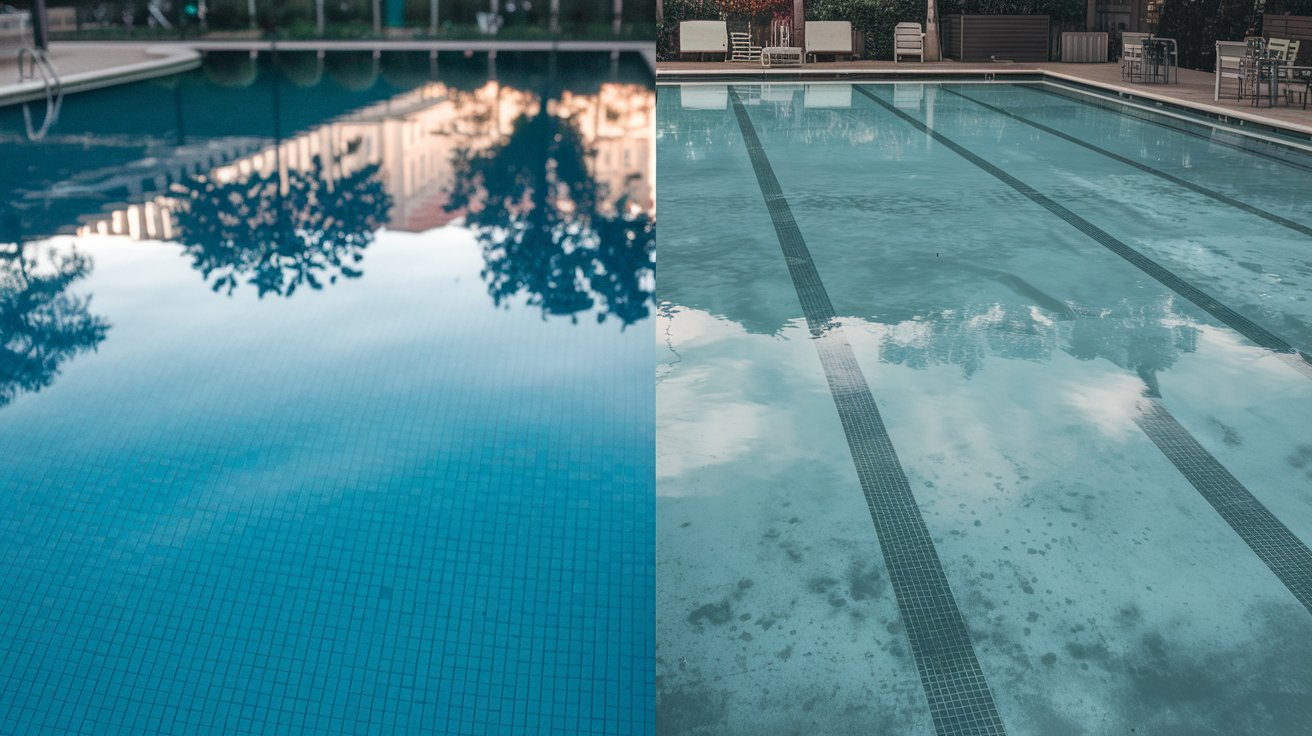
Fine sediment is so light that small turbulence can lift it and spread it across the pool. The goal is calm water, slow movement, and a clean filter afterwards so the dust does not cycle back through the returns.
- Let it settle: Shut off anything that stirs the water. Give the pool a short settling window so the dust drops back to the floor and stays in one place. Calm, still water makes a bigger difference than stronger suction.
- Go slow: Move the vacuum head, slowly, with steady straight passes. Keep the head flat on the floor. Avoid quick turns and hard pushes into corners. When a dust cloud starts, pause and wait for it to settle, then continue at a slower pace.
- Clean after: Fine debris loads the filter fast. Right after vacuuming:
- Sand/DE: Backwash, then rinse (when the valve has a rinse setting) to reduce blowback.
- Cartridge: Remove and rinse thoroughly until the runoff looks clear.
This step prevents the “vacuumed it… and it came right back” cycle.
When Should You Use Pool Flocculant For Fine Debris?
Flocculant the can work when the pool has a layer of ultra-fine dust that keeps slipping through normal filtration. It is a “reset” method, not an everyday fix. It is best saved for heavy silt, construction dust, or stubborn haze that will not clear after normal vacuuming and filter cleaning.
How Floc Works
Flocculant binds tiny particles together into heavier clumps. Instead of floating or passing through the filter, the clumps sink and form a layer on the pool floor. The job then becomes removing that layer without stirring it back into the water.
Vacuum to Waste
Floc cleanup usually fails in normal Filter mode because the clumps can break apart and get pushed right back into the pool. The standard approach is vacuuming the waste/drain, which bypasses the filter and sends the dirty water out of the pool. This keeps the fine debris from recirculating, but it also removes a lot of water quickly.
Real Tradeoffs:
Floc is not “free cleaning.” It often comes with:
- Water loss from vacuuming to waste, followed by a refill.
- Chemical rebalance after refill (especially sanitizer and pH).
- More manual labor because the vacuuming must be slow and careful.
For many pools, floc is a one-time tool for extreme fine debris, not the best long-term method.
How Can A Robotic Pool Cleaner Remove Fine Debris Out Of a Pool Without Draining?
A robot can solve the “dust poofs up and comes back” problem because it filters the water inside its own unit. The debris stays trapped in the robot’s basket instead of going through the pool’s main filter and returning through the jets.
Micron Cheat Sheet
Micron rating is basically “how small a particle the filter can catch.” Smaller number = finer capture.
| Filter Type | Common capture range (approx.) | What it means for dust |
|---|---|---|
| Sand filter | 20–40 µm | Fine silt can pass through |
| Cartridge filter | 5–20 µm | Better, but ultra-fine dust can still slip by |
| Ultra-fine robot filter | 3 µm | Built for very fine particles |
3‑Micron Capture
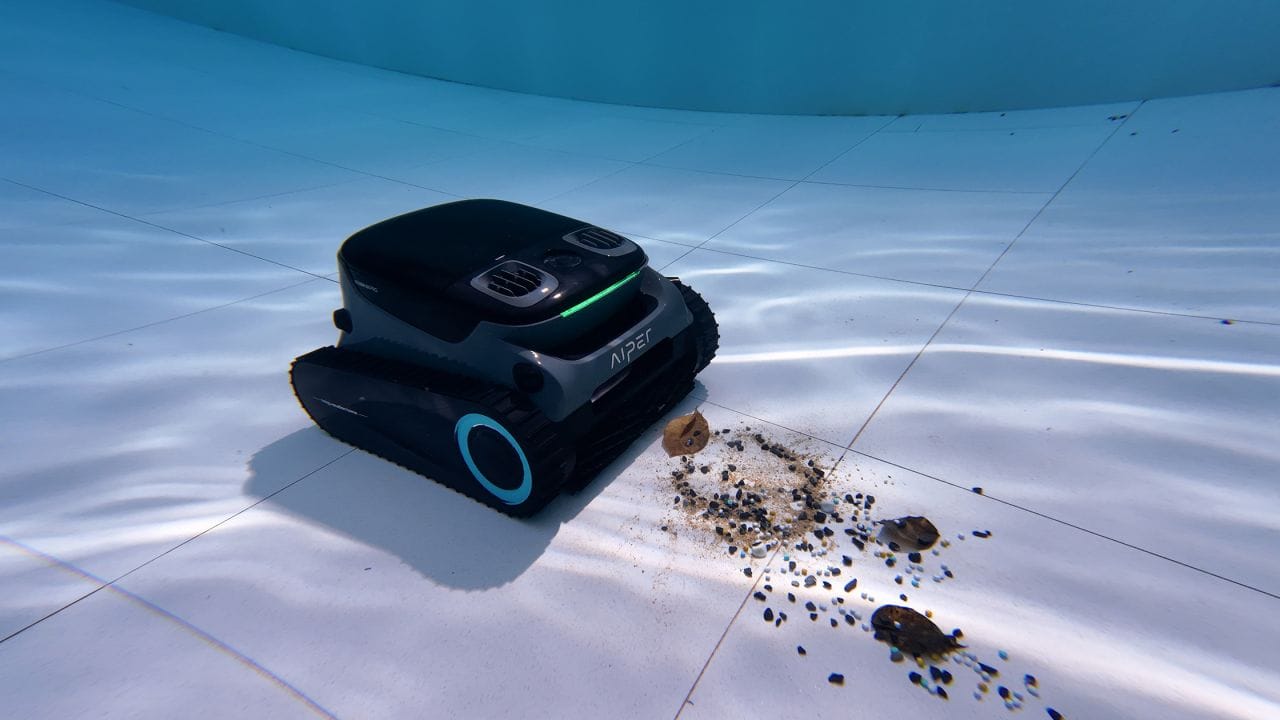
The Aiper Scuba X1 Pro Max uses an ultra-fine MicroMesh™ filter rated at 3 μm, designed to trap fine dust and algae-sized particles inside its filter basket.
Less Rework
Floc cleanup often pushes water out of the pool (vacuum to waste). A robot avoids that because it removes debris mechanically:
- Dust goes into the robot’s basket, not back through the returns.
- No drain-down cycle for cleanup.
- Less “vacuum, cloud, resettle” frustration because filtration happens at the source.
How Do You Prevent Fine Dust And Pollen From Settling Again?
Most “floor dust” starts at the surface. Wind drops pollen,, dirt, and ash into the water. Then circulation carries it around until it finally sinks into corners and along the floor. Prevention is about catching it early and keeping water moving through the whole rectangle.
Surface Control
Skimming matters more than most people think, because removing particles while they float keeps them from becoming bottom sediment later. A surface skimmer robot can help during high-pollen days or after storms. The Aiper Surfer S2 is built to patrol the surface and collect floating debris before it sinks.
Skimmer Socks
Skimmer basket socks are a simple add-on that can capture finer debris before it hits the pump basket and main filter. They are especially useful for:
- Pollen season
- Fine dust after mowing or windy days
- Light debris that normally slips through baskets
They also load up fast, so frequent rinsing keeps suction from dropping.
Circulation Habits
Fine sediment collects where flow is weak. The usual trouble spots are corners, steps, and the far end away from returns.
Best habits for fewer dead zones:
- Run the pump long enough to keep water mixing (more during heavy debris days).
- Aim return jets to create a slow, consistent “loop” around the pool.
- Watch where dust settles after a few hours. That map shows where circulation is failing.
Conclusion
Fine debris is hard to remove because it behaves like smoke in water. It lifts easily, it slips through many filters, and it settles again in the same low-flow spots. The fastest results usually come from matching the fix to the cause. Slow, calm vacuuming plus proper filter cleaning helps when the dust is already on the floor. Flocculant can work when the pool is loaded with ultra-fine silt, but it often forces a vacuum-to-waste cleanup that costs water and time.
For many pools, the long-term answer is mechanical capture with ultra-fine filtration, so the dust gets trapped instead of recycled back through the returns. Prevention also matters: better surface skimming, simple skimmer socks, and return aiming to reduce dead zones, keep pollen and dust from turning into bottom sediment again.
Frequently Asked Questions
How do I get dust out of my pool without a vacuum?
The cleanest option is mechanical capture, not stirring. A robotic cleaner with an ultra-fine filter can trap dust in its own basket, so the debris does not pass through the pool’s main filter and return to the water. Skimming also helps, because a lot of “dust” starts as surface pollen and settles later.
Will a pool clarifier fix fine sediment?
Sometimes, but it depends on the filter. Clarifiers are meant to bind tiny particles into larger ones, so the filter can catch them. When the filter media is too coarse, the “improved” particles can still slip through, or they can load the filter quickly and reduce flow. Pool clarifier can improve sparkle, but it does not replace fine filtration or proper cleanup.
Why does my pool vacuum stir up dust?
Fine sediment is very light, so vacuuming can lift it into a cloud. Two other causes are common: the filter is not fine enough to catch the particles, or unfiltered water is bypassing the filter and blowing dust back through the return jets. Slow vacuuming and a clean filter help, but ultra-fine filtration is often what ends the cycle.