
How to Read a Water Meter for Leaks: Detect Irrigation Issues (Step-by-Step)
Turn off all water to check your meter’s leak indicator. Movement signals a leak. A reading test catches slow leaks. Isolate irrigation to confirm outdoor or indoor issues. Modern above-ground systems lower hidden leak risks.

A sudden spike in your water bill can be frustrating, especially when you have no idea where the extra usage is coming from. In many cases, the culprit is a hidden leak, often from underground sprinkler lines or plumbing you cannot see. If you are wondering how to read a water meter for leaks, the good news is you do not need to call a plumber right away.
If you are wondering exactly how to read your water meter for leaks, the good news is you do not need to call an expensive plumber right away. By performing a simple DIY test, you can pinpoint exactly where the water is escaping and take immediate action.
TL; DR: The Leak Indicator Signals Water Flow
If the small red triangle or flashing faucet icon moves while all water sources are completely turned off, you have a leak in your system.
What Your Water Meter Can Tell You About Irrigation Leaks
Your water meter is one of the most reliable tools you have for detecting hidden problems. It tracks every drop of water flowing into your home, which means even the smallest leak will show up over time.
Underground sprinkler leaks are especially tricky. A tiny crack in a pipe can waste hundreds or even thousands of gallons each month without any obvious signs on the surface. The meter, however, does not miss it.
This is why it helps to have a general sense of your normal usage. If you already have an idea of the average cost of watering your lawn, any sudden increase can point to a problem.
Catching these issues early can save you money and prevent long-term damage to your yard, such as soil erosion or dying plants caused by uneven watering.
Locating Your Water Meter and Understanding the Dial
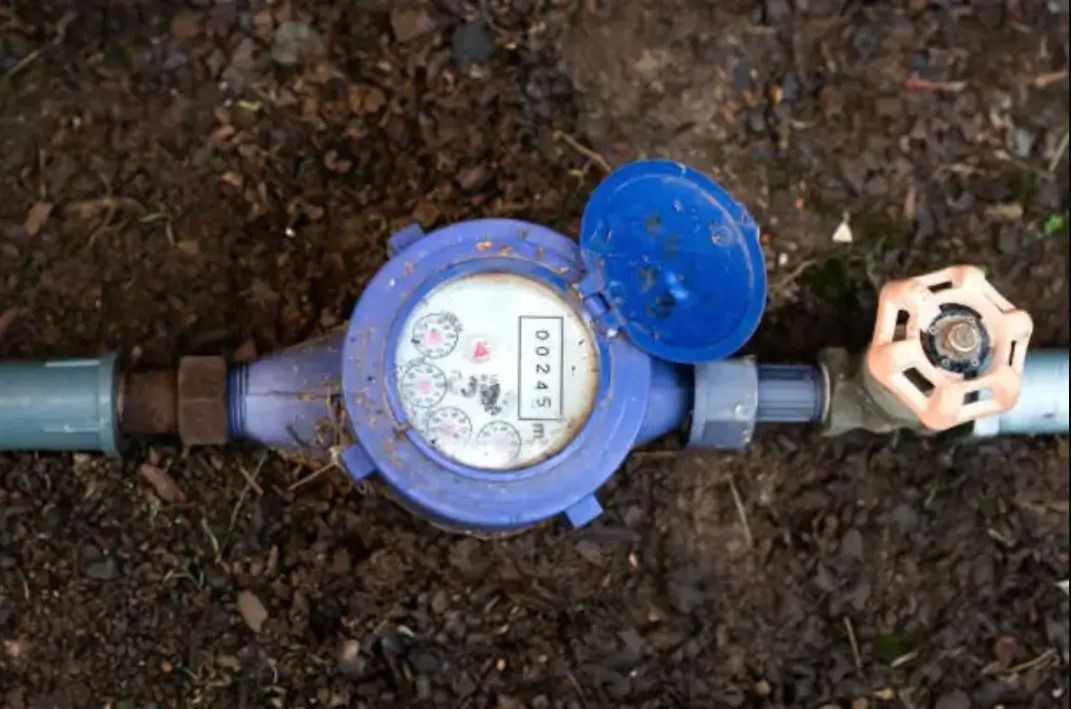
Before you can run a leak test, you need to find your water meter. In most US homes, it is located in a covered utility box near the curb or sidewalk. In colder regions, it may be inside your basement or utility area.
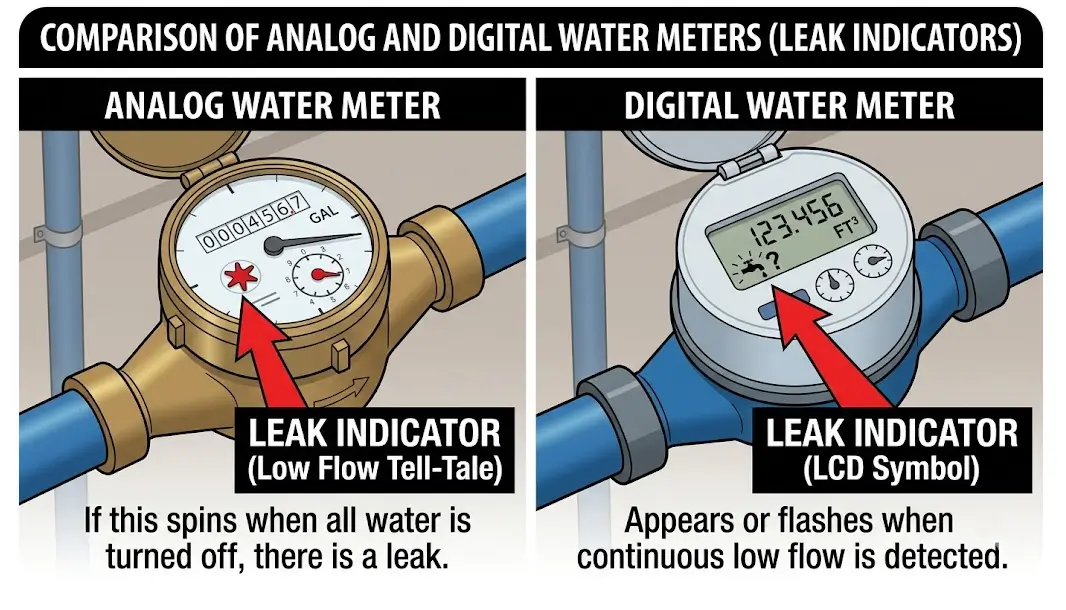
Once you open the box, you will see either an analog or digital meter.
An analog meter typically has a circular dial with numbers and a small moving indicator. A digital meter displays readings on a screen and may cycle through different data points.
The most important feature to look for is the water meter leak indicator. On analog meters, this is usually a small red triangle, star, or gear that spins when water is moving through the system. On digital meters, there may be a flashing icon or a low-flow indicator.
You do not need to understand every number or measurement on the meter. For leak detection, your focus should be on whether that small indicator is moving when no water is in use.
Step-by-Step: Test for Any Leak Using Your Water Meter
Now that you know where your meter is and what to look for, you can perform a simple test to detect irrigation leaks or indoor plumbing issues.
- Step 1. Turn off all water: Make sure every faucet, appliance, and outdoor hose is completely turned off. This includes washing machines, dishwashers, and even automatic systems. According to the leak detection guidelines by the Portland Water Bureau, the first step is to ensure that no water is being used anywhere in or around your home.
- Step 2. Check the leak indicator: Look closely at the small indicator on your meter. If it is moving, even slightly, it usually means water is flowing through the system. This is one of the quickest ways to detect irrigation leaks or continuous indoor leaks.
- Step 3. Run a long-term test: Write down the exact meter reading. Then wait for one to two hours without using any water at all. Avoid flushing toilets, running appliances, or turning on outdoor systems during this time. After the waiting period, check the meter again. If the reading has changed, it is a strong sign that water is escaping somewhere in your system. This method is especially useful for identifying slow leaks that may not be obvious right away.
Be mindful of common mistakes during this test. Forgetting about an automatic ice maker, a water softener, or a scheduled irrigation cycle can interfere with your results. Double-check that everything is off before starting.
By following these steps, you can confidently test for any leak using your water meter without specialized tools.
Narrowing It Down: Is It an Irrigation Leak or Indoor Plumbing?
Once you confirm there is a leak, the next step is figuring out where it is coming from. This is where a simple isolation method helps.
Locate your irrigation system’s main shut-off valve and turn it off completely. This stops water from flowing to your outdoor sprinkler system.
Now check your water meter again. If the leak indicator stops moving, you have confirmed that the issue is in your irrigation system, most likely an underground sprinkler leak. If the indicator continues to move, the problem is likely inside your home, such as a leaking toilet, faucet, or pipe.
This step helps you avoid unnecessary guesswork and focus your efforts on the right area.
Preventing Underground Leaks: Why Modern Alternatives Win
Traditional underground irrigation systems can be effective, but they come with a major downside. When something goes wrong, finding and fixing the issue is not easy. Pipes are buried beneath your lawn, so even a small leak can go unnoticed for weeks or months.
Repairs often involve digging up sections of your yard, which can be time-consuming and expensive. In some cases, the cost of fixing underground sprinkler leaks adds up quickly, especially if multiple areas are affected.
Because of this, many homeowners are moving toward simpler, more accessible solutions. Instead of dealing with buried pipes, some are exploring options such as installing a reliable sprinkler system without digging trenches
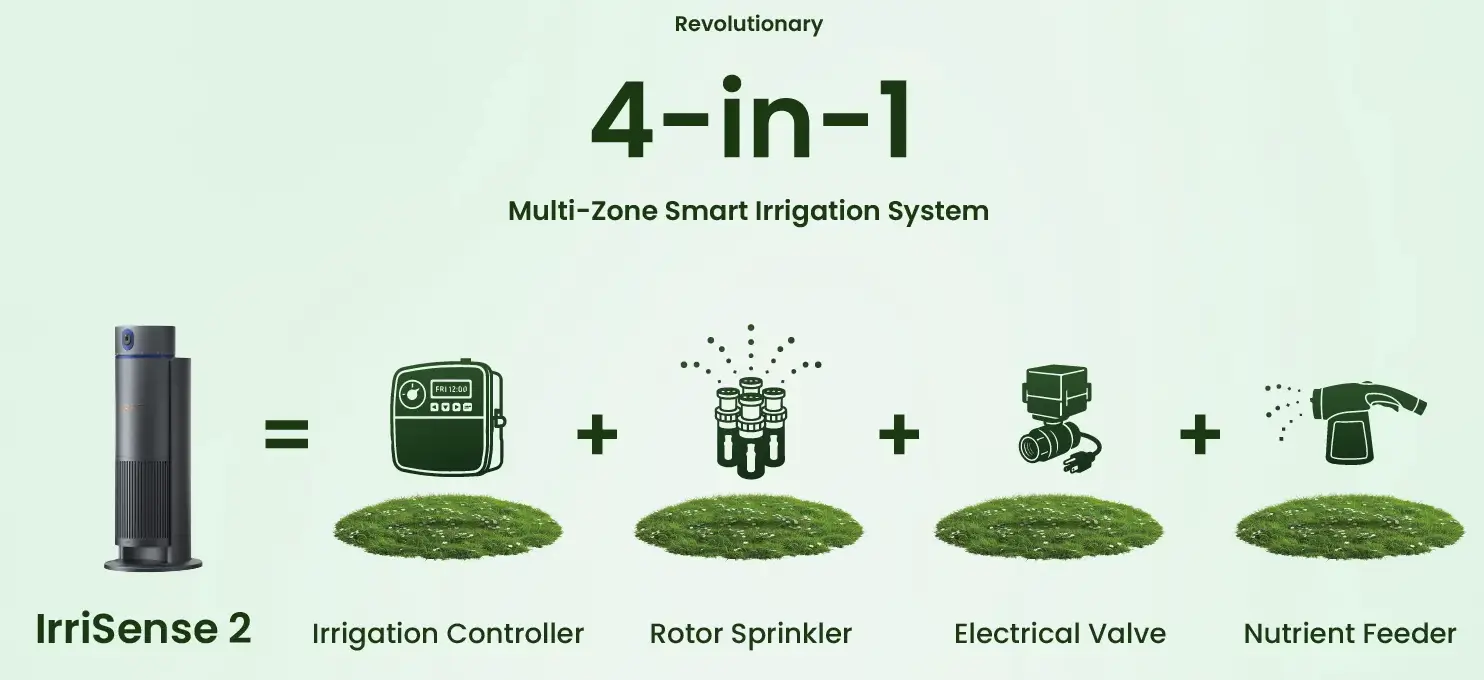
Modern above-ground systems eliminate the risk of hidden leaks entirely. One example is the Aiper IrriSense 2, a 4-in-1 smart irrigation system that combines a controller, sprinkler, treatment system, and valve in a single setup.
Since it operates above ground, you do not have to worry about undetected underground damage. It also uses smart scheduling and weather-based adjustments to optimize watering, helping homeowners save up to 40 percent on water usage while keeping their lawn healthy.
By choosing a system that is easier to monitor and maintain, you reduce the chances of unexpected leaks and costly repairs.
Summary & Best Practices
Checking your water meter is one of the simplest ways to stay ahead of potential leaks. Make it a habit to run this quick DIY test a couple of times a year, especially before the peak watering seasons of spring and summer.
Taking a proactive approach not only protects your wallet from sudden bill spikes but also helps conserve water. If you are tired of dealing with the risks of aging underground pipes, consider exploring the long-term benefits of smart irrigation systems to manage your outdoor water usage more safely and efficiently.
FAQs
How do I know if my irrigation system is leaking underground?
Look for signs like unusually wet spots on your lawn, reduced water pressure, or areas where plants are struggling. The most reliable method is using your water meter and turning off the irrigation system to see if the leak indicator stops moving.
How long should I wait when testing a water meter for leaks?
Waiting one to two hours is usually enough to detect most slow leaks. This timeframe allows even small amounts of water loss to show up on the meter.
Does a small meter movement always mean a leak?
Yes. If all water sources and appliances are completely turned off, any movement on the meter indicates that water is still flowing somewhere in the system.
Can irrigation leaks increase water bills significantly?
Absolutely. Even a tiny leak can waste thousands of gallons over time. This can lead to a noticeable spike in your water bill, especially during peak watering seasons.